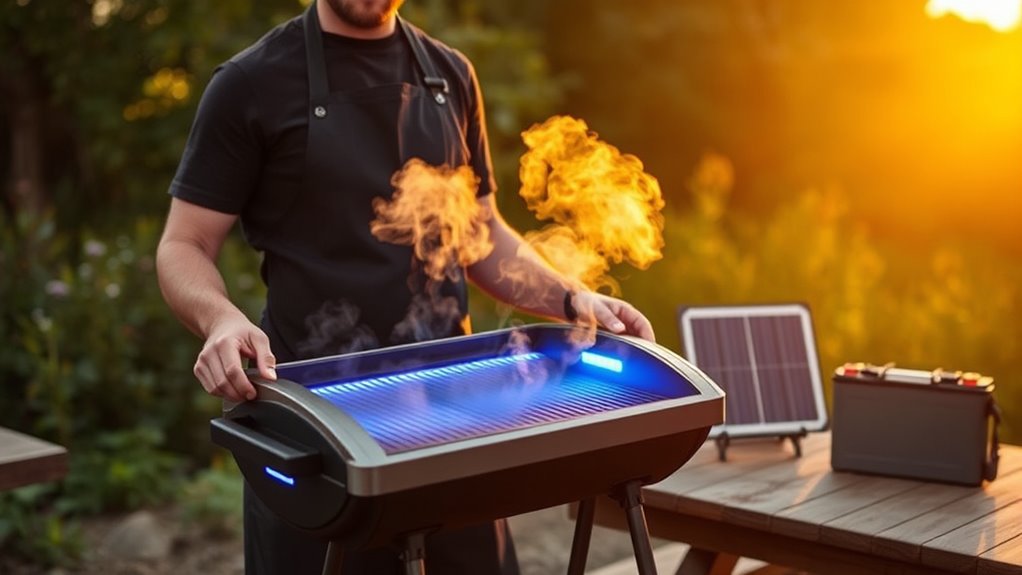

To power your electric grill off-grid, first determine its wattage needs based on how often and long you plan to cook. Consider portable options like deep-cycle batteries, solar panels with battery storage, or gas generators for reliable energy. Combining these solutions can guarantee consistent performance. Proper setup, safe connections, and equipment maintenance are also essential. Keep exploring to discover detailed tips on choosing the best power sources and ensuring safety outdoors.
Key Takeaways
- Assess your grill’s wattage and energy needs based on usage frequency, cooking duration, and number of servings for reliable off-grid performance.
- Choose suitable portable power sources like solar panels, battery banks, or generators with capacity matching your grill’s wattage.
- Utilize solar panels paired with inverters and batteries to harness renewable energy for daytime and evening grilling.
- Consider gas-powered generators for high-capacity, portable backup power, keeping in mind fuel, noise, and emissions.
- Ensure safe setup with stable surfaces, weather protection, secure wiring, and routine maintenance for efficient and safe outdoor grilling.

Jackery Solar Generator 1000 v2 and 200W Solar Panel,1070Wh,1500W AC
- Powerful AC Output: 1500W continuous, 3000W surge
- Lightweight & Portable: 23.8 lbs with foldable handle
- Fast Charging: Full charge in 1 hour via app
As an affiliate, we earn on qualifying purchases.
Assessing Your Power Needs for Off-Grid Grilling
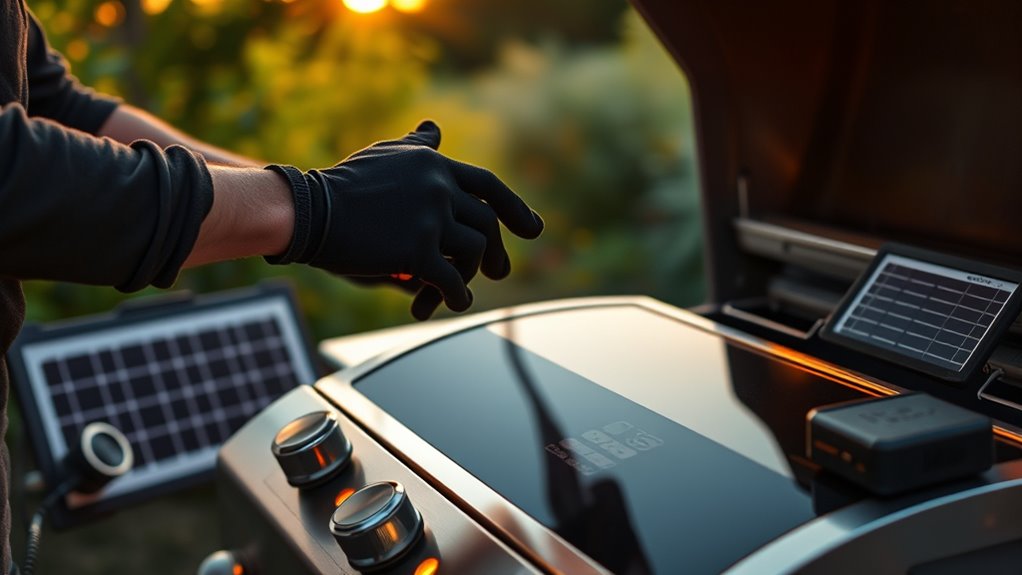
Before choosing an off-grid electric grill, you need to determine your power requirements. If you’re into urban camping or outdoor dining, consider how often and how long you’ll use the grill. Think about the wattage of the grill and how much power you’ll need to run it effectively. For quick meals during a weekend trip, a lower wattage might suffice, but for extended outdoor gatherings, you’ll want a more powerful setup. Remember, off-grid environments require careful planning to avoid running out of power mid-cook. Assess your typical cooking sessions, the number of people you’ll serve, and the available energy sources. Knowing your precise power needs helps you select a grill that performs reliably without draining your energy supplies too quickly. For larger setups, understanding the horsepower of electric motors can help you estimate the energy demands more accurately.

SOARAISE Solar Power Bank 48000mAh Wireless Portable Charger with 4 Cables
- High-Efficiency Solar Panels: 4 premium solar panels for faster charging
- Large Capacity Battery: 48000mAh lithium-polymer battery for extended use
- Multi-Device Charging: Supports 7 devices simultaneously with multiple ports
As an affiliate, we earn on qualifying purchases.
Choosing the Right Portable Power Sources
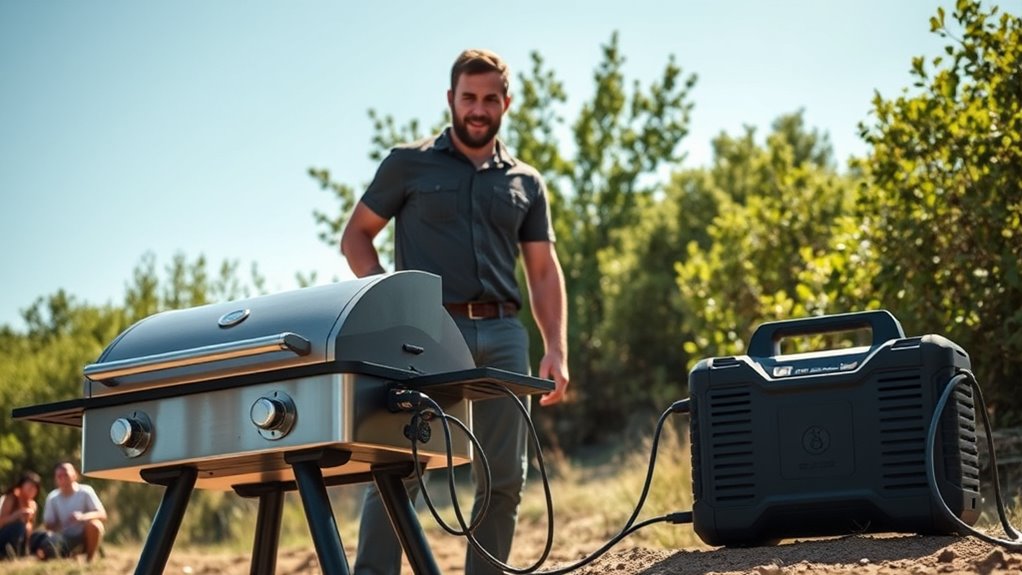
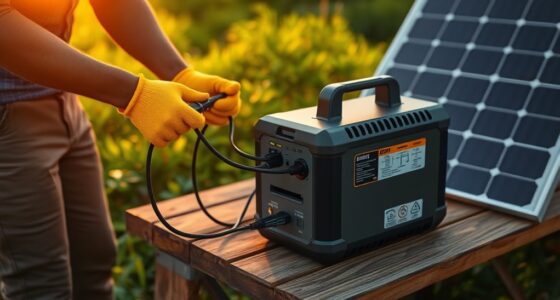
Selecting the right portable power source is crucial to guarantee your off-grid grilling sessions go smoothly. If you enjoy indoor grilling or preparing gourmet recipes outdoors, choosing a reliable power option ensures consistent performance. Consider battery-based solutions like deep-cycle batteries or portable power stations, which provide steady energy for your electric grill. Solar generators are excellent for eco-friendly setups, especially when paired with solar panels. Think about your cooking frequency and power needs—higher wattage appliances require more robust sources. Portability, weight, and recharge time also matter. For a seamless experience, select a power source that matches your grill’s requirements and suits your outdoor environment, so you can focus on power management and perfecting those gourmet recipes without interruptions.

MARBERO 111Wh Solar Generator with Panels Included Solar Panel Kit 30W
- Solar Generator with Panel: Includes 111Wh power station and 30W solar panel
- Multiple Power Outputs: USB, AC, and DC ports for versatile charging
- High Capacity Battery: 111Wh (30,000mAh) lithium battery for reliable power
As an affiliate, we earn on qualifying purchases.
Exploring Solar Power Options for Electric Grills
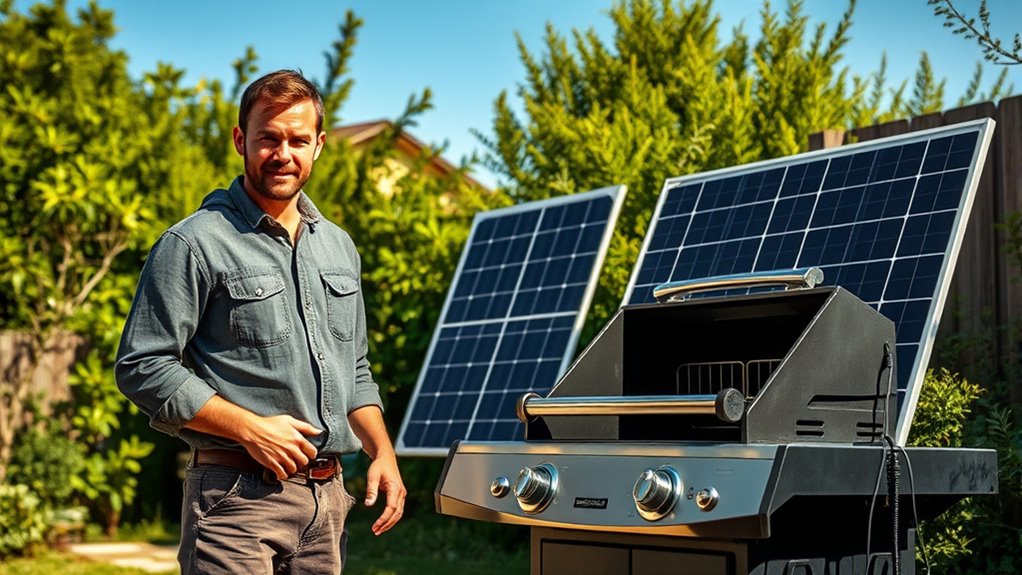
Have you considered harnessing the sun’s energy to power your electric grill off-grid? Solar power is a practical option if you’re ready for solar panel installation. Start by choosing panels compatible with your energy needs and available sunlight. You’ll need to ensure inverter compatibility so your solar system can convert DC power into usable AC electricity for your grill. Portable solar panel kits are available for easy setup, making them ideal for outdoor use. Proper placement and secure mounting maximize sun exposure, boosting efficiency. Keep in mind, a reliable battery system can store excess energy for cloudy days or evening grilling. With the right setup, solar power can keep your electric grill running smoothly while reducing reliance on traditional power sources.

Jackery Explorer 300 Portable Power Station,292Wh
- Lightweight Design: Only 7.5 lbs with 292Wh capacity
- Easy to Carry: Integrated handle for portability
- Multiple Device Charging: 2 AC outlets, USB-C, USB-A, car port
As an affiliate, we earn on qualifying purchases.
Utilizing Gas Generators: Pros and Cons
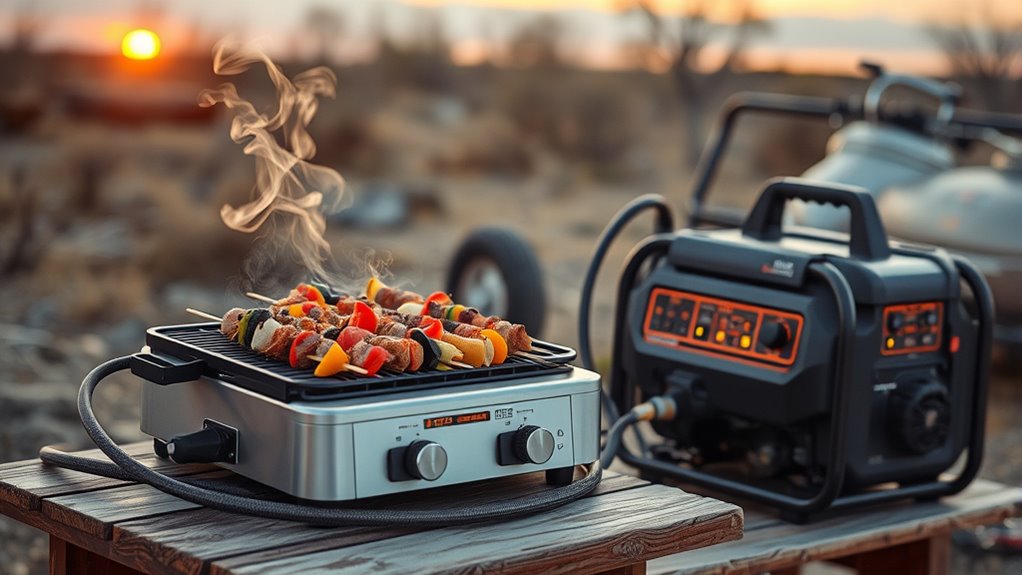
Gas generators offer a convenient off-grid power source for your electric grill, especially when solar options aren’t feasible. They rely on gasoline engines, providing quick and reliable energy when you need it. One major advantage is their portability and ease of use; you can bring them anywhere, making them ideal for camping or outdoor gatherings. However, fuel efficiency varies between models, so you’ll want one that maximizes fuel use to save money and reduce emissions. Gasoline engines tend to be loud and emit fumes, which can be a drawback in quiet or environmentally sensitive areas. Additionally, you’ll need to carry extra fuel, and storage safety is a concern. Overall, gas generators are a practical choice but require careful consideration of their pros and cons. Incorporating traditional Italian dishes like focaccia or ribollita into your outdoor meals can enhance your experience, especially when paired with the right cooking equipment.
Battery Systems for Extended Grilling Sessions
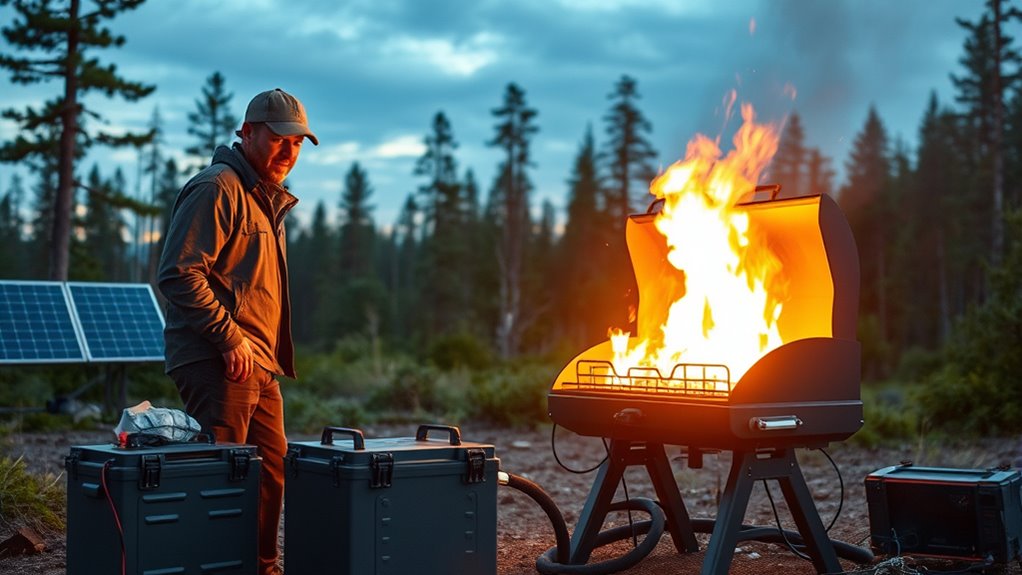
To keep grilling longer off-grid, you need to understand your battery capacity needs and choose the right portable power options. Proper charging strategies will help guarantee your batteries stay ready for extended use. Considering these points lets you enjoy more grilling without interruptions. For optimal performance, consider integrating Kia Tuning enhancements to your power system to maximize efficiency and reliability.
Battery Capacity Essentials
Choosing the right battery capacity is vital for ensuring your off-grid electric grill can handle extended grilling sessions without interruption. You need enough capacity to meet your grill’s power demands over time, which depends on your usage duration. Battery chemistry plays a key role; lithium-ion batteries offer high energy density and longevity, making them ideal for longer sessions. Additionally, a reliable power inverter is essential, as it converts the battery’s DC power into AC for your grill. Ensuring your battery system has sufficient capacity and the right chemistry will prevent power drops and keep your grilling seamless. Understanding energy-efficient technologies and how they apply to your setup can help optimize performance and sustainability. By understanding these essentials, you’ll be better prepared to select a system that provides consistent, extended power for your off-grid culinary adventures.
Portable Power Options
When planning for extended grilling sessions off-grid, selecting the right portable power options is crucial to guarantee your electric grill stays powered without interruption. Reliable battery systems, such as deep-cycle or portable power stations, provide steady energy, ensuring consistent heat for safe cooking. Properly choosing your power source supports cooking safety by preventing unexpected shutdowns that could lead to undercooked food or accidents. Additionally, having dependable batteries makes grill maintenance easier, as you can avoid frequent power interruptions that might cause overheating or stress on your grill components. Always verify your batteries’ capacity and compatibility with your grill to maintain ideal performance. Understanding the input lag and response times of your power system can also help optimize your grilling experience. Investing in quality portable power options ensures you can focus on grilling while keeping safety and equipment longevity in check.
Charging Strategies for Longevity
Since extended grilling sessions can drain batteries quickly, implementing effective charging strategies is essential for maintaining power longevity. To maximize your battery lifespan and ensure consistent performance, consider these power conservation tips:
- Charge batteries fully before use to prevent deep discharges that shorten lifespan.
- Use solar chargers or renewable sources during breaks to replenish power naturally.
- Avoid unnecessary device usage when not grilling to reduce power drain.
- Schedule charging sessions during off-peak times to optimize battery health.
- Regularly monitor battery temperature to prevent overheating and extend overall battery life.
Combining Multiple Power Solutions for Reliability
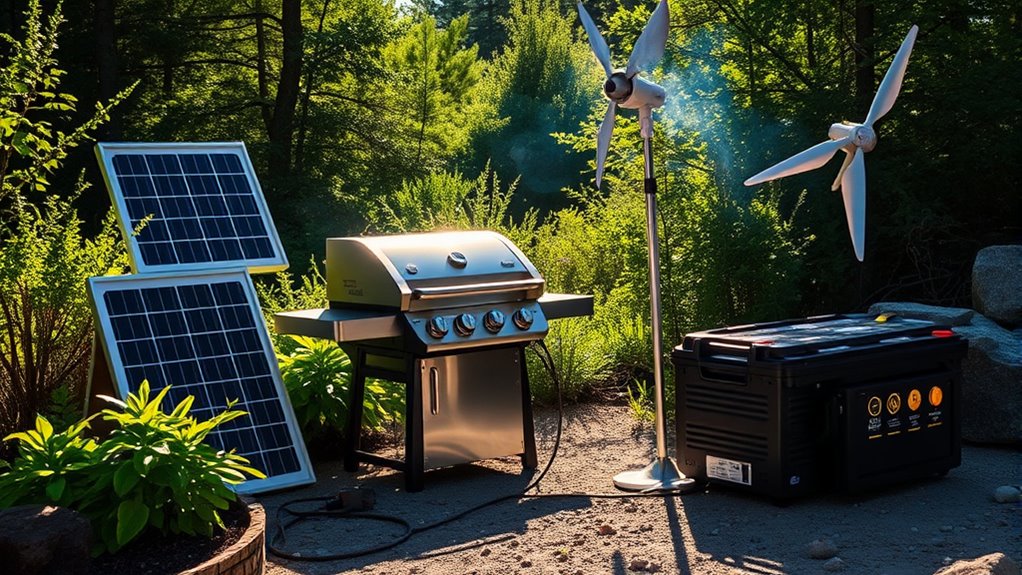
To guarantee your electric grill stays powered in off-grid situations, combining multiple energy sources can greatly enhance reliability. Using a mix of solar, battery, and backup generators ensures continuous operation even when one source falters. For example, during cloudy days, stored battery power or a generator can keep your grill running. This approach mimics indoor grilling setups, where multiple appliances like an electric stove rely on varied power sources to prevent disruptions. To illustrate, consider this setup:
| Power Source | Usage Scenario | Advantage |
|---|---|---|
| Solar Panels | Daytime grilling | Renewable, silent |
| Battery Bank | Evening use | Reliable backup |
| Generator | Extended grilling | High capacity |
Combining solutions guarantees consistent performance, no matter the off-grid challenge.
Ensuring Safety and Proper Setup Outdoors
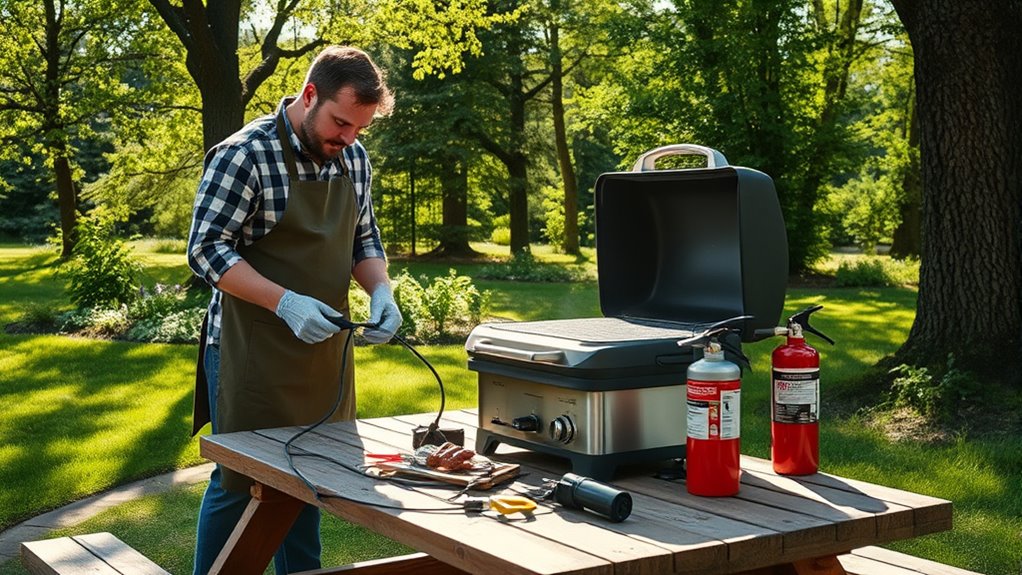
Setting up your electric grill outdoors requires careful attention to safety to prevent accidents and guarantee reliable operation. First, choose a flat, stable surface away from flammable materials. Make certain the grill is protected from weather elements with a weather-resistant cover or shelter to prevent damage. Prioritize fire safety by keeping a fire extinguisher nearby and avoiding overloading power sources. Additionally, check that your power connections are secure and insulated. Keep the grill clear of debris and ensure proper ventilation to prevent overheating. Remember to regularly inspect cords and plugs for damage. Proper electrical safety measures are essential to ensure safe operation and prevent potential hazards. By following these steps, you can enjoy safe, efficient grilling outdoors while minimizing risks related to fire safety and weather exposure.
Maintenance and Care for Off-Grid Power Equipment
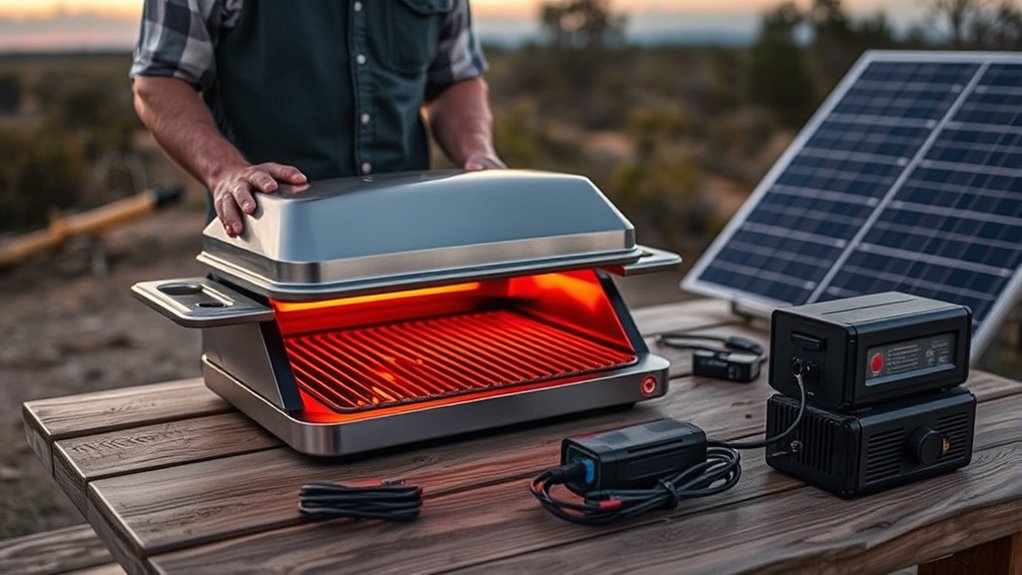
Taking care of your off-grid power equipment is essential for reliable performance. You should regularly inspect your gear, keep batteries in good shape, and store everything safely when not in use. These simple steps help guarantee your electric grill stays ready whenever you need it. Regular maintenance of power systems ensures optimal operation and longevity of your equipment.
Regular Equipment Inspections
Regular equipment inspections are essential to keep your off-grid electric grill running smoothly and reliably. Regular checks help prevent breakdowns, ensure food safety, and improve your grilling techniques. When inspecting, look for loose connections, worn cords, and buildup of grease or debris that could cause hazards. Keep the grill surface clean to maintain even heat and avoid flare-ups. Check the power source, such as batteries or solar panels, for proper function. Also, verify that safety features, like circuit breakers, work correctly. Regular maintenance also includes inspecting electrical connections and ensuring that all components are in good condition. Performing these inspections helps you grill confidently, ensuring safe, delicious results every time.
Battery Maintenance Tips
Maintaining your off-grid electric grill’s battery is key to ensuring reliable power during your outdoor cooking sessions. Regularly perform battery recalibration to keep the system accurate and prevent voltage fluctuations. This process helps the battery’s internal management system correctly read its capacity, avoiding unexpected shutdowns. Also, check for proper voltage stabilization by ensuring connections are clean and secure, which minimizes power drops. Keep the terminals free of corrosion and inspect the wiring for wear or damage. Charging the battery fully before long-term storage or extended use helps preserve its health. Additionally, using proper battery maintenance practices can extend the overall lifespan of your battery. By staying on top of these maintenance tips, you’ll maximize battery longevity and ensure your electric grill powers up reliably whenever you’re ready to cook.
Safe Storage Practices
Proper storage is essential to preserve your off-grid power equipment’s performance and lifespan. When storing your electric grill, ensure it’s clean and dry to prevent rust and maintain food safety. Regularly perform grill cleaning to remove grease and residue, reducing fire hazards and ensuring safe operation later. Store your equipment in a cool, dry place away from direct sunlight and moisture, which can damage components. Before storage, disconnect batteries and check for any signs of wear or damage. Consider these safe storage practices:
- Clean grill surfaces thoroughly after each use
- Cover the grill with a weather-resistant cover
- Store in a well-ventilated area to prevent mold
- Keep batteries in a cool, dry environment, away from flammable materials
- Ensure proper ventilation during storage to prevent moisture buildup and prolong equipment life
Tips for Maximizing Efficiency During Outdoor Cooking
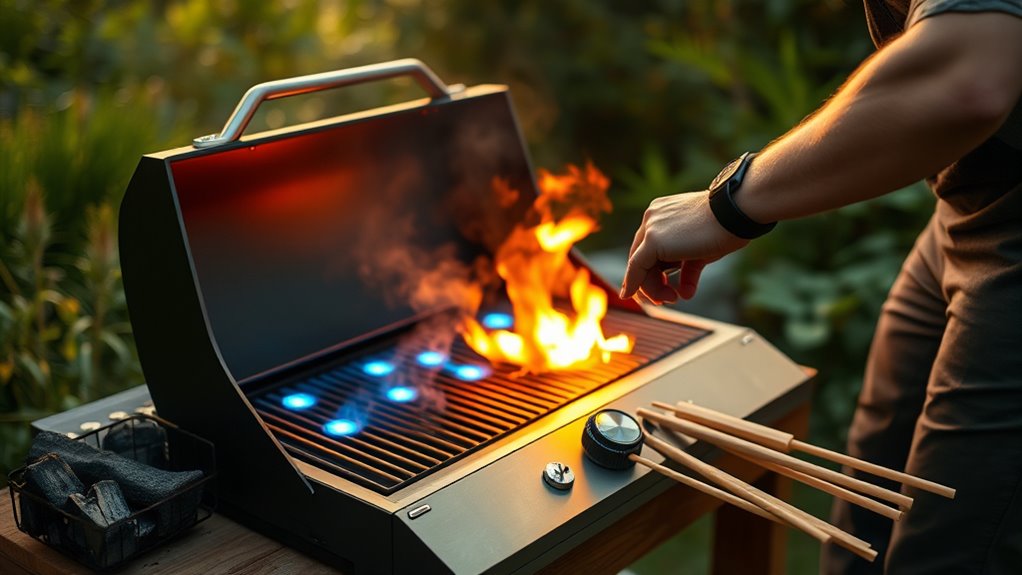
To get the most out of your outdoor cooking with an electric grill off-grid, focus on preheating efficiently and using the right cookware. Preheat your grill sufficiently to ensure even cooking and reduce energy waste. When selecting cookware, opt for flat, well-fitting grates or cast iron pans that maximize heat transfer. This approach is similar to indoor grilling, where proper prep is key to achieving perfect results. Also, plan your recipe pairing to minimize cooking time—combine items that cook together or require similar temperatures. Keep your grill covered when possible to retain heat and boost efficiency. Additionally, using glycolic acid in skincare routines can help maintain healthy skin that’s resilient to environmental stressors, ensuring you look your best during outdoor activities. By managing preheating and cookware choice, you’ll enjoy faster, more consistent outdoor meals while conserving energy.
Frequently Asked Questions
How Long Can My Electric Grill Operate on a Single Charge?
You wonder how long your electric grill can run on a single charge. It depends on your battery capacity and the grill’s power consumption. A larger battery capacity means more operating time, while higher power consumption shortens it. Generally, if your grill uses about 1500W and you have a 20Ah, 12V battery, you might get around 2-3 hours of grilling. Keep an eye on these specs to estimate your grill’s runtime accurately.
What Are the Environmental Impacts of Various Off-Grid Power Options?
Ever wondered how your off-grid power choice impacts the environment? When comparing renewable and nonrenewable options, you see that renewables like solar or wind have a smaller environmental footprint, producing clean energy without emissions. Nonrenewable sources, like diesel or coal, cause pollution and deplete resources. Your decision influences the planet’s health, so opt for cleaner, sustainable energy to minimize environmental impacts and promote a greener future.
Can I Use My Existing Home Solar System for Off-Grid Grilling?
You can use your existing home solar system for off-grid grilling if it has enough solar panels and adequate power storage. Make certain your solar panels generate enough energy during the day to power your electric grill and charge your batteries. You might need to supplement with additional power storage or a portable solar generator, especially if your current setup isn’t designed for high-demand appliances like grilling.
What Safety Precautions Are Essential When Setting up Portable Power Outdoors?
Think of setting up your portable power like preparing a spaceship for launch. You should prioritize fire safety by keeping a fire extinguisher nearby and guarantee your equipment inspection is thorough, checking for damaged cords or loose connections. Always set up on stable, dry ground, and avoid overloading outlets. These precautions keep your outdoor setup safe, preventing accidents and ensuring your off-grid grilling adventure stays fun and hazard-free.
How Do Weather Conditions Affect Power Source Performance During Outdoor Cooking?
Weather conditions greatly impact your power source performance during outdoor cooking. High winds cause wind interference, reducing solar efficiency by disrupting sunlight absorption on solar panels. Clouds and rain lower solar efficiency further, decreasing energy output. Strong winds can also damage portable power equipment. To guarantee reliable power, monitor weather forecasts, protect solar panels from wind interference, and consider backup options during adverse weather.
Conclusion
Powering your electric grill off-grid isn’t just about convenience—it’s about embracing self-reliance and resilience. By carefully evaluating your needs, selecting the right power sources, and maintaining safety, you can enjoy reliable outdoor cooking anywhere. Remember, the true strength lies in your ability to adapt and innovate. Just like a well-maintained grill, your off-grid setup fuels more than just meals; it fuels your confidence to thrive anywhere.