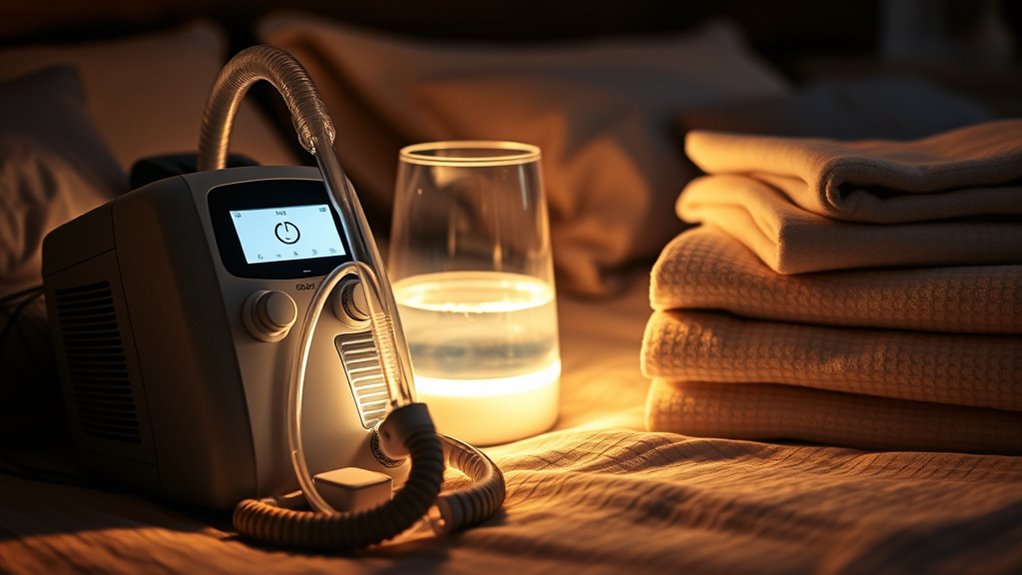
When power’s out, you can rely on portable batteries, power banks, or UPS systems to keep your CPAP and humidifier running smoothly. Make sure to choose devices with enough capacity to support your therapy all night and regularly test them. Solar panels and backup batteries can provide additional power, especially during extended outages. For more tips on staying prepared and keeping your devices running, continue exploring simple, effective solutions for peace of mind.
Key Takeaways
- Use fully charged portable batteries or power banks compatible with your CPAP for uninterrupted therapy during outages.
- Install a reliable UPS system to provide backup power and protect your device from surges.
- Consider a generator or spare batteries for extended power outages to ensure continuous therapy.
- Regularly maintain and test backup power sources to confirm proper operation when needed.
- Explore solar power options and proper storage to maintain power independence and device readiness.
Portable Battery Packs and Power Banks

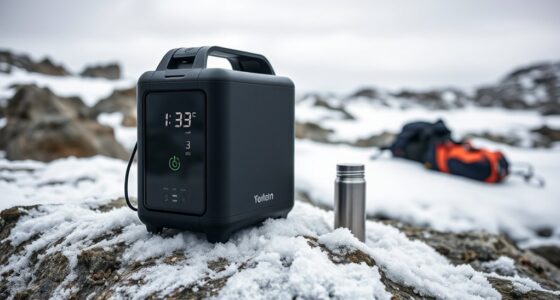
Have you ever worried about running out of power during your CPAP therapy while on the go? Portable battery packs and power banks are your best bet for staying powered up. When choosing one, pay attention to its battery capacity—measured in milliampere-hours (mAh) or watt-hours (Wh)—to make sure it can support your device long enough. Consider your CPAP’s power consumption; devices with higher power needs require larger capacities to run through the night. Lightweight and compact options make travel easier, but make sure they’ve got enough juice to keep your therapy uninterrupted. By matching your CPAP’s power consumption with a suitable battery capacity, you’ll enjoy peace of mind knowing you can stay on treatment, even when away from an outlet. Additionally, staying informed about AI discoveries can influence future healthcare solutions and device innovations.
Using Uninterruptible Power Supply (UPS) Systems
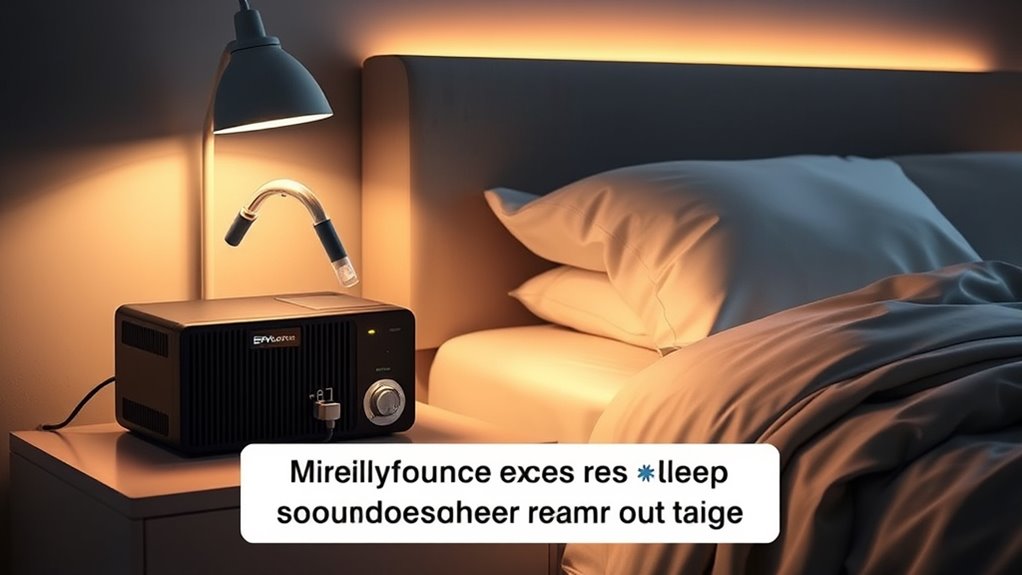
Using a UPS system can provide reliable power backup for your CPAP and humidifier, ensuring your therapy continues uninterrupted during outages. To get the most out of it, you’ll need to choose the right UPS model and keep up with regular maintenance. Let’s explore the benefits, selection tips, and care practices to keep your system ready when you need it. Regularly checking the battery health of your UPS can help prevent unexpected failures and ensure consistent performance.
Power Backup Benefits
Ever wondered how to guarantee your CPAP therapy stays uninterrupted during power outages? A UPS system offers significant power backup benefits, ensuring your sleep remains undisturbed. With adequate battery capacity, a UPS can provide enough energy to run your CPAP and humidifier through outages, giving you peace of mind. Proper power management within the UPS helps optimize battery use, extending runtime and preventing unexpected shutdowns. This means you won’t have to worry about losing essential therapy time or waking up unprotected. Additionally, a UPS can protect your device from power surges and fluctuations, safeguarding your equipment and ensuring consistent performance. Investing in a reliable UPS enhances your sleep security and keeps your therapy seamless, no matter what’s happening with the power grid. power management is crucial to maximize the efficiency and lifespan of your UPS system.
Choosing Right UPS
Wondering how to pick the right UPS for your CPAP and humidifier? It’s essential to factor in both battery life and power capacity to guarantee continuous operation during outages. A suitable UPS provides enough backup time and can handle your device’s power demands. To choose wisely:
- Check your CPAP and humidifier’s power requirements to determine the needed power capacity.
- Opt for a UPS with a battery life that covers your usual outage duration.
- Consider a unit with surge protection to safeguard your equipment.
- Ascertain compatibility with your devices’ voltage and plug types for seamless use.
- Understanding projector contrast ratios can help ensure your backup system supports your full setup without compromise.
Maintenance Tips
Regular maintenance of your UPS system guarantees it performs reliably when you need it most. Start by checking the battery health and replacing it if it shows signs of wear, guaranteeing your CPAP or humidifier stays powered during outages. Keep the UPS clean and dust-free to prevent overheating, which can compromise performance. Regularly test the system to confirm it switches on seamlessly, supporting your sleep hygiene by maintaining consistent device operation. Additionally, calibrate your equipment periodically to ensure your CPAP delivers the correct pressure levels—faulty calibration can affect sleep quality. Implementing proper filtration in your setup can further enhance device longevity and air quality. Follow the manufacturer’s guidelines for maintenance schedules and calibration processes. Staying proactive with these tips helps you avoid interruptions, keeps your sleep environment at its best, and extends your UPS’s lifespan.
Solar Power Options for Continuous Charging

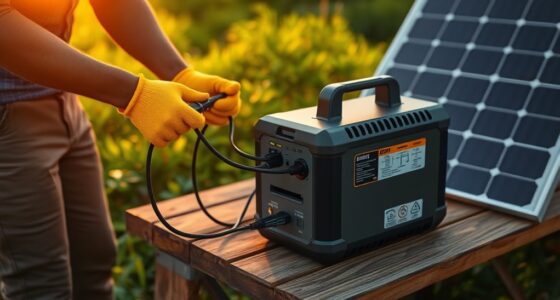
Maximizing your solar panel efficiency guarantees you get the most power from your sunlight, even on cloudy days. Battery storage provides a reliable power reserve, so your CPAP stays on overnight without interruptions. By optimizing these factors, you can maintain continuous charging and peace of mind during extended power outages. Incorporating battery technologies into your setup can further enhance energy reliability and performance.
Solar Panel Efficiency Optimization
To guarantee your solar panels operate at peak efficiency for continuous charging, it’s essential to optimize their placement and maintenance. Improving solar panel efficiency depends on maximizing exposure to sunlight and reducing obstructions. Here are four ways to achieve that:
- Position panels at the best angle to capture the most sunlight throughout the day.
- Clear debris, dirt, and shading that block sunlight, ensuring consistent exposure.
- Regularly inspect for damage or corrosion that can reduce efficiency.
- Use adjustable mounts to track the sun’s movement and maximize sunlight absorption.
- Consider the location of your panels, as local climate and sunlight availability significantly impact overall performance.
Battery Storage for Power Reserve
Having a reliable battery storage system is essential for maintaining a continuous power supply when solar energy isn’t available, such as at night or during cloudy days. To maximize your system’s effectiveness, focus on battery longevity by selecting high-quality batteries designed for repeated cycles. Proper power management guarantees your batteries are charged efficiently without overloading or draining them prematurely. This approach helps extend your battery’s lifespan and guarantees your CPAP and humidifier stay powered consistently. Investing in good battery capacity allows you to store excess solar energy during sunny periods, providing a seamless backup when sunlight diminishes. Additionally, selecting batteries with long cycle life can further enhance the durability and overall performance of your energy storage system. Ultimately, a well-managed battery system offers peace of mind, ensuring your devices operate smoothly regardless of weather conditions or grid outages.
Manual and Alternative Breathing Devices
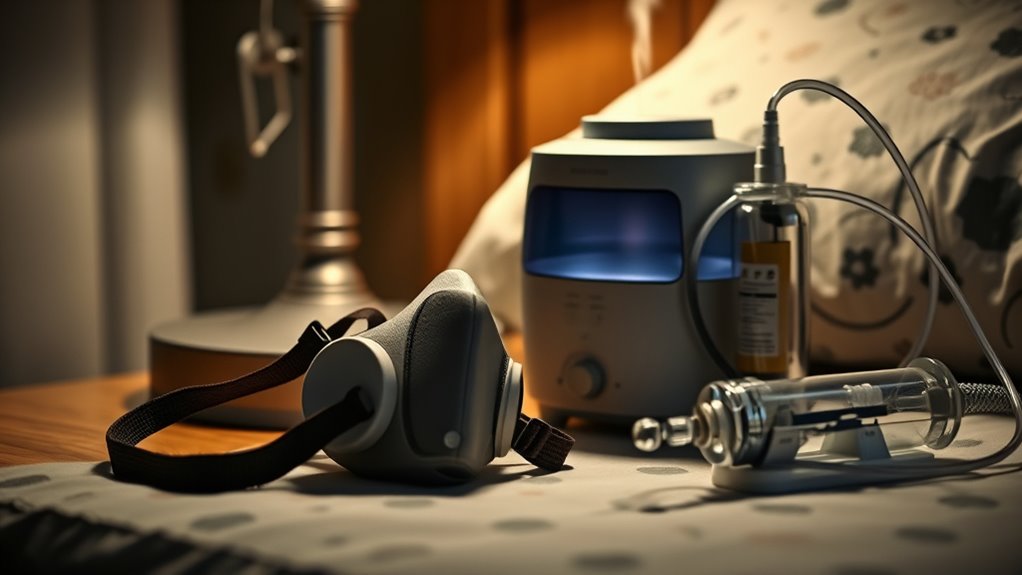
Are manual and alternative breathing devices a viable option when standard CPAP therapy isn’t suitable? Yes, they can be effective, especially during power outages or when you need a portable solution. These devices often rely on your own breath or simple mechanics, making them less dependent on electricity and device compatibility. They also allow you to control air quality directly, reducing concerns about filters or humidifiers. Here are some key points: 1. Manual devices like breath-powered masks can improve airflow without power. 2. Alternative devices often have minimal setup, ideal for travel or emergencies. 3. They provide immediate relief, especially when standard CPAP isn’t available. 4. Always check air quality compatibility to avoid irritation or discomfort. Additionally, tracking and managing your breathing device usage can enhance your overall effectiveness and comfort. These options give you peace of mind when power issues arise, ensuring continued breathing support.
Maintaining and Preparing Your Equipment for Emergencies
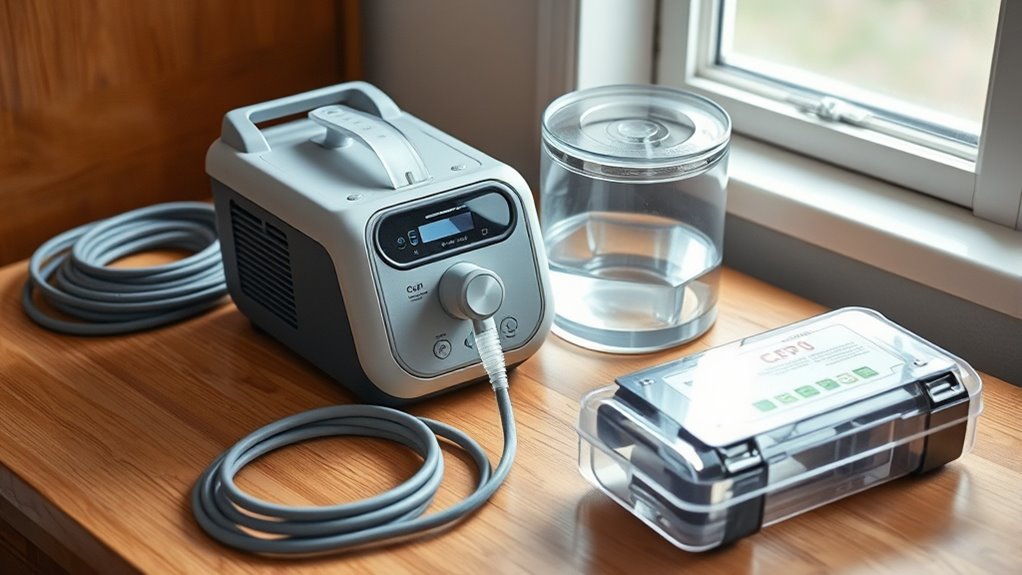
Preparing your CPAP and humidifier equipment for emergencies is essential to guarantee reliable operation when you need it most. Start by regularly checking your device’s battery maintenance, ensuring batteries are fully charged and in good condition. Consider investing in a backup power source compatible with your portable device; this helps you stay protected during power outages. Make sure your CPAP is compatible with portable power solutions, so you can easily switch to battery power if needed. Keep spare batteries and necessary adapters handy, and test your backup setup periodically to confirm everything works smoothly. Proper maintenance and preparation ensure your equipment remains functional during emergencies, giving you peace of mind knowing you won’t be left without your therapy when it’s most critical. Additionally, understanding best anime movies and animated films that touch hearts can help pass the time during unexpected outages, making your downtime more enjoyable.
Tips for Safe and Effective Power Backup Usage
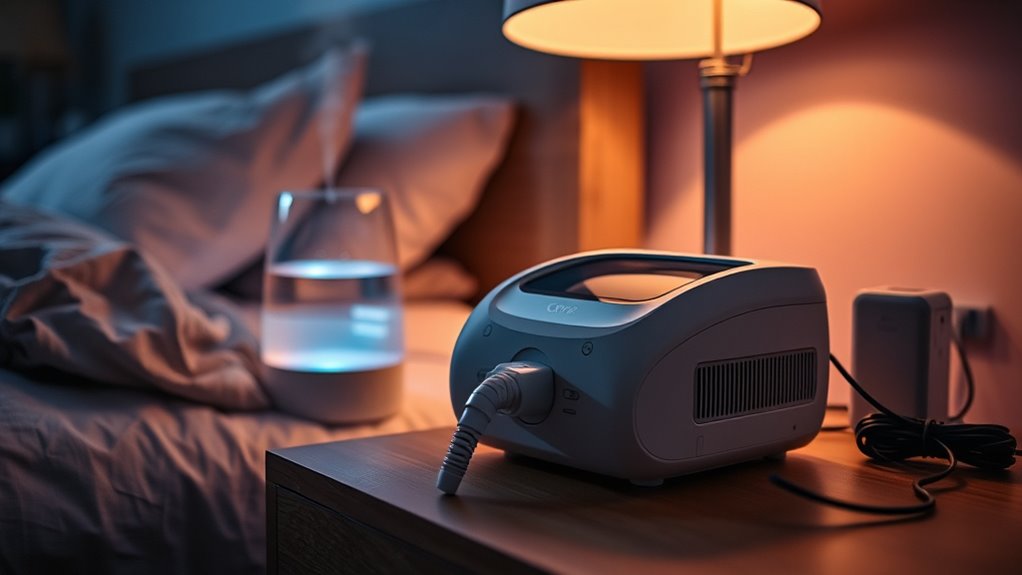
Using your power backup safely and effectively guarantees your CPAP and humidifier stay reliable during outages. Prioritize medical device safety by following the manufacturer’s instructions for your backup power source. Properly test your equipment regularly to ensure it functions correctly when needed. For emergency preparedness, keep your backup device fully charged and store it in an accessible location. Always use compatible batteries or generators designed for medical devices to prevent damage or hazards. Remember that fatherhood emphasizes support and care, much like maintaining your backup power system to ensure continuous health management.
Ensure your backup power for CPAP and humidifier is safe, tested, fully charged, and compatible to stay reliable during outages.
Here are four tips to maximize safety and efficiency:
- Use surge protectors to prevent power surges.
- Maintain a backup power supply that matches your device’s power needs.
- Avoid overloading outlets or extension cords.
- Keep extra batteries or fuel on hand for longer outages.
Frequently Asked Questions
How Long Can a Portable Battery Pack Power a CPAP Device?
The battery capacity of your portable pack determines how long it can power your CPAP device. Typically, a fully charged battery can last between 8 to 12 hours, depending on your device’s power consumption. Keep in mind, recharge time varies but usually takes about 2 to 4 hours. To guarantee uninterrupted sleep, choose a battery with sufficient capacity and plan for timely recharging during the day.
What Safety Precautions Should I Take With Backup Power Sources?
Power can be unreliable, so safety matters. You should always follow battery safety guidelines, like avoiding overcharging and keeping devices away from water. guarantee electrical grounding to prevent shocks, especially with backup power sources. Regularly inspect your batteries for damage, store them properly, and use equipment approved for your device. Taking these precautions keeps you safe and ensures your backup power works effectively when needed.
Can Solar Panels Fully Recharge CPAP Batteries Overnight?
You wonder if solar panels can fully recharge CPAP batteries overnight. It depends on solar panel efficiency and your battery capacity. If your panels have high efficiency and your batteries have a small capacity, you might get a full charge, especially with good sunlight. However, larger batteries or less efficient panels may not recharge completely overnight. To guarantee reliable power, consider your panel size, efficiency, and battery needs.
Are Manual Breathing Devices as Effective as CPAP Machines?
Manual breathing devices, versus CPAP machines, offer a more straightforward, portable option for managing sleep apnea. While manual devices require you to breathe naturally without continuous pressure, CPAPs provide consistent airflow, often leading to better symptom control. If you prefer simplicity and mobility, manual devices might work, but for effective, uninterrupted therapy, CPAP machines are generally more reliable. Your choice depends on your comfort, lifestyle, and specific medical needs.
How Often Should I Test My Backup Power System?
You should test your backup power system at least once a month to guarantee it’s reliable when needed. During testing, focus on battery maintenance by checking for any corrosion or wear and make sure the surge protection is functioning properly. Regular testing helps identify issues early, so you’re prepared during power outages. Keeping your backup system in good condition ensures continuous CPAP use, even when the main power source fails.
Conclusion
When power fades, think of your CPAP setup as a sturdy boat ready to weather any storm. With portable batteries, UPS, solar options, and manual devices, you’re equipped to stay afloat through emergencies. Keep your gear maintained and know your backup options. This way, you’re steering through darkness with confidence, knowing your breathing support is always within reach—like a lighthouse guiding you safely home, no matter how wild the night gets.