
When it comes to backup power in healthcare, guessing or taking shortcuts isn’t an option. Patient safety depends on reliable and tested systems like UPS and generators, designed with redundancy and resilience. Regular maintenance and staff training are crucial to prevent failures during outages. Relying on assumptions can lead to dangerous gaps. To guarantee continuous care, it’s indispensable to follow proven practices. Keep exploring to discover how to strengthen your backup power strategy effectively.

Get backup power and energy gear delivered free with Prime
- Fast, free delivery on millions of items
- Prime Video, Amazon Music and more included
- Member-only deals all year
Key Takeaways
- Relying on assumptions about backup capacity can lead to critical system failures during outages.
- Regular testing and maintenance are essential to ensure backup power systems perform reliably when needed.
- Engaging with power system experts helps identify vulnerabilities and optimize backup infrastructure.
- Combining multiple backup layers like UPS, generators, and redundant feeds ensures continuous operation.
- Continuous review and updates of backup plans prevent unforeseen failures and improve resilience.
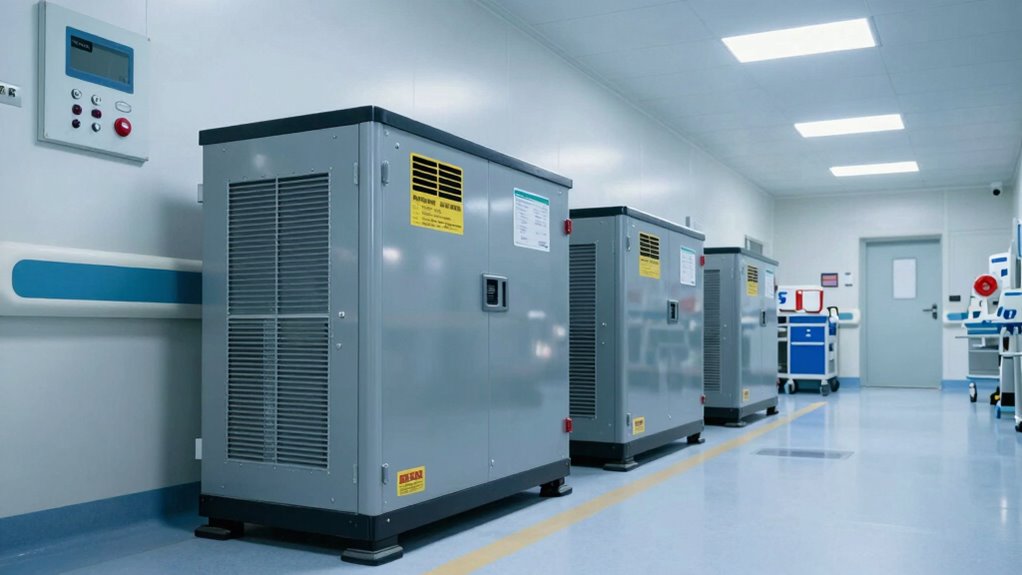
In healthcare, dependable backup power is crucial to guarantee patient safety and uninterrupted medical operations during outages. When emergencies strike, every second counts, and a well-planned power system becomes a critical part of your facility’s emergency preparedness. You can’t afford to guess or cut corners when it comes to power redundancy. If your backup systems fail or are insufficient, the consequences can be dire, affecting patient care and risking lives. That’s why understanding and investing in the right backup power solutions isn’t just a good idea—it’s a necessity.
Power redundancy means having multiple layers of backup systems in place, so if one fails, another takes over seamlessly. It’s about creating a resilient power infrastructure that can withstand outages without disrupting essential functions. You need to evaluate your facility’s unique needs carefully, considering the types of equipment that require constant power, such as life-support systems, ventilators, and critical monitoring devices. Relying solely on a single backup source, like a generator, leaves you vulnerable if that generator isn’t maintained properly or if it doesn’t have enough capacity. Instead, you should implement a combination of solutions—uninterruptible power supplies (UPS), standby generators, and even redundant power feeds—to ensure continuous operation.
Multiple backup layers ensure seamless power and continuous patient care during outages.
Emergency preparedness isn’t just about having backup power systems installed; it’s about regularly testing and maintaining them. You need to simulate outages to confirm your systems work as intended and train your staff on emergency procedures. Many facilities overlook this step, assuming their backup systems are sufficient without verifying their performance in real conditions. That’s a risky mistake. Proper testing will reveal weaknesses, allowing you to address them before a real emergency occurs. It’s also crucial to keep detailed records of maintenance and testing schedules, so you know your systems are always ready to activate when needed. Additionally, understanding power redundancy helps ensure your facility remains operational during unforeseen events. Regularly reviewing and updating your backup plans based on emerging threats can further strengthen your resilience. Being aware of power sources and how they interact within your system is essential for comprehensive emergency planning.
Furthermore, engaging with power specialists can help you identify potential vulnerabilities and optimize your backup system design for maximum reliability. Relying solely on assumptions about your backup capacity can lead to critical oversights.
Products Worth Considering

Ring Alarm 5-Piece Wireless Security System

Ring Alarm 8-Piece Kit (2nd Gen) Home Security System

Ring Alarm 14-Piece Wireless Security System Kit
As an affiliate, we earn on qualifying purchases.
Frequently Asked Questions
How Long Should Medical Backup Power Systems Last During an Outage?
During an outage, your medical backup power system should last long enough to guarantee critical functions remain operational. Typically, this means providing at least 24 hours of energy storage, but some facilities may require longer for power redundancy. You need reliable systems that can sustain life-support equipment and essential devices without guesswork, so regularly testing and maintaining your backup power ensures it performs when needed.
What Are the Most Reliable Backup Power Options for Medical Facilities?
You should prioritize reliable backup power options like generators with automatic transfer switches and uninterrupted power supplies (UPS). These guarantee seamless power redundancy during outages, vital for emergency preparedness. Invest in systems tested regularly and maintained properly to prevent failures. Relying on proven, robust solutions minimizes risks, keeps critical medical equipment running, and guarantees patient safety during power disruptions.
How Often Should Medical Backup Power Systems Be Tested?
You should test your medical backup power systems at least monthly to guarantee they’re ready for anything—think of it as the heartbeat of your facility’s safety. During these tests, focus on battery maintenance to spot issues early and verify generator capacity to handle peak loads. Regular testing keeps your system reliable, so you’re never caught off guard when every second counts. Don’t leave safety to chance—test often and stay prepared!
Are There Specific Regulations for Medical Backup Power Installations?
Yes, there are specific regulations for medical backup power installations. You must follow regulatory compliance requirements set by agencies like the Joint Commission and CMS, which mandate adherence to installation standards. These standards guarantee safety, reliability, and proper functioning during outages. It’s vital to stay updated with local codes and standards to avoid penalties and guarantee patient safety. Properly installing and maintaining backup power systems is fundamental for compliance and operational integrity.
What Are the Costs Associated With Implementing Medical Backup Power?
Think of medical backup power as your safety net—investment is key. Costs vary with system size, fuel type, and installation complexity, but expect to spend thousands to hundreds of thousands of dollars. Regular battery maintenance and ensuring power redundancy are essential for reliable operation. While upfront costs seem high, they’re critical for patient safety, preventing costly downtime, and meeting strict regulatory requirements.
Conclusion
You can’t afford to guess when it comes to medical backup power. Imagine a hospital losing power during a critical surgery—lives could be at risk. Proper planning and reliable backup systems guarantee safety and continuity of care. Don’t leave it to chance; invest in tested, backup solutions. Your proactive approach could be the difference between life and death, making sure patients receive the care they need, no matter what happens.