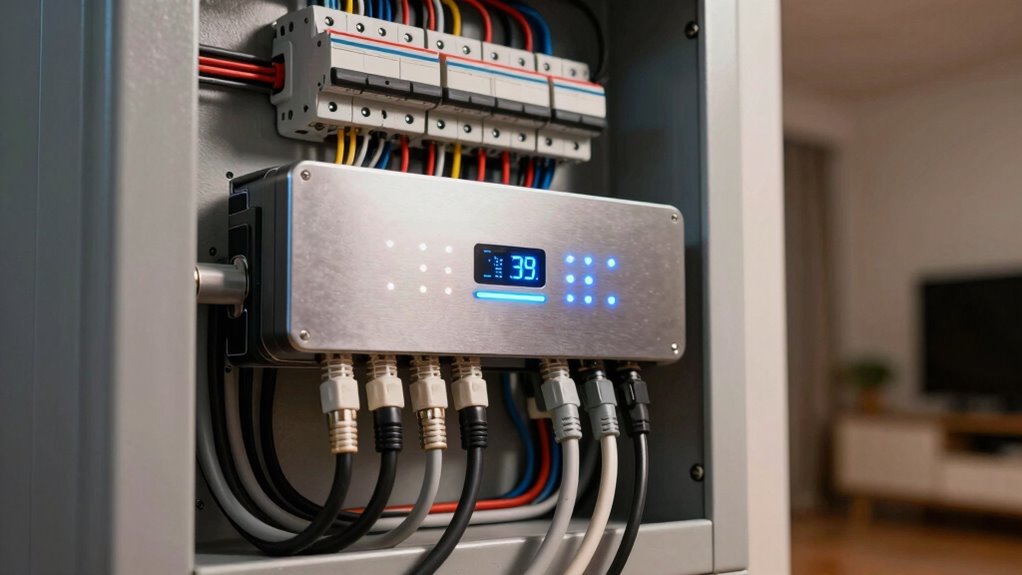

Surge wattage is the extra power your generator needs to start appliances with motors or compressors, like refrigerators and air conditioners. It’s essential because if your generator can’t handle these initial demands, appliances might fail or shut down. By understanding surge wattage, you guarantee your backup system can power all critical devices safely and reliably. Keep going to discover how proper surge management makes your home’s backup power more dependable and efficient.

Get backup power and energy gear delivered free — and shop member deals
- Fast, free delivery on millions of items
- Access to Prime Big Deal Days deals on October 6–7
- Prime Video, Amazon Music and more included
Key Takeaways
- Surge wattage is the initial power needed to start appliances with motors or compressors during a power outage.
- Knowing surge wattage helps select a generator that can handle startup loads without overload.
- Proper planning ensures critical devices receive sufficient power during startup, preventing damage or failure.
- Including a safety buffer above calculated surge needs increases backup system reliability.
- Understanding surge wattage optimizes generator use, prolongs lifespan, and ensures a stable power supply during outages.

When choosing a home backup generator, understanding surge wattage is vital because it determines the initial power needed to start appliances and equipment. Surge wattage, often called starting wattage, represents the extra power required when a device first powers up. This is especially important for appliances with motors or compressors that draw a significant amount of energy during startup. If your generator can’t handle these surges, your equipment might fail to start or the generator could overload, causing unnecessary disruptions during outages. That’s why knowing the surge wattage helps you select a generator with proper capacity, guaranteeing all critical devices run smoothly when the power’s out.
Understanding surge wattage ensures your generator can handle startup power needs for reliable home backup.
Generator efficiency plays an essential role here. A more efficient generator can produce the necessary surge wattage without wasting fuel or overworking itself. When you compare models, look at how well they handle power surges. A generator with good power surge management will provide consistent, reliable bursts of power without losing stability or efficiency. This not only protects your appliances but also prolongs the lifespan of your generator. In addition, a generator’s ability to handle power surges efficiently can significantly impact overall operational costs. In practice, a highly efficient unit minimizes fuel consumption during startup surges, meaning you get more runtime for your money and less stress on the system. Additionally, understanding regional flavor profiles can help you select generators that are optimized for different climate conditions, ensuring reliable performance no matter where you are. Being aware of generator ratings is also crucial, as it helps you compare models based on their surge capacity and efficiency.
Understanding surge wattage also helps you plan your backup system more effectively. You want to guarantee your generator’s surge capacity exceeds the combined startup demands of your most critical appliances—such as your refrigerator, sump pump, or HVAC system. By calculating the surge wattage of each device, you can add these numbers together to determine the total starting load your generator must support. This way, you prevent overloads and guarantee seamless power delivery during outages. Proper power surge management involves not only choosing the right size generator but also organizing your appliance startup sequence to avoid simultaneous surges that could overwhelm your system. Additionally, considering the load prioritization process can help optimize your backup plan by ensuring essential devices receive power first, extending your generator’s effective runtime during outages.
Furthermore, knowing the manufacturer’s specifications can help you better understand the true capacity and limitations of your generator, ensuring you select a model that will meet your surge demands reliably. In practice, it’s wise to select a generator rated for slightly more than your calculated surge wattage needs. Doing so provides a buffer for unexpected power demands and guarantees your appliances operate without interruption. Remember, small differences in surge wattage can have substantial impacts on your backup system’s reliability. Being mindful of generator efficiency and power surge management helps you optimize your setup, giving you peace of mind during storms or outages. Ultimately, understanding surge wattage is about guaranteeing your home remains powered safely and efficiently, with minimal hassle or risk of damage.
home backup generator with high surge wattage
As an affiliate, we earn on qualifying purchases.
As an affiliate, we earn on qualifying purchases.
Frequently Asked Questions
How Is Surge Wattage Different From Continuous Wattage?
Surge wattage differs from continuous wattage because it handles voltage stability during power fluctuations. When you start a motor or appliance, surge wattage provides the extra power needed briefly, preventing voltage drops that could damage your devices. Continuous wattage, on the other hand, is the steady power your equipment needs to run consistently. Understanding both helps guarantee your backup system can handle initial surges and ongoing power demands without overloads.
Can Surge Wattage Damage My Appliances?
While voltage spikes can seem like a minor nuisance, they might pose a risk to your appliances if not properly managed. Surge wattage is a brief burst of energy that can sometimes cause damage, but with proper surge protectors, you guarantee your appliances are shielded from harmful surges. This safeguards your devices, extending their lifespan and keeping your home running smoothly without unexpected hiccups.
How Do I Measure Surge Wattage at Home?
To measure surge wattage at home, you need to perform power measurement and circuit analysis. Start by using a clamp meter or a surge wattage tester on your appliance’s power cord. Turn on the device and observe the readings, especially during startup. This process helps you identify the peak wattage during surges, ensuring your backup system can handle these power spikes without damage or interruptions.
What Appliances Require High Surge Wattage?
Think of appliances that require high surge wattage like sprinters at the starting line—they need a quick burst of energy. Appliances with powerful startup, like refrigerators, air conditioners, and sump pumps, experience a significant power spike during startup. These devices demand higher surge wattage to get going, so make certain your backup system can handle their initial power surge. Otherwise, your backup may struggle when these appliances turn on.
How Often Do Surge Wattages Occur During Outages?
During outages, surge wattages can occur frequently, especially when appliances with high startup power, like refrigerators or sump pumps, turn on. Power grid stability drops, causing sudden power spikes. Surge protection devices help guard your equipment, but these surges can happen multiple times throughout an outage. It’s important to have a reliable backup system that can handle these fluctuations, ensuring your appliances stay protected and operational until power is restored.
reliable home standby generator for appliances
As an affiliate, we earn on qualifying purchases.
As an affiliate, we earn on qualifying purchases.
Conclusion
Understanding surge wattage helps you plan your home backup effectively, ensuring your essential devices keep running during power outages. By knowing the surge requirements of your appliances, you can choose the right generator size and avoid surprises. Isn’t peace of mind worth a little extra planning? With the right knowledge, you can confidently keep your home powered and protected, no matter what. So, are you ready to make smarter backup choices today?
generator surge capacity calculator
As an affiliate, we earn on qualifying purchases.
As an affiliate, we earn on qualifying purchases.
best portable generator for home backup
As an affiliate, we earn on qualifying purchases.
As an affiliate, we earn on qualifying purchases.
Fall Picks
fall essentials
As an affiliate, we earn on qualifying purchases.