Solar energy plays a crucial role in emergency preparedness by providing a reliable, off-grid power source during outages and disasters. With properly maintained panels and backup batteries, you can keep essential devices, communication tools, and lighting running when utility services fail. This reduces your dependence on the grid and enhances your safety during emergencies. Discover how maintaining your solar system can boost your resilience and guarantee energy security when it’s needed most.
Key Takeaways
- Solar energy provides a reliable power source during disasters, ensuring critical devices remain operational.
- Proper maintenance maximizes solar panel efficiency, supporting continuous energy supply during emergencies.
- Battery storage systems enable backup power, maintaining essential functions when grid power is lost.
- Solar systems reduce dependence on unreliable utility services, enhancing resilience in crisis situations.
- Regular upkeep and monitoring ensure solar setups operate effectively when needed most.

Have you ever considered how solar energy can boost your emergency preparedness? When disasters strike—be it storms, power outages, or other crises—having a reliable energy source becomes essential. Installing solar panels can give you a measure of security, especially if you focus on proper solar panel maintenance. Regular upkeep ensures your system functions efficiently when you need it most. Clean panels, free of dust and debris, maximize energy absorption, and checking connections or inverter performance prevents unexpected failures. With well-maintained solar panels, you can generate power consistently, reducing your dependence on the grid during emergencies. This grid independence is critical because utility services often become unreliable or completely shut down during disasters. By investing in solar energy, you create an off-grid capability that keeps your essential devices running, from communication tools to medical equipment.
Regular solar panel maintenance ensures reliable power during emergencies and reduces dependence on the grid.
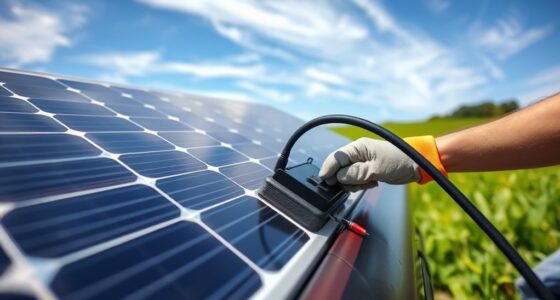
Solar panel maintenance isn’t complicated, but it’s necessary. Simple routines like inspecting for dirt, snow, or shading, and cleaning panels with a soft cloth or water, can greatly improve performance. Also, periodically checking your system’s wiring and inverter ensures everything operates smoothly. Some systems even come with monitoring apps that alert you to issues, so you can address problems proactively. When your solar setup is in top shape, it reduces the risk of power interruptions when the grid is compromised. This independence from the traditional power grid allows you to maintain communication, lighting, and refrigeration, which are indispensable during emergencies. Additionally, practicing creative problem-solving can help you find innovative solutions for maintaining and enhancing your solar setup in challenging situations.
Beyond maintenance, having solar panels means you can store excess energy using batteries. This stored power becomes a backup when the sun isn’t shining, providing a continuous energy supply when outages last days or longer. Battery systems enhance your resilience, ensuring you’re not left in the dark or unable to charge devices when you need them most. Additionally, choosing high-quality panels and reliable inverters helps maximize your system’s lifespan and performance, giving you peace of mind when disaster strikes.
In essence, integrating solar energy into your emergency preparedness plan makes you less dependent on the grid. Regular solar panel maintenance keeps your system efficient and ready for action. This approach not only safeguards your household during unexpected outages but also empowers you to stay connected and safe, no matter what nature throws your way. With solar, you gain independence, resilience, and the confidence that your energy needs are covered—even in the worst scenarios.
Frequently Asked Questions
How Long Can a Solar Backup Power System Sustain Essential Home Functions?
Your solar backup system can typically sustain essential home functions for 24 to 72 hours, depending on battery capacity and system longevity. If you have a larger battery bank, you’ll power things longer. Proper maintenance and efficient energy use also extend how long your system can support your home during an outage. Keep in mind, real duration varies based on energy draw and system size.
What Are the Safety Considerations When Installing Solar Panels for Emergencies?
When installing solar panels for emergencies, prioritize safety by conducting a thorough hazard assessment to identify potential risks like electrical shocks or fire hazards. Follow proper installation safety protocols, such as wearing protective gear and ensuring secure mounting. Always work with certified professionals to prevent accidents, and verify that your system meets local electrical codes. This approach guarantees your solar setup is safe, reliable, and ready when you need it most.
Can Solar Energy Be Used to Power Medical Devices During Outages?
Yes, solar energy can power medical devices during outages if you have a reliable system. Grid-tied systems with batteries ensure continuous power, especially if you choose units with solid solar panel warranties for durability. Just make certain your setup is properly maintained and sized to meet your device needs. This way, you stay prepared and protected, even when the grid goes down, keeping essential devices operational when you need them most.
Are Portable Solar Generators Effective for Disaster Response Efforts?
Imagine a reliable friend in challenging times—you’ll find portable solar generators quite effective for disaster response efforts. They provide portable power, ensuring essential devices stay operational when the grid is down. These generators boost disaster resilience by offering clean, renewable energy on the go. Their portability and ease of use make them a smart choice to keep communication, medical devices, and lights functioning during emergencies, helping you stay prepared and resilient.
What Maintenance Is Required to Ensure Solar Systems Are Ready for Emergencies?
To keep your solar system ready for emergencies, you need to focus on battery longevity and panel cleaning. Regularly check and maintain your batteries, ensuring they’re charged and not overused to prolong their lifespan. Clean your solar panels with a soft cloth or sponge to remove dirt and debris, maximizing efficiency. Inspect connections and wiring for damage, and keep the system protected from harsh weather to guarantee it’s reliable when you need it most.
Conclusion
In moments of crisis, solar energy becomes your unwavering lifeline, illuminating even the darkest hours with an almost supernatural resilience. By embracing solar power, you’re not just preparing for emergencies—you’re forging a future where power outages are mere hiccups, not catastrophes. As the sun’s rays sustain us, their role in emergency preparedness transforms from helpful to indispensable, making solar energy your ultimate shield against nature’s unpredictable fury. Don’t wait—let the sun’s strength safeguard your tomorrow.