The environmental impact of solar manufacturing mainly comes from raw material extraction, energy use, and supply chain emissions. Mining, especially for rare earth elements, can harm ecosystems and cause pollution. Manufacturing often relies on fossil fuels, increasing carbon emissions. Shipping and production add to the overall environmental footprint. However, industry efforts are underway to develop cleaner methods and improve sustainability. Keep exploring to see how innovations aim to reduce these effects further.
Key Takeaways
- Solar manufacturing involves energy-intensive processes often powered by fossil fuels, increasing greenhouse gas emissions.
- Raw material extraction, especially rare earth mining, causes habitat destruction and water contamination.
- Extensive shipping and transportation across countries add to the overall carbon footprint of solar panel production.
- Industry efforts include recycling and sustainable mining innovations to reduce environmental impacts.
- The environmental benefits of solar energy can be offset by emissions and pollution from manufacturing supply chains.
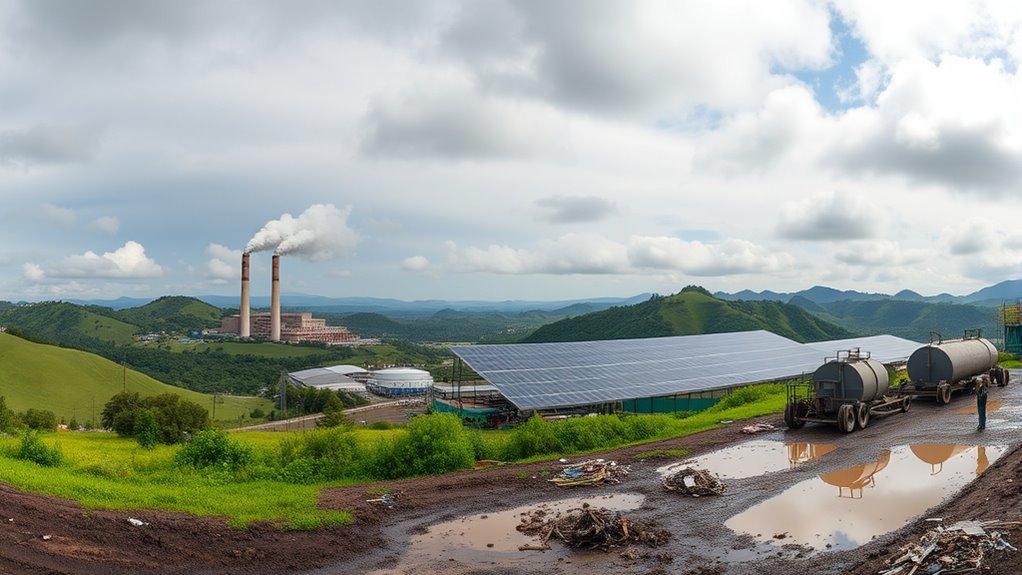
While solar energy offers a clean alternative to fossil fuels, manufacturing solar panels has notable environmental impacts. One of the most significant concerns revolves around supply chain emissions, which occur at every stage of producing the materials needed for solar technology. From mining raw materials to transportation and fabrication, each step adds carbon emissions that contribute to climate change. You might not realize it, but the supply chain for solar panels often involves extensive shipping across countries, increasing the carbon footprint and energy use. This transportation, along with energy-intensive manufacturing processes, adds to the overall environmental cost of solar panel production.
Manufacturing solar panels involves supply chain emissions, extensive shipping, and energy-intensive processes that impact the environment.
A critical aspect of this process involves rare earth mining, which is essential for many solar panel components. Rare earth elements, like neodymium and dysprosium, are indispensable for manufacturing magnets in certain types of solar panels and other renewable energy devices. However, extracting these materials is resource-intensive and often occurs in regions with lax environmental regulations. The mining process can lead to habitat destruction, soil erosion, and contamination of water sources, impacting local ecosystems and communities. You should be aware that the environmental footprint of rare earth mining is substantial, and it can offset some of the sustainability benefits of solar energy.
Furthermore, the manufacturing of solar panels relies heavily on energy, and if that energy comes from fossil fuels, it diminishes the environmental benefits of solar power. Many factories operate in regions where coal or natural gas dominate the energy grid, leading to higher greenhouse gas emissions during production. This means that even though solar panels generate clean energy once installed, their manufacturing phase can produce a significant amount of pollution. Additionally, the development of advanced manufacturing techniques is being explored to reduce energy consumption and emissions in the production process.
Despite these challenges, the industry is making efforts to reduce its environmental impact. Innovations in recycling and material efficiency aim to lower supply chain emissions and reduce dependence on environmentally harmful raw materials. Some companies are exploring alternative mining methods or sourcing materials more sustainably. You can help by supporting solar manufacturers that prioritize environmentally responsible practices.
Frequently Asked Questions
What Are the Long-Term Ecological Benefits of Solar Manufacturing?
You’ll see long-term ecological benefits from solar manufacturing through increased solar panel longevity, which means fewer replacements and less waste. This process markedly reduces your ecological footprint by decreasing reliance on fossil fuels and lowering greenhouse gas emissions. As solar technology advances, the sustainable benefits grow, helping you contribute to a cleaner environment. Over time, the reduced resource consumption and waste make solar energy a truly eco-friendly choice for the future.
How Does Solar Manufacturing Impact Local Wildlife?
Solar manufacturing can impact local wildlife by disrupting habitats and causing pollution runoff. You might notice wildlife habitats shrinking or being altered as factories expand or land is cleared. Pollution runoff from manufacturing processes can contaminate nearby water sources, harming aquatic life and animals relying on these ecosystems. To minimize these impacts, companies often implement measures to protect habitats and control runoff, but some effects on wildlife can still occur.
Are There Innovations Reducing Environmental Impacts in Solar Production?
You’ll be pleased to know that innovations are making solar production more eco-friendly. For instance, 60% of new solar panel factories now use eco-friendly materials, reducing toxic waste. Water conservation techniques, like closed-loop systems, cut water use by up to 70%. These advancements help lower environmental impacts, ensuring solar manufacturing becomes a greener and more sustainable industry, aligning with your goal to support renewable energy responsibly.
What Policies Promote Sustainable Solar Manufacturing Practices?
You can support policies that promote sustainable solar manufacturing by advocating for strict supply chain ethics and transparency. Encouraging governments and companies to adopt regulations that ensure ethical sourcing and fair labor practices helps reduce environmental harm. Additionally, backing carbon offset initiatives incentivizes manufacturers to minimize emissions, promoting eco-friendly practices. These policies drive the industry toward sustainability, ensuring solar products are produced responsibly while benefiting the environment and communities involved.
How Does Recycling Solar Panels Affect Environmental Footprint?
Recycling solar panels considerably reduces your environmental footprint by improving recycling efficiency and promoting better waste management. When you recycle panels, you recover valuable materials like silicon and metals, which decreases the need for new resource extraction and minimizes waste in landfills. This process helps lower energy consumption and emissions associated with manufacturing new panels, making solar energy more sustainable and eco-friendly for you and future generations.
Conclusion
While solar energy offers a brighter future, the manufacturing process casts shadows that can’t be ignored. You must recognize that every gleam of progress comes with hidden costs, like a double-edged sword. By understanding and addressing these environmental impacts, you can help guarantee that solar power truly shines sustainably. Only through awareness and action can we turn the tide—transforming what’s currently a shadow into a beacon of hope for our planet’s future.