
TL;DR

Get backup power and energy gear delivered free with Prime
- Fast, free delivery on millions of items
- Prime Video, Amazon Music and more included
- Member-only deals all year
Solar-powered outdoor string lights use a small photovoltaic panel to charge a rechargeable battery that runs LED bulbs after dark. Their brightness and runtime depend on sunlight, battery condition, settings, and product design, so check panel placement options, lumens, battery replacement, and weather ratings before buying.
A patio can look ready for a summer dinner at sunset, then lose its glow just as the food hits the table. Solar-powered outdoor string lights can add that warm, dotted light without an outlet or an extension cord crossing the deck—but only if the panel gets enough sun to charge.
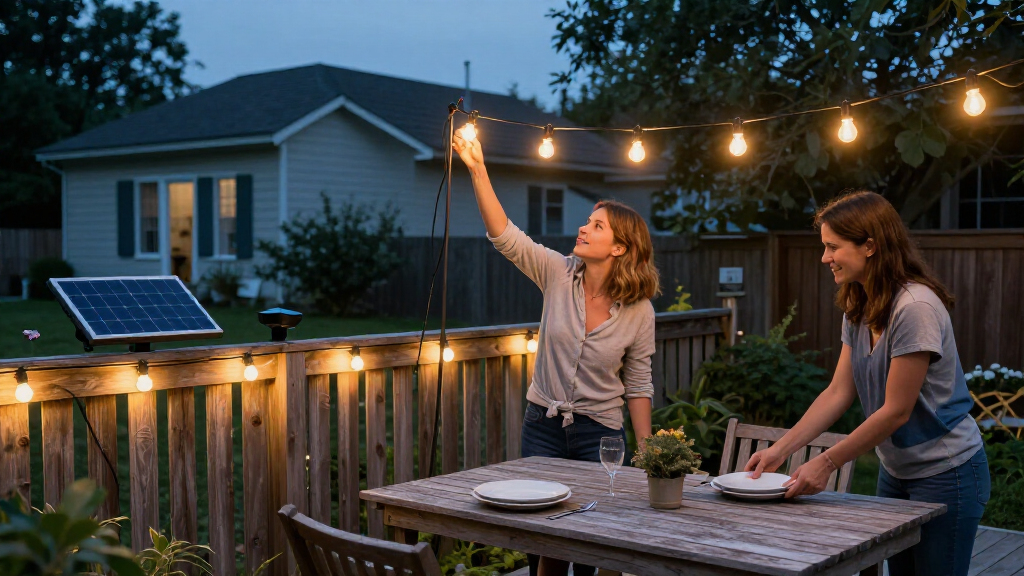
These lights pair LED bulbs with a small photovoltaic panel and rechargeable battery. The panel collects sunlight during the day, stores energy, and powers the bulbs after dark. This guide explains how to place the panel, estimate real-world runtime, compare brightness and weather ratings, and keep the lights working through changing seasons.
Put the panel in several hours of direct sun; use a separate panel and cable if the bulbs hang in shade.
Treat advertised runtime as an ideal-condition estimate because weather, brightness, and battery age change performance.
Compare lumens, bulb spacing, and clear versus diffused glass instead of relying on vague brightness claims.
Check which parts the weather rating covers, and follow the maker’s instructions for storms and freezing conditions.
Look for battery replacement options and USB backup charging if you want longer service or flexibility on cloudy days.
How solar string lights turn daylight into evening glow
Solar-powered outdoor string lights use a panel to turn daylight into stored battery power, then use that power to run LED bulbs after dark. In practical terms, the panel is the charger, the battery is the fuel tank, and the LEDs are the low-draw lamps. This small energy budget is why panel placement matters so much: several hours of direct sun can give the battery a useful charge, while shade may leave too little stored energy for the evening you have in mind.
Most sets include a cable, a stake or mounting bracket for the panel, and a string of bulbs with a control box. Some have a light sensor for automatic dusk operation; others add a remote, timer, dimmer, or flashing modes. These controls affect convenience and energy use: dimming can stretch runtime, while brighter settings or some animated modes may use the battery faster. A USB backup appears on some newer models, but many still rely entirely on solar charging, so check the product details rather than assuming.
Here’s the useful twist: the panel and the bulbs do not always need to sit in the same place. If your pergola stays shaded beneath maple leaves, a cable-connected panel can sit in a sunny bed nearby. That flexibility can make solar lights workable in a shaded seating area, but only if the cable is long enough to reach a genuinely sunnier spot without creating a trip hazard or pulling on the connection. Check cable length before you buy; a panel that reaches the sunny side of the yard can make more difference than a bigger bulb ever will.
Products Worth Considering

Philips Hue Festavia Globe Outdoor String Lights, 32 Bulbs, 91 ft

Philips Hue Large Smart Light Tube, Black – White and Color Ambiance LED Color-Changing Light – 1 Pack

Philips Hue Bridge Pro Smart Lighting Hub
As an affiliate, we earn on qualifying purchases.
Place the panel where it can catch several hours of sun
Solar-powered outdoor string lights charge most reliably when their panel receives several hours of direct sunlight, away from shade and obstructions. Choose a spot with open sky rather than a location under an eave, behind glass, or beneath branches. Partial shade can still allow charging, but it reduces the energy available to store, which may mean shorter runtime or weaker light later. The bulbs can hang where you want the atmosphere; the panel needs the sunshine.
Walk the route at different times of day before mounting anything. A fence might be sunny at noon but shaded by the house by mid-afternoon. For example, if you want lights over a north-facing balcony, the railing may stay dim all day; a panel on a cable placed on a sunny ledge can improve charging, provided the cable reaches safely and the panel stays secure. If no spot gets much direct sun, consider whether shorter or less consistent runtime will still suit your plans, or choose a plug-in set instead.
Follow this simple setup sequence before you attach the string:
- Check the sun path: Look for a spot that receives several hours of direct sunlight. Observe it at different times, since a brief sunny patch may not be enough for dependable evening use.
- Test the cable reach: Place the panel where it gets sun without pulling the wire tight. A taut cable can strain connections, and a route across a walking area can create a trip risk.
- Angle and secure it: Follow the maker’s instructions, then stake or mount the panel firmly. A stable position helps keep it aimed at the sky and prevents wind or routine yard work from shifting it.
- Test after dark: Turn the lights on and check that the sensor and controls behave as expected. Testing before final installation makes it easier to troubleshoot a poor charge or awkward control location.
Leaves, dust, and snow can block the panel like a curtain over a window. Wipe the surface periodically and reposition it when seasonal shadows shift. These small checks matter because even a well-chosen location can become less effective as trees grow, foliage changes, or the sun’s path moves through the year.
Estimate runtime without trusting the biggest number on the box
Solar-powered outdoor string lights can run for several hours after a good charge, but no single runtime applies to every night. Actual performance depends on direct sunlight, battery capacity and age, brightness settings, and weather. Treat a manufacturer’s advertised hours as an ideal-condition estimate, not a promise that the bulbs will shine until morning. The number is most useful for comparing products under similar stated conditions, not predicting exactly how long your own set will last.
Think of the battery like a small bucket: strong sun fills it, while clouds, shade, and a tired battery leave it partly empty. Running the lights at full brightness drains that stored energy faster than using a lower setting. A cloudy afternoon before a long dinner may mean dimmer light or an earlier shutoff, especially late in the season. This creates a practical tradeoff: lowering brightness may keep the lights on longer, but the glow may not be strong enough for the activity you have planned.
For a realistic example, a set that glows through a summer barbecue after a clear day may fade sooner following a gray autumn afternoon. If you need light at a particular hour, check whether the model offers USB charging as a backup or a replaceable battery. USB charging can provide more control when sunlight is unreliable, while a replaceable battery may help restore performance after capacity declines; either feature can add cost or require extra maintenance. Test your own setup for several evenings before relying on it for a gathering; that gives you a better guide than a box claim.
Many models switch on automatically at dusk, then stop when the battery runs low or the sensor detects morning light. Timers and dimmers can help you manage the charge, but the controls vary. A timer can prevent the lights from using energy after everyone has gone inside, while a dimmer lets you trade some brightness for longer use. Read the manual and test the modes before hanging the string high above a deck.
Compare brightness, bulb style, and the job you need done
Solar-powered outdoor string lights usually suit decorative and ambient lighting better than security or detailed task lighting. To judge brightness, look for lumens where the maker provides them, then compare bulb size, spacing, color temperature, and whether the glass is clear or diffused. Lumens give you a more useful measure of light output than a vague “bright” label, but they do not tell the whole story: spacing and diffusion affect how evenly that light reaches the area.
Clear bulbs can make each point of light look crisp and sparkly, while frosted or diffused bulbs spread a softer glow. Warm-white light often feels cozy over a dining table; cooler white can make a path look sharper. Bulbs with a larger shape may create a bolder visual rhythm, but bulb spacing matters too: widely spaced bulbs leave darker gaps. The right choice depends on whether you value a decorative pattern, a comfortable glow, or more even visibility—and a set designed for atmosphere may not satisfy all three at once.
| Feature | What you’ll notice | Good fit |
|---|---|---|
| Warm, diffused bulbs | Soft amber glow with less glare | Dining areas and pergolas |
| Clear bulbs | Sharper points of light | Decorative borders and patios |
| Higher lumen output | More measured light | Brighter general visibility |
| Low-output decorative sets | Gentle atmosphere, not task light | Planters, balconies, and camping |
If you want to read a recipe or spot a step, pair the string with a proper porch or task light. A pretty strand above a table can make the space feel welcoming without providing enough light for safe repair work or dependable security. Using a separate purpose-built light avoids asking a decorative set to do a job its output and battery may not support.
Check the weather rating before leaving the lights outside
Outdoor-rated solar string lights are designed for exposure described by the manufacturer, but “weather-resistant” does not mean every part can handle every storm or water condition. Check which components the rating covers: bulbs, sockets, cable, panel, and battery compartment can have different protections. This distinction matters because a sheltered string can still depend on an exposed panel or connector; one vulnerable part may determine whether the whole setup is suitable for your location. A rating for rain does not automatically make a product safe to submerge or leave exposed to severe weather.
Imagine a string hanging under a covered porch while its panel sits in an open garden bed. The bulbs may stay sheltered, but wind-driven rain can still reach the panel connection or control box. Follow the installation and care instructions, secure the cable so it cannot whip against a railing, and bring the set in if the maker advises removal during harsh conditions. A more protective rating can offer greater flexibility, but it does not eliminate the need to install and maintain the set as directed.
For seasonal use, inspect the cable insulation, sockets, and seals for cracks or loose fittings. If a component looks damaged, stop using the lights and contact the manufacturer for guidance rather than improvising a repair. These are low-voltage lighting products, but damaged electrical parts and rechargeable batteries still deserve care.
Weather-resistant is not the same as stormproof. Check the product’s rating and instructions for the specific parts you plan to leave exposed.
Place the panel where it will not be buried under leaves or snow. If your area gets freezing temperatures, confirm the product’s stated operating range; a light set suited to mild rain may not be designed for a hard winter outdoors. If the instructions call for seasonal storage, following them may protect the components, though it means the lights will not be available year-round.
Keep winter performance and battery aging in perspective
Solar string lights often work in winter if the product’s temperature limits allow it, but shorter days and a low sun angle usually reduce charging. Snow, dirt, and shade can cut the panel’s exposure further. Expect fewer hours of light than on a long, bright summer day, even when the set itself remains outdoors safely. This is a seasonal limit on energy available to store, not necessarily a sign that the lights have failed.
For instance, a panel tucked beside a shed may receive several hours of sun in July but only a brief patch in December. Adjusting its angle or moving it to a clearer spot can help, and clearing snow from the panel restores the surface’s ability to collect light. Never climb onto an icy roof or unstable ladder to reach it; reposition the panel from a safe, accessible location. If winter sun remains limited, plan on shorter illumination or use another light source when dependable evening light matters.
The rechargeable battery also loses capacity over time, so an older string may fade earlier even in good weather. Battery replacement varies by model. Before buying, check the battery type, whether the compartment is accessible, and whether replacement parts are available. A replaceable battery can extend the useful life of the lights, but it requires finding and fitting the correct replacement; a sealed design may be simpler to maintain initially, yet leave you replacing the whole set when capacity drops.
Solar power avoids drawing electricity from an outdoor outlet while the lights run, but the set still contains electronics and a battery that eventually need proper replacement or disposal. Its cost and environmental value depend on how long it lasts and how often you use it. Store or maintain it according to the manual, and recycle batteries through an appropriate local collection program rather than putting them in household trash.
Frequently Asked Questions
How long do solar string lights stay on at night?
Runtime varies with the sunlight collected, battery condition, brightness setting, and weather. Treat the maker’s advertised hours as an ideal-condition estimate, then test your set over several evenings.
Can I put the solar panel away from the string lights?
Many models connect the panel and lights with a cable, letting you place the panel in a sunnier spot. Check cable length before buying and secure the wire without stretching it tight.
Will solar string lights work on cloudy days or in winter?
They can charge in cloudy weather, but usually collect less energy. Short winter days, low sun, and snow or dirt on the panel can reduce nighttime runtime.
Can solar outdoor string lights stay in the rain?
Only if the manufacturer rates the relevant parts for outdoor exposure. Check the rating and instructions for the bulbs, cable, panel, and battery compartment; weather-resistant does not mean submersible or stormproof.
Are solar string lights bright enough for security or reading?
Most decorative sets work best as ambient lighting, not as dependable security or task lights. Compare lumens and consider a product designed for security or close-up work if you need strong, reliable illumination.
Conclusion
Choose solar string lights by starting with the panel’s location, then match brightness, controls, battery options, and weather rating to the space you actually have. A modest set with a sunny, well-placed panel can be more dependable than a flashy set left under a shaded roof.
Give the panel its patch of sky, and your patio can keep its warm little constellation after the sun slips away.