If you’re installing solar panels, face them south in the northern hemisphere to maximize sunlight throughout the year. In contrast, if you’re in the southern hemisphere, orient your panels north for the best exposure. Properly aligning your panels according to your hemisphere guarantees higher efficiency and energy production. Adjusting the tilt for seasonal changes can further boost performance. Keep exploring to discover tips on optimizing your solar setup for year-round gains.
Key Takeaways
- Northern hemisphere panels should face south for maximum sunlight exposure; southern hemisphere panels should face north.
- Sun’s path differs: it travels across the southern sky in the northern hemisphere, and the northern sky in the southern hemisphere.
- Optimal tilt angles typically match the latitude of the location, adjusted seasonally for better efficiency.
- Shading and obstructions impact performance; site planning must consider hemisphere-specific sun paths.
- Proper orientation and tilt enhance energy output and system efficiency, tailored to hemisphere-specific solar trajectories.
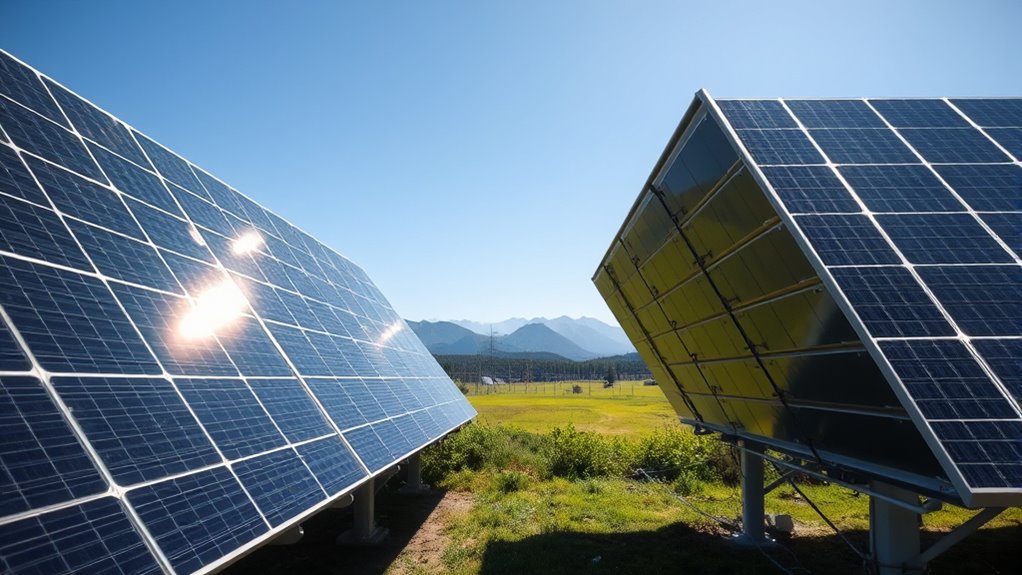
Have you ever wondered how the direction your solar panels face can impact their efficiency? The orientation of your panels plays a vital role in capturing maximum sunlight throughout the day. In the northern hemisphere, facing your panels south typically provides the best exposure because the sun travels across the southern part of the sky. Conversely, in the southern hemisphere, orienting your panels north allows you to harness the sun’s path effectively. But beyond just choosing a general direction, angle optimization becomes essential. Adjusting the tilt of your solar panels ensures they hit the sun at the most direct angle, especially during peak sunlight hours. This precise positioning maximizes energy output and can considerably improve your system’s overall efficiency.
When considering orientation, you also need to think about shading analysis. Shadows cast by nearby trees, buildings, or other obstructions can drastically reduce the amount of sunlight hitting your panels. No matter how well you optimize your angle, shading can diminish performance if not properly addressed. Conducting a shading analysis helps identify potential shadowing issues throughout the year, allowing you to adjust your panels’ placement or angle accordingly. For instance, if a tall tree blocks sunlight during morning hours, you might tilt your panels differently or position them to avoid that shadow altogether. Proper shading analysis ensures you’re not inadvertently sacrificing energy production because of overlooked obstructions.
The sun’s path varies with latitude, so your ideal panel orientation in the northern hemisphere isn’t the same as in the south. In the north, tilting your panels southward at an appropriate angle—often close to your latitude—captures the most sunlight over the year. In the south, a north-facing setup is generally best, with an angle tailored to your location’s specific solar path. These adjustments are important because a poorly aligned system can lead to decreased energy output, especially during winter months when the sun is lower in the sky. Regularly reviewing your angle optimization, especially with seasonal changes, ensures your system remains efficient year-round. Additionally, understanding solar panel orientation can help you select the most effective installation site and setup.
Ultimately, understanding the differences in solar panel orientation between hemispheres and paying close attention to angle and shading analysis can make a big difference in your system’s performance. By carefully planning and adjusting your panels’ direction and tilt, you maximize exposure to sunlight and boost energy production. Whether you’re in the northern or southern hemisphere, taking the time to optimize your solar panel setup ensures you get the most out of your investment and contribute more effectively to your energy needs.
Frequently Asked Questions
How Does Seasonal Variation Affect Optimal Panel Orientation?
Seasonal variation impacts your ideal panel orientation by requiring adjustments for seasonal tilt and solar declination changes. In summer, you should tilt panels less to maximize sunlight exposure, while in winter, increasing tilt captures more low-angle sunlight. By tracking the solar declination throughout the year, you can set your panels to align with the sun’s position, ensuring maximum efficiency and energy production year-round.
What Are the Environmental Impacts of Different Orientations?
Think of your solar panels as a garden’s pollinator, shaping the environment with each turn. Proper orientation minimizes your environmental footprint by maximizing energy output and reducing unnecessary resource use. Incorrect positioning can harm biodiversity effects, disrupting local habitats and wildlife. By choosing the right angle, you help preserve ecosystems and promote sustainable energy, turning your solar setup into an environmentally conscious act that supports biodiversity and reduces ecological impact.
How Does Local Climate Influence Panel Positioning Strategies?
You should consider local climate when positioning your solar panels, as microclimate factors like temperature, humidity, and wind influence efficiency. Shading considerations are also vital; avoid obstructions that cast shadows during peak sunlight hours. Adjust your panel angle and orientation based on these microclimate factors to maximize energy production, ensuring your system performs at its best throughout seasonal and daily variations. Proper positioning helps you get the most out of your solar investment.
Are There Differences in Maintenance Needs Based on Orientation?
Your panel orientation impacts maintenance needs, especially regarding panel cleaning and shading mitigation. South-facing panels in the northern hemisphere may accumulate more dirt due to dust, requiring regular cleaning. Conversely, east- or west-facing panels might face more shading issues during different times of the day, necessitating shading mitigation measures. Regular inspections help prevent efficiency loss, ensuring your solar system performs best regardless of orientation.
How Can Adjustable Mounts Optimize Panel Performance Year-Round?
Think of your solar panels as a dancer, needing the perfect rhythm year-round. Adjustable mounts act as a skilled choreographer, enabling tracking systems to follow the sun’s path and optimize performance. They also help mitigate shading by shifting panels away from obstacles. With these mounts, you guarantee your panels capture maximum sunlight daily, boosting efficiency and energy output regardless of season or weather changes.
Conclusion
Whether you’re in the northern or southern hemisphere, optimizing your solar panel orientation can considerably boost energy output. Did you know that properly angled panels can increase efficiency by up to 20%? That means more clean energy and savings for you. So, take the time to adjust your panels correctly—small changes can make a big difference. Embrace the sun’s power and watch your energy bills drop while helping the planet thrive.