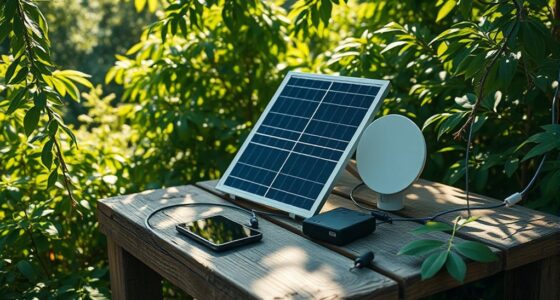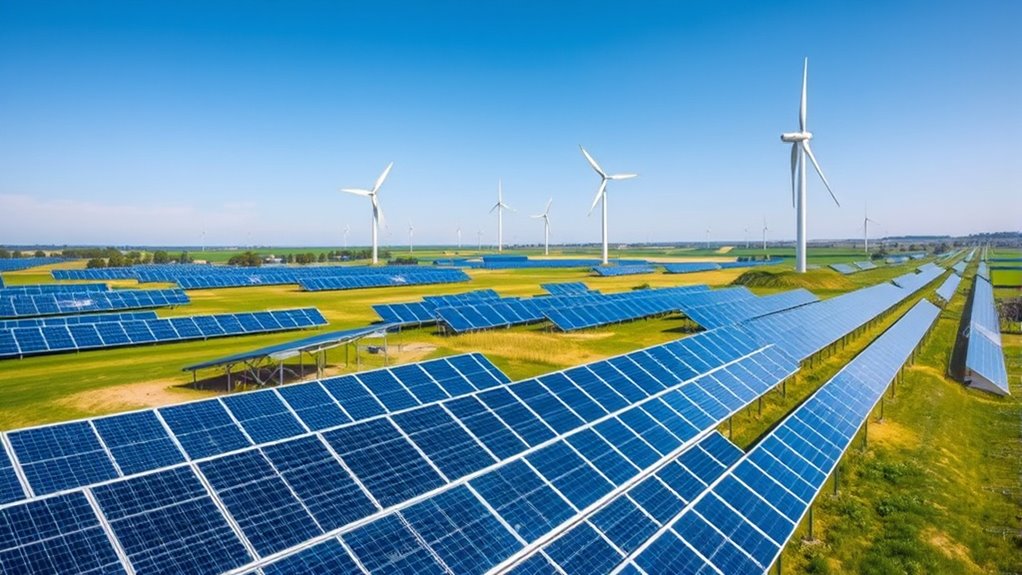

A solar and wind hybrid system combines solar panels and wind turbines to generate electricity more reliably. When the sun shines or the wind blows, these sources produce energy, which is often stored in batteries for later use. The system can connect to the grid to send excess power or draw backup energy when needed. Properly designed, it guarantees a steady supply and maximizes renewable potential—discover more about how these systems work as you continue.
Key Takeaways
- Hybrid systems combine solar panels and wind turbines to generate electricity from renewable sources.
- Excess energy is stored in batteries or other storage solutions for use during low wind or sunlight periods.
- Grid integration allows surplus energy to be fed back into the electrical grid, enhancing energy efficiency.
- Proper design ensures reliable power supply by buffering fluctuations and preventing energy wastage.
- These systems promote sustainable energy use, reduce reliance on fossil fuels, and support a greener future.
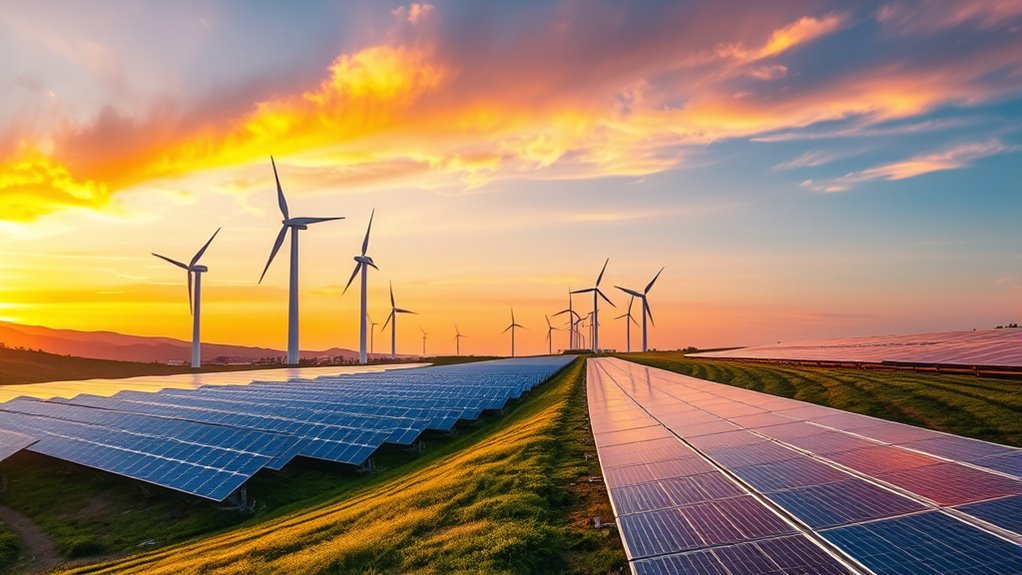
Have you ever wondered how to guarantee a reliable and sustainable energy supply? When it comes to solar and wind hybrid systems, the answer lies in understanding how they work together to create a steady flow of power. These systems combine the strengths of both renewable sources, but to make that combination effective, you need to focus on key components like energy storage and grid integration. Energy storage plays a crucial role because it captures excess energy generated during peak sunlight or wind periods, storing it for times when generation dips. Without efficient storage, the system’s reliability suffers, and you risk power shortages during low production intervals. Batteries or other storage technologies are integrated into the system to buffer these fluctuations, ensuring a continuous energy supply regardless of weather conditions.
Grid integration is equally vital because it allows your hybrid system to connect seamlessly with the existing electrical grid. This connection enables you to feed surplus energy back into the grid, earning credits or reducing your reliance on fossil fuels. Proper grid integration also helps balance supply and demand, preventing overloads and maintaining stability within the network. When you design or operate a hybrid system, you must consider smart inverters and control systems that coordinate energy flow between your renewable sources, storage units, and the grid. These controls optimize performance, making sure excess energy is stored or exported and that your system responds dynamically to changing energy needs.
The combination of solar panels and wind turbines offers a diversified approach to renewable energy, but without proper energy storage and grid integration, the system’s potential isn’t fully realized. During sunny days with little wind, your system can generate plenty of power, but without storage, that energy might go unused. Conversely, windy nights might produce ample wind power, but if your storage isn’t capable, the energy goes to waste or your system experiences gaps. By investing in good energy storage solutions, you create a buffer that smooths out these fluctuations, providing a stable power supply. Meanwhile, robust grid integration ensures that when your system produces more energy than needed, you can feed excess into the grid, benefiting both you and the community.
In essence, the success of solar and wind hybrid systems hinges on carefully managing energy storage and grid integration. These elements work together to ensure your renewable energy system is not only sustainable but also reliable and efficient. When designed thoughtfully, they allow you to harness the full potential of renewable sources, reduce dependence on fossil fuels, and contribute to a cleaner, greener future.
Frequently Asked Questions
What Is the Cost Comparison Between Hybrid and Single-Source Systems?
Hybrid systems generally cost more initially than single-source setups due to additional equipment and installation. However, you’ll see cost savings over time through improved efficiency and reliability, reducing your reliance on grid power or backup fuels. While the initial investment is higher, the long-term benefits—like lower energy bills and increased energy security—make hybrid systems a smart choice if you’re looking for a balanced, cost-effective renewable energy solution.
How Do Hybrid Systems Perform During Extreme Weather Conditions?
During extreme weather, your hybrid system’s storm resilience and system adaptability shine. It continues to generate power even if one source is affected, thanks to multiple energy inputs. Wind may diminish in storms, but solar panels can still operate if sunlight reaches them. Conversely, wind turbines may generate more power during windy conditions. This multi-source approach guarantees your system remains reliable, resilient, and adaptable, even amidst severe weather.
What Maintenance Is Required for Hybrid Solar and Wind Systems?
You should perform regular system inspections to guarantee everything runs smoothly. Check batteries for proper charge levels and any signs of corrosion, and clean or replace components as needed. Keep an eye on inverter and generator performance, and tighten connections if you notice issues. Consistent battery maintenance and thorough inspections help prevent breakdowns, maximize efficiency, and extend the lifespan of your hybrid solar and wind system.
Can Hybrid Systems Be Integrated With Existing Energy Grids?
Imagine you’re stepping into the future—hybrid systems can indeed be integrated with existing energy grids. You’ll need to navigate grid integration processes and address regulatory challenges, which can be complex. But with proper planning, smart inverters, and cooperation with utility providers, you can smoothly connect your hybrid system. This allows you to contribute clean energy while ensuring stability and compliance with local regulations.
What Are the Environmental Impacts of Hybrid Energy Systems?
You’ll find that hybrid energy systems generally have positive environmental impacts by reducing reliance on fossil fuels and lowering greenhouse gas emissions. They support recycling initiatives by using sustainable materials and minimize habitat disruption, aiding wildlife conservation. However, manufacturing and disposing of components can generate waste, so careful planning guarantees these systems remain eco-friendly. Overall, they promote cleaner energy while helping protect ecosystems and encouraging sustainable practices.
Conclusion
By combining solar and wind power, you create a more reliable and efficient energy system that adapts to varying weather conditions. This hybrid approach maximizes energy production and reduces reliance on fossil fuels. Isn’t it time you consider how integrating these renewable sources can power your future sustainably? Embracing solar and wind hybrid systems isn’t just about technology—it’s about making a smarter, greener choice for our planet and generations to come.