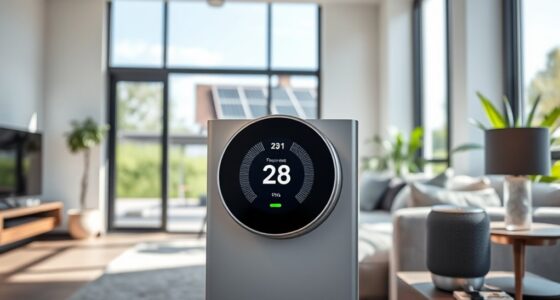
To achieve net zero homes, you combine solar energy, battery storage, and energy efficiency measures. Install solar panels to generate clean electricity and use batteries to store excess power for cloudy days or nights. Improve insulation, seal leaks, and choose energy-efficient windows and lighting to reduce overall consumption. Smart thermostats and appliances help optimize use, making your home more self-sufficient. Keep exploring to discover how these elements work together for a truly sustainable living space.
Key Takeaways
- Integrate high-efficiency insulation, windows, and smart technology to minimize indoor energy consumption.
- Install solar panels to generate renewable electricity and reduce reliance on traditional utility sources.
- Use battery storage systems to store excess solar energy for use during nights or cloudy days.
- Optimize system efficiency with smart thermostats and LED lighting to further lower overall energy demand.
- Achieve grid independence by balancing energy production and consumption, ensuring resilience and cost savings.

Are you curious about how homes can produce as much energy as they consume? Achieving this balance is the goal of net zero homes, which combine renewable energy sources, advanced building insulation, and smart technology to create highly efficient living spaces. The foundation of these homes lies in harnessing renewable energy, especially solar power, which allows you to generate clean electricity right on your roof. By installing solar panels, you can capture sunlight and convert it into usable energy, drastically reducing reliance on fossil fuels and slashing your utility bills. The key is to maximize the efficiency of this system, ensuring your panels produce enough energy to meet your household’s needs throughout the year.
But generating renewable energy alone isn’t enough. To truly reach net zero, you need to minimize energy consumption inside your home. That’s where building insulation plays a crucial role. Proper insulation keeps indoor temperatures stable, reducing the need for heating and cooling—two of the largest energy consumers in most homes. Modern insulation materials are more effective than ever, sealing gaps and preventing heat transfer. When combined with airtight construction techniques, good insulation ensures your home maintains a consistent temperature, making your renewable energy system more efficient. As a result, your solar panels work less hard, and your energy bills stay low.
In addition to insulation, you can incorporate other energy-saving measures like energy-efficient windows, LED lighting, and smart thermostats. These upgrades further reduce your home’s energy demand. Once your consumption is minimized, you can focus on generating enough renewable energy to offset what you use. Battery storage systems come into play here, storing excess solar energy generated during sunny days for use at night or during cloudy periods. This storage capability helps ensure a steady power supply, making your home truly net zero. It also means you’re less affected by grid outages and fluctuating energy prices.
Frequently Asked Questions
What Are the Initial Costs of Building a Net Zero Home?
You can expect initial costs for building a net zero home to range from $150,000 to $300,000, depending on size, location, and design choices. It’s essential to do a thorough cost analysis to understand expenses and explore financing options like grants or loans that support sustainable building. While upfront costs are higher, many find long-term savings on energy bills make it a worthwhile investment.
How Long Does It Take to Recoup Investment Through Energy Savings?
You’ll likely see a positive energy payback within 5 to 10 years, thanks to financial incentives and lower utility bills. While initial costs might seem steep, the long-term savings and tax credits help offset expenses. Your investment benefits from energy efficiency, making the home more affordable over time. With consistent solar and battery use, you’ll enjoy the comfort of reduced bills and a greener lifestyle, making the wait worthwhile.
Are Net Zero Homes Suitable for All Climates?
Net zero homes can be suitable for many climates, but their climate adaptability depends on regional feasibility. In sunnier, warmer areas, solar energy production is more efficient, making it easier to achieve net zero goals. In colder or cloudier regions, additional insulation and energy strategies are necessary. You should assess your local climate and regional feasibility to determine if a net zero home fits your environment and energy needs.
What Maintenance Is Required for Solar and Battery Systems?
Think of your solar and battery system as a garden that needs regular care. You’ll need to perform solar panel maintenance, like cleaning panels to remove dirt and debris that block sunlight. Battery upkeep involves monitoring their performance, ensuring connections are secure, and occasionally calibrating or updating software. Regular inspections help maximize efficiency and lifespan, making sure your system continues to produce clean energy and save you money.
Can Existing Homes Be Retrofitted to Achieve Net Zero Status?
Yes, you can retrofit existing homes to achieve net zero status, but it comes with challenges. Retrofitting involves overcoming structural limitations and complying with historical building codes, which may restrict modifications. You’ll need to upgrade insulation, install solar panels, add energy-efficient systems, and possibly update wiring. Planning carefully and working with experts helps navigate these retrofitting challenges, making your home more sustainable while respecting its character and regulations.
Conclusion
Imagine your home as a tiny island of sustainability in a vast ocean. By integrating solar, batteries, and efficiency, you’re building a resilient sanctuary that generates its own energy and minimizes waste. Just like a well-tended garden thrives with care, your net zero home flourishes through smart choices. Together, you create a harmonious haven—powerful, self-sufficient, and ready to face the waves of change ahead. Your journey toward net zero is a beacon of hope and innovation.