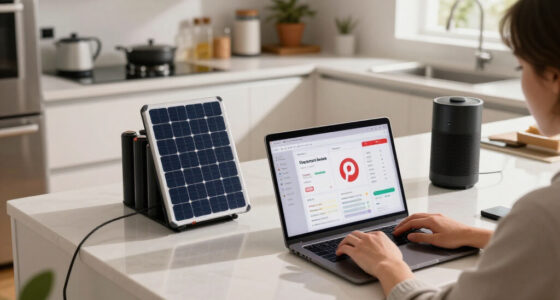
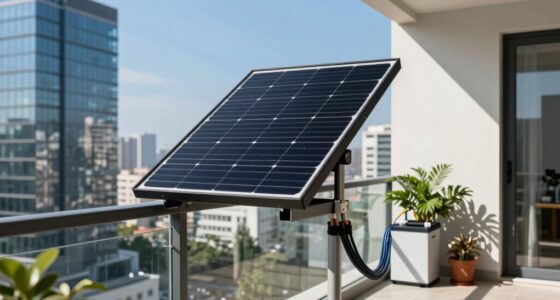
To build an entry-level home backup system, start by identifying essential appliances and calculating their energy needs. Position solar panels where they get maximum sunlight, preferably south-facing in the Northern Hemisphere, and guarantee they’re angled correctly. Choose a battery with enough capacity to cover your needs, adding extra for inefficiencies. Select an inverter that can handle your peak loads and install all components safely, following manufacturer instructions. If you keep going, you’ll learn how to integrate and test your system for reliable backup.

Get backup power and energy gear delivered free — and shop member deals
- Fast, free delivery on millions of items
- Access to Prime Big Deal Days deals on October 6–7
- Prime Video, Amazon Music and more included
Key Takeaways
- Assess essential household appliances and calculate total energy needs for backup capacity.
- Select a suitable location with maximum sunlight for solar panel installation.
- Determine battery capacity based on daily consumption and desired backup duration.
- Choose an inverter and charge controller that meet system power and safety requirements.
- Test the integrated system during simulated outages to ensure reliability and safety.

Having a dependable home backup system is essential to protect your data and guarantee peace of mind during power outages or emergencies. To build an entry-level system, start by evaluating your energy needs. Identify the essential appliances and devices you want to keep running, such as your refrigerator, lights, and communication tools. Once you know your power requirements, you can determine the size of the backup solution needed. This step guides your choice of solar panel placement and battery capacity planning, ensuring your system is effective without overspending.
Evaluate your essential devices to determine the right size for a reliable home backup system.
Solar panel placement plays a critical role in maximizing energy collection. You want to position your panels where they’ll receive the most sunlight throughout the day, typically on a south-facing roof if you’re in the northern hemisphere. Avoid shaded areas like trees or chimneys, and angle the panels correctly according to your latitude to optimize efficiency. Proper placement ensures your system generates enough electricity during the day to charge your batteries effectively, reducing reliance on grid power and lowering long-term costs. Incorporating landscaping techniques, such as trimming trees or strategic shading, can further improve solar performance. Additionally, understanding the importance of solar system safety can help prevent potential hazards and ensure your system operates reliably. Being aware of safety precautions during installation and maintenance is crucial for preventing accidents and prolonging your system’s lifespan.
Battery capacity planning is equally important. You need to determine how much stored energy you’ll require during outages. Think about how long you might be without power and how much energy your essential devices consume daily. For example, if your critical appliances use 1 kWh per day and you want to be prepared for at least two days, you’ll need at least 2 kWh of battery capacity. It’s wise to add some extra capacity to account for inefficiencies and future expansion. Choosing the right batteries involves balancing capacity, cost, and lifespan. Lithium-ion batteries are popular for their durability and efficiency, but lead-acid options can be more budget-friendly, albeit with shorter lifespans.
Once you’ve settled on your solar panel placement and battery capacity, you can select an inverter that matches your power needs. The inverter converts the stored DC energy into usable AC power for your home. Make sure it can handle the total wattage of your essential appliances. Installation is straightforward if you follow manufacturer instructions and safety guidelines, but if you’re unsure, consulting a professional can save you headaches later. Remember, an efficient energy management system can help optimize your backup system’s performance and longevity.
Finally, integrate all components—solar panels, batteries, inverter, and charge controller—into a cohesive system. Test everything thoroughly to ensure it works during simulated outages. With proper planning and execution, you’ll have an entry-level backup system that provides reliable power, peace of mind, and a foundation for future upgrades.
entry-level solar backup system kit
As an affiliate, we earn on qualifying purchases.
As an affiliate, we earn on qualifying purchases.
Frequently Asked Questions
What Is the Ideal Backup System Size for a Small Home?
For a small home, an ideal backup system size typically ranges between 4 to 8 kWh, balancing power consumption and energy efficiency. You want enough capacity to cover essential appliances and avoid excess energy use. Consider your peak energy needs and future expansion plans. This size guarantees reliable backup during outages while maintaining efficiency, helping you save on energy costs and ensuring your home stays powered when needed most.
How Much Does a Basic Backup System Typically Cost?
A basic backup system usually costs between $300 and $800, depending on capacity and features. You’ll want to contemplate battery lifespan, which impacts long-term reliability, and data redundancy, ensuring your data stays safe if one component fails. Investing in a system that balances cost with durability helps you avoid frequent replacements, giving you peace of mind knowing your essential files are protected without overspending on unnecessary features.
Can I Upgrade My Backup System Later?
Yes, you can upgrade your backup system later, like adding new pieces to a growing puzzle. Keep in mind, battery lifespan may vary with upgrades, so check if your batteries can handle the extra load, and verify your system includes power surge protection to safeguard your investments. Upgrading keeps your backup system flexible and ready for future tech, making sure you’re protected as your needs evolve.
What Are the Best Brands for Home Backup Equipment?
You should consider brands like APC, CyberPower, and Eaton for your home backup equipment. These brands offer reliable power sources and prioritize safety features like surge protection and automatic shutoff. Look for units with solid warranties and good customer reviews. Investing in reputable brands guarantees your backup system provides consistent power during outages and keeps your devices safe from power surges and electrical issues.
How Often Should I Test My Backup System?
Think of your backup system as a safety net that needs regular inspection. You should test it at least once a month to guarantee cloud synchronization and hardware redundancy work seamlessly. Regular testing is like tuning an instrument—small adjustments keep it singing. By doing this, you catch potential issues early, so when disaster strikes, your data stays safe, resilient, and ready to bounce back like a well-oiled machine.
As an affiliate, we earn on qualifying purchases.
Conclusion
Building your home backup system is like planting a sturdy tree in your yard—once rooted, it stands resilient against storms. With each component you install, you’re nurturing a shield of security that shelters your sanctuary. As the roots deepen and branches spread, your peace of mind grows stronger, ready to weather any blackout. Remember, a well-crafted backup system isn’t just equipment; it’s the silent guardian watching over your home, always ready to spring into action when needed.
As an affiliate, we earn on qualifying purchases.
As an affiliate, we earn on qualifying purchases.
Halloween Picks
halloween
As an affiliate, we earn on qualifying purchases.