If your solar cables run hot, it’s often due to poor insulation, improper sizing, or environmental factors like sunlight and moisture that degrade the insulation over time. Thinner or longer cables increase resistance and generate more heat, while inadequate ventilation traps heat in tight bundles. Proper installation, using heat-resistant materials, and ensuring cables are correctly rated for your system can prevent overheating. Explore further to discover how to keep your cables cooler and safer.
Key Takeaways
- Poor or damaged insulation allows heat to escape and accumulate, causing cables to run hotter.
- Inadequate ventilation or heat-resistant materials trap heat, increasing cable temperature.
- Undersized or long cables raise resistance, leading to more heat generation.
- Environmental exposure, like sunlight and moisture, degrades insulation and impairs heat dissipation.
- Improper installation practices, such as tight bends or poor grounding, hinder heat management.
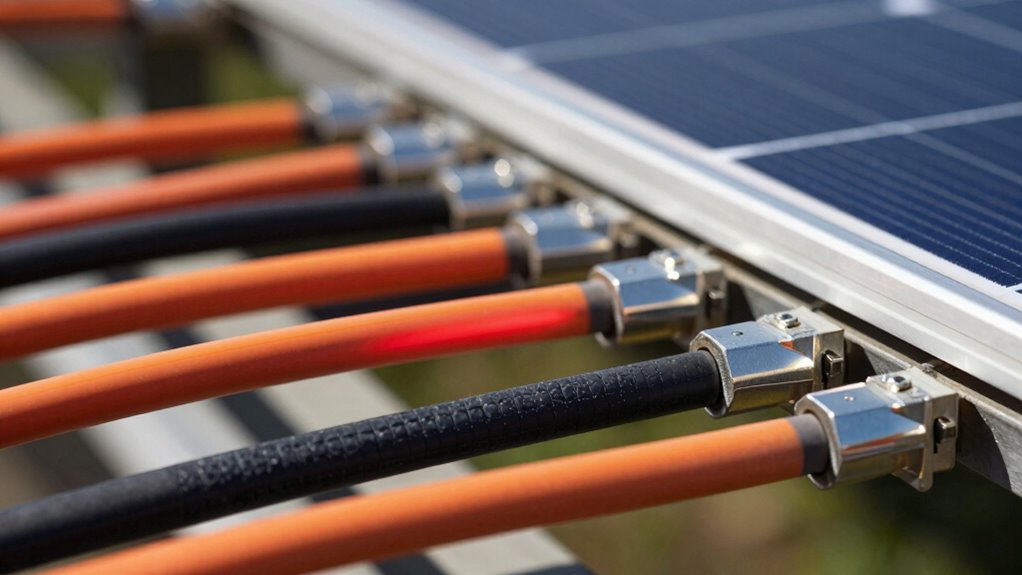
Have you noticed your solar cables running hotter than usual? If so, you might be wondering what’s causing the heat buildup. One of the main factors that influence whether your solar cables stay cool or get hot is the quality of their cable insulation. Good cable insulation acts as a barrier, preventing heat from escaping and protecting the conductors from external elements. When the insulation is subpar or damaged, heat can accumulate more easily, leading to higher temperatures. This insulation also plays a crucial role in electrical safety, reducing the risk of short circuits or fires caused by overheating.
Poor insulation can cause solar cables to overheat and pose safety risks.
Temperature regulation is another critical element that determines how hot your solar cables get during operation. Cables that are designed with proper heat dissipation in mind typically run cooler because they effectively manage the heat generated by electrical current. When cables lack appropriate temperature regulation features—such as adequate ventilation or heat-resistant materials—they tend to trap heat, raising their surface temperatures. This issue is especially common in high-current systems or when cables are bundled tightly together without sufficient spacing. Proper cable sizing is essential to minimize resistance and heat buildup in such configurations. Additionally, using cables with heat-resistant jackets can help improve their ability to withstand higher temperatures and enhance safety.
The length and thickness of the cables also matter. Longer cables increase resistance, which leads to more heat being produced during electricity transmission. Similarly, thinner cables have higher resistance compared to thicker ones, making them more prone to heating. If your setup uses undersized cables for the amount of current flowing through them, you’ll likely see increased heat buildup. This is why choosing the right size and type of cable, rated for your specific solar system, is essential for maintaining safe temperatures.
Environmental factors further influence cable temperature. Exposure to direct sunlight, high ambient temperatures, or moisture can degrade cable insulation over time, reducing its effectiveness and impairing temperature regulation. Regular inspection of the cables’ condition is necessary to identify signs of wear, such as cracking or brittleness, which can compromise insulation and lead to overheating. Additionally, using proper installation practices can significantly improve heat dissipation and overall safety. Ensuring proper grounding and avoiding unnecessary bends or kinks in the cables also contribute to better heat management.
In essence, whether your solar cables run hot or stay cool depends on a combination of quality materials, proper installation, and environmental conditions. Ensuring good cable insulation, selecting cables with effective temperature regulation features, and maintaining proper installation practices are key to preventing overheating. When you pay attention to these factors, you can help keep your solar system running efficiently, safely, and for many years to come.

ZIBOO FT-2000W Solar Panel Tester MPPT Meter – 2000W Max Power, 150V/35A PV Module Tester for Voc/Isc, Open Circuit Voltage & Short Circuit Current, with Backlight & Data Hold
⚡ Professional-Grade PV Testing Measures maximum power (Pmax) up to 2000W, open-circuit voltage (Voc: 12-150V), and short-circuit current…
As an affiliate, we earn on qualifying purchases.
As an affiliate, we earn on qualifying purchases.
Frequently Asked Questions
How Does Cable Length Affect Solar Cable Temperature?
Longer solar cables tend to run hotter because increased length raises resistance, which generates more heat. Your cable insulation plays a vital role in managing this heat, but it’s important to guarantee proper heat dissipation. If cables are too long without adequate ventilation or cooling, they can overheat, potentially causing damage or efficiency loss. Keep cable runs optimized and consider insulation quality to maintain safe operating temperatures.
Can Environmental Factors Influence Solar Cable Heating?
Environmental factors definitely influence solar cable heating. High ambient temperatures increase the risk of cables running hot, especially if the cable insulation isn’t rated for such conditions. Direct sunlight and lack of airflow can also raise cable temperatures, making it essential to choose cables with appropriate insulation for your environment. Proper installation and weather-resistant materials help manage these factors, ensuring your solar system operates safely and efficiently.
What Safety Measures Prevent Solar Cables From Overheating?
You can prevent solar cable overheating by ensuring proper safety measures. Use high-quality connector quality to reduce resistance, and choose cables with durable cable insulation that withstands heat. Regularly inspect connections for wear or damage, and avoid overloading the system. Properly rated cables and secure connections help dissipate heat efficiently, preventing hot spots. These precautions keep your solar setup safe and efficient, minimizing the risk of overheating hazards.
Are There Specific Certifications for Heat-Resistant Solar Cables?
Yes, there are specific certifications for heat-resistant solar cables, guaranteeing they meet safety standards. Certification standards like UL, IEC, and TUV verify that the cables have proper heat resistance, durability, and quality. When choosing solar cables, look for these certifications to ensure they can withstand high temperatures and harsh environmental conditions. This guarantees your system’s safety, efficiency, and longevity in real-world applications.
How Often Should Solar Cables Be Inspected for Heat Damage?
You should inspect your solar cables at least once a year for heat damage. Studies show that improper cable insulation and poor heat dissipation can lead to overheating, affecting system efficiency. Regular inspections help catch early signs of wear, such as melting or discoloration, preventing potential failures. By checking cables frequently, you guarantee ideal heat dissipation and maintain safe, reliable performance of your solar power system.
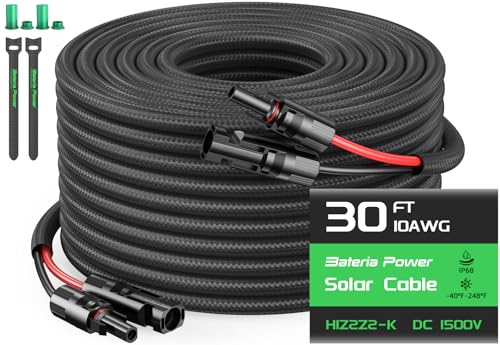
Bateria Power 10AWG 30FT Solar Panel Extension Cable, Flame Retardant Protective Sleeving Twin Wire 10 Gauge Solar Cable with IP68 Female & Male Waterproof Connectors, Dust Caps for Home, RV
【Enhanced Solar Cable with Protective Sleeving】Our solar cables feature heavy-duty flame-retardant sleeving for superior abrasion resistance against dragging,…
As an affiliate, we earn on qualifying purchases.
As an affiliate, we earn on qualifying purchases.
Conclusion
Understanding why some solar cables run hot helps you guarantee your system’s safety and efficiency. Proper cable selection, installation, and maintenance can prevent overheating issues. Did you know that improperly rated cables can lead to a 50% increase in energy loss? By paying attention to these details, you not only protect your investment but also maximize your solar system’s performance. Keep these tips in mind, and your solar setup will run smoothly and safely for years to come.

energeaster 10AWG Solar Cable with Pair of Connectors Solar Panel Adaptor Kit Tool, Extension Cable,10 Gauge Wire,Red and Black(20FT Red + 20FT Black)
Tinned Coppoer Wire: Made with tin-coated pure cooper, the tinned-coated pure cooper cable has good electrical conductivity, compared…
As an affiliate, we earn on qualifying purchases.
As an affiliate, we earn on qualifying purchases.

EVARSOL Solar Grounding Lugs Nickel-plated Lay-in Lugs Ground Wire Clamps for Copper Earth Wire 16-4AWG Fast Install on RV/Boat/Roof Solar Array
【5 Sets of Earth Lugs】5pcs Ground Cable Clamp with Hex Screw,5Pcs Grounding Gasket with Dimples,5Pcs M8*25 Allen Socket…
As an affiliate, we earn on qualifying purchases.
As an affiliate, we earn on qualifying purchases.