TL;DR

Get backup power and energy gear delivered free with Prime
- Fast, free delivery on millions of items
- Prime Video, Amazon Music and more included
- Member-only deals all year
Trina Storage has been selected to supply battery systems for the 50 MW/196 MWh AEJ Nozu project in Oita Prefecture, Japan. The project is scheduled for completion in the third quarter of 2028 and has a 20-year capacity contract; contract and investment values have not been disclosed.
Trina Storage has been selected to supply battery systems for the 50 MW/196 MWh AEJ Nozu project in Oita Prefecture, Japan, adding a large grid-scale storage development to the company’s Japanese portfolio. The facility is scheduled to be completed in the third quarter of 2028, according to the project details reported by Energy Storage.
The project is being developed by Nozomi Energy, a Japanese renewable energy platform backed by infrastructure investor Actis. Its project company is AEJ Nozu Storage Power Plant Contract Company. The planned facility is in Nishihata, Nozu Town, Usuki City, and has a nominal storage duration of approximately 3.9 hours, based on its stated power and energy ratings.
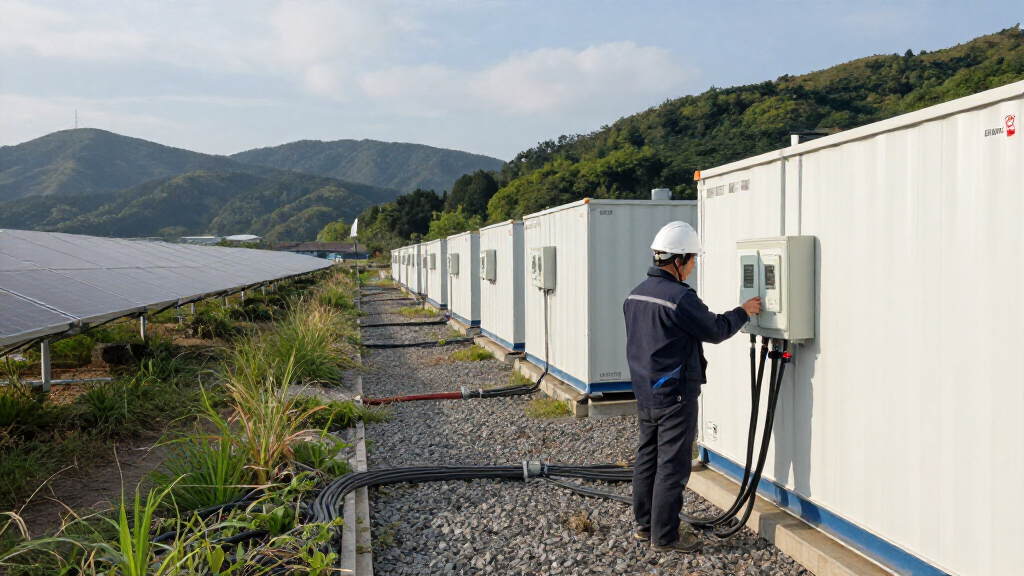
Trina Storage will provide its Elementa 2 Pro system, built around standardized 5 MWh containerized units. The manufacturer’s technical documentation lists 5.015 MWh of nominal energy capacity per container and proprietary 314 Ah lithium iron phosphate cells. The design also includes liquid cooling, battery monitoring and safety systems. These are product specifications; project-specific operating assumptions and performance guarantees for Nozu have not been disclosed.
China Energy Engineering Shanxi Electric Power Engineering Co. has separately won the engineering, procurement and construction contract for the project’s balance-of-plant works. The development has obtained key land and grid-connection permits, according to the source report. Nozomi Energy reached financial close in September 2026 after arranging non-recourse project financing from Aozora Bank, but the financing amount was not disclosed.
A Contracted Storage Project in Oita
Nozu would add a substantial grid-connected battery to Japan’s electricity system, where storage can shift electricity across time and provide flexibility as the power mix changes. Its 50 MW power rating describes how quickly it can discharge, while its 196 MWh energy capacity indicates the amount of energy it can store. The approximately 3.9-hour duration is relevant to how the facility may be dispatched, though the project’s detailed operating plan has not been made public.
The project also has a long-term revenue mechanism: it secured a capacity contract in Japan’s fiscal 2023 Long-Term Decarbonization Auction. The contract provides inflation-linked capacity payments over 20 years, according to the source report. That arrangement offers the developer greater revenue visibility than relying solely on short-term market opportunities, but it does not remove construction, delivery, commissioning or operational risks.
For Trina Storage, the award expands its presence in Japan and places its equipment in a project backed by long-term contracted capacity. The supply contract’s value and the project’s total investment cost are not public, so the financial scale of the deal cannot be assessed from the disclosed figures.
Products Worth Considering

Levoit Eleva 300X HEPA Air Purifier for Home and Bedroom

Ring Alarm 14-Piece Wireless Security System Kit

Samsung 85 M80H Series Mini LED 4K Smart TV (2026)
As an affiliate, we earn on qualifying purchases.
Nozu’s Auction and Financing Path
Nozu is among the storage developments supported by Japan’s long-term decarbonization capacity mechanism, which is designed to encourage investment in low-carbon generation and flexible power resources. The project secured its capacity contract in the fiscal 2023 auction, before reaching financial close in September 2026. Aozora Bank provided non-recourse project financing, under which repayment is tied to the project rather than the sponsor’s general balance sheet; the amount and other financing terms have not been disclosed.
The Nozu award comes as Trina Storage builds a wider Japanese project pipeline. The company has a separate 160 MWh utility-scale battery project in the Kyushu region, according to the source report. In September, it also signed a memorandum of understanding with Japanese developer AMP-lify concerning approximately 1 GWh of potential grid-connected storage projects using its Elementa 3 series. That agreement concerns potential projects and is distinct from the Nozu supply contract.
Costs and Performance Terms Undisclosed
The value of Trina Storage’s supply contract and Nozu’s total investment cost have not been disclosed. Aozora Bank’s financing amount and detailed terms are also unavailable. Trina Storage’s published product information gives a cell cycle life of up to 12,000 cycles, but the company has not disclosed the project-specific operating assumptions or performance guarantees that would determine how that figure applies at Nozu.
The project’s intended dispatch strategy, expected contribution to grid services and final operating arrangements have not been specified in the available report. The announced completion date is a plan, not confirmation that construction, equipment delivery and commissioning have been completed. Those activities remain ahead of the Q3 2028 target.
Construction Toward the 2028 Target
The next milestones are expected to include coordination between Trina Storage, Nozomi Energy and the EPC contractor, followed by equipment delivery, construction and commissioning. Trina Storage says its Japanese operations will support system configuration, technical consultation, delivery coordination and after-sales service alongside local project partners. The company has not announced a detailed construction schedule or interim milestones in the source report.
Further updates may clarify installation progress, operating arrangements and project-specific performance terms. The current stated goal is completion in the third quarter of 2028; the project’s readiness to operate will depend on delivery and commissioning as well as completion of the remaining work.
Key Questions
How large is the Nozu battery project?
The project is rated at 50 MW/196 MWh, with a nominal storage duration of approximately 3.9 hours.
Where will the battery be built?
It is planned for Nishihata, Nozu Town, Usuki City, in Oita Prefecture, Japan.
What equipment will Trina Storage supply?
Trina Storage will supply its Elementa 2 Pro battery energy storage system, based on standardized containerized units using lithium iron phosphate cells.
When is the project expected to be completed?
Completion is scheduled for the third quarter of 2028. Construction, equipment delivery and commissioning remain ahead.
What is known about the project’s cost?
The supply contract value, total project investment and Aozora Bank financing amount have not been disclosed.
Source: ess-news.com