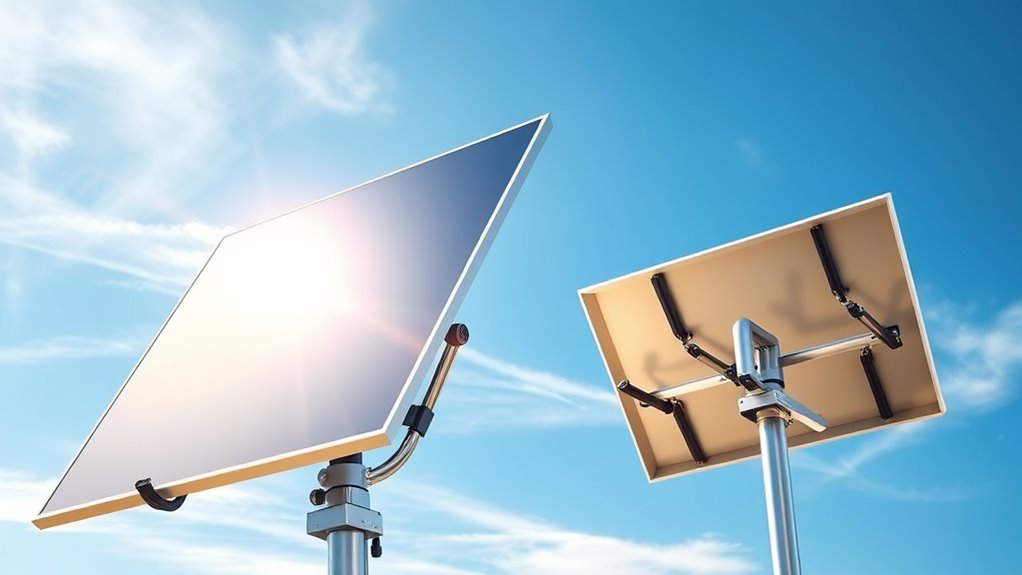

Solar tracking systems help you boost your solar panel efficiency by adjusting their position to follow the sun. Single-axis trackers move panels along one direction, typically east to west, offering an affordable and simpler option. Dual-axis trackers follow the sun more precisely in both azimuth and altitude, capturing more sunlight and increasing energy output. If you want to discover which system best fits your needs and how they compare, there’s more to explore ahead.
Key Takeaways
- Single-axis trackers rotate panels east-west, offering a cost-effective way to improve efficiency with simpler installation.
- Dual-axis trackers adjust panels along azimuth and altitude, maximizing sunlight capture throughout the year.
- Dual-axis systems typically increase energy output by 25-35% compared to fixed or single-axis setups.
- Single-axis trackers are suitable for smaller projects due to lower cost and easier maintenance.
- Dual-axis systems are ideal for high-insolation areas seeking maximum energy gains despite higher initial costs.

Solar tracking systems are innovative devices designed to maximize the efficiency of solar panels by automatically adjusting their position throughout the day. When you choose a solar tracking system, you’re investing in a technology that can markedly boost photovoltaic efficiency by ensuring your panels always face the sun at the most favorable angle. This continuous adjustment means your system captures more sunlight, leading to higher energy output compared to fixed systems. The key advantage here is that solar tracking systems optimize the angle of incidence, which directly impacts the amount of sunlight your panels absorb, especially during peak sunlight hours.
When considering system installation, you’ll notice that single-axis trackers are simpler and generally easier to set up. They move panels along one axis—typically from east to west—tracking the sun’s movement across the sky during the day. This setup is ideal if you’re looking for a cost-effective way to improve photovoltaic efficiency without complex mechanical requirements. Installation tends to be quicker and less expensive, making it a popular choice for smaller or mid-sized solar projects. However, while single-axis trackers do improve energy gains, they still leave some potential untapped because they don’t adjust for seasonal variations or the sun’s altitude.
Dual-axis trackers, on the other hand, offer a more sophisticated approach by moving panels along two axes—azimuth and altitude. This means the system can follow the sun’s path more precisely, adjusting not only east to west but also up and down, throughout the year. As a result, dual-axis systems capture sunlight at the most advantageous angles, especially during mornings, evenings, and different seasons. The enhanced tracking capability boosts photovoltaic efficiency further, often translating into 25-35% more energy production compared to fixed or single-axis systems. Although dual-axis trackers involve more complex system installation and higher upfront costs, they can markedly increase the return on investment by maximizing energy generation, particularly in locations with high solar insolation or where land space is limited. Additionally, advancements in tracking technology continue to improve system reliability and reduce maintenance needs over time.

ECO-WORTHY Solar Panel Single Axis Tracking System (Increase 30% Power) with Tracker Controller,High Stability, Multi-Angle Adjustment,Ideal for Different Solar Panels, for Yard/Farm/Field/Garden
【Quick Ways to Get After-Sales Support】For any product issues or concerns, please contact us through your order details…
As an affiliate, we earn on qualifying purchases.
As an affiliate, we earn on qualifying purchases.
Frequently Asked Questions
How Do Tracking Systems Impact Overall Solar Panel Lifespan?
Tracking systems can extend your solar panel lifespan by boosting panel efficiency and reducing wear. They optimize sunlight exposure, which lessens the stress on panels and system components, improving durability. Dual-axis trackers, in particular, allow for better alignment, minimizing mechanical strain and enhancing system durability over time. While they may require more maintenance, the improved efficiency and longevity make tracking systems a smart investment for a sustainable solar setup.
What Are the Maintenance Requirements for Dual-Axis Trackers?
Think of dual-axis trackers as the dancers of solar systems, requiring careful choreography. You need to stick to regular lubrication schedules to keep moving parts smooth and prevent wear. Calibration procedures are essential to guarantee accurate tracking, so you’ll want to routinely check and adjust sensors and motors. Performing these maintenance tasks keeps your system performing at its best, extending its lifespan and maximizing energy output.
Can Solar Trackers Be Integrated With Existing Solar Installations?
Yes, you can integrate solar trackers with your existing solar installation, but you should consider compatibility concerns and potential integration challenges. Make sure your current system’s design supports tracker installation, and check if the inverter and wiring can handle the added load. Consulting with a solar professional helps ensure smooth integration, avoiding issues related to electrical compatibility, mounting, and system communication. Proper planning makes the upgrade efficient and effective.
How Do Weather Conditions Affect the Performance of Tracking Systems?
Think of your tracking system as a brave sailor steering stormy seas. Weather variability can challenge performance, especially during heavy storms or cloudy days, reducing energy output. Strong winds or snow can misalign trackers, impacting efficiency. To guarantee climate resilience, choose systems with sturdy design and smart controls that adapt to weather changes, maintaining optimal sun exposure regardless of weather conditions. This way, your solar setup stays productive even in unpredictable climates.
What Are the Cost Differences Between Single and Dual-Axis Trackers?
You’ll find that single-axis trackers are more affordable upfront, with lower installation costs, making them a budget-friendly choice. Dual-axis systems, however, cost more due to their advanced design and increased complexity. While they have higher initial expenses, they offer efficiency gains by optimizing sunlight exposure throughout the day and year, potentially increasing energy output and long-term savings. Your choice depends on balancing initial costs with the desired efficiency benefits.

ECO-WORTHY Solar Panel Dual Axis Tracking System (Expanded Version Increase 40% Power) with Tracker Controller,for 10PCS 100W/8PCS 200W/4PCS 400W,High Stability, Multi-Angle Adjustment, for Yard/Farm
Intelligent detection of strong light by high-precision light sensor, power generation efficiency increased by 40%: The tracker equipped…
As an affiliate, we earn on qualifying purchases.
As an affiliate, we earn on qualifying purchases.
Conclusion
Understanding the difference between single and dual-axis solar tracking systems can markedly boost your solar energy efficiency. While some believe dual-axis systems always outperform single-axis ones, studies show the added complexity and cost may not always be justified, especially in certain locations. Evaluate your specific needs and budget carefully. Ultimately, choosing the right system depends on balancing your energy goals with practical considerations, ensuring you get the most out of your solar investment.

ECO-WORTHY Solar Panel Dual Axis Tracking System (Increase 40% Power) with Tracker Controller, Complete Solar Tracker Kit, Ideal for Different Solar Panels, for Yard/Farm/Field
[Generate more power] Dual-axis solar tracker make the mounted panels turn face to sunlight any daytime. Compared to…
As an affiliate, we earn on qualifying purchases.
As an affiliate, we earn on qualifying purchases.
ECO-WORTHY Solar Panel Dual Axis Tracking System (Increase 40% Power) with Tracker Controller, Complete Solar Tracker Kit, Ideal for Different Solar Panels, for Yard/Farm/Field
[Generate more power] Dual-axis solar tracker make the mounted panels turn face to sunlight any daytime. Compared to…
As an affiliate, we earn on qualifying purchases.
As an affiliate, we earn on qualifying purchases.