Solar shingles and building-integrated photovoltaics combine energy generation with sleek design, letting you replace traditional roofing with stylish, customizable panels. They seamlessly blend into your building’s architecture, mimicking materials like slate or clay tiles while providing durability and weather resistance. Installation is straightforward, often reducing costs and disruption. These solutions boost property value and support sustainability efforts without sacrificing aesthetics. Keep exploring to discover how these innovative panels can transform your building’s look and efficiency.
Key Takeaways
- Solar shingles and BIPV integrate seamlessly into roofing, replacing traditional materials with aesthetically appealing, customizable designs.
- They serve dual roles as roofing materials and power generators, supporting architectural styles from modern to traditional.
- These systems are lightweight, durable, weather-resistant, and simplify installation, enhancing building efficiency and longevity.
- BIPV solutions reduce visual clutter and need for separate mounting systems, maintaining building design integrity.
- They increase property value, promote sustainability, and offer long-term energy cost savings through integrated renewable technology.
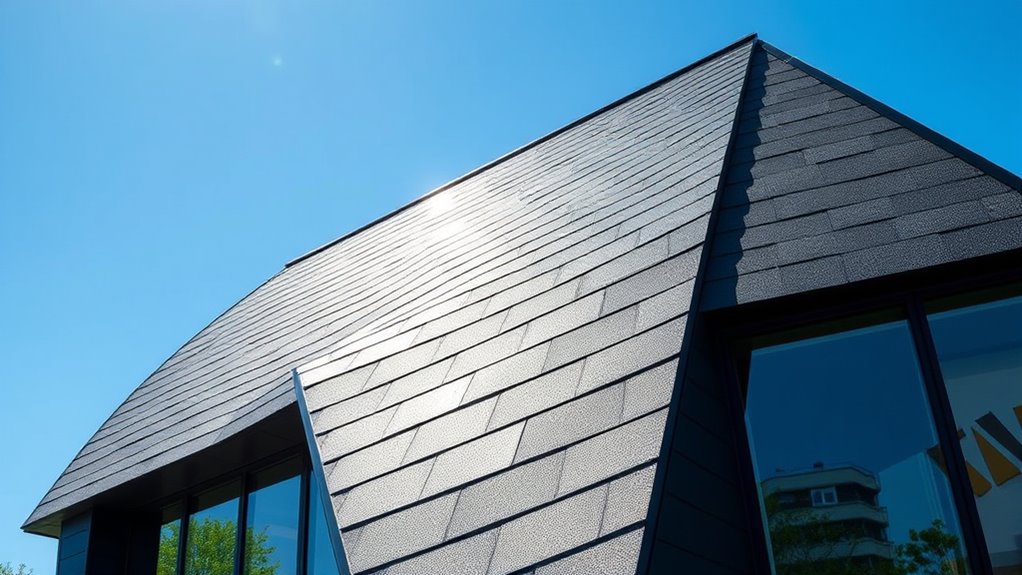
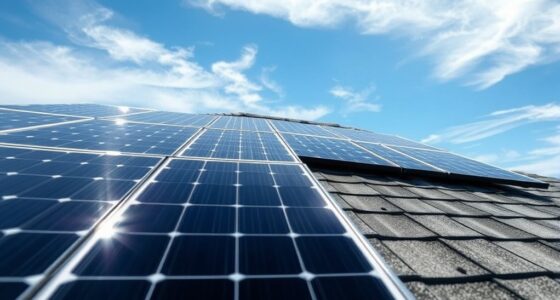
Have you considered how solar technology can seamlessly blend into your building’s design? Solar shingles and building-integrated photovoltaics (BIPV) are transforming the way we think about renewable energy, offering a sleek alternative to traditional panels. These innovative solutions prioritize solar roof integration, allowing your roof to serve as both a protective cover and a power generator. Instead of bulky, conspicuous solar panels that disrupt your building’s aesthetic, solar shingles are designed to mimic conventional roofing materials like asphalt, slate, or clay tiles. This means you get the benefits of solar power without compromising the visual harmony of your property.
When it comes to aesthetic design, solar shingles are a game-changer. They come in a variety of styles, colors, and textures, enabling you to customize your roof to match your overall architectural vision. Whether your building has a modern, minimalist vibe or a traditional, historic look, solar shingles can complement it perfectly. This seamless integration ensures that your solar system enhances your property’s curb appeal rather than detracts from it. Plus, because they are installed as part of the roof itself, they eliminate the need for separate mounting structures, reducing visual clutter and creating a cleaner, more unified appearance.
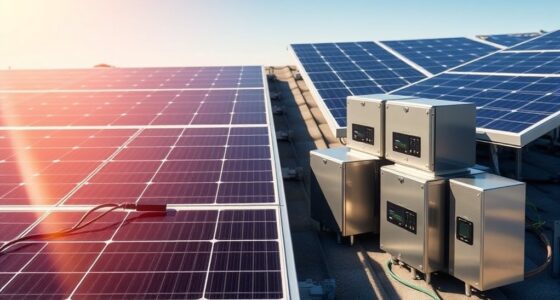
Beyond aesthetics, solar roof integration with shingles offers practical benefits. They are lightweight, durable, and designed to withstand harsh weather conditions, giving you long-term reliability alongside visual appeal. The installation process is often straightforward, especially when compared to retrofitting traditional panels onto existing roofs. This means less disruption and faster deployment, making it easier to incorporate solar technology into new or existing buildings. Additionally, solar shingles can be integrated with solar charge controllers, optimizing energy harvest and system efficiency.
Another advantage is the potential for cost savings. Since solar shingles serve dual purposes—protecting your home and generating electricity—they can reduce the overall materials needed for your roof. Additionally, integrating solar into your building’s design can increase property value, as eco-friendly features are increasingly attractive to buyers. It’s a smart investment that aligns with sustainable living goals while maintaining or elevating your building’s aesthetic appeal.
Frequently Asked Questions
How Long Do Solar Shingles Typically Last Before Needing Replacement?
Solar shingles typically last around 25 to 30 years before you need to contemplate replacing them. Their durability lifespan is comparable to traditional roofing materials, but material degradation over time can affect their efficiency. You should regularly inspect for signs of wear, such as cracks or loose shingles, to guarantee optimal performance. Proper maintenance and quality installation can extend their lifespan, helping you get the most out of your investment.
Are Solar Shingles Compatible With All Roof Types and Materials?
Solar shingles are incredibly versatile and can be compatible with many roof types, but they don’t fit every material perfectly. You’ll want to verify roof material compatibility, especially with traditional shingles, metal, or tile roofs, to guarantee proper installation. Their aesthetic integration is sleek, blending technology with design seamlessly. While not universal, with proper planning, solar shingles can enhance almost any roof, transforming your home into a powerhouse.
What Is the Average Cost Comparison Between Solar Shingles and Traditional Panels?
The cost comparison shows that solar shingles typically have higher installation expenses than traditional panels, mainly due to their specialized design and installation process. On average, solar shingles can cost about 30-50% more upfront. While the initial investment is higher, they offer a seamless look and save on roofing materials. You should weigh these factors against long-term benefits and potential incentives to decide which option fits your budget.
Can Solar Shingles Be Installed on Existing Roofs or Only New Constructions?
Think of solar shingles as a stylish upgrade to your roof; they can be installed on existing roofs, making them a retrofit option. Your roof’s compatibility and condition matter, but many homeowners successfully upgrade without a full tear-off. Just like fitting a new piece into a puzzle, solar shingles adapt well, offering a seamless blend of aesthetics and energy savings, even on older structures.
How Do Solar Shingles Perform in Cloudy or Low-Light Conditions?
In cloudy or low-light conditions, solar shingles still generate some electricity, but their cloud performance and energy efficiency decrease compared to sunny days. You might notice a dip in power output, especially during overcast weather or in winter months. However, modern solar shingles are designed to maximize energy production even in less ideal lighting, helping you maintain some level of solar energy generation throughout varied weather conditions.
Conclusion
As you consider solar shingles and building-integrated photovoltaics, you’re gently steering your home toward a more harmonious future. Think of these innovations as silent guardians, blending seamlessly with your roof’s natural beauty, quietly harnessing sunlight’s energy. They work behind the scenes, adding a touch of elegance while quietly powering your life. Embracing this subtle shift can gently illuminate your path to sustainability, turning everyday spaces into discreet, radiant sources of hope for a greener tomorrow.