Understanding solar panel sizes and wattage options helps you choose the right system for your energy needs. Higher-wattage panels produce more electricity in less space, making them ideal for limited roof areas or maximizing efficiency. Lower-wattage panels are often more affordable upfront but require more units to meet your goals. Factors like your home’s energy use, roof space, and sunlight impact your choice. To make the best decision, explore how these options work together to optimize your solar setup.
Key Takeaways
- Solar panel wattage indicates power output; higher wattage panels produce more electricity in less space.
- Panel sizes vary based on wattage, with larger panels generally offering higher wattage options.
- Choosing the right wattage depends on your energy needs, roof space, and sunlight availability.
- Higher-wattage panels reduce the number of panels needed, maximizing efficiency in limited space.
- Professional assessment helps determine optimal wattage and panel size for cost-effective solar system design.
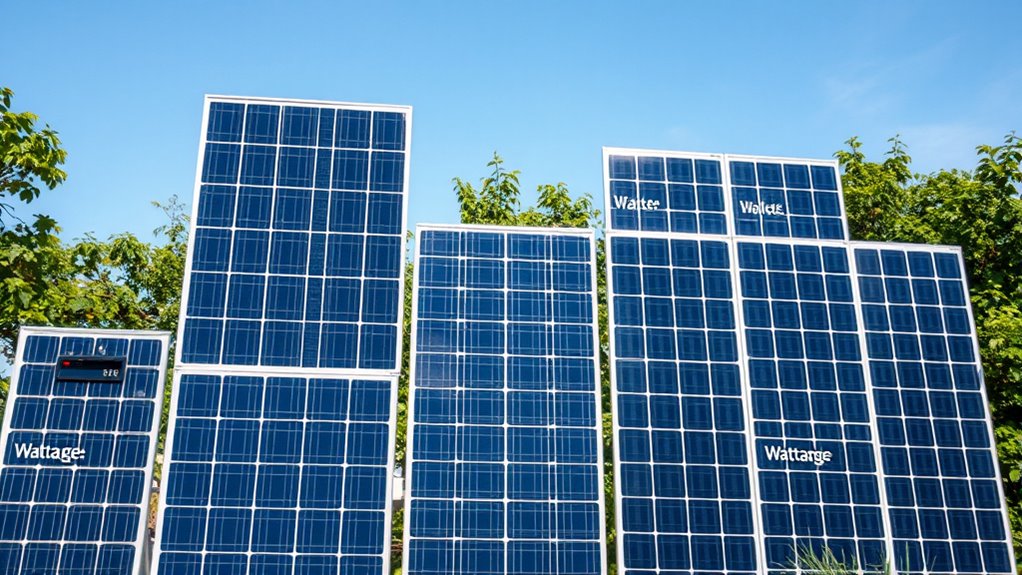
Choosing solar panels, wattage indicates how much power each panel can produce under standard test conditions. Higher-wattage panels generate more electricity in a smaller footprint, which is advantageous if space is limited. Conversely, lower-wattage panels may be more affordable upfront but might require more panels to meet your energy needs. Your home’s energy consumption patterns influence your ideal panel size and wattage. For example, if you consume a lot of energy, you’ll need larger or more efficient panels to produce enough power. If your energy use is minimal, smaller panels may suffice, saving you money upfront. It’s also important to consider the climate and sunlight availability in your region, as these factors impact how much energy your panels can produce. Understanding solar panel rankings by throw, brightness, and efficiency helps you select the best options for your specific situation.
For grid-tied systems, selecting the right panel size is essential because it directly affects how much energy you can generate and feed back into the grid. Excess power can be sent back to your utility, often earning you credits or incentives, which further offsets your costs. Proper sizing ensures you maximize these benefits while avoiding overspending on capacity you don’t need. During solar panel installation, a professional assessment helps determine the ideal wattage and number of panels based on your energy bills, roof space, and shading factors. This careful calculation guarantees your system is tailored to your specific needs, making your investment more efficient and cost-effective.
Frequently Asked Questions
How Do I Determine the Best Panel Size for My Home?
To find the best panel size for your home, consider your energy needs and available roof space. Focus on solar panel efficiency to maximize output, and avoid installation challenges by choosing a size that fits comfortably without causing structural issues. You might need a professional assessment to determine the ideal size, ensuring your system is both effective and easy to install, saving you time and potential costs down the line.
Can I Upgrade My Solar Panels Later?
Like upgrading from a classic car to a sleek new model, you can definitely upgrade your solar panels later. You’ll want to contemplate battery storage and guarantee inverter compatibility, so your system handles the new panels efficiently. Adding panels increases capacity, but check with your installer to optimize wiring and verify your existing setup supports future expansions. Upgrading keeps your solar system adaptable, maximizing your investment’s long-term benefits.
What Is the Lifespan of Different Solar Panel Wattages?
You’ll find that the lifespan of solar panels varies with wattage, typically lasting 25 to 30 years. Higher wattage panels often have enhanced panel durability, which can extend their life. Most come with warranty coverage of 25 years, guaranteeing you’re protected against performance issues. Regular maintenance helps maximize longevity, no matter your panel’s wattage. So, investing in quality panels with good warranties ensures you get the most out of your solar system over time.
Do Larger Panels Perform Better in Cloudy Conditions?
Did you know larger panels can produce up to 25% more power in cloudy weather? While they generally perform better than smaller panels under diffuse light, their efficiency still drops in overcast conditions. Larger panels capture more sunlight overall, but cloud cover reduces overall energy output. So, if you want the best performance in cloudy weather, opt for panels with higher wattage and efficiency ratings, but don’t expect full sunlight results.
Are Higher Wattage Panels More Cost-Effective Long-Term?
Higher wattage panels can be more cost-effective long-term because they generate more electricity from the same space, leading to greater long-term savings on your energy bills. While they may have a higher upfront cost, the increased energy production improves your overall cost efficiency over time. You’ll benefit from maximizing energy output, reducing your reliance on grid power, and enjoying faster return on investment, making them a smart choice for long-term savings.
Conclusion
Now that you know about solar panel sizes and wattage options, choosing the right setup is like finding the perfect puzzle piece—it fits just right to power your life efficiently. Remember, bigger isn’t always better; it’s about what meets your energy needs. With this knowledge, you’re ready to harness the sun’s power confidently. So go ahead, light up your world and turn those solar dreams into reality—your sunny future awaits!