Choosing the right solar panel mounting system depends on your property’s layout and energy goals. Roof mounts are cost-effective and easy to install, but your roof’s orientation and shading can affect performance. Ground-mounted systems offer more flexibility and higher efficiency by adjusting angles, though they cost more upfront. Pole mounts can optimize sun exposure for specific needs. Keep exploring to learn how each option can help you maximize your solar energy output effectively.
Key Takeaways
- Roof mounts are cost-effective and easy to install, ideal for residential setups, but depend on roof orientation and shading.
- Ground-mounted systems offer flexible positioning and higher efficiency, suitable for shaded or poorly oriented roofs.
- Pole mounts provide adjustable angles and elevation, enhancing performance in specific terrains or for off-grid applications.
- Installation costs vary, with roof mounts being cheaper, while ground and pole systems may involve higher land prep and foundation expenses.
- Innovations like adjustable and modular mounts aim to improve efficiency, reduce costs, and adapt to diverse site conditions.

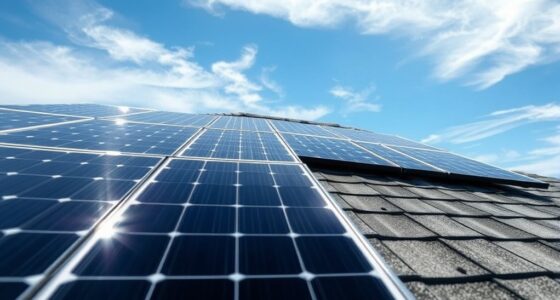
Solar panel mounting systems are essential components that securely attach panels to roofs or the ground, ensuring ideal energy capture. Choosing the right mounting system can considerably impact your solar setup’s overall effectiveness and cost-efficiency. When considering options, you’ll want to think about how each type influences solar panel efficiency and installation costs. For example, roof mounts are often the most straightforward and economical choice, especially if you already have a suitable roof. They typically involve lower installation costs because they integrate directly with your existing structure, reducing labor and material expenses. However, their impact on solar panel efficiency depends heavily on the roof’s orientation, tilt, and shading. Properly installed roof mounts that optimize panel angles can maximize energy production, but if misaligned, they might limit your system’s performance. Additionally, Hackathons can serve as platforms for innovators to develop new mounting technologies that improve efficiency and reduce costs.
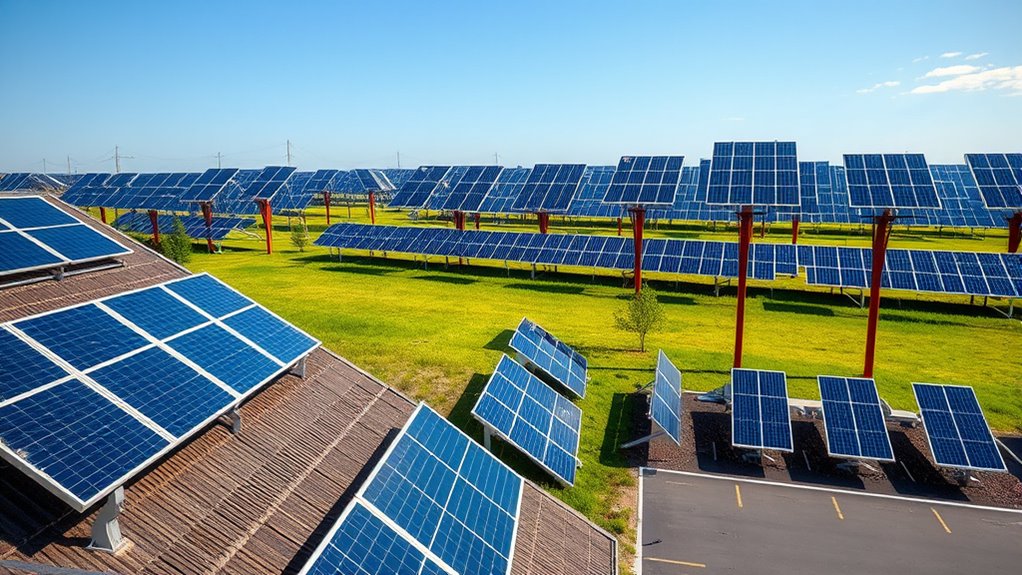
Ground-mounted systems, on the other hand, offer greater flexibility in positioning your panels for maximum sunlight exposure. They are ideal if your roof isn’t suitable due to shading, orientation, or structural issues. Although these systems usually involve higher installation costs due to the need for additional land preparation, concrete foundations, and mounting hardware, they can substantially boost solar panel efficiency. You can adjust ground-mounted panels seasonally or even tilt them differently to capture more sunlight, which can lead to better energy generation over time. This adaptability often offsets the initial higher costs, especially in large-scale installations or where maximizing output is a priority.
Frequently Asked Questions
How Do Mounting Systems Impact Solar Panel Efficiency?
Mounting systems directly impact your solar panel efficiency by optimizing panel tilt and wind resistance. If you adjust the tilt correctly, your panels capture more sunlight, boosting energy output. Proper mounting also enhances wind resistance, preventing damage and ensuring consistent performance. When you choose a sturdy, well-designed system, you maximize efficiency, protect your investment, and extend your panels’ lifespan, making your solar energy system more effective and reliable.
Are There Specific Mounting Options for Uneven Terrain?
Yes, there are specific mounting options for uneven terrain. You can choose terrain adaptation mounts that securely anchor on uneven surfaces, allowing for ideal panel positioning. Adjustable ground mounts and specialized pole systems help you adapt to an uneven surface, ensuring stability and maximizing efficiency. These options enable you to customize your setup, improve energy production, and prevent shading or instability caused by the uneven terrain.
What Maintenance Is Required for Different Mounting Systems?
Think of your solar system as a garden needing tender care. You’ll want to follow cleaning protocols regularly to clear dust and debris, keeping energy flow smooth. Corrosion prevention is essential—check for rust, especially on metal parts, and apply protective coatings when needed. For ground and pole mounts, inspect fasteners and supports often, tightening or replacing parts to keep your solar garden thriving.
Can Mounting Systems Be Customized for Unique Roof Styles?
Yes, mounting systems can be customized for unique roof styles. You can incorporate custom roof adaptations to guarantee a perfect fit, regardless of the roof’s shape or material. Innovative mounting designs allow you to optimize solar panel placement while maintaining the roof’s integrity. Working with specialists, you’ll get tailored solutions that blend seamlessly with your roof’s architecture, maximizing energy production and ensuring durability.
What Are the Costs Associated With Various Mounting Options?
You’ll find that the cost comparison among mounting options varies considerably. Roof mounts are generally more affordable due to simpler installation expenses, while ground and pole mounts can cost more because of additional labor and equipment. Ground systems often require extensive site prep, and pole mounts may need specialized foundations. Consider your budget and site conditions to choose the most cost-effective solution that suits your energy needs and installation expenses.
Conclusion
Choosing the right solar panel mounting system is like finding the perfect fit for your home. Whether you opt for roof, ground, or pole mounts, each offers unique benefits tailored to your space and needs. By selecting the best option, you guarantee your solar setup is as sturdy and reliable as a lighthouse guiding ships safely ashore. Make your decision confidently, and enjoy the long-lasting energy savings and environmental impact your system provides.