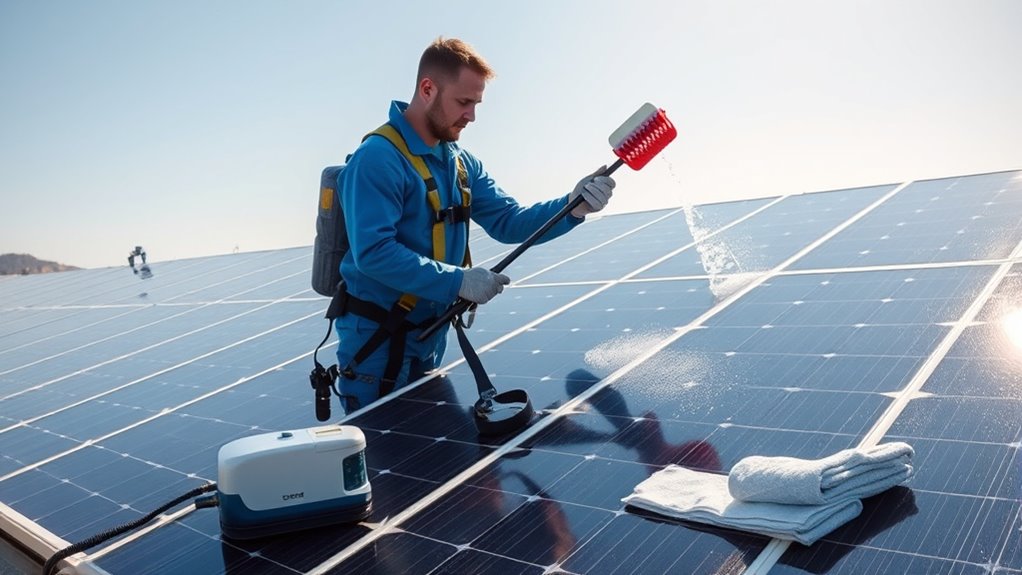

To clean your solar panels effectively, use soft-bristled brushes or sponges to gently dislodge bird droppings and dirt. Opt for low-pressure hoses to rinse away stubborn deposits without risking damage. Mix a small amount of dish soap with water for a safe cleaning solution, and use microfiber cloths or squeegees to wipe panels clean. Always prioritize safety and avoid high-pressure streams—stay with us to discover more expert tips for maintaining peak panel performance.
Key Takeaways
- Use soft-bristled brushes or microfiber cloths to gently dislodge dirt and bird droppings without scratching panels.
- Employ low-pressure hoses or gentle sprays to rinse panels safely, avoiding high-pressure water that can cause damage.
- Apply a mild cleaning solution, such as diluted dish soap, to remove stubborn grime effectively without harming the surface.
- Utilize extendable tools and ladders with safety features to access and clean panels on higher or hard-to-reach installations.
- Consider automated or robotic cleaning systems for consistent maintenance and reduced manual effort over time.
Keeping your solar panels clean is essential for maintaining their efficiency and maximizing energy output. Over time, bird droppings can accumulate on the surface, creating dark patches that block sunlight and reduce power generation. These deposits aren’t just unsightly; they can also cause long-term damage if left unaddressed. Regular panel maintenance involves removing these bird droppings promptly to ensure your system performs at its peak. Using the right tools and techniques makes cleaning safer and more effective, preventing scratches or other damage to your panels.
Keeping solar panels clean prevents damage and maximizes energy output through safe, effective maintenance.
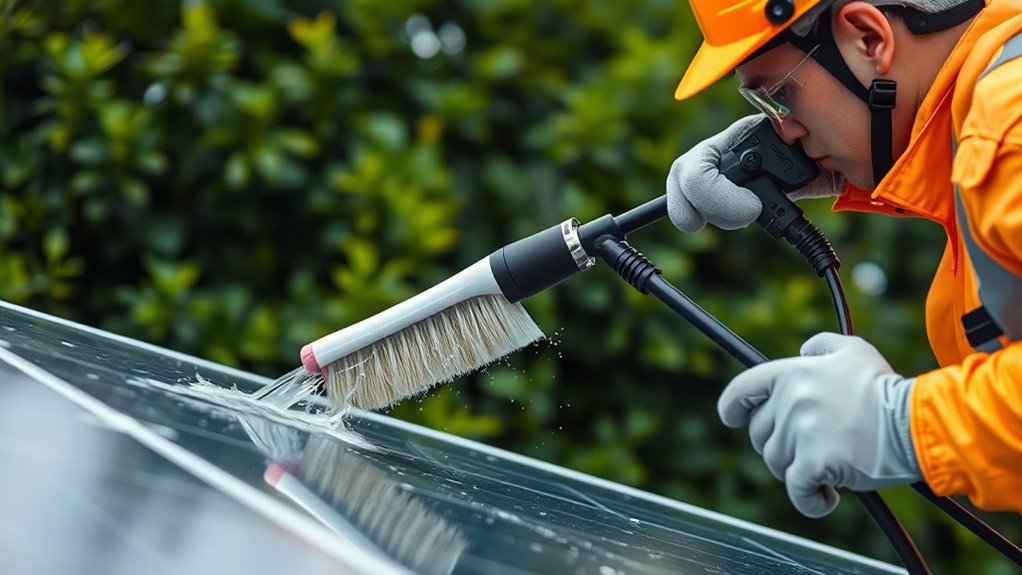
The most straightforward approach begins with gentle cleaning methods. A soft-bristled brush or a sponge can help dislodge stubborn bird droppings without scratching the glass surface. For more stubborn buildup, a low-pressure hose can be highly effective. It’s critical to avoid high-pressure water streams, which might crack or damage the panels. Instead, use a gentle spray to loosen debris before wiping it away. When cleaning, always use clean, non-abrasive materials to minimize the risk of scratches that could impair panel performance over time.
A common technique for maintaining your panels involves a combination of water and a mild, non-abrasive cleaning solution. You can mix a small amount of dish soap with water to help lift grime and bird droppings. Using a squeegee or microfiber cloth after rinsing helps remove residual dirt and water spots, leaving a streak-free surface. This method is especially useful if your panels are installed at an angle, allowing water to run off easily. Remember, safety first: avoid climbing onto roofs or using unstable ladders, and consider using extendable tools for hard-to-reach panels. Additionally, understanding the importance of proper maintenance can help you better plan your cleaning schedule and ensure your panels stay in optimal condition for years to come.
For regular panel maintenance, scheduled cleanings are key. Depending on your location and exposure to birds or pollution, you might need to clean your panels every few months or even more often during certain seasons. Installing bird deterrents around your panels can also reduce the frequency of bird droppings, easing your maintenance efforts. When selecting cleaning tools, opt for those designed specifically for solar panel care—these are gentle yet effective. Automated cleaning systems are another option if you want to reduce manual labor, but they should always be used carefully to avoid damaging delicate surfaces.
Frequently Asked Questions
How Often Should Solar Panels Be Professionally Cleaned?
You should schedule professional cleaning for your solar panels at least once a year, but this depends on your location and environmental conditions. Regular solar panel maintenance involves checking for dirt, dust, or debris that can reduce efficiency. If you live in a dusty or polluted area, increase the cleaning frequency to every six months. Proper maintenance guarantees peak performance and prolongs your panels’ lifespan.
Are There Eco-Friendly Cleaning Solutions for Solar Panels?
Yes, you can use eco-friendly detergents and biodegradable solutions to clean your solar panels. These eco-friendly cleaning options are designed to be gentle on the environment while effectively removing dirt and grime. By choosing biodegradable solutions, you help reduce chemical runoff and pollution. Always opt for environmentally safe products to keep your panels clean without harming wildlife or ecosystems, ensuring a sustainable and responsible approach to solar panel maintenance.
Can Cleaning Damage Solar Panels or Void Warranties?
Cleaning your solar panels is like walking a tightrope—you want to be careful. If you use harsh cleaning chemicals or scrub too hard, you can damage the panels or void your warranty. Always check your manufacturer’s guidelines before cleaning, and avoid abrasive tools. Proper cleaning methods protect your panels and keep your warranty intact, so you get the most out of your solar investment without risking costly repairs.
What Safety Precautions Are Recommended During Cleaning?
You should always wear personal protective equipment like gloves and safety glasses to protect yourself during cleaning. Follow safe cleaning practices by turning off the solar system before starting, avoiding abrasive tools, and working in dry conditions to prevent slips or electrical hazards. Keep your workspace clear, stay on stable surfaces, and never rush. These precautions help guarantee your safety while keeping your solar panels clean and functioning efficiently.
How Do Weather Conditions Affect Cleaning Schedules?
Imagine the weather as a fickle friend, sometimes generous, sometimes elusive. Weather impact dictates your cleaning schedule; rainy days wash away dust naturally, reducing the need for manual cleaning. During dry, sunny seasons, dirt and debris cling fiercely, demanding more attention. Plan seasonal cleaning around weather patterns, aiming for clear, calm days to maximize effectiveness and safety. Adapting to weather conditions keeps your solar panels shining bright throughout the year.
Conclusion
Now that you know the top tools and techniques, cleaning your solar panels becomes a breeze. With the right approach, you can boost their efficiency to levels that seem almost celestial. Regular maintenance not only prolongs the lifespan of your panels but also guarantees you’re harnessing maximum sunlight. Don’t let dirt and grime block your solar power potential—stay diligent, stay smart, and watch your energy savings soar to astronomical heights.