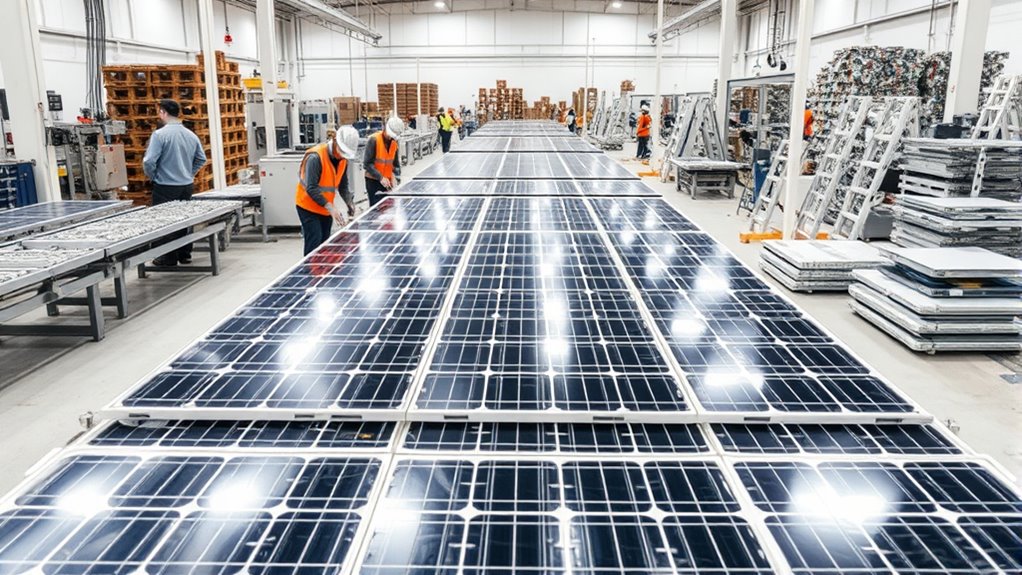

Implementing effective solar module recycling programs involves establishing clear collection and processing protocols, partnering with certified facilities, and using advanced technologies like mechanical and chemical separation. It’s important to design solar systems for easier disassembly, track materials throughout the lifecycle, and follow strict environmental standards. Recycling recovers valuable materials such as silicon and silver, reduces waste, and supports sustainability. To learn more about best practices that can help you optimize your recycling efforts, keep exploring this essential topic.
Key Takeaways
- Establish certified collection and processing protocols aligned with environmental and safety standards.
- Utilize advanced recycling technologies like mechanical, thermal, and chemical methods for high recovery efficiency.
- Design solar systems for easier disassembly and select panels from manufacturers committed to recyclability.
- Maintain detailed documentation and tracking throughout the decommissioning process to ensure transparency.
- Educate and train teams on latest recycling practices to promote sustainability and maximize material recovery.

As solar panels become more widespread, recycling them has never been more important. When panels reach the end of their lifespan, proper panel decommissioning ensures that valuable materials are recovered, and environmental impacts are minimized. You need to understand that effective panel decommissioning is the first step in a sustainable solar lifecycle, preventing hazardous waste from polluting landfills and reducing the need for virgin resource extraction. This process involves carefully disassembling the panels, separating different components like glass, aluminum, and silicon, and preparing them for recycling. The key to successful panel decommissioning lies in employing advanced recycling technology, which has evolved to efficiently recover high-value materials from outdated or damaged panels.
Today’s recycling technology allows you to break down PV modules with minimal environmental footprint. It uses specialized processes—such as mechanical crushing, thermal treatment, or chemical separation—to extract materials like silicon, silver, and aluminum. These recovered materials can then be reused in manufacturing new panels or other products, closing the loop in the photovoltaic supply chain. By leveraging innovative recycling technology, you reduce waste and support a circular economy, making solar energy more sustainable and economically viable. Incorporating recycling technology into your decommissioning process ensures maximum material recovery while minimizing environmental impact.
Implementing a robust solar module recycling program involves establishing clear protocols for collection, transportation, and processing. You should partner with certified recycling facilities that adhere to strict environmental and safety standards. These facilities are equipped with state-of-the-art recycling technology, ensuring maximum material recovery and minimal environmental impact. Proper documentation and tracking throughout the decommissioning process help maintain transparency and ensure compliance with regulations.
Best practices also include planning for the entire lifecycle of your solar panels from the outset. This means selecting panels from manufacturers committed to recyclability, designing systems that facilitate easier disassembly, and maintaining records for future decommissioning. When it’s time to retire a panel, timely decommissioning helps prevent hazardous leaks and ensures materials are recovered efficiently. Education and training are crucial too; your team must be familiar with the latest recycling technologies and protocols to handle decommissioning safely and effectively.
Ultimately, embracing extensive solar module recycling programs and best practices not only prolongs the benefits of solar energy but also demonstrates environmental responsibility. By prioritizing proper panel decommissioning and investing in advanced recycling technology, you contribute to a cleaner, more sustainable future. This proactive approach ensures that your solar investments remain environmentally friendly and economically beneficial long after installation, reinforcing the integrity of renewable energy initiatives worldwide.
Frequently Asked Questions
How Cost-Effective Are Solar Module Recycling Programs?
Solar module recycling programs are generally cost-effective when you consider the long-term benefits. A thorough cost analysis shows that recycling reduces disposal costs and recovers valuable materials, making it economically viable. Recycling incentives can further improve cost efficiency by encouraging participation. You’ll find that investing in recycling programs saves money over time, supports sustainability, and helps you comply with regulations, making it a smart choice for your solar infrastructure.
What Are the Environmental Benefits of Recycling Solar Panels?
Recycling solar panels considerably reduces their environmental impact by minimizing waste and preventing harmful materials from leaching into ecosystems. You help conserve natural resources through material recovery, reusing valuable components like silicon and metals. This process lowers energy consumption compared to manufacturing new panels, decreases carbon emissions, and promotes sustainability. By recycling, you actively contribute to protecting the environment and supporting a cleaner, greener future for everyone.
Which Regions Have the Most Advanced Solar Recycling Initiatives?
Think of regions with advanced solar recycling initiatives as pioneers blazing trails through dense forests. Europe leads with robust regional policies and industry collaborations, setting global standards. Countries like Germany and the Netherlands have established all-encompassing programs, turning waste into resources. Their proactive efforts create a model others follow, ensuring sustainability. You can see how these collaborative approaches transform solar waste into a valuable, circular economy, paving the way for a greener future.
How Do Recycling Programs Handle Hazardous Materials in Panels?
Recycling programs handle hazardous materials in panels by carefully separating and managing hazardous waste to guarantee material safety. They use specialized processes to extract valuable components while containing toxic substances like lead and cadmium. These programs follow strict regulations to prevent environmental contamination and protect workers. By implementing proper disposal and recycling techniques, you can safely manage hazardous waste, minimizing risks and promoting sustainable, responsible recycling practices.
What Are Future Innovations in Solar Module Recycling Technology?
Imagine a future where solar panel recycling is like a high-tech symphony, seamlessly orchestrating advanced material recovery. You’ll see innovations harnessing automation in recycling, transforming tedious processes into swift, precise operations. New methods will break down panels more efficiently, reclaiming precious metals and materials with minimal waste. These breakthroughs will make recycling more sustainable, cost-effective, and eco-friendly, turning today’s challenges into tomorrow’s clean energy triumphs.
Conclusion
By embracing solar module recycling, you’re planting seeds for a greener future that blooms with sustainability. Think of it as tending a garden where each recycled panel is a blossoming flower restoring the earth’s vigor. With best practices, you can turn waste into a treasure trove of resources, transforming what once was discarded into a shining beacon of hope. Together, you’re sculpting a cleaner, brighter horizon—one recycled panel at a time.