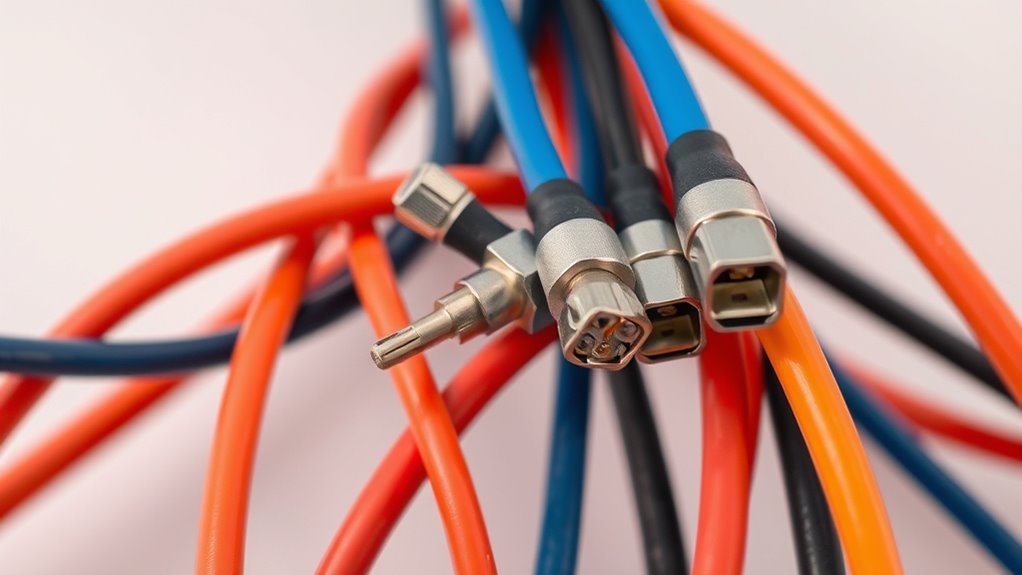
Choosing the right solar cables, connectors, and wiring is essential for a safe, efficient system. You should pick cables with durable insulation that withstands sunlight, moisture, and temperature changes, ensuring long-term performance. Use proper connectors that fit securely and follow your system’s voltage and current ratings. Correct routing and high-quality conductors like copper further improve safety and efficiency. Keep in mind these basics to set up a reliable solar power system and discover more tips along the way.
Key Takeaways
- Select durable, UV-resistant cables with appropriate insulation types (e.g., XLPE, EPDM) for outdoor solar installations.
- Ensure cables and connectors are rated for your system’s voltage and current to guarantee safety and efficiency.
- Properly route and secure wiring to prevent physical damage and maintain system reliability over time.
- Use high-quality copper conductors for better conductivity and longevity in solar wiring systems.
- Follow manufacturer guidelines and electrical codes for compatibility, connection practices, and installation safety.
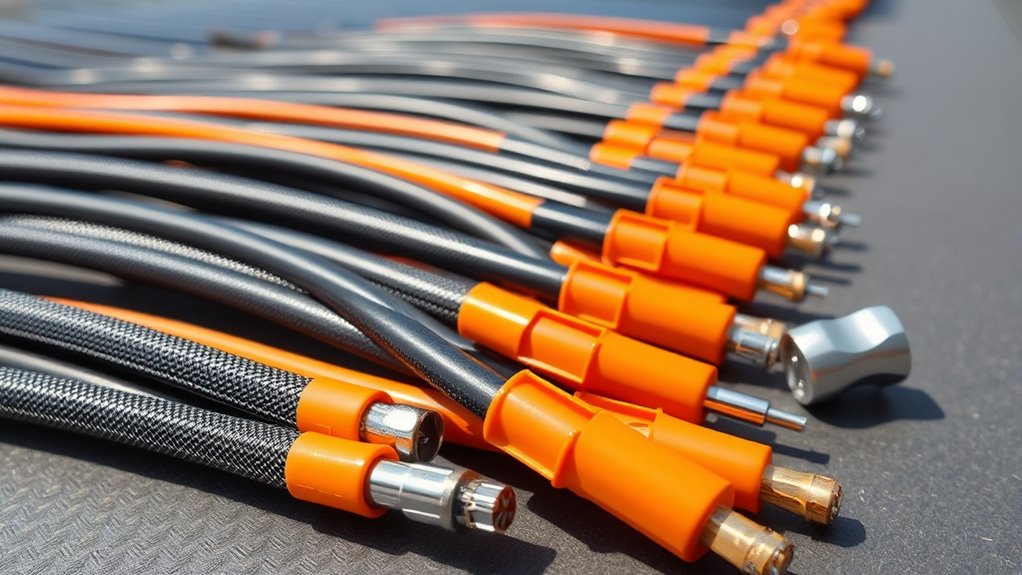
When installing a solar power system, choosing the right cables, connectors, and wiring is essential for ensuring safety, efficiency, and durability. One of the most critical factors you need to consider is the solar cable durability. Your cables will be exposed to various environmental conditions, including sunlight, temperature fluctuations, rain, and wind. Therefore, selecting cables made from high-quality materials that can withstand UV exposure, moisture, and temperature extremes is vital. Durable solar cables prevent premature failures, reduce maintenance costs, and ensure your system performs reliably over the long term.
Choosing durable, high-quality cables ensures long-term safety and performance in your solar power system.
Equally important is understanding wiring insulation types. Insulation acts as a protective barrier that prevents electrical shorts, protects against moisture, and shields the conductors from physical damage. Different insulation materials offer varying levels of protection. For example, cross-linked polyethylene (XLPE) insulation provides excellent heat resistance and durability, making it suitable for outdoor installations. Ethylene Propylene Diene Monomer (EPDM) offers superior weather resistance and flexibility, especially in colder climates. When choosing wiring, you should consider the specific environmental conditions of your installation site and select insulation types that provide appropriate protection. Proper insulation guarantees safety by preventing accidental contact with live wires and reduces the risk of electrical faults that can damage your system or pose safety hazards.
Additionally, the thickness of the insulation, often indicated by its voltage rating, plays a role in durability and safety. Higher voltage-rated cables typically have thicker insulation, offering better protection against environmental stressors. You should also pay attention to the cable’s overall build quality, including the type of conductor used—copper or aluminum—and whether it’s shielded or unshielded depending on your installation needs. Copper conductors generally offer better conductivity and longevity, making them a preferred choice for most solar setups.
Furthermore, proper cable routing and secure connections are vital to prevent physical damage and maintain system integrity over time. When selecting cables, connectors, and wiring, don’t overlook the importance of compatibility with your system’s voltage and current specifications. Using undersized or incompatible cables can cause overheating, reduce system efficiency, and pose safety risks. Always follow manufacturer recommendations and local electrical codes to guarantee your wiring setup is safe and compliant.
Frequently Asked Questions
How Do I Determine the Right Cable Gauge for My System?
To determine the right cable gauge for your system, start by calculating the total current your system will carry. Use wire gauge selection charts to match the current with the appropriate cable size, ensuring minimal voltage drop and safety. Consider the length of the run, as longer distances need thicker cables. Always choose a slightly higher gauge if in doubt, and consult local electrical codes for safety compliance.
Are There Specific Connectors Compatible With All Solar Panels?
Not all connectors are universally compatible with every solar panel, but many follow standard connector standards like MC4, which offer broad compatibility. When choosing connectors, check for universal compatibility to guarantee they fit your panels and system components. Always verify the connector standards specified by your panel manufacturer, as matching these ensures secure, reliable connections and easy installation across different brands and models.
What Safety Precautions Should I Take During Wiring Installation?
You should turn off all power sources before wiring to prevent electrical shock and avoid working in wet conditions to reduce risk. Use insulated tools and wear protective gear like gloves and goggles. Double-check connections for proper insulation to prevent fire hazards. Keep your workspace clear of debris, and follow manufacturer instructions carefully. Regularly inspect your wiring for damage, ensuring safety throughout installation and maintenance.
Can I Upgrade My Wiring Without Replacing Existing Components?
Sure, you can attempt wiring upgrades without replacing existing components—just like trying to update your phone’s software without changing the hardware. While it might seem easy, it’s risky and often not recommended. For safe and effective wiring upgrades, you’ll likely need to replace some components to ensure everything works seamlessly and safely. Ignoring this could lead to issues, so it’s best to evaluate whether component replacement is necessary before proceeding.
How Weather-Resistant Are Standard Solar Cables and Connectors?
Standard solar cables and connectors are quite weather-resistant thanks to durability testing and their material composition. They’re designed to withstand UV rays, rain, and temperature fluctuations, making them suitable for outdoor use. However, their resistance varies by manufacturer. You should check product specifications and certifications to verify they meet your weather conditions, and consider protective enclosures for added longevity in harsh environments.
Conclusion
By understanding solar cables, connectors, and wiring, you build a reliable system, guarantee safety, and maximize efficiency. With the right knowledge, you select quality components, make proper connections, and maintain your setup. By paying attention to details, troubleshooting issues becomes easier, and your solar energy system performs better. Remember, choosing the right cables, connectors, and wiring isn’t just a task—it’s the foundation of a successful solar project, powering your future with confidence and clarity.