
A defect notice over 14,000 euros, addressed to an electrical contracting firm with 40 employees. In the past, that would have cost three weeks and a lot of nerves. This time, the answer takes eleven minutes — and then the real story begins: the one about the subcontractor who doesn’t just tolerate a documentation tool, but uses it.

Get backup power and energy gear delivered free with Prime
- Fast, free delivery on millions of items
- Prime Video, Amazon Music and more included
- Member-only deals all year
A €14,000 defect notice lands at a 40-person electrical firm. In the past: three weeks and a lot of nerves. This time the answer takes eleven minutes — because the subcontractor keeps its own chain of evidence.
- April — Lead fitter Adrian Kowal files a wall breakthrough as a request: photo, location, dimensions. He may not decide it; approval runs through site management and structural engineering, attached to the case.
- April 28 — The jour fixe discusses the cable routing; the resolution is minuted as an item, audio retained, delivery to all parties documented.
- May 6 — Closure window for 3rd-floor-east: all trades notified — German for Vosskamp’s people, Polish for part of the crew. Kowal walks the axis and dictates six sentences: route, distances, clamps, fire-stopping, labeling, photo positions. Photos, time, place and audio stay anchored with a timestamp.
- Thursday — The notice arrives. Vosskamp attaches the counter-evidence: cable run in the photo, measurements against the axis, the approved plan revision, the jour fixe minutes. Same chain of evidence as the notice itself, visible to both sides.
- +2 days — Claim withdrawn. The error lay in a ceiling grid changed after the meeting and never redistributed — the missing read receipts for that plan revision are in the history too.
“I request, I don’t decide — and that’s exactly why nobody can pin the decision on me afterwards.”
— Adrian Kowal, lead fitter, Elektro Vosskamp (fictional example company)The subcontractor’s own file
- Equal-ranking trail: photos, dictations, certificates on the same cases
- Full export at any time — without asking anyone
- One login for four general contractors; client data stays strictly separated
- Plan revision H vs. I compared visually in the browser — no CAD license, correction cloud back as a model issue
- Archive with intact chain of evidence at a fraction of an active project’s cost
The downside, stated openly
- “I never got that” no longer applies — read receipts and portal history are symmetric
- A fitter blowing a deadline is on record too
- Two fitters never warmed up to the new visibility; one left the company
- Vosskamp’s defense: “A tool with which I can prove my own good work, I feed voluntarily.”
Self-certification as its own workflow — before, after, timestamp, own copy. Receivables have visibly fallen since the switch: not because anyone pays faster, but because nobody has to ask questions anymore. With its consent-based certification profile, the firm won an autumn tender as the most expensive bidder.
Scenario story: Elektro Vosskamp is a fictional example company. The story shows the target build-out of Gewerkton; individual features are in beta or under development.
“You owe us a ceiling”
The letter arrives on a Thursday. A general contractor that Elektro Vosskamp has worked with for four years is claiming costs: in an office building in Lingen, an already closed suspended ceiling had to be opened up again because a cable run had been routed incorrectly. Demolition, reconstruction, painting, construction delay — 14,000 euros, addressed to the company with the 40 people, not the one with the 180.
Henrik Vosskamp knows the statics of such letters. The subcontractor sits on the shorter lever because the subcontractor rarely has evidence. He has fitters, deadlines, and invoices — but the documentation of the construction site traditionally belongs to whoever keeps it.
On this Thursday, that is different, and the reason lies seven months back.
construction project documentation software
As an affiliate, we earn on qualifying purchases.
As an affiliate, we earn on qualifying purchases.
The Request the Fitter Never Decided
In April, lead fitter Adrian Kowal needs a breakthrough through a partition wall on the third floor. In the old world, that means: have a quick word with the foreman, put the core drill on, keep working — and a year later someone asks who authorized that.
In the platform, the breakthrough is a request. Kowal files it with a photo, location, and dimensions; he is not allowed to decide it. The path runs back through site management and structural engineering, with approval or rejection, and everything stays attached to the case. Kowal found it bureaucratic at first. Today he says the sentence that explains evidence symmetry better than any feature list: “I request, I don’t decide — and that’s exactly why nobody can pin the decision on me afterwards.”
The cable run the letter is about is not this breakthrough. But it lies in the same area, and above that same area a ceiling is closed six days later.
electrical site evidence management tool
As an affiliate, we earn on qualifying purchases.
As an affiliate, we earn on qualifying purchases.
The Last Look
On May 6, the drywall contractor reports for the 3rd-floor-east area: closure on the following day. The platform opens a window for this and notifies all trades that have anything lying there — including those who don’t have an account with the general contractor, only a portal link. Vosskamp’s people get the message in German, the Polish-speaking part of the crew in Polish.
That evening, Kowal walks the axis and speaks six sentences into his phone. Cable run route, distances, clamps, fire-stopping, labeling, photo positions. From the dictation come structured suggestions, which he confirms; photos, time, place, component reference, and the audio recording itself remain stored unchanged, anchored with a timestamp.
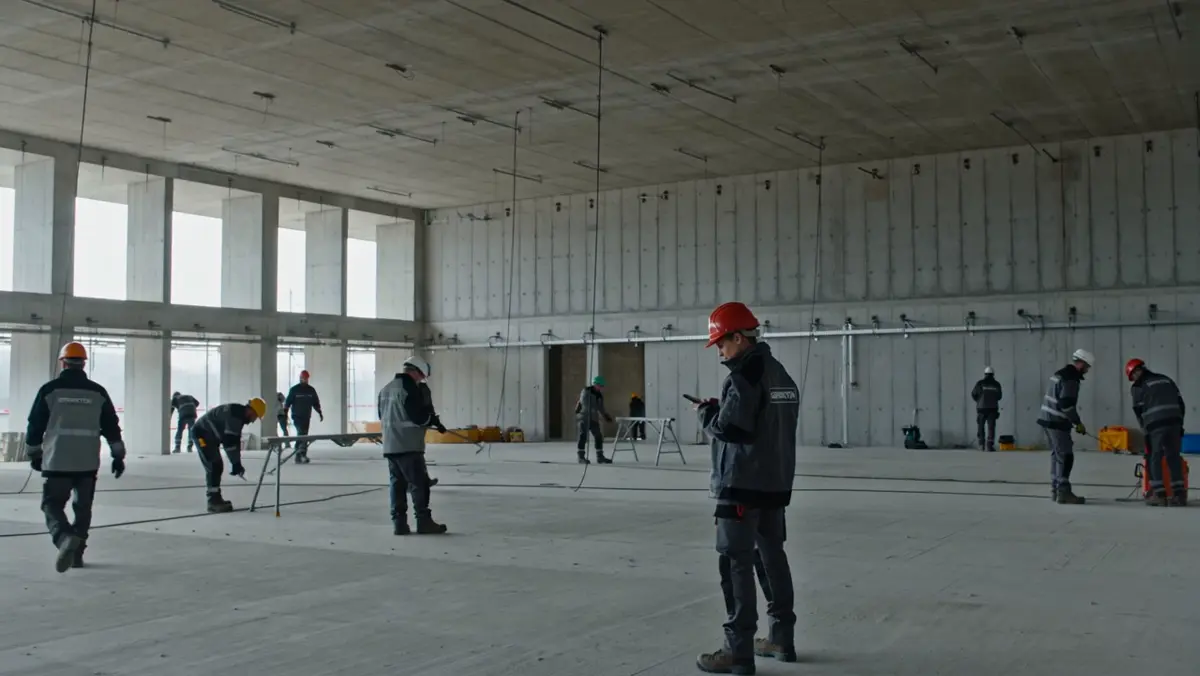
The decisive thing about this is not the technology. It is who owns the trail. Vosskamp does not document in the general contractor’s file, but in its own, equal-ranking trail with the same chain of evidence — photos, dictations, certificates, hanging on the same cases. The company can export this trail in full for itself at any time, without asking anyone for permission.
digital photo and audio documentation app
As an affiliate, we earn on qualifying purchases.
As an affiliate, we earn on qualifying purchases.
Eleven Minutes
Back to Thursday. Vosskamp opens the case, selects “counter-evidence,” and attaches to the notice what was created on May 6: the cable run route in the photo, the measurements against the axis, the plan with the approved revision — and the minutes of the jour fixe from April 28, in which the cable routing was discussed. The audio track for it exists; in the minutes, the resolution is recorded as an item, and the delivery to all parties is documented.
The counter-evidence is neither a goodwill form nor a comment field. It carries the same chain as the notice itself, and it is visible to both sides.
Eleven minutes after opening, the case is submitted. Two days later the answer comes: the general contractor withdraws the claim. The error lay in the ceiling grid, which had been changed after the meeting and not redistributed — which is likewise in the history, along with the read receipts that are missing for that plan revision.
Vosskamp did not experience this triumphantly. He experienced it as expensive: “For four years I paid letters like this because disputing them would have cost more than paying.”
construction change order tracking software
As an affiliate, we earn on qualifying purchases.
As an affiliate, we earn on qualifying purchases.
What Else the Company Gets Out of It
The dispute is the story you tell. The everyday is the story that counts.
One login, four clients. Vosskamp works for four general contractors, and all four use the same platform. Yet there is only one account and one view: all construction sites, all open items, all deadlines. The separation between clients remains technically strict — no client sees another’s data — but Vosskamp’s dispatcher sees her company in one place.
Crews across three construction sites. From the same view, the weekly disposition is created. Who is where, which completion notice triggers which next move, where a bottleneck arises because the same four people are needed in two places. For a specialty contractor whose costing hangs on utilization, that is the most tangible benefit in the whole system.
Plans without a CAD license. Kowal opens the shop drawing in the browser, not in the drafting program. He sees the difference between revision H and revision I visually marked, measures in the calibrated plan, places a correction cloud on the cable routing, and sends the item back to the engineering office as a model issue — in the open exchange format, without a media break. Where no model existed at all for an existing building, Vosskamp’s technician captured the affected rooms herself in the browser in order to be able to show the riser zones. Detailed planning this is not, and it doesn’t want to be; that stays with the architect.
Done means proven. The self-certification is its own workflow for the subcontractor: before, after, timestamp, own copy. Proven performance becomes a progress-billing line faster; Vosskamp’s receivables have visibly fallen since the switch — not because anyone pays faster, but because nobody has to ask questions anymore.
Assets instead of slips of paper. For the technical building equipment, Vosskamp maintains assets with identifier, room, product data, and document references, plus measurement series from the functional tests. The templates query raw value, unit, method, device, and conditions — and evaluate nothing. What is permissible is decided by the specialist; the tool records what was measured. In the end there is a report with an index and checksums that runs directly into the object’s handover data set and from there migrates into the operating phase: inspection cycles, maintenance certificates, asset register.
Their own inventory. Completed projects are kept by Vosskamp in the archive — read access, chain of evidence intact, stored immutably, for a fraction of what an active project costs. For a company whose records are subject to retention periods of many years, that is the first affordable answer to a question that previously had only two bad options. And once a quarter, management reads its own figures across all clients: recurring defects, time to response, interfaces with other trades — teams and construction sites, not individuals.

Their own calling card. From the statistics of their own company — and only with their consent — a shareable profile is created: how many items were remedied on time, how many recurring defects there were, in how many languages reports come back. With it, Vosskamp won a tender in the autumn in which he was the most expensive bidder. His certification profile can be found in the company directory; the training certificates of his crews are attached to it.
The Downside, Stated Openly
It exists. “I never got that” no longer applies — and that hits both sides. Read receipts, deliveries, and portal history are symmetric, and when one of Vosskamp’s fitters blows a deadline, that’s on record too. Two fitters never warmed up to the new visibility; one left the company.
Vosskamp defends it anyway, and not with efficiency but with a power argument: “A tool that only collects evidence for the site manager, we will all sabotage. A tool with which I can prove my own good work, I feed voluntarily.”
On the building site, what counts is what is proven. The sentence does not belong only to those who hand out the contracts.
Transparency: Gewerkton is a product from the house of the publisher of this publication.
[Powered by Thorsten Meyer AI](https://thorstenmeyerai.com/)Learn more about Gewerkton and its lines: Field, Studio and Cloud.
Halloween Picks
halloween
As an affiliate, we earn on qualifying purchases.