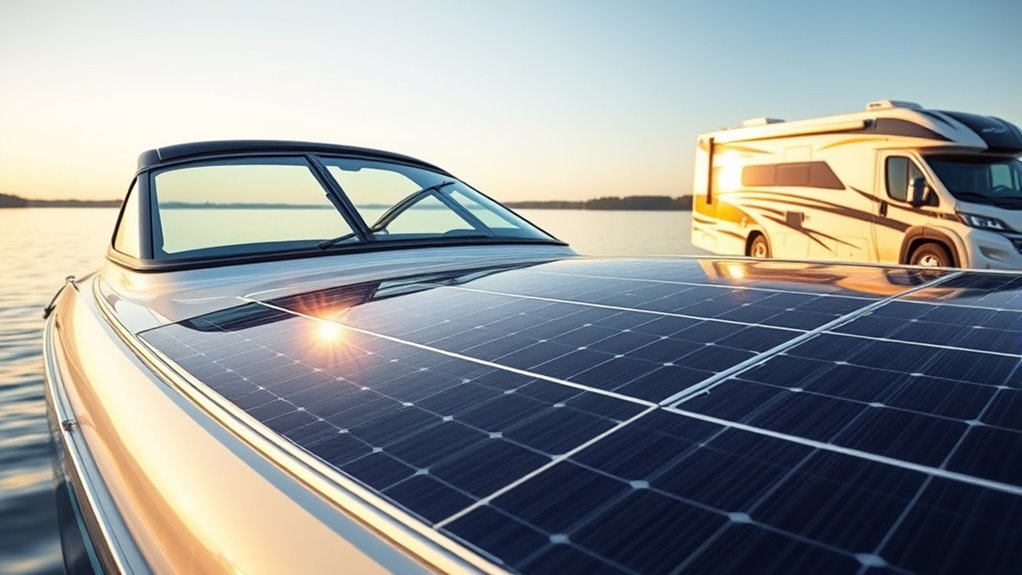
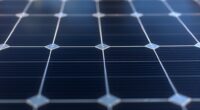
Flexible solar panels provide a lightweight, durable, and adaptable power source perfect for boats and RVs. They easily conform to curved surfaces, making installation straightforward and secure even during movement. Their high durability ensures they withstand harsh weather, vibrations, and prolonged sun exposure. Proper installation and maintenance can extend their lifespan and maximize energy output. If you want to discover more about choosing and preserving these panels, keep exploring the options available for your mobile needs.
Key Takeaways
- Flexible solar panels are lightweight and can be easily installed on curved surfaces of boats and RVs.
- They are durable, tested to withstand harsh weather, vibrations, and prolonged sun exposure.
- Installation is simple with adhesives or lightweight brackets, suitable for DIY setups.
- Their lightweight design reduces structural stress and simplifies handling and transportation.
- Regular maintenance and proper installation extend panel lifespan and ensure optimal energy performance.

Flexible solar panels are revolutionizing the way we harness renewable energy by offering lightweight, adaptable, and durable alternatives to traditional panels. When you’re considering installing these on your boat or RV, you’ll appreciate how their flexibility allows them to conform to curved surfaces, saving space and reducing weight. But durability is essential, especially in environments exposed to the elements. Manufacturers perform rigorous durability testing to guarantee these panels can withstand harsh weather conditions, vibrations, and frequent movement. This testing simulates real-world scenarios—like hail, wind, and prolonged sun exposure—so you can trust that your panels will endure over time. Knowing that they are built for resilience gives you peace of mind when off-grid or parked in remote locations. Additionally, the use of high-quality filters and sensors in testing ensures that panels maintain optimal performance under varying environmental factors.
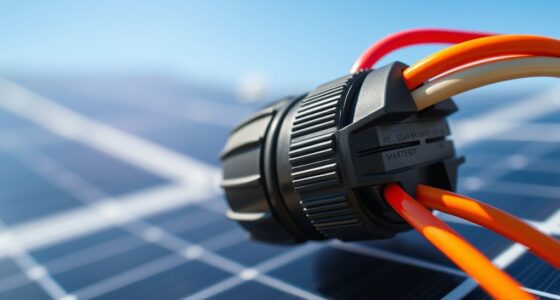
Installation techniques for flexible solar panels are straightforward and adaptable, making them ideal for mobile settings. You don’t need complex mounting hardware or structural modifications. Instead, you often use adhesive or lightweight brackets designed specifically for these panels. The flexibility allows you to mount them on curved surfaces like the roof of your boat or the rounded top of your RV without concern for gaps or uneven surfaces. Proper installation is essential; you want to guarantee good contact between the panel and the surface to maximize energy generation. Many users prefer using high-quality, weather-resistant adhesives that can handle vibrations and temperature fluctuations. It’s also important to consider wiring and connections—secure, waterproof connectors prevent moisture ingress that could impair performance.
Because flexible solar panels are lightweight, they reduce the stress on your vehicle’s structure, which is especially important for boats and RVs that are constantly moving or exposed to rough conditions. This lightweight nature also simplifies the installation process, allowing you to do it yourself with minimal tools and effort. However, to extend their lifespan, you should pay attention to the installation techniques, ensuring panels are securely attached and protected from potential damage caused by debris or accidental impacts. Regular inspections and maintenance help identify any wear or issues early, maintaining peak performance.
Frequently Asked Questions
How Do Flexible Solar Panels Perform in Extreme Weather Conditions?
Flexible solar panels generally perform well in extreme weather, thanks to durability testing and weather resilience. You’ll find they withstand high winds, heavy rain, and even snow, without losing efficiency. However, you should regularly check for damage or wear to guarantee longevity. While they’re designed to handle tough conditions, proper installation and maintenance help maximize their performance and durability in extreme environments.
Can Flexible Solar Panels Be Installed on Curved Surfaces Easily?
Ever wondered if flexible solar panels can seamlessly fit on curved surfaces? You’ll find they’re designed for easy curved surface installation, thanks to their pliable material. Using adhesive mounting techniques, you can firmly attach them without drilling or complex hardware. This flexibility allows you to customize your setup and maximize space, making it straightforward to adapt panels to your boat or RV’s unique contours. Isn’t it great how simple installation can be?
What Is the Lifespan of Flexible Solar Panels on Boats and RVS?
Flexible solar panels typically last 5 to 10 years, depending on durability testing and environmental exposure. You should perform regular maintenance, like cleaning and inspecting for damage, to maximize their lifespan. While they’re designed to withstand harsh conditions on boats and RVs, factors like UV rays and saltwater can impact longevity. Proper care guarantees you get the most out of your flexible solar panels and extend their useful life.
Are Flexible Solar Panels Waterproof and Resistant to Saltwater?
While flexible solar panels aren’t entirely impervious, they boast impressive marine durability and corrosion resistance, making them well-suited for saltwater environments. You’ll find that they remain resilient against moisture and salt exposure, effectively resisting water intrusion. This means your panels can handle the rigors of marine life, providing reliable power without compromising performance, as long as you choose high-quality, marine-rated options designed specifically for saltwater conditions.
How Do Flexible Solar Panels Compare in Efficiency to Traditional Rigid Panels?
Flexible solar panels generally have a lower efficiency comparison to traditional rigid panels, often converting about 15-20% of sunlight into electricity. However, their lightweight advantages make them ideal for mobile applications, allowing easier installation and less added weight. While you might sacrifice some efficiency, you gain portability and flexibility, which can be more beneficial depending on your setup. Overall, they’re a practical choice if weight and adaptability are your priorities.
Conclusion
Flexible solar panels are a smart choice for boats and RVs, offering lightweight, durable, and easy-to-install energy solutions. They conform effortlessly to curved surfaces, making them perfect for your adventurous lifestyle. Think of them as the chameleon of solar power—adapting seamlessly to your needs. By choosing flexible panels, you empower yourself with clean energy that keeps your journeys going smoothly. Embrace this eco-friendly option and enjoy the freedom of reliable power wherever you go.