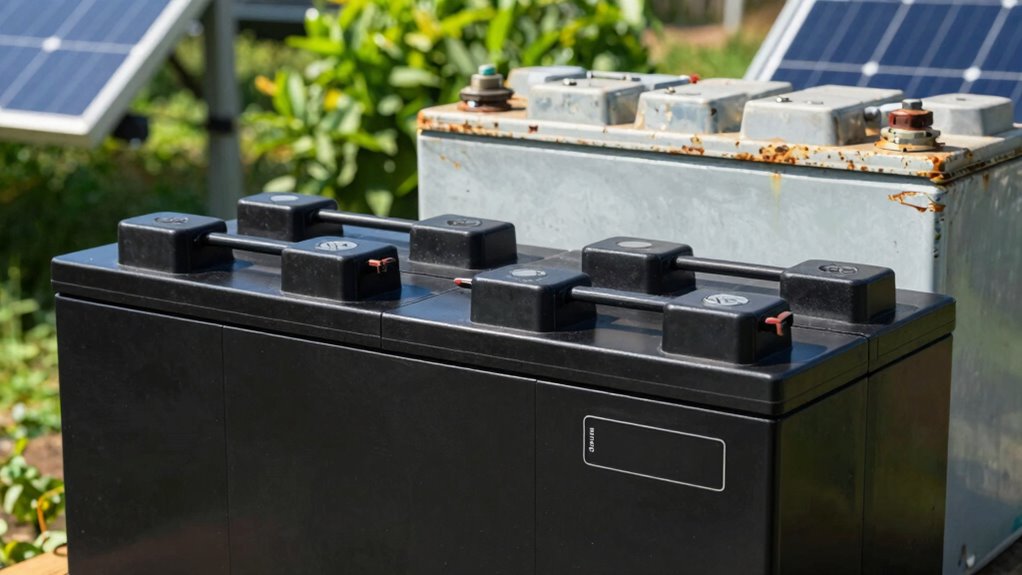

Deep cycle lithium batteries are replacing older solar setups because they last much longer and handle repeated charge cycles better. They offer faster charging, improve system efficiency, and are lighter and more space-efficient. You’ll notice fewer maintenance costs and better performance during limited sunlight. Their durability and high energy density make them a smart upgrade for reliable, cost-effective power. Keep exploring to discover how these batteries can transform your solar energy system even further.

Get backup power and energy gear delivered free with Prime
- Fast, free delivery on millions of items
- Prime Video, Amazon Music and more included
- Member-only deals all year
Key Takeaways
- Deep cycle lithium batteries last longer and withstand more charge cycles, reducing the need for frequent replacements in solar setups.
- They offer faster charging and higher efficiency, improving overall system performance and reliability.
- Their compact, lightweight design saves space and allows for easier upgrades in existing solar configurations.
- Enhanced durability and high energy density ensure consistent power delivery over extended periods.
- Cost-effective due to lower maintenance and longer lifespan, making them a sustainable upgrade from older batteries.
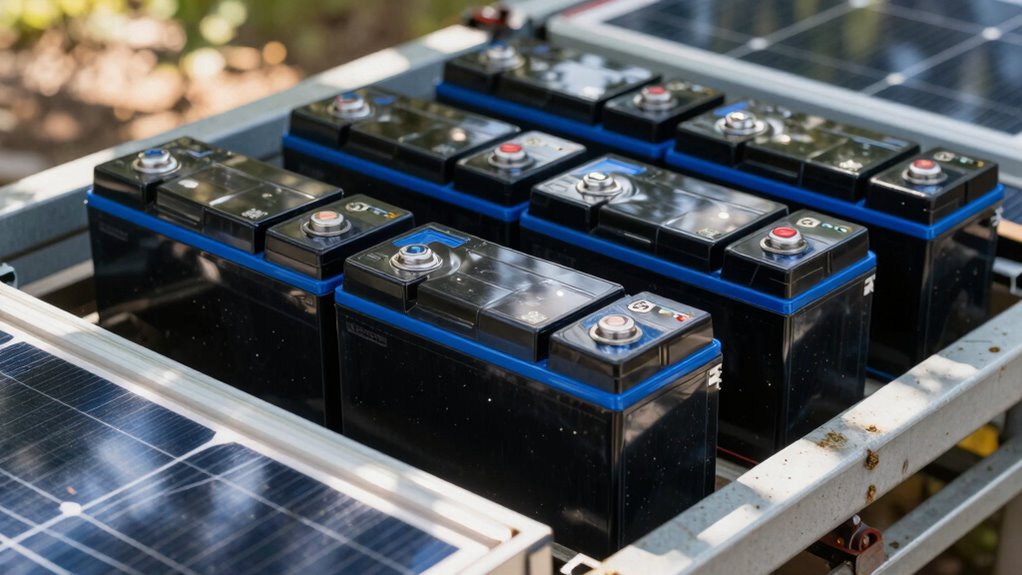
Are you looking for a reliable power source that can handle repeated use without losing performance? If so, deep cycle lithium batteries are quickly becoming the go-to choice for replacing older solar setups. Unlike traditional lead-acid batteries, these batteries offer an impressive battery lifespan that extends far beyond what you might expect. You won’t need to worry about frequent replacements, saving you both time and money in the long run. Their durability allows you to draw down their charge repeatedly without degrading, making them ideal for solar energy systems that demand consistent, reliable power.
Deep cycle lithium batteries provide long-lasting, reliable power for solar setups, reducing replacements and improving efficiency over time.
One of the biggest benefits of upgrading to deep cycle lithium batteries is their superior charging efficiency. They charge faster and more effectively than many older battery types, which means you spend less time waiting for your system to recharge. This efficiency is crucial if you’re managing a remote or off-grid setup where maximizing energy use is essential. Plus, their ability to handle high charge and discharge cycles without significant wear makes them a smart investment. You’ll notice that your solar system becomes more responsive and reliable, especially during periods of limited sunlight or high energy demand. Additionally, the longer lifespan of these batteries reduces the need for frequent replacements, further enhancing their value.
Another advantage is that deep cycle lithium batteries are lightweight and space-efficient. They pack more power into a smaller footprint, allowing you to optimize your setup without sacrificing capacity. This feature is particularly useful if you’re upgrading an existing solar array and need to fit new batteries into tight spaces. Their long-lasting performance means you won’t have to worry about replacing them every few years, unlike older battery options that tend to lose their capacity over time. This durability not only improves your system’s overall efficiency but also reduces maintenance costs, giving you peace of mind. Additionally, their high energy density contributes to their compact size and increased capacity. As technology advances, the availability of deep cycle lithium batteries continues to grow, making them a more accessible option for various energy needs. Moreover, ongoing innovations in battery technology are further enhancing their performance and reliability, ensuring they remain a top choice for sustainable energy solutions.
Furthermore, these batteries tend to have a higher depth of discharge, enabling you to utilize more of their stored energy and extract maximum value from your investment. Over time, this translates into a more sustainable and cost-effective energy solution. If you’re tired of dealing with unreliable, short-lived batteries that hinder your solar system’s performance, making the switch to deep cycle lithium batteries offers a clear upgrade. They deliver consistent, efficient power that keeps your solar setup running smoothly, year after year.
Products Worth Considering

Sonos Era 100 SL Compact Microphone-Free Speaker, Black

eufy Security SoloCam S340 3K Dual-Lens Solar Security Camera

Ring Battery Doorbell 2K Plus, Indoor Cam 2K, and Window & Door Sensor Bundle
As an affiliate, we earn on qualifying purchases.
Frequently Asked Questions
How Long Do Deep Cycle Lithium Batteries Typically Last?
Deep cycle lithium batteries usually last between 5 to 15 years, depending on how well you care for them. They can handle around 2,000 to 5,000 charging cycles, making them more durable than traditional batteries. When it’s time to replace them, consider battery recycling options to reduce environmental impact. Proper maintenance, avoiding overcharging, and monitoring performance help extend their lifespan, ensuring you get the most out of your solar setup.
Are Lithium Batteries Environmentally Friendly Compared to Traditional Options?
Lithium batteries are like eco-friendly warriors, but they face recycling challenges that can impact their environmental friendliness. Compared to traditional options, they use fewer resources during operation, but resource extraction for lithium can harm ecosystems. Recycling efforts are essential to reduce waste and environmental harm. Overall, while they’re better in some ways, you should consider these factors when evaluating their environmental impact.
What Is the Ideal Depth of Discharge for Lithium Batteries?
You should aim for a depth of discharge (DoD) of around 80% for lithium batteries, which balances longevity and performance. This level helps maximize energy density while reducing stress on the battery, extending its lifespan. Since lithium batteries are more recyclable than traditional ones, proper recycling after use is vital. Keeping within the recommended DoD guarantees you get the most out of your investment and supports sustainable battery recycling practices.
Can Lithium Batteries Be Safely Used in All Weather Conditions?
Think of lithium batteries as weather-resistant warriors—they can handle most conditions. You can safely use them in all weather, but proper battery safety practices are essential. Extreme cold may reduce efficiency, while excessive heat can shorten lifespan. To guarantee weather resilience, keep batteries protected from direct sunlight and moisture. With thoughtful care, your lithium batteries will stand strong against the elements, powering your setup reliably year-round.
How Do Lithium Batteries Impact Overall Solar System Efficiency?
Lithium batteries boost your solar system efficiency by offering superior energy storage and faster charging. They reduce downtime, optimize power output, and extend system lifespan. Plus, their recyclability minimizes environmental impact, supporting sustainable energy storage. When you choose lithium, you’re enhancing overall performance while contributing to responsible battery recycling efforts, ensuring your solar setup remains efficient and eco-friendly for years to come.
Conclusion
As you consider upgrading your solar setup, deep cycle lithium batteries prove to be the smarter choice. They offer longer lifespan, better efficiency, and lighter weight than older options. Isn’t it time you embraced the future of energy storage? Making the switch now means you’ll enjoy more reliable power and fewer replacements down the line. So, why settle for less when you can upgrade to the best in solar technology today?