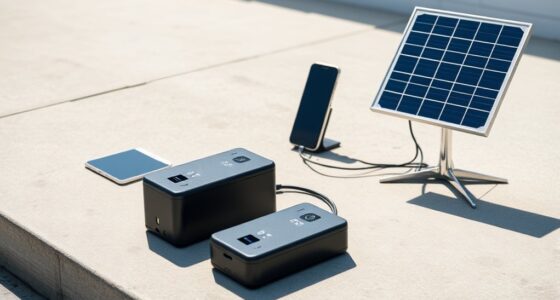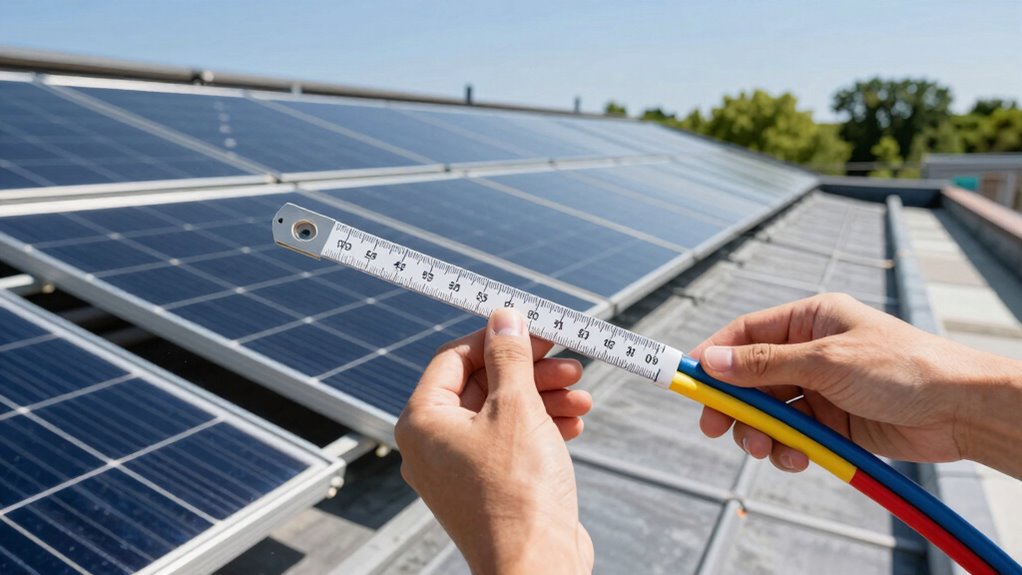

To choose the right solar extension cable length, measure the distance between your solar panels and inverter or charge controller accurately, considering any future system changes. Avoid overly long cables to prevent energy loss and unnecessary slack that can cause tangling or damage. Use outdoor-rated cables suited for environmental conditions to guarantee safety and durability. Properly managing cable length enhances system performance and safety. Keep exploring to learn more tips for ideal installation and management.
Key Takeaways
- Measure the exact distance between solar panels and the inverter to determine appropriate cable length.
- Account for future system modifications when selecting cable length for flexibility.
- Choose a cable length that minimizes excess slack to prevent tangling and damage.
- Use outdoor-rated cables suited for environmental conditions to ensure durability and safety.
- Plan for proper cable management to maintain system safety and prevent wiring issues.
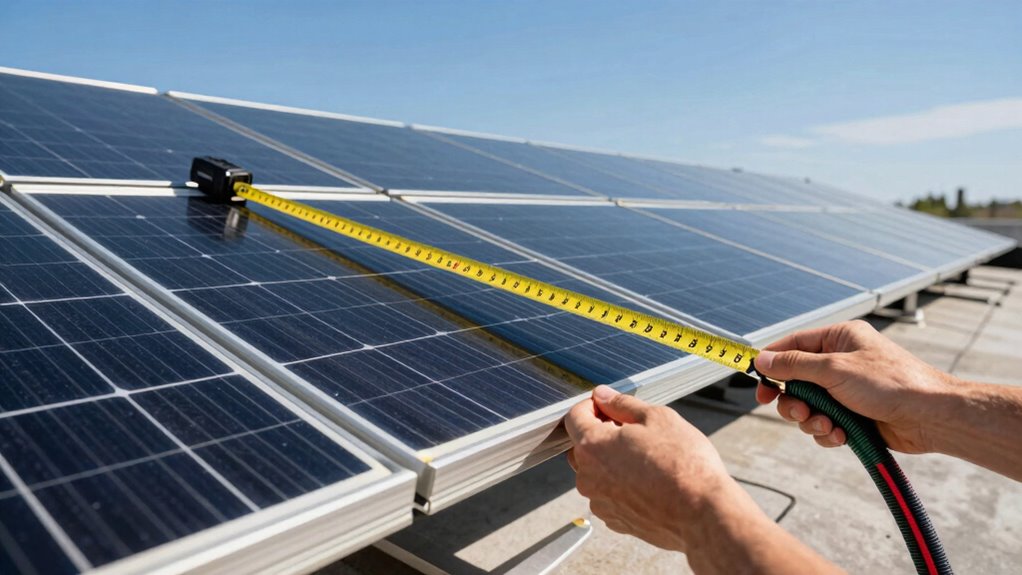
Are you confident you’re selecting the best solar extension cable for your setup? Getting the right length isn’t just about reaching your panels or inverter; it’s about ensuring your entire system functions efficiently and safely. Choosing an extension cable that’s too long can lead to unnecessary energy loss, reducing overall system efficiency. On the other hand, a cable that’s too short might require additional connectors or repositioning of your equipment, which can introduce points of failure or increase installation costs. To strike the right balance, you need to accurately measure the distance between your solar panels and the inverter or charge controller, considering potential future adjustments. Remember, having a little extra length can be helpful for flexibility, but avoid excessive slack that could cause tangling or damage. Proper cable management can help prevent safety issues and prolong the life of your setup. Additionally, understanding the importance of proper wiring can significantly impact your system’s safety and performance. Using the right tools and techniques for installation is essential to avoid common wiring mistakes that could compromise your system’s integrity. Ensuring your cables are properly rated for outdoor use is also crucial, especially when exposed to environmental elements, as this directly affects durability and safety. Being aware of the impact of environmental conditions on cable longevity can help you select the most suitable materials for your installation.
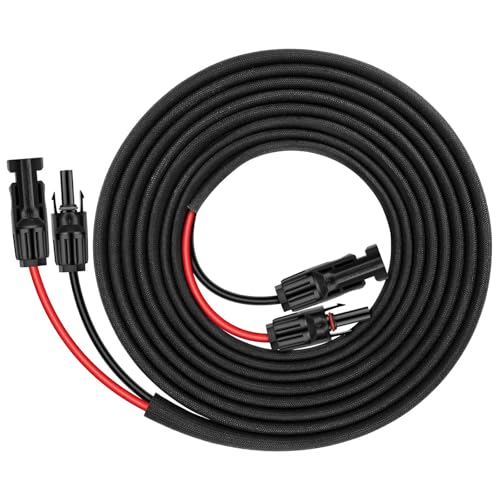
Geosiry 20FT 12AWG Solar Panel Extension Cable with Female and Male Connectors, Solar Extension Cable for Solar Panels, Charge Controllers and Solar Generators (12AWG, 20FT)
Quality Solar Cable: A pair of 20 foot long 12AWG solar panel extension cable (1 black + 1…
As an affiliate, we earn on qualifying purchases.
As an affiliate, we earn on qualifying purchases.
Frequently Asked Questions
Can I Use Regular Extension Cords for Solar Panels?
You shouldn’t use regular extension cords for solar panels because they lack universal compatibility and aren’t designed for solar power systems. These cords may not handle the voltage or weather conditions, risking safety and efficiency. Instead, choose specialized solar extension cables that match your system’s specifications. While they might cost more initially, they ensure better safety, durability, and performance, making them a smarter investment in the long run.
How Do Weather Conditions Affect Cable Length Choices?
Weather conditions greatly impact your cable length choices. You need durable cables that withstand weather resilience, such as rain, wind, and UV exposure. Temperature fluctuations cause materials to expand and contract, so opt for cables with flexible insulation to prevent damage. If you expect extreme weather, choose slightly longer cables to avoid tension and ensure safety. Properly matching cable length to weather conditions helps maintain system efficiency and longevity.
Is There a Maximum Length for Solar Extension Cables?
Like Icarus flying too close to the sun, your solar extension cables have a practical limit. The maximum length depends on cable resistance and voltage drop, which increase with length. If cables are too long, voltage drops compromise efficiency, and resistance may cause overheating. To avoid these issues, keep cable runs within recommended lengths—usually around 15-20 meters—ensuring ideal performance and safety for your solar setup.
What Safety Precautions Should I Take When Extending Cables?
When extending cables, you should prioritize safety by guaranteeing proper cable insulation to prevent electrical shocks and shorts. Always check grounding requirements to avoid potential electrical hazards. Make certain connectors are secure and weatherproof, especially in outdoor settings. Avoid overloading cables, and inspect for damage regularly. Following these precautions helps protect your system and ensures safe, efficient operation of your solar setup.
How Does Cable Length Influence Solar System Efficiency?
Longer cable lengths can decrease your solar system’s efficiency due to increased voltage drop, which reduces power output. To minimize this, choose an appropriate cable gauge; thicker cables (lower gauge numbers) help prevent voltage loss over distance. By balancing cable length with proper gauge, you guarantee the best energy transfer, maximizing system performance. Keeping cables as short as feasible also helps maintain efficiency and prevents unnecessary power loss.
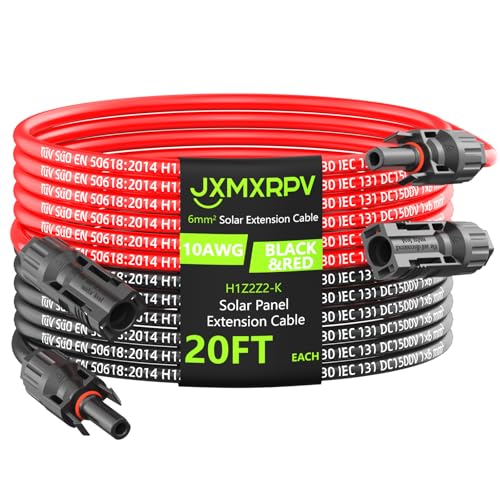
JXMXRPV Solar Cable Extension 20Ft 10AWG, Solar Wire with Tool-Free Solar Connectors, Waterproof Solar Panel Extension Cable 6mm², PV Cable 10Gauge for Home Boat RV Solar Panels(20ft)
Extended Reach: Our Solar Panel Connector Extension Cable provides an extended reach for connecting solar panels to inverters…
As an affiliate, we earn on qualifying purchases.
As an affiliate, we earn on qualifying purchases.
Conclusion
Remember, choosing the right solar extension cable length is about finding the perfect balance—neither too short nor too long. Think of it like fitting a puzzle piece; if it’s too tight, it won’t sit right, and if it’s too loose, it won’t connect properly. By measuring carefully and considering your setup, you’ll guarantee your solar system runs smoothly. When in doubt, it’s better to have a little extra length than to be left short—it’s better to have it and not need it than need it and not have it.

energeaster 10AWG Solar Cable with Pair of Connectors Solar Panel Adaptor Kit Tool, Extension Cable,10 Gauge Wire,Red and Black(20FT Red + 20FT Black)
Tinned Coppoer Wire: Made with tin-coated pure cooper, the tinned-coated pure cooper cable has good electrical conductivity, compared…
As an affiliate, we earn on qualifying purchases.
As an affiliate, we earn on qualifying purchases.
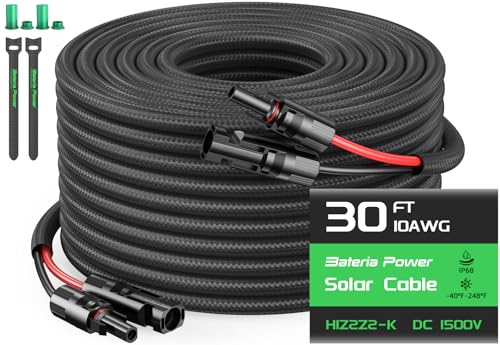
Bateria Power 10AWG 30FT Solar Panel Extension Cable, Flame Retardant Protective Sleeving Twin Wire 10 Gauge Solar Cable with IP68 Female & Male Waterproof Connectors, Dust Caps for Home, RV
【Enhanced Solar Cable with Protective Sleeving】Our solar cables feature heavy-duty flame-retardant sleeving for superior abrasion resistance against dragging,…
As an affiliate, we earn on qualifying purchases.
As an affiliate, we earn on qualifying purchases.