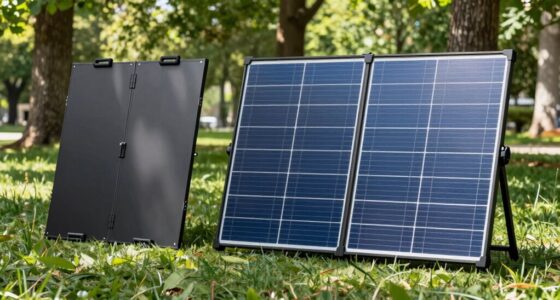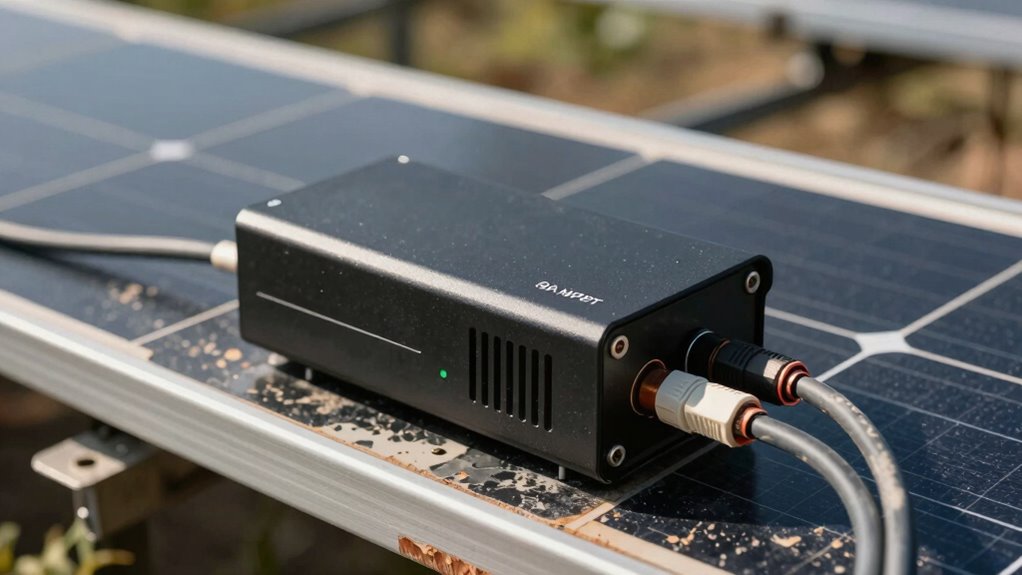

A 60A MPPT controller isn’t always the best choice because it can be more expensive and complicated than necessary for your system. Oversizing may lead to higher costs and more complex wiring, without providing real performance benefits if your needs are smaller. Properly matching the controller to your current system guarantees efficiency, safety, and savings. To find out more about choosing the right size, keep exploring how system needs and component compatibility matter.

Get backup power and energy gear delivered free — and shop member deals
- Fast, free delivery on millions of items
- Access to Prime Big Deal Days deals on October 6–7
- Prime Video, Amazon Music and more included
Key Takeaways
- Higher amperage controllers are not necessarily more efficient or suitable for small or moderate systems.
- Oversizing a controller increases cost and complexity without improving performance.
- Properly matching the controller’s capacity to system and battery needs ensures safety and longevity.
- Larger controllers require more complex wiring and installation, which may not be ideal for DIY setups.
- Focusing on system requirements and compatibility yields better performance than simply choosing the highest-rated controller.
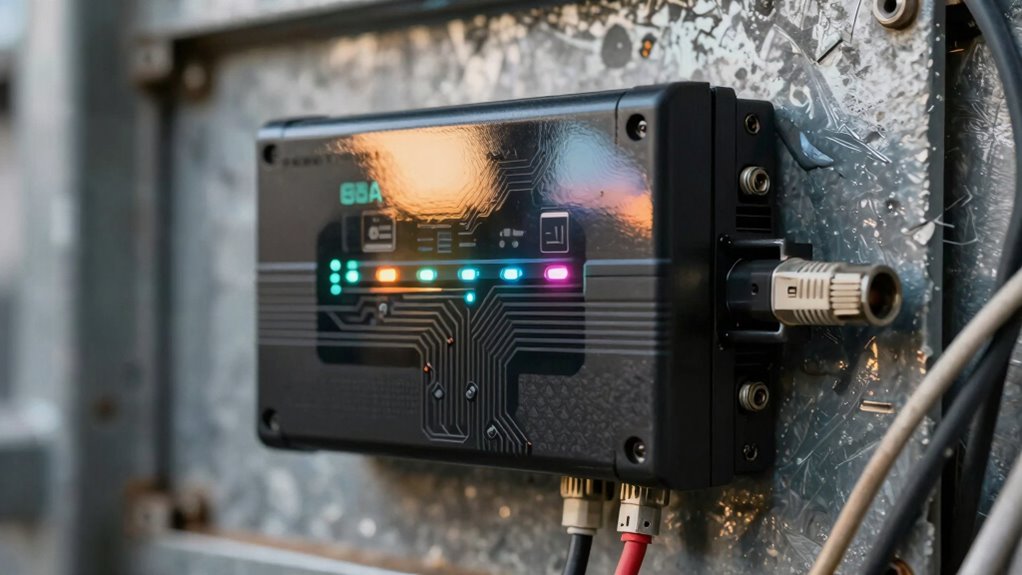
When shopping for a solar charge controller, it’s tempting to assume that a higher amperage rating, like 60A, automatically means you’ll get a better, more capable device. But that’s not always the case. Just because a controller can handle more current doesn’t mean it’s the right choice for your system. You need to consider battery compatibility, which is crucial for ensuring your batteries are charged efficiently and safely. A controller rated for 60A might be overkill if your battery bank only needs significantly less current. Using a controller with a much higher amperage rating than your system requires can lead to unnecessary expense and complexity without real benefit. Conversely, if your system grows, a 60A controller might seem like a good future-proof option, but it’s better to invest in a controller that matches your current needs and can be upgraded later, rather than overspending from the start.
Another factor often overlooked is installation complexity. A larger, more powerful controller like a 60A model can involve more complicated wiring, mounting, and setup procedures. These controllers might require additional hardware or specific configurations, which can make installation more challenging, especially if you’re a DIY enthusiast. Complex installation can lead to mistakes that compromise system safety or efficiency, and it might mean additional costs for professional help. It’s better to select a controller that aligns with your existing setup’s complexity level and your technical skills. Additionally, understanding battery compatibility is essential to avoid mismatched components that can reduce your system’s efficiency and lifespan. Moreover, selecting a controller with appropriate system capacity ensures that you’re not overspending on unnecessary features or power handling capabilities. It’s also wise to consider wiring complexity when choosing a controller to ensure it fits your skill level and system design. Recognizing the importance of component matching can prevent costly mismatches that impair system performance.
Furthermore, considering system efficiency can help you choose a controller that optimizes energy transfer and performance, rather than just focusing on maximum current capacity. Finally, a higher amperage controller isn’t necessarily more efficient or better at managing power. Many controllers operate just as well within a lower amperage range if that’s what your system demands. Oversizing your controller doesn’t improve performance—it only increases cost and potentially complicates your wiring and system integration. It’s important to match the controller’s specifications to your actual system size, including the battery capacity, panel configuration, and expected load. When you do this, you’re more likely to achieve optimal performance, safety, and longevity for your solar investment.
In short, choosing a 60A MPPT controller simply because it’s rated higher isn’t a smart move unless your system truly demands it. Focus on battery compatibility, your current and future system needs, and installation ease. This way, you avoid unnecessary costs and complications, ensuring your solar setup runs smoothly and efficiently.
As an affiliate, we earn on qualifying purchases.
Frequently Asked Questions
How Do I Determine the Right Controller Size for My System?
To determine the right controller size, you need to take into account your system’s total solar panel output and battery compatibility. Calculate your panel’s maximum current and ensure the controller can handle it comfortably. Also, think about installation considerations like space and mounting options. Choosing a slightly larger controller provides room for future expansion, but avoid oversizing, which can lead to inefficiencies. Proper sizing optimizes safety, performance, and longevity of your system.
What Are the Cost Differences Between 60A and Lower-Rated Controllers?
The cost comparison shows that 60A MPPT controllers tend to be more expensive than lower-rated options, reflecting their higher capacity and advanced features. If you’re on a tight budget, a lower-rated controller might save you money upfront, but make certain it still meets your system’s needs. Consider your future expansion plans and energy requirements to balance budget considerations with long-term performance and avoid unnecessary upgrades later.
Can a Higher-Rated Controller Improve Efficiency in Small Systems?
Like a well-tuned instrument, a higher-rated controller can boost efficiency in small systems, but only if it fits your setup. It may extend the controller lifespan by handling future expansion or increased loads. However, it might introduce installation challenges or unnecessary complexity. If you’re working with a small system, selecting a controller that matches your current needs guarantees smooth operation without added costs or complications.
What Are the Maintenance Requirements for Large MPPT Controllers?
You need to regularly inspect your large MPPT controller to guarantee peak operation. Keep the solar panel and battery connections clean and secure, preventing corrosion and loose wires. Check the system’s firmware updates and monitor for error messages. Also, verify the compatibility with your batteries to prevent damage. Proper maintenance helps maximize efficiency, prolongs lifespan, and ensures safe, reliable energy transfer in your solar setup.
Are There Specific Brands Known for Better Performance at 60A?
You should consider brands like Victron Energy, MidNite Solar, and Renogy for 60A MPPT controllers, as they offer reliable performance, good battery compatibility, and solid warranty coverage. These brands are known for their durability and efficiency, making them a smart choice. Always check the warranty terms and verify the controller is compatible with your battery type to maximize lifespan and performance.
As an affiliate, we earn on qualifying purchases.
Conclusion
While a 60A MPPT controller might seem like the best choice, it’s not always necessary or cost-effective. Think of it like buying a large toolbox when you only need a few tools—you’re paying for capacity you won’t use. Instead, assess your actual power needs and future plans. A smaller, well-matched controller can save you money and still meet your needs, ensuring you don’t overspend for features you won’t utilize.
battery compatible solar controller
As an affiliate, we earn on qualifying purchases.
As an affiliate, we earn on qualifying purchases.
As an affiliate, we earn on qualifying purchases.
Fall Picks
fall essentials
As an affiliate, we earn on qualifying purchases.