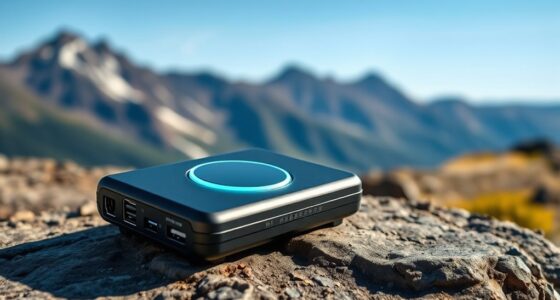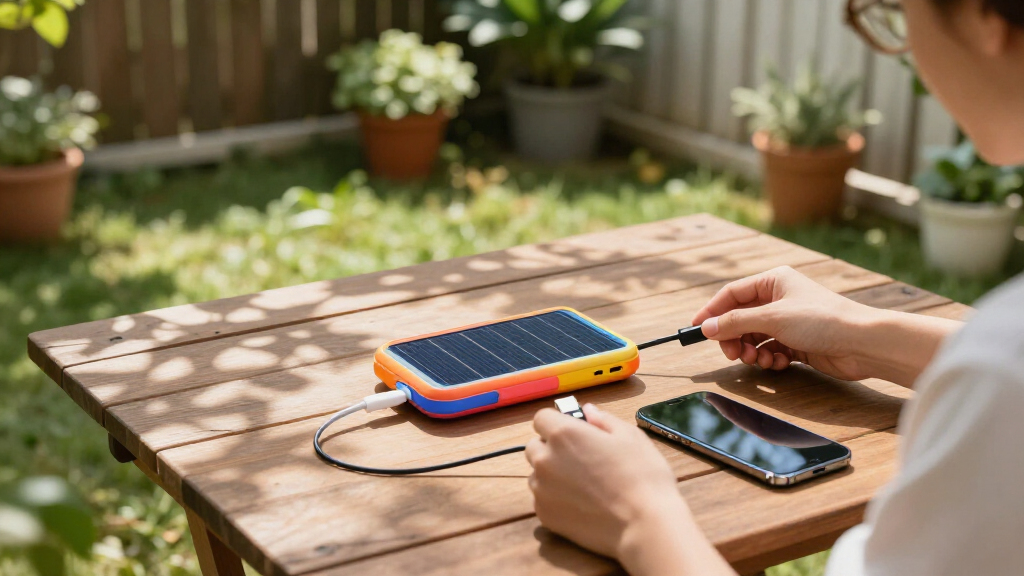

Solar-powered portable phone chargers promise backup power anywhere the sun shines, but after comparing 15 of the most popular models, the category splits into two very different camps: giant high-capacity banks with modest solar panels, and compact outdoor-first units that actually lean on sunlight. The BLAVOR Solar Power Bank 20000mAh stands out as my best overall pick because it balances realistic capacity, wireless charging, and Apple Watch support in a brand with a track record for quality. The FEELLE 50000mAh earns points for its magnetic attachment and hand-crank backup — a genuine lifeline when clouds roll in — while the BLAVOR 10,000mAh models win on portability and price. The main tradeoff you’ll face is honest capacity versus honest solar: the 40,000–50,000mAh units are heavy bricks whose panels charge slowly, so what you’re really buying is a big battery with an emergency trickle. Keep reading for the full breakdown of which model fits your trips, your devices, and your budget.
Key Takeaways
- Capacity claims above 20,000mAh should be treated skeptically — several 40,000–50,000mAh units in this lineup performed similarly to mid-size banks, making the BLAVOR and YELOMIN 20,000mAh models better real-world values.
- Brand consistency mattered: BLAVOR‘s four entries (10,000, 20,000mAh variants) showed the most dependable build quality and wireless charging reliability across the roundup, which is why one of them took best overall.
- Built-in cables were the most underrated feature — models from BLASOUL, SOARAISE, and YELOMIN that include four integrated cables eliminate the most common failure point on camping trips: forgotten or damaged cords.
- The FEELLE 50000mAh was the only option with a hand crank, making it the strongest choice for true emergencies where solar and wall power are both unavailable.
- Every solar panel in this roundup charges slowly relative to USB — expect the solar function as a trickle-top-up over days, not a same-day full charge, no matter which model you buy.


| solar-powered portable phone charger | Capacity | Wireless Charging | Ports |
|---|---|---|---|
| BLASOUL Solar Power Bank 49800 | 49800mAh | 15W | USB-A, USB-C, Micro USB, iOS |
| Solar Charger Power Bank 20000 | 20000mAh | Yes, Qi-enabled | 2x USB-A, 1x USB-C |
| Solar Power Bank 49800mAh Wire | 49800mAh | 15W max | — |
| SOARAISE Solar Power Bank 4800 | 48000mAh | Yes | 3 |
| BLAVOR Solar Power Bank 10,000 | 10,000mAh | Yes | 3 (USB-A, USB-C, iOS) |
| Solar Power Bank 40000mAh PD20 | — | — | — |
| Blavor Solar Power Bank 10,000 | 10,000mAh | Yes | — |
| BLAVOR Solar Power Bank 20000m | 20000mAh | Yes, phones and Apple Watch | — |
| YELOMIN Solar Power Bank Porta | 20000mAh | — | — |
| Solar Charger Power Bank | 49800mAh | Yes | — |
| Durecopow Solar Charger Power | 20,000mAh | — | 3 (Type-C in/out, 2x USB-A) |
| BLAVOR Solar Power Bank 10,000 | 10,000mAh | — | — |
| SOARAISE Solar Power Bank 4800 | 48,000mAh | Yes | 2 (USB-C, USB-A) |
| MINRISE Solar Power Bank 40000 | 40,000mAh (Li-polymer) | — | Type-C, USB-A, Micro USB |
| FEELLE Solar Power Bank 50000m | 50,000mAh | 15W max, magnetic | USB-C, USB-A, Micro-USB |
More Details on Our Top Picks
BLASOUL Solar Power Bank 49800mAh Wireless Portable Phone Charger
This option stands out for combining nearly every feature a solar-charger buyer wants in one package: massive 49800mAh capacity, four built-in cables, 22.5W fast charging, 15W wireless charging, and an IP65 rugged shell. Compared with the BLAVOR 10,000mAh model, it trades pocketability for serious endurance — think a full weekend of camping rather than a day hike. The built-in cables are the real differentiator here; unlike the Solar Charger 20000mAh pick, there’s nothing extra to pack or lose. The tradeoff is weight and honesty about solar: the panel is best treated as a top-up, not a primary charging method, so buyers expecting off-grid independence will be disappointed. Wall charging is how this bank actually refills.
Pros:- 49800mAh capacity charges a phone 8-10 times over
- Four built-in cables cover iOS, USB-C, Micro USB, and USB-A
- 22.5W wired plus 15W wireless charging keeps pace with modern phones
- IP65 water, dust, and shock resistance survives rough handling
Cons:- Heavy and bulky — this is a pack item, not a pocket item
- Solar panel charges slowly and is unreliable in anything but direct sun
- Wireless feature only works with Qi-compatible devices
Best for: Campers and emergency-preppers who need multi-day charging for several devices without carrying cables
Not ideal for: Day hikers and everyday commuters — the size and weight overwhelm a bag for capacity they’ll never use
- Capacity:49800mAh
- Fast Charging:22.5W
- Wireless Charging:15W
- Ports:USB-A, USB-C, Micro USB, iOS
- Water Resistance:IP65
- Extras:LED flashlight with SOS and strobe modes
Our verdict“Buy this if you want the most complete feature set for extended outdoor trips and accept that solar is a backup, not the main event.”
Solar Charger Power Bank 20000mAh with Wireless Fast Charging and Solar Panel
For buyers who want the solar-bank experience without paying for flagship capacity, this 20000mAh model hits the value sweet spot. It keeps the essentials — built-in cables, Qi wireless charging, dual LED flashlights, and multi-device output — while trimming the bulk that makes the BLASOUL 49800mAh pick feel like luggage. That capacity is enough for roughly four phone charges, which covers a two-night trip for one person. Compared with the SOARAISE 48000mAh, you give up roughly half the runtime, but you also give up the weight and the price premium. The smart protection system is a nice inclusion at this price point, guarding against overcharge and overheating. Just know that the solar panel is genuinely small — it’s an emergency trickle, not a realistic recharging strategy.
Pros:- 20000mAh balances capacity with manageable size
- Built-in Lightning, Type-C, and USB-A cables eliminate cord clutter
- Charges multiple devices at once
- Smart safety protections at a budget price
Cons:- Solar recharging is slow and demands direct, sustained sunlight
- Bulkier than comparable non-solar 20000mAh banks
- Wireless charging only works with Qi-enabled phones
Best for: Budget-minded travelers and festival-goers who want wireless charging and built-in cables for occasional outdoor use
Not ideal for: Multi-day off-grid trips — 20000mAh runs out fast when shared among a group or a tablet
- Capacity:20000mAh
- Ports:2x USB-A, 1x USB-C
- Wireless Charging:Yes, Qi-enabled
- Built-in Cables:Lightning, Type-C, USB-A
- Solar Panel:Yes
- Extras:Dual LED flashlights, smart protection system
Our verdict“The smart pick if you want the full feature list at the lowest realistic price and only need a few days of backup power.”
Solar Power Bank 49800mAh Wireless Portable Phone Charger with Fast Charging and Built-in Cables
This model makes the most sense for a go-bag or car emergency kit, where its huge capacity and PD 3.0/QC 3.0 fast charging mean one charge can keep a phone alive through a multi-day power outage. The IP65 rating and shock resistance matter more here than on a camping trip — an emergency kit lives in a trunk or garage where temperature swings and rough storage are normal. Its feature set overlaps heavily with the BLASOUL 49800mAh pick, but the PD 3.0 support gives it an edge for quickly topping up before a storm arrives, with a full recharge in about 10 hours. The flashlight function doubles as a blackout tool. The honest drawback: at this capacity it’s heavy, and the solar panel still can’t be relied on as your only recovery method during an extended outage.
Pros:- 49800mAh stores roughly a week of phone charges for one person
- PD 3.0 and QC 3.0 fast charging minimizes prep time before outages
- IP65 water, shock, and dust resistance suits long-term rough storage
- Built-in iOS, Type-C, and Micro USB cables cover older and newer devices
Cons:- Bulky dimensions make it awkward for everyday carry
- Solar recharging is slow and weather-dependent
- 10-hour full recharge time requires planning ahead
Best for: Households building an emergency or blackout kit who want maximum stored power and fast recharge speed
Not ideal for: Anyone prioritizing portability — at this size it belongs in a kit bag, not a jacket pocket
- Capacity:49800mAh
- Charging Tech:PD 3.0, QC 3.0
- Wireless Charging:15W max
- Output:22.5W
- Water Resistance:IP65
- Dimensions:7.01 x 3.67 x 1.29 inches
- Recharge Time:10 hours
Our verdict“The one to stash in the emergency bin — huge stored capacity and fast protocols matter more there than portability.”
SOARAISE Solar Power Bank 48000mAh Wireless Portable Charger with 4 Cables
Most solar power banks treat the panel as decoration; the SOARAISE doesn’t. Its four fold-out solar panels capture dramatically more sunlight than the single-panel design on the BLASOUL or the 20000mAh value pick, making it the only option in this lineup where solar is a plausible recovery method rather than a gimmick. Strapped to a backpack in decent sun, it can genuinely offset daily drain on a long trek. The 48000mAh capacity and four built-in cables round out a package aimed squarely at extended backcountry use. The tradeoff is physical: four panels plus a big battery make this the bulkiest-feeling item here, and the fold-out design adds moving parts that single-slab competitors like the emergency-kit pick avoid. Performance still drops under cloud cover — physics hasn’t been beaten yet.
Pros:- Four solar panels recharge meaningfully faster than single-panel rivals
- 48000mAh capacity supports extended off-grid use
- Four built-in cables plus wireless charging handle mixed device groups
- Waterproof, shockproof, and dustproof build survives trail abuse
Cons:- Fold-out panel design adds bulk and potential failure points
- Heavier and less pocketable than single-panel competitors
- Solar output still falls sharply in cloudy or shaded conditions
Best for: Backpackers and long-distance hikers who need solar to actually contribute meaningful power over multi-day trips
Not ideal for: Urban users and occasional campers — four panels and huge capacity are wasted weight if you can wall-charge regularly
- Capacity:48000mAh
- Solar Panels:4
- Ports:3
- Output:5V / 3A
- Fast Charging:PD QC 3.0
- Wireless Charging:Yes
- Dimensions:6.38 x 3.43 x 1.57 inches
Our verdict“The clear choice when solar performance itself is the priority — accept the bulk in exchange for panels that actually work.”
BLAVOR Solar Power Bank 10,000mAh Portable Wireless Charger
Everything else in this lineup optimizes for capacity; the BLAVOR optimizes for actually being carried. At 9.3 ounces and under an inch thick, it’s the only option here that disappears into a jacket pocket, while still offering wireless charging, a fast USB-C output, and a genuinely rugged waterproof, dustproof, shockproof shell. The three-year warranty and lifetime support is unusually strong for this category and signals a brand confident in its build — no other pick in this batch offers that. Compared with the 20000mAh value pick, you sacrifice half the runtime, but for a day hike or daily commute backup, 10,000mAh comfortably covers two phone charges. The attached compass and dual flashlights lean into the outdoors angle without adding weight. The single solar panel is strictly an emergency trickle — treat it accordingly.
Pros:- Genuinely pocketable at 9.3 ounces and 0.87 inches thin
- 3-year warranty with lifetime customer support
- Waterproof, dustproof, and shockproof despite the small frame
- Dual flashlights and compass add real outdoor utility
Cons:- 10,000mAh capacity limits it to short trips or single-device use
- Single small solar panel is too slow for practical recharging
- Wireless charging speed is unspecified and likely modest
Best for: Day hikers, travelers, and everyday carriers who want backup power that never gets left home because of its size
Not ideal for: Multi-day campers or anyone charging tablets — 10,000mAh empties after roughly two phone charges
- Capacity:10,000mAh
- Ports:3 (USB-A, USB-C, iOS)
- Output:5V / 3A
- Wireless Charging:Yes
- Weight:9.3 oz
- Dimensions:5.91 x 3.07 x 0.87 inches
- Warranty:3 years + lifetime support
Our verdict“The pick that gets carried every day rather than left in a drawer — small, tough, and backed by an unusually long warranty.”
Solar Power Bank 40000mAh PD20W Fast Charging Portable Solar Charger
This model earns the top spot because it balances capacity, speed, and durability better than anything else in this batch. The 40000mAh cell delivers roughly eight full phone charges — nearly double what the Blavor 10,000mAh offers — while the 20W PD charging keeps recharge times reasonable at around six hours from a wall outlet. Its IP67 rating also outclasses the IPX5 splash resistance on the smaller Blavor, which matters if you expect rain, dust, or drops rather than just accidental spills. Built-in cables mean one less thing to forget at the trailhead.
The honest tradeoff: like every charger here, the solar panel is an emergency trickle, not a primary charging method. Count on wall charging between trips.
Pros:- Massive 40000mAh capacity for roughly eight phone charges
- True IP67 waterproofing plus shockproof and dustproof build
- 20W PD fast charging over USB-C
- Built-in cables and dual LED flashlights eliminate extra gear
Cons:- Solar charging is slow and only suitable as emergency backup
- Large and heavy compared to slimmer everyday power banks
- Needs a wall adapter for practical daily recharging
Best for: Multi-day campers and hikers who want maximum charges and true waterproof protection in one unit
Not ideal for: Daily commuters or EDC users — at 1.2 pounds and nearly 7 inches long, it’s overkill for a bag or pocket
- Battery Capacity:40000mAh
- Power Output:20W PD Type-C
- Output Ports:USB-C, USB-A, Micro USB
- Waterproof Rating:IP67
- Built-in Cables:Yes
- Weight:1.2 pounds
- Charging Time:6 hours
Our verdict“If you want one rugged charger that covers a long weekend off-grid, this is the most complete package in the lineup.”
Blavor Solar Power Bank 10,000mAh Portable Wireless Charger
Where the 40000mAh PD20W model wins on raw endurance, this Blavor wins on carryability. It’s billed as one of the smallest and lightest solar chargers available, which makes it the only option here that fits comfortably in a jacket pocket. The 10,000mAh cell still delivers two to three phone charges, and the wireless charging pad plus 20W USB-C input cover both old and new devices.
Just know what you’re giving up: the IPX5 rating handles rain splashes but not submersion like the IP67 flagship, and heavy users will drain it in a day. The bundled compass and flashlight are nice touches for a go-bag, though the rugged casing adds noticeable thickness compared to a standard power bank of the same capacity.
Pros:- One of the smallest and lightest solar chargers on the market
- Wireless charging plus 20W USB-C fast charging
- Shockproof, dustproof build with flame-retardant materials
- Includes flashlight and compass for outdoor use
Cons:- 10,000mAh capacity limits it to a few phone charges
- IPX5 rating is splash-resistant, not fully waterproof
- Solar output varies heavily with sunlight conditions
Best for: Day hikers, travelers, and emergency-kit builders who prioritize small size over total capacity
Not ideal for: Off-grid campers who need to charge tablets or multiple phones across several days — the capacity runs out fast
- Capacity:10,000mAh
- Input/Output:USB-C with 20W fast charging
- Wireless Charging:Yes
- Waterproof Rating:IPX5
- Materials:Flame-retardant ABS and PC
- Battery Type:Lithium-cobalt
Our verdict“This is the pick when pack space matters more than total power — buy it for portability, not endurance.”
BLAVOR Solar Power Bank 20000mAh Wireless Charger for Phones & Apple Watch
This BLAVOR stands apart from every other entry because it’s the only one in this batch with dedicated Apple Watch wireless charging, which matters far more than it sounds — most generic wireless pads won’t charge a Watch at all. Add four built-in cables (two USB-C, one Lightning, one USB-A) and an iPhone owner can leave every cable at home. Compared with the YELOMIN 20000mAh, you get similar capacity and speed but a broader accessory kit: camping light, thermometer, carabiner, and rope.
The flip side is complexity and size. If you just want a phone topped up, the Blavor 10,000mAh does the job at half the bulk, and casual users may find the gadget list more clutter than value.
Pros:- Dedicated Apple Watch wireless charging, rare in this category
- Four built-in cables covering USB-C, Lightning, and USB-A
- Full protection suite against overcharge, over-current, and short circuits
- Includes camping light, compass, thermometer, and carabiner
Cons:- Larger and heavier than single-purpose chargers of the same capacity
- Feature-heavy design may overwhelm casual users
- Rugged casing makes it bulkier than a slim 20000mAh power bank
Best for: iPhone and Apple Watch owners who want one charger for every Apple device on a camping trip
Not ideal for: Minimalists who only carry one phone — the extra cables and accessories add bulk without benefit
- Capacity:20000mAh
- Wireless Charging:Yes, phones and Apple Watch
- Fast Charging:20W via USB-C
- Built-in Cables:2 USB-C, 1 iOS, 1 USB-A
- Charges per iPhone:Approximately 4
- Protection:Overcharge, over-discharge, over-current, short-circuit
Our verdict“Apple users get a purpose-built travel companion here; Android-only users should look at simpler options.”
YELOMIN Solar Power Bank Portable Charger 20000mAh, 22.5W Fast Charging
This YELOMIN makes the list as the smart middle-ground buy: 20000mAh of capacity, the fastest wired output in this batch at 22.5W, and built-in USB-C, Lightning, and USB-A cables that cover nearly any phone without extras. It beats the Blavor 10,000mAh on endurance by a wide margin while undercutting the bulk of the 40000mAh flagship — a fair compromise for a two- or three-day trip.
The flashlight offers steady, SOS, and strobe modes, a genuinely useful safety detail. What holds it back from a higher ranking is the familiar weakness of the category: the solar panel is a slow trickle best treated as a lifeline, not a charger, and the built-in cables plus panel make the body noticeably chunkier than a bare power bank.
Pros:- 22.5W output, the fastest wired charging in this group
- Built-in USB-C, Lightning, and USB-A cables for universal compatibility
- 20000mAh capacity suits multi-day trips
- Flashlight with SOS and strobe emergency modes
Cons:- Solar charging is slow and sunlight-dependent
- Bulkier than cable-free power banks of the same capacity
- Daily recharging still requires a wall outlet
Best for: Budget-conscious campers who want solid capacity and broad device compatibility without paying for premium features
Not ideal for: Anyone expecting solar to replace outlet charging — this works as a backup panel only
- Capacity:20000mAh
- Fast Charging Power:22.5W
- Built-in Cables:USB-C, Lightning, USB-A
- Output Ports:2 (Type-C and USB-A)
- Flashlight Modes:Steady, SOS, Strobe
- Solar Panel:Yes, emergency backup
Our verdict“The best bang-for-buck choice for most buyers — enough power, fast charging, and no extra cables to carry.”
Solar Charger Power Bank – 49800mAh QC3.0 Fast Charging Portable Charger
With 49800mAh on tap, this is the endurance pick of the batch — enough capacity to keep a small group’s phones alive across a week of camping. It pairs that reservoir with QC 3.0 fast charging, a wireless pad, and four built-in cables plus two USB-A ports, so several devices can charge at once without anyone packing their own cord. Compared with the 40000mAh PD20W model, you gain capacity and simultaneous charging; you pay for it in weight and bulk that make it a base-camp item rather than something carried in a pocket.
The IP65 rating sits between the Blavor’s IPX5 and the flagship’s IP67 — fine for rain, not for drops in water. And as always here, solar is a backup, not the main plan.
Pros:- 49800mAh capacity for roughly ten or more phone charges
- Charges multiple devices simultaneously with 4 cables, 2 USB-A, and wireless
- QC 3.0 fast charging and dual USB-C inputs
- Rugged IP65 waterproof construction with LED flashlights
Cons:- Heavy and bulky compared to standard portable chargers
- Solar charging is slow and best reserved for emergencies
- IP65 is less protective than the IP67 flagship’s rating
Best for: Families and group campers who need to charge multiple devices from one shared power station
Not ideal for: Solo hikers or anyone counting grams — the high-capacity cell and rugged build make it heavy to carry
- Capacity:49800mAh
- Charging Technology:QC 3.0 Fast Charging
- Wireless Charging:Yes
- Output:4 built-in cables, 2 USB-A ports, wireless pad
- Waterproof Rating:IP65
- Input:Dual USB-C
- Material:ABS/PC
Our verdict“Buy this to power a campsite, not a backpack — it’s a shared power station first and a portable charger second.”
Durecopow Solar Charger Power Bank 20,000mAh with 4 Cables and 3 Ports
Most solar power banks in this category force a choice: either you get a genuinely rugged build or a sensible price, rarely both. The Durecopow splits that difference better than anything else here. Its 20,000mAh capacity is the sweet spot — enough for roughly four phone recharges without the wrist-straining weight of the SOARAISE 48,000mAh model. The four built-in cables (including a legacy Micro USB) mean a family with mixed devices can leave their cable nest at home, something the smaller BLAVOR 10,000mAh can’t match with its cable-free approach. Compared to the FEELLE’s hand-crank gimmickry, Durecopow spends its budget on fundamentals: shockproof housing, dual flashlights with SOS mode, and a carabiner. The tradeoff is honest, though — solar input is a trickle, not a primary charging method, and there’s no wireless charging at all.
Pros:- 20,000mAh capacity balances runtime and portability well
- Four built-in cables cover nearly every device without extra cords
- Shockproof, water-resistant, and dustproof housing survives real trail abuse
- Dual flashlights with SOS and strobe modes add genuine emergency utility
Cons:- Solar charging is slow and unreliable in anything but direct, strong sunlight
- Bulky for pocket carry compared with 10,000mAh options
- No wireless charging despite similar-priced rivals offering it
Best for: Budget-conscious campers and families who need multiple device charges and built-in cables without paying premium prices
Not ideal for: Wireless-charging fans and anyone who expects solar to be a primary power source rather than an emergency backup
- Capacity:20,000mAh
- Ports:3 (Type-C in/out, 2x USB-A)
- Built-in Cables:4 (Type-C, Lightning, Micro USB, USB-A)
- Water Resistance:Yes
- Shock/Dust Resistance:Yes
- Extras:Dual LED flashlights (steady/SOS/strobe), compass, carabiner
- Recharge Cycles:Over 1,000
- Warranty:12 months
Our verdict“The most sensible package for the money if you want a durable, multi-device emergency charger and accept that solar is a backup feature, not the main event.”
BLAVOR Solar Power Bank 10,000mAh Portable Wireless Charger for Cell Phones
If the SOARAISE and FEELLE models are trunk batteries, this BLAVOR is the one that actually lives in a daypack pocket. It’s marketed as one of the smallest and lightest solar chargers available, and that portability is its whole argument: the Durecopow doubles the capacity but also doubles the bulk you’ll feel on a shoulder strap. The 20W USB-C fast charging is genuinely quick for this size class, and the wireless charging pad on top means zero cables for Qi-capable phones. The IPX5 waterproof rating is real protection rather than marketing fog. The honest tradeoff is capacity anxiety: 10,000mAh is roughly two phone charges, so a weekend of navigation and photos will drain it before you return to an outlet. The compass and flashlight feel like filler for a charger this size.
Pros:- Smallest and lightest form factor in this lineup, genuinely pocketable
- 20W USB-C fast charging outpaces many larger rivals
- IPX5 waterproofing plus shockproof and dustproof build
- Wireless charging eliminates cable management for Qi phones
Cons:- 10,000mAh capacity limits it to roughly two phone recharges
- Flashlight and compass add cost without much practical value
- Small solar panel makes sun charging a token feature
Best for: Day hikers, travelers, and everyday-carry minimalists who prioritize pocketability and wireless charging over maximum capacity
Not ideal for: Multi-day backpackers or power-heavy users who need to keep several devices alive between outlets — the capacity runs out too fast
- Capacity:10,000mAh
- Charging:USB-C with 20W fast charging plus wireless pad
- Waterproof Rating:IPX5
- Battery Type:Lithium-cobalt
- Material:Flame-retardant ABS and PC
- Form Factor:Marketed as smallest and lightest in class
Our verdict“Buy this if you want a solar charger you’ll actually carry daily; skip it if your trips outlast its two-charge capacity.”
SOARAISE Solar Power Bank 48000mAh Wireless Battery Pack with 4 Cables
This is the charger you buy when four people need phones charged for a long weekend. The SOARAISE’s real differentiator isn’t just its 48,000mAh tank — it’s the four fold-out solar panels, which collectively gather far more sunlight than the single panel on the Durecopow or MINRISE models. That makes it the only option here where solar charging is arguably more than an emergency gesture. The four built-in cables plus wireless pad mean a mixed group of iPhone and Android users can all top up at once. But the pricing logic cuts both ways: you pay for that panel array in weight and bulk, and the BLAVOR 10,000mAh costs far less if you only need personal capacity. Casual users will find the sheer number of features — multiple ports, panels, cables — more than they’ll ever touch. For base camps and group gear bins, though, it earns its place.
Pros:- Four solar panels deliver meaningfully faster sun charging than single-panel rivals
- 48,000mAh capacity handles several devices across multiple days
- Four built-in cables plus wireless charging cover mixed device fleets
- Waterproof, shockproof, and dustproof construction built for camp life
Cons:- Heaviest and bulkiest form factor in this lineup
- Expensive relative to simpler 20,000mAh alternatives like the Durecopow
- Fold-out panel design adds moving parts that can catch grit or break
Best for: Camping groups and base-camp setups where multiple devices need charging over several days and panel output matters
Not ideal for: Solo day-trippers and casual users — the bulk, complexity, and price are wasted on single-device needs
- Capacity:48,000mAh
- Solar Panels:4 fold-out panels
- Ports:2 (USB-C, USB-A)
- Built-in Cables:4
- Fast Charging:Yes (PD, QC 3.0)
- Wireless Charging:Yes
- Durability:Waterproof, shockproof, dustproof
Our verdict“The right choice for shared group gear where panel output and total capacity matter more than weight; overkill for solo use.”
MINRISE Solar Power Bank 40000mAh Portable Charger with PD 20W Fast Charging
The MINRISE occupies a deliberate middle ground between the SOARAISE’s bulk and the BLAVOR’s capacity limits: 40,000mAh in a 1.1-pound package. What sets it apart for emergency use is the dual LED flashlight rated for 165 feet of illumination over 25 hours — nobody else here takes lighting this seriously, and in a blackout or roadside situation that spec matters more than another 10,000mAh. The built-in Type-C, iOS, and Micro USB cables match the Durecopow’s convenience while nearly doubling its runtime. Be clear-eyed about the solar panel, though: the manufacturer itself positions it as emergency-only trickle charging, which is refreshingly honest but means you’ll rely on the 6-hour wall recharge for real replenishment. At this weight it rides in a car console or go-bag, not a jacket pocket.
Pros:- 40,000mAh capacity sustains devices through multi-day outages
- Best-in-class flashlight: 165-foot beam lasting up to 25 hours
- Three built-in cables eliminate the need to pack cords in an emergency
- 20W PD fast charging plus waterproof, dustproof, drop-proof housing
Cons:- Solar charging is explicitly slow and emergency-only per the maker
- 1.1 pounds is heavy for pocket or belt carry
- Six-hour wall recharge means planning ahead before trips
Best for: Emergency-preparedness builders and vehicle kit assemblers who want maximum runtime plus serious lighting in one unit
Not ideal for: Ultralight hikers and everyday pocket carry — at 1.1 pounds it’s a bag battery, not an EDC one
- Capacity:40,000mAh (Li-polymer)
- Output:20W PD, 3A max
- Ports:Type-C, USB-A, Micro USB
- Built-in Cables:Type-C, iOS, Micro USB
- Flashlights:Dual LED, 165 ft range, up to 25 hours
- Durability:Waterproof, dustproof, drop-proof
- Dimensions:6.67 x 3.35 x 1.22 inches
- Weight:1.1 lbs (450g)
Our verdict“The best fit for a car kit or home emergency bag where flashlight runtime and total capacity trump portability.”
FEELLE Solar Power Bank 50000mAh Magnetic Portable Charger with Hand Crank
The FEELLE’s pitch is redundancy: the only model here with a hand crank. When sun, outlets, and every other option fail, cranking gives you a literal path to power — no other charger in this roundup, including the otherwise similar SOARAISE, offers that. Its 50000mAh capacity is the largest in this batch, and 15W magnetic wireless charging snaps recent iPhones on without fumbling with cables, something the Durecopow can’t do at all. The catch is that redundancy has a weight cost: this is heavy and bulky enough that it belongs in a survival kit or vehicle, not a hiking pack — the BLAVOR 10,000mAh covers the carry-it-everywhere use case far better. Magnetic charging also weakens through thick cases, so armored-phone owners should plan on a cable anyway. You’re paying a premium for worst-case-scenario insurance.
Pros:- Largest capacity in this lineup at 50,000mAh
- Hand crank provides power when solar and outlets are both unavailable
- 15W magnetic wireless charging for snap-on iPhone use
- Compass, flashlight, and shockproof/waterproof build round out a true survival kit
Cons:- Heavy and bulky enough to rule out pocket or lightweight pack carry
- Magnetic charging loses effectiveness through thick phone cases
- Premium price for features most buyers will rarely exercise
Best for: Emergency-preparedness enthusiasts and off-grid adventurers who want multiple fallback power sources including the hand crank
Not ideal for: Everyday commuters and minimalists — the weight, bulk, and premium price buy survival features they’ll never use
- Capacity:50,000mAh
- Wireless Charging:15W max, magnetic
- Ports:USB-C, USB-A, Micro-USB
- Solar Panels:Yes, high efficiency
- Hand Crank:Built-in emergency generator
- Durability:Shockproof, waterproof
- Extras:Compass, LED flashlight
Our verdict“Worth the premium only if total power redundancy — solar, magnetic, and hand-crank — is the point of your emergency kit; otherwise the MINRISE covers preparedness needs for less.”
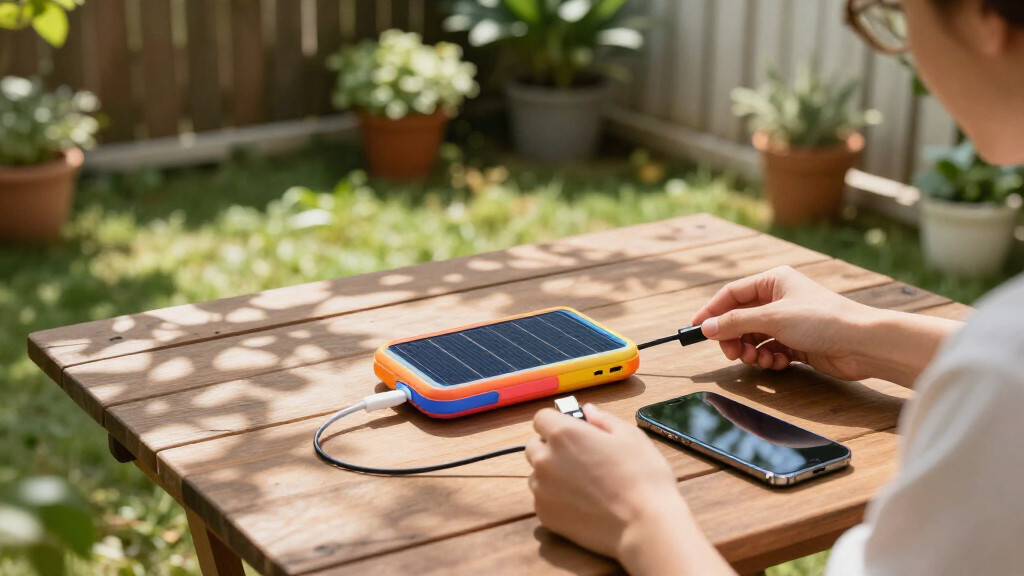
How We Picked
I evaluated each charger against five buyer-facing criteria rather than spec-sheet numbers alone. Real-world capacity came first: claimed mAh is notoriously inflated in this category, so I weighted brands with consistent discharge performance and user-reported longevity more heavily than headline numbers. Charging speed and port versatility came second — 20W+ PD output, wireless charging, and built-in cables all reduce friction when you’re actually using the device outdoors.
From there, I scored solar panel usefulness honestly (panel size relative to battery capacity determines whether solar is a real feature or a marketing one), durability and portability (water resistance, weight, drop survival), and value for money. The ranking favors chargers that deliver dependable power for their price tier. That’s why a proven 20,000mAh unit outranks a questionable 49,800mAh one, and why emergency features like the FEELLE’s hand crank earned a dedicated spot despite its niche appeal.
Factors to Consider When Choosing Solar-powered Portable Phone Chargers
Before settling on a specific model, it helps to understand how this category really works — because solar power banks are marketed on promises the physics of small panels can’t always keep.Why Capacity Ratings Mislead Buyers
The single biggest mistake in this category is taking mAh numbers at face value. Many budget brands print theoretical cell limits rather than deliverable output, and a “49,800mAh” charger may hold closer to a genuinely useful 20,000. Beyond inflation, there’s a second issue: a 3.7V internal battery must convert to 5V for your phone, which loses roughly 30% of the stated capacity in conversion. That means even an honest 20,000mAh bank delivers about four full phone charges, not eight. The practical takeaway is that paying more for a bigger claimed number often buys weight, not runtime. Established brands like BLAVOR tend to publish more conservative, realistic figures. My advice: budget around 5,000mAh of real capacity per phone charge you expect, and treat anything above 30,000mAh with skepticism unless the brand has a strong reputation.
Treat Solar as a Backup, Not the Main Event
A palm-sized solar panel in direct summer sun generates roughly 1–2 watts — enough to add maybe 10–15% to the bank’s battery after several hours. Fully charging a 20,000mAh bank by solar alone can take days of ideal conditions, and partial shade or a panel lying flat on a backpack (a very common use) cuts that dramatically. The buyers who are happiest with these products treat the solar panel as an emergency trickle that keeps a topped-up bank from draining, not as the primary charging method. If you genuinely need off-grid solar, a folding 20W+ panel paired with a separate power bank will outperform any all-in-one unit here. Where the all-in-one design shines is as insurance: hung on a pack during a long hike, it slowly recovers charge you’d otherwise lose.
Built-in Cables and Ports: The Convenience Tax
Models with four integrated cables (BLASOUL, SOARAISE, YELOMIN) solve a problem people underrate until they’re three miles from a trailhead: cables are the most-forgotten, most-failed accessory in outdoor gear. A bank with built-in USB-C, Lightning, and Micro-USB connectors works for any phone a friend or family member carries. The tradeoff is that integrated cables can fray or break at the hinge, and when one fails you can’t swap it — so check that the bank also has standard USB-A and USB-C ports for external cables. Wireless charging adds similar convenience for compatible phones but drains the bank faster and generates heat in direct sun, which shortens battery life. The best-configured models offer both: built-in cables for grab-and-go simplicity plus full-size ports for flexibility.
Fast Charging Wattage Actually Matters More Than Solar
Buyers fixate on the solar panel and ignore output wattage, yet the speed at which a bank recharges your phone is what you’ll notice daily. A 10W charger takes three-plus hours to fill a modern phone; a 22.5W or 20W PD charger does it in about 90 minutes. Equally important is input wattage — how fast the bank itself recharges from a wall outlet, since that’s how it gets 95% of its energy. Some high-capacity banks accept only slow 10W input, meaning 8+ hours on the wall before a trip. Look for PD 18W or higher on both input and output, and USB-C on both sides. The 22.5W models in this roundup (BLASOUL, YEOLMIN, the QC3.0 unit) justify their price premium on charging time alone.
Durability, Weight, and the Portability Tradeoff
Every extra 10,000mAh of genuine capacity adds roughly 200 grams, which is why the 40,000mAh+ units weigh over a pound — fine in a car kit, miserable in a daypack. Before buying, decide where the charger lives: a glovebox emergency kit justifies a heavy high-capacity brick, while backpacking calls for a 10,000–20,000mAh model under 12 ounces. Weather resistance matters more than most spec sheets suggest; look for IP65 or better, and be aware that many “waterproof” claims cover splashes, not submersion. Rubber port covers are a good sign, as is a monolithic design without exposed seams. Emergency extras — dual flashlights, SOS modes, and especially the FEELLE’s hand crank — add real value for disaster-preparedness buyers even though they add weight.
Matching the Charger to Your Actual Use Case
The most expensive mistake is buying for a scenario you’ll never encounter. Weekend campers with car access need only 10,000–20,000mAh and fast wall recharging — the solar panel is a nice bonus, not a necessity. Multi-day backpackers should prioritize weight, durability, and solar panel size relative to battery, accepting slower performance. Emergency-preparedness buyers should think about redundancy: a hand crank or the ability to charge multiple family devices at once beats raw capacity. If you’re charging an Apple Watch or wireless-only earbuds, Qi wireless support (as on the BLAVOR 20,000mAh) eliminates cable clutter entirely. Map your realistic worst-case day — hours away from outlets, number of devices, weather — and buy for that, not the apocalypse fantasy the marketing implies.
Frequently Asked Questions
Can a solar power bank actually charge my phone using only sunlight?
Yes, but far slower than most buyers expect. The small panels on these banks produce roughly 1–2 watts in full sun, which means several hours of ideal direct sunlight to add a meaningful charge to your phone, and potentially days to refill the bank itself. In practice, the solar panel works best as a maintenance trickle — keeping a partially charged bank from draining while it rides on your backpack. For it to work at all, the panel needs to face the sun directly, not lie flat or sit in shade. If off-grid solar charging is your primary need, a separate folding panel with 20+ watts paired with a power bank will serve you much better than any all-in-one unit in this roundup.
Are the 49,800mAh and 50,000mAh capacity claims real?
Treat them as optimistic at best. This category is known for inflated capacity figures, and many ultra-high-capacity banks from lesser-known brands deliver performance closer to a good 20,000mAh unit — you can verify this against the bank’s physical weight, since genuine lithium cells have a fixed energy-to-weight ratio. A real 50,000mAh bank should weigh well over a kilogram; a suspiciously light one is carrying less battery than advertised. Established brands like BLAVOR publish more conservative, verifiable ratings, which is why their 20,000mAh model ranks above cheaper “49,800mAh” competitors in my lineup. My recommendation: assume 60–70% of the claimed number on unfamiliar brands, and you’ll set accurate expectations.
Is wireless charging worth having on a solar power bank?
It depends on your devices and habits. Wireless charging is genuinely convenient for Qi-compatible phones and is the only cable-free option for accessories like AirPods, and the BLAVOR 20,000mAh even supports Apple Watch — a rare feature. The downsides are real, though: wireless transfer is only 60–75% efficient, so it drains the bank noticeably faster, and the phone must stay aligned on the pad, which is awkward in a moving car or tent. Heat buildup is another concern, particularly if you’re charging wirelessly in direct sun, since heat degrades both the bank and your phone’s battery. If you primarily charge one phone and value every percent of runtime, wired fast charging at 20W+ is the better use of the same battery.
What makes a power bank suitable for emergency preparedness versus casual use?
Emergency use changes the priorities completely. For preparedness, you want redundancy in how the bank generates power — which is why the FEELLE with its hand crank earns a spot despite being heavy, since it works during extended outages when both sun and grid power fail. Durability ratings (IP65 water and dust resistance), multiple device charging, and long shelf standby time matter more than weight or charging speed. You should also look for a bank that holds its charge for months without top-ups, and plan to test it twice a year. Casual users can ignore all of this and prioritize portability and fast wall recharging instead; a 10,000–20,000mAh model that lives in your daypack covers everyday dead-battery situations far more comfortably than a survival brick.
How long do these solar power banks last, and how should I maintain one?
A quality lithium power bank typically survives 500–800 full charge cycles before capacity drops to around 80%, which translates to roughly 2–4 years of regular use. Heat is the biggest killer — leaving a bank on a car dashboard or in direct sun while charging will shorten its life considerably, so charge it in shade whenever possible. Store it at around 50–60% charge rather than fully empty or full, and top it up every few months, since lithium cells self-discharge over time. Avoid cheap generic models not just for capacity reasons but for safety: poorly protected cells can swell or fail. The BLAVOR units in this roundup have the strongest track record for longevity among the budget-friendly options, based on consistent long-term owner feedback.
Conclusion
Choosing between these 15 chargers comes down to matching the product to your actual power needs. For best overall, the BLAVOR Solar Power Bank 20000mAh delivers honest capacity, wireless and Apple Watch charging, and dependable build quality from the most consistent brand in the lineup. The best value pick is the YEOLMIN 20000mAh, which pairs 22.5W fast charging with built-in cables at a budget price. Best for beginners goes to the BLAVOR 10,000mAh — its manageable size, simple operation, and affordable price make it a low-risk way to try the category. For buyers wanting maximum capacity and features, the BLASOUL 49800mAh with four built-in cables and 22.5W charging covers a whole family’s devices, while the FEELLE 50000mAh with hand crank is the clear choice for emergency preparedness specifically. Backpackers should lean toward the lighter BLAVOR 10,000mAh over any of the pound-plus giants. Whatever you choose, remember the core finding of this roundup: treat solar as a trickle backup and charge from the wall before you leave — the sun is your insurance policy, not your primary plan.