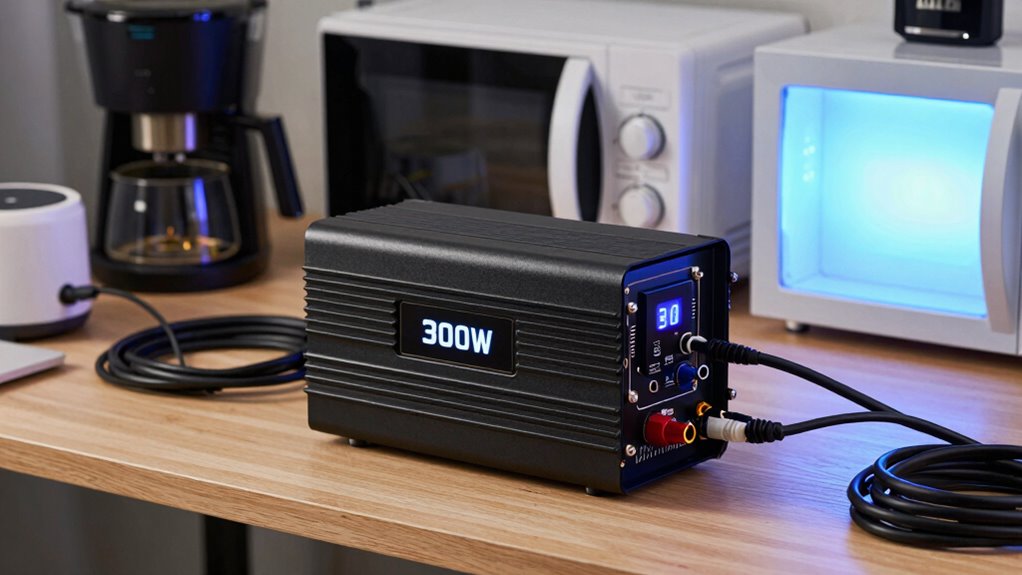

A 3000W inverter may seem powerful, but real appliances often draw more than their listed wattage, especially during startup surges. Items like refrigerators or motors can temporarily exceed the inverter’s continuous capacity, leading to shutdowns or performance issues. To guarantee your system runs smoothly, you need to understand the actual power demands of your appliances, including surge requirements. Keep going, and you’ll uncover how to get the most reliable performance from your inverter.

Get backup power and energy gear delivered free with Prime
- Fast, free delivery on millions of items
- Prime Video, Amazon Music and more included
- Member-only deals all year
Key Takeaways
- The inverter’s true capacity depends on the appliances’ startup surges, which often exceed rated wattage.
- Real appliances, like refrigerators, require brief surge power that may surpass a 3000W inverter’s limit.
- Proper system setup and high-quality inverters minimize energy losses, ensuring reliable performance.
- Regular maintenance and correct sizing prevent overloads and performance issues with real device loads.
- Understanding actual power needs helps select an inverter capable of handling real-world appliance demands.
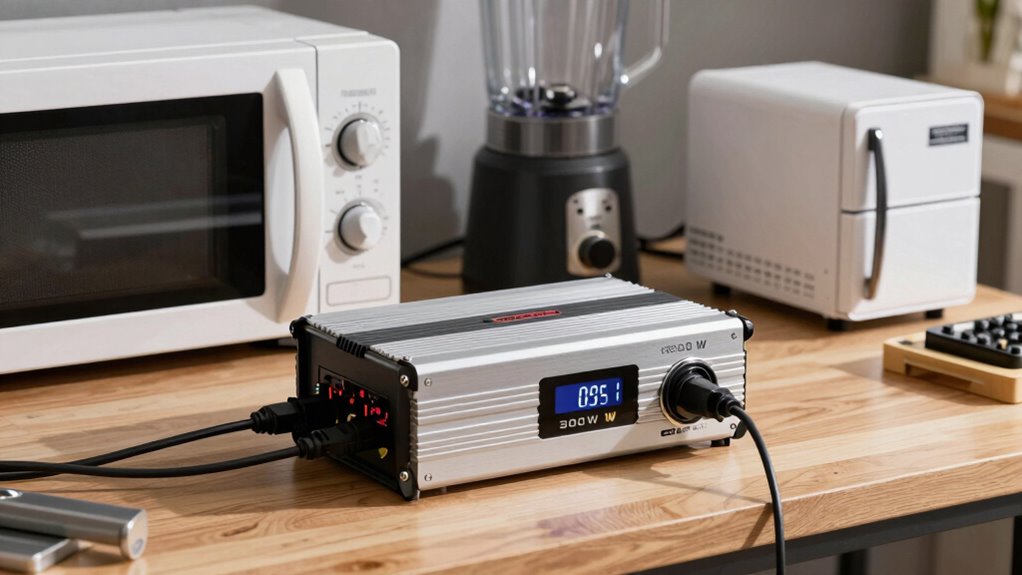
A 3000W inverter might sound powerful on paper, but once you connect real appliances, its true capacity becomes clear. The name suggests it can handle a lot, but the actual performance depends on how efficiently it converts and delivers power. Solar efficiency plays a big role here—if your inverter isn’t optimized for your solar setup, you’ll find that it struggles to provide consistent power, even if it’s rated at 3000 watts. A high-quality inverter should maximize solar efficiency by minimizing energy losses, ensuring you get the most out of your panels. If your inverter isn’t maintained properly, its ability to sustain high loads diminishes over time, making it less effective when powering multiple appliances simultaneously. Proper inverter maintenance is essential to keep your system operating at peak performance. When you start plugging in household devices—like refrigerators, TVs, or power tools—you may notice that the inverter reaches its limits sooner than expected. That’s because the continuous wattage rating doesn’t always reflect the surge power needed to start certain appliances. Many devices draw more initial current, and if your inverter isn’t capable of handling these surges, it might shut down or underperform. This is where understanding your real power needs becomes *essential*. Relying solely on the inverter’s rated capacity can lead to misjudging what it can actually support. Additionally, knowing the difference between surge and continuous power ratings helps you better plan your energy setup. inverter maintenance is key to keeping your system running smoothly. Regularly checking connections, cleaning terminals, and ensuring proper ventilation helps prevent overheating and power dips. An inverter that’s well-maintained will perform closer to its rated capacity, providing more reliable power for your appliances. Without proper upkeep, dust buildup or loose connections can cause efficiency drops, leading to lower solar efficiency and less power delivery. Additionally, monitoring your inverter’s performance helps you identify issues early, so you can address them before they impact your entire setup. Furthermore, understanding inverter specifications can help you select the right model for your needs. It’s also important to consider battery compatibility to ensure your system functions seamlessly. Ultimately, a 3000W inverter is a useful tool, but only if you understand its limitations and maintain it properly. Being aware of your appliances’ startup surges, ensuring your solar system operates at high efficiency, and performing regular inverter maintenance will make a significant difference. This way, you won’t be caught off guard when real appliances demand more power than the inverter initially suggests. It’s about managing expectations and keeping your system in top shape so that it truly meets your energy needs.
Products Worth Considering

eufy Security 5-Piece Home Alarm Kit

Bose Lifestyle Ultra Wireless Home Speaker, White Smoke

Coway Airmega 250S WiFi Air Purifier for Large Rooms
As an affiliate, we earn on qualifying purchases.
Frequently Asked Questions
Can a 3000W Inverter Handle Multiple Devices Simultaneously?
Yes, a 3000W inverter can handle multiple devices simultaneously, but your battery efficiency matters. If the combined power draw exceeds 3000W, the inverter will strain, possibly reducing battery life and increasing noise levels. To avoid issues, distribute the load wisely and monitor the total wattage. Keep in mind, running too many devices at once might make the inverter noisier and less efficient, so plan your power usage accordingly.
What Is the Surge Capacity of a 3000W Inverter?
Think of the surge capacity as your inverter’s secret weapon, giving it a powerful boost when starting appliances. A 3000W inverter‘s surge capacity typically ranges from 6000W to 9000W, depending on battery efficiency and inverter compatibility. This extra power guarantees your devices start smoothly without strain. Remember, the better your battery setup, the more reliably your inverter handles these surges, much like a well-trained athlete ready for sudden demands.
How Long Can a 3000W Inverter Power Appliances?
You can power appliances with a 3000W inverter for as long as your battery capacity allows, which depends on the total watt-hours of your battery bank. Typically, with a high-capacity battery and good inverter efficiency, you might run essential appliances for several hours. Keep in mind, lower battery capacity or inverter inefficiency will shorten this duration, so always match your power needs with your battery size for maximum runtime.
Is a 3000W Inverter Suitable for Outdoor Use?
Yes, a 3000W inverter is suitable for outdoor use, especially if you prioritize inverter portability. You should also focus on battery maintenance to guarantee reliable power, as outdoor environments can be harsh. Keep it protected from moisture, dust, and extreme temperatures. With proper care and a portable design, your inverter can power outdoor activities, camping, or emergency situations effectively, making it a versatile and essential outdoor companion.
What Safety Features Should I Look for in a 3000W Inverter?
You should look for safety features like battery protection, which prevents your battery from over-discharging, and overload shutdown, which automatically turns off the inverter if you exceed its capacity. These features protect both your appliances and the inverter itself. Confirm the inverter has built-in thermal protection as well, to prevent overheating. These safety measures keep your setup reliable and safe during heavy or continuous use.
Conclusion
So, you see, that 3000W inverter might seem impressive at first glance. But when you actually connect real appliances, the story changes. Will it power everything you need without surprises? Or will it fall short when you least expect it? The real test is just around the corner. Stay tuned—what happens next could change your whole perspective on inverter power forever. Are you ready to find out?