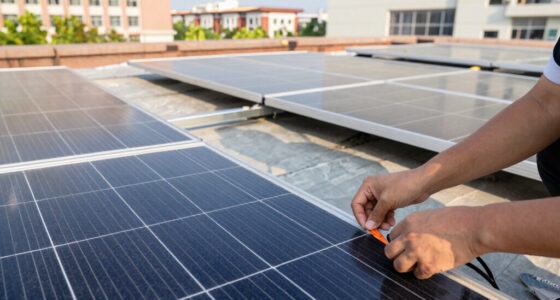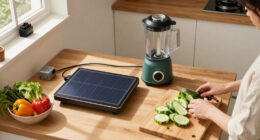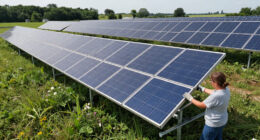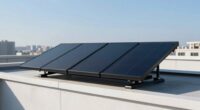
If you want to maximize energy output in a small space, monocrystalline solar panels are your best option. They’re highly efficient and compact, allowing you to generate more power from less surface area. Their sleek, dark appearance blends well with rooftops and shaded spots. Flexible or thin-film panels are good for curved surfaces, but monocrystalline panels provide the best performance for limited areas. Keep exploring to discover how to choose and install the right system for your needs.

Get backup power and energy gear delivered free with Prime
- Fast, free delivery on millions of items
- Prime Video, Amazon Music and more included
- Member-only deals all year
Key Takeaways
- Monocrystalline panels are highly efficient and compact, making them ideal for limited space installations.
- Flexible or thin-film panels suit curved or uneven surfaces, maximizing space utilization.
- High-efficiency monocrystalline panels deliver more power in a smaller footprint.
- Proper mounting and orientation optimize sunlight exposure and boost energy output.
- Cost-effective, smaller systems reduce installation expenses and accelerate savings.
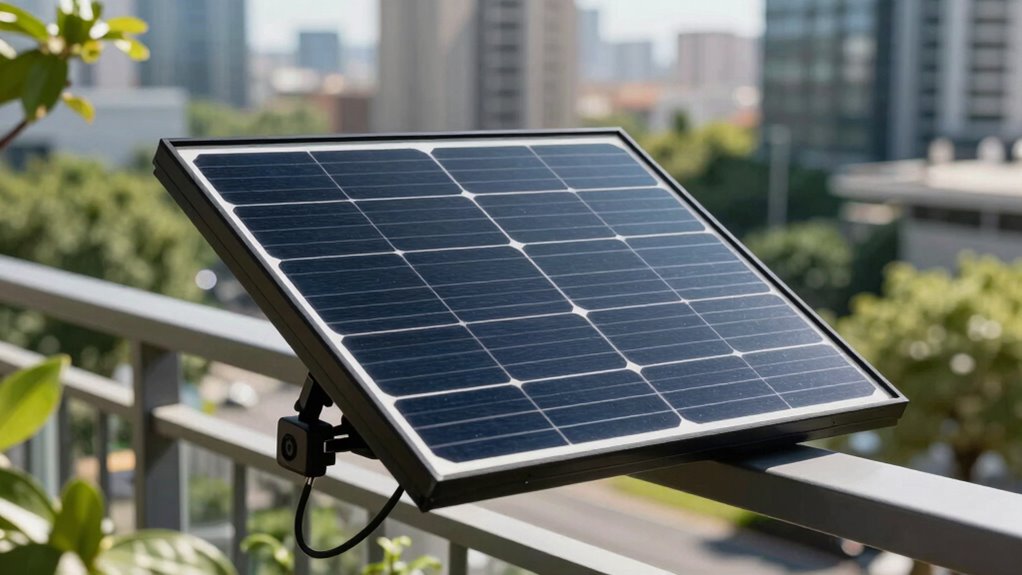
Are you worried that your limited outdoor space can’t support solar panels? Many people with small yards or compact rooftops assume they can’t benefit from solar energy, but that’s not the case. Choosing the right type of solar panel is key to maximizing your space, boosting energy efficiency, and keeping installation costs manageable. With advancements in solar technology, smaller panels can deliver impressive results, making solar power accessible even in tight spots.
When it comes to small spaces, you want panels that are both efficient and space-conscious. Monocrystalline solar panels are often the best choice for small areas because of their high energy efficiency. They use high-purity silicon, which allows them to convert more sunlight into electricity in a smaller size compared to other types. This means you get more power from less surface area, perfect for limited outdoor spaces. Their sleek, dark appearance also tends to blend well with rooftops or walls, making them less obtrusive.
On the other hand, polycrystalline panels are usually less efficient but come at a lower installation cost. If your space allows for multiple panels, or if you’re willing to invest a bit more upfront, monocrystalline options give you a better return on your investment over time. Keep in mind that installation costs for small-scale solar setups are generally lower than larger systems, especially when you choose panels that are easier to mount or integrate into existing structures. The simpler the installation, the quicker you’ll see savings, and the less disruption you’ll face. In addition, selecting panels with high efficiency can further optimize your limited space by maximizing energy output.
Another factor to consider is the tilt and orientation of your panels. Small spaces often limit flexibility, but with the right mounting system, you can optimize the angle to maximize sunlight exposure. This ensures you’re getting the most energy efficiency out of your panels, which directly impacts your overall savings and environmental benefits. Also, look into flexible or thin-film solar panels, which can be installed on curved or uneven surfaces—these options are highly versatile for small or unusual spaces. Additionally, understanding solar panel efficiency can help you select the best options for your specific needs.
Ultimately, the best solar panel for your small space strikes a balance between energy efficiency, installation costs, and your available area. Monocrystalline panels tend to be the most effective for small, shaded, or limited spaces due to their high efficiency, while other types might suit different budgets or aesthetic preferences. By carefully choosing your panels and optimizing their placement, you can generate clean energy without needing a sprawling yard or large roof. Small spaces shouldn’t keep you from harnessing the power of the sun—smart choices make all the difference.
Products Worth Considering

Ring Alarm 8-Piece Kit (Newest Model) – Home Security System

Arlo Pro 2K HDR Wireless Security Camera (6th Gen), 4-Camera Kit

Ring Alarm 14-Piece Kit
As an affiliate, we earn on qualifying purchases.
Frequently Asked Questions
How Do I Determine the Right Size of Solar Panel for My Small Space?
To determine the right size of solar panel for your small space, start by evaluating your energy needs. Compare efficiency ratings to find panels that maximize power output in limited areas. Consider installation factors like available sunlight and mounting options. Measure your space carefully, then match your energy goals with panel wattage. Prioritize high-efficiency panels that fit your space well, ensuring you get the most energy production without overcrowding.
Are Portable Solar Panels Effective for Small-Scale Energy Needs?
Yes, portable solar panels can be highly effective for small-scale energy needs. They offer excellent portable efficiency, allowing you to harness sunlight wherever you go. With energy portability in mind, these panels are compact, lightweight, and easy to set up, making them perfect for camping, emergencies, or small outdoor projects. While they may not power entire homes, they provide reliable, on-the-go energy for chargers, lights, and small appliances.
What Maintenance Is Required for Small-Space Solar Panels?
Imagine sunlight dancing on your small solar panels each morning. You’ll need to maintain them clean with gentle routines—like rinsing with water or wiping away dust—so they capture maximum sunlight. Watch for weather resilience by inspecting for debris after storms or heavy rain. Regularly checking for dirt, leaves, or snow ensures your panels stay efficient, making your small space a reliable source of clean energy day after day.
Can Small Solar Panels Be Integrated With Existing Home Systems?
Yes, you can integrate small solar panels with your existing home systems. To do this effectively, consider solar panel placement carefully, ensuring panels are positioned to maximize sunlight exposure. Shading considerations are essential; avoid areas shaded by trees or buildings that could reduce efficiency. With proper planning, your small solar panels can seamlessly connect to your home’s electrical system, providing clean energy while blending into your current setup.
What Are the Cost Differences Between Various Small-Space Solar Panel Options?
Think of choosing solar panels like picking the right tool for a craft—each has its price tag. Small monocrystalline panels often have a steeper cost comparison but deliver higher efficiency, while polycrystalline options are more budget-friendly but slightly less efficient. Installation expenses vary based on complexity and size, so plan accordingly. Ultimately, your choice balances upfront costs with long-term savings, making the investment worthwhile.
Conclusion
When choosing solar panels for small spaces, remember that the right fit depends on your energy needs and available area. Opt for compact, high-efficiency panels like monocrystalline ones, which maximize power in minimal space. Keep in mind, “A penny saved is a penny earned,” so invest wisely. With the right panels, you’ll harness the sun’s power efficiently and make the most of your limited space—turning small areas into mighty energy sources.