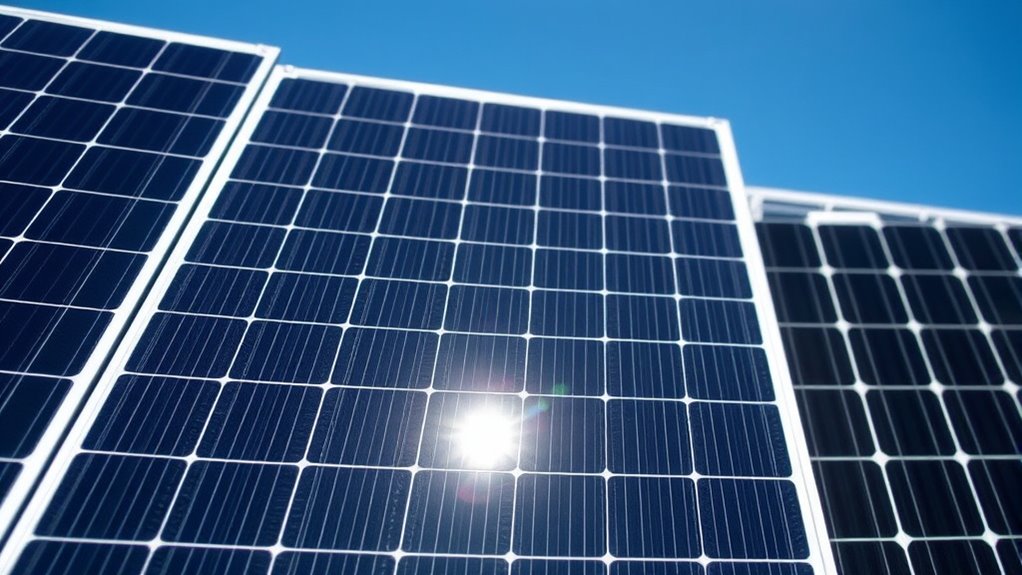

Understanding solar panel types helps you choose the best for your needs. PERC panels improve traditional silicon models with simple manufacturing and a lower ecological impact. HJT panels combine silicon with thin-film layers, offering higher efficiency but with more complex production. IBC panels use advanced back contact designs for maximum output but require intricate manufacturing. Each has advantages and ecological considerations—exploring these further reveals how they can impact your solar setup.
Key Takeaways
- PERC panels improve efficiency by adding a rear passivation layer, with a simpler, eco-friendly manufacturing process.
- HJT panels combine crystalline silicon with thin-film layers, offering higher efficiency but requiring specialized, energy-intensive production.
- IBC panels feature full surface metallic contact coverage, providing high performance at the cost of complex, energy-heavy manufacturing.
- HJT and IBC panels deliver better high-temperature performance and longer lifespan, offsetting their higher environmental footprint.
- Understanding each technology’s manufacturing impacts and efficiencies helps in making sustainable solar energy choices.

Have you ever wondered how different types of solar panels are classified? It all comes down to the underlying technology, manufacturing processes, and performance characteristics. These factors influence not only how the panels are made but also their environmental impacts over their lifespan. Understanding the distinctions between PERC, HJT, and IBC panels helps you make smarter choices when considering solar energy solutions.
PERC, which stands for Passivated Emitter and Rear Cell, is a popular technology that enhances traditional crystalline silicon panels. Its manufacturing process involves adding a passivation layer to the rear of the cell, which reflects unabsorbed light back into the silicon, boosting efficiency. This process is relatively straightforward and integrates well with existing production lines, making PERC panels more cost-effective to produce. From an environmental perspective, PERC panels tend to have a lower manufacturing footprint compared to more complex technologies. Since they use standard silicon wafer processing, they generate fewer waste materials and consume less energy during production. Over their operational life, PERC panels offer good efficiency and longevity, making them a practical choice for many installations.
PERC panels are cost-effective, efficient, and have a low environmental footprint due to straightforward manufacturing processes.
Heterojunction (HJT) panels represent a more advanced technology that combines crystalline silicon with thin-film amorphous silicon layers. Their manufacturing process is more complex, involving the deposition of ultra-thin amorphous silicon layers onto crystalline wafers, often requiring specialized equipment and clean-room environments. This complexity increases production costs and energy consumption, which can impact the environmental footprint of HJT modules. However, HJT panels deliver higher efficiencies and better performance at high temperatures, often translating into higher energy yields over their lifespan. Their manufacturing process results in fewer defects and lower degradation rates, which can reduce the need for replacements and minimize waste.
Interdigitated Back Contact (IBC) panels are at the forefront of solar cell technology, boasting nearly complete surface coverage of the silicon wafer with metallic contacts. This design requires intricate manufacturing steps, including precise doping and the application of multiple layers of conductive materials. These advanced manufacturing processes demand high-energy input and sophisticated equipment, leading to a larger environmental impact during production. Despite the higher initial environmental costs, IBC panels provide exceptional efficiency and durability, often surpassing other types in performance. Their long lifespan and high energy output can offset their more intensive manufacturing footprint, offering eco-friendly benefits over time.
Additionally, ongoing advancements in manufacturing efficiency aim to reduce the environmental impacts associated with producing these high-performance panels.
Frequently Asked Questions
How Do PERC, HJT, and IBC Panels Compare in Cost?
You’ll find that PERC panels tend to be the most affordable, offering a good balance of efficiency and cost. HJT panels are generally more expensive due to their manufacturing complexity, which boosts efficiency but raises costs. IBC panels fall somewhere in between, with higher manufacturing complexity than PERC but slightly lower costs than HJT. Your choice depends on your budget and desired efficiency, as costs vary based on these factors.
Which Solar Panel Type Offers the Best Efficiency?
You’ll find that HJT (Heterojunction) panels offer the best efficiency among these types because of their advanced bifacial design, capturing sunlight on both sides. They also excel at shading mitigation, maintaining high performance even when partially shaded. While IBC (Interdigitated Back Contact) panels are efficient, HJT panels surpass them in overall efficiency, making them ideal if maximizing energy output is your goal.
Are There Environmental Impacts Associated With Each Technology?
You should know that each solar panel technology has environmental impacts. PERC, HJT, and IBC panels have different environmental footprints, mainly due to their manufacturing processes. Recyclability challenges are common, especially with newer technologies like HJT and IBC, which contain more complex materials. While they generate clean energy, you need to take these factors into account regarding sustainability and end-of-life disposal when choosing a panel type.
How Long Do PERC, HJT, and IBC Panels Typically Last?
You can expect PERC, HJT, and IBC panels to last around 25 to 30 years, thanks to their durability comparisons and material longevity. PERC panels often have slightly shorter lifespans, while HJT and IBC panels tend to last longer due to their advanced materials and construction. Proper maintenance can extend these lifespans, ensuring you get the most out of your investment over time.
What Are the Maintenance Requirements for Each Panel Type?
You should regularly perform panel cleaning to keep PERC, HJT, and IBC panels efficient, especially in dusty or polluted areas. Check for dirt, debris, or shading that can reduce performance. Maintain warranty coverage by following manufacturer guidelines and scheduling inspections as recommended. Most panels require minimal maintenance beyond cleaning, but staying proactive guarantees your system operates at peak efficiency and helps avoid potential issues that could void warranties.
Conclusion
Now that you understand the differences between PERC, HJT, and IBC solar panels, you’re better equipped to choose the right technology for your needs. Did you know that HJT panels can boost efficiency by up to 2% compared to traditional types? That small percentage can make a big difference over a 25-year lifespan, powering your home more effectively. With this knowledge, you’re ready to make smarter, more informed solar decisions for a brighter future.