A solar panel kit for hunting can keep a trail camera powered longer between visits, but the right choice depends on the camera’s voltage, site exposure, and how much backup battery capacity you need. My best overall pick is the Monarch Hunting Products The Charger for its broader 12V charging setup and built-in controls; the MPLIB 5000mAh panel stands out for its larger stated battery capacity, while the Moultrie Gen 2 Power Pack offers a camera-focused package from an established trail-camera brand. The main tradeoffs are panel output and battery capacity versus size, mounting flexibility, and compatibility with your camera. A higher-wattage panel may help in limited sunlight, but it cannot solve a poor mounting angle or an incompatible connector. Read on for the full comparison and a guide to matching a kit to your hunting setup.

Get backup power and energy gear delivered free with Prime
- Fast, free delivery on millions of items
- Prime Video, Amazon Music and more included
- Member-only deals all year
Key Takeaways
- The Charger is the broadest-use pick: its 12V charging port system, USB ports, switches, and included solar panel suit setups that need more than a simple camera power lead.
- Battery capacity differs across the compact camera kits: MPLIB lists 5000mAh, while Aothaigro and RISERO list 4000mAh; those figures are useful for comparison but do not guarantee the same runtime across cameras or conditions.
- Output compatibility matters as much as wattage: several kits list both 6V and 12V outputs, while the 6W multi-output models also list 9V, making camera voltage and connector checks a necessary first step.
- Mounting and placement separate convenient kits from basic ones: the Augstci and one 5000mAh kit specify 360-degree brackets, while other options require buyers to pay closer attention to how the panel will face the sun.
- Coverage can beat extra features for multi-camera properties: HME’s three-pack is purpose-built for several cameras, while single-panel kits make more sense when one camera needs a dedicated power source.




| solar panel kit for hunting | Battery capacity | Maximum power | Dimensions |
|---|---|---|---|
| Monarch Hunting Products The C | — | — | — |
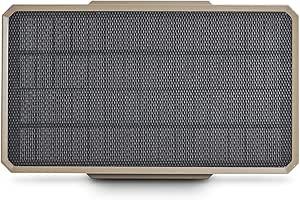
| MPLIB Trail Camera Solar Panel | 5000mAh | 5W | 6.69 x 4.6 x 1.7 in |
| Moultrie Gen 2 Solar Panel Pow | 3350mAh | — | — |
| Trail Camera Solar Panel | 2000mAh | — | 6.5 x 5.51 x 1.18 in |
| Aothaigro 6W Trail Camera Sola | 4000mAh | — | — |
| 6W Solar Panel Charger for Tra | 6000mAh | 6 watts | 7 x 10 x 5 inches |
| Augstci Solar Panel for Trail | — | 4 watts | 6 x 4 x 0.19 inches |
| Trail Camera Solar Panel with | — | 3 watts | 6.7 x 4.6 x 1.25 inches |
| RISERO Trail Camera Solar Pane | 4000mAh | 4 watts | 7.9 x 5.5 x 1.2 inches |
| Hunting Made Easy 5000 mAh Sol | 5000mAh | 5 watts | — |
| HME Trail Camera 12V Solar Aux | — | — | — |
| Trail Camera Solar Panel | 6000mAh | 6 watts | 6.7 × 4.09 × 0.57 inches |
| Trail Camera Solar Panel 12V/6 | 4000mAh | 3 watts | — |
More Details on Our Top Picks
Monarch Hunting Products The Charger – 12V Charging Port System with Weather-Resistant Housing, USB Ports, Switches & Solar Panel
The Charger is the most complete blind-power setup in this group: rather than focusing only on a trail camera, it combines a solar panel with a weather-resistant 12V system, USB ports, switches, a voltmeter, and LED lighting. That makes it a better fit for hunters who want to manage several small electrical needs from one mounted unit. Compared with the Moultrie Gen 2 Solar Panel Power Pack, which is designed around powering a trail camera, Monarch offers broader utility inside a blind. The tradeoff is added setup and a firm dependence on a 12V rechargeable battery, sold separately. Its electrical controls may also be more involved than a camera-specific panel. I’d choose it for a semi-permanent blind, not for a lightweight setup that needs to move between camera locations.
Pros:- Combines a solar panel with 12V charging, USB ports, switches, a voltmeter, and LED lighting
- Weather-resistant housing suits outdoor blind installations
- Mounting hardware and wiring are included for installation
- Provides more general-purpose blind power than camera-focused packs such as the Moultrie Gen 2
Cons:- Requires a separate 12V rechargeable battery
- The 12V-only design offers less flexibility for cameras that need other voltages
- Wiring and power management may be challenging for buyers unfamiliar with electrical systems
Best for: Hunters outfitting a fixed or frequently used blind who want solar-supported 12V power, USB charging, lighting, and visible battery monitoring in one system.
Not ideal for: Hunters seeking a compact, camera-only charger or anyone who does not want to source and connect a separate 12V rechargeable battery.
- Brand:Monarch Hunting Products
- Part number:1040
- Power system:12V; requires a rechargeable battery
- Included features:Solar panel, USB ports, switches, voltmeter, and LED lighting
- Housing:Weather-resistant
- Item weight:3.6 lb
- Package dimensions:12.28 x 8.58 x 6.69 in
Our verdict“Choose The Charger for a blind that needs a mounted, multi-function 12V power system; skip it for a simple trail-camera-only setup.”
MPLIB Trail Camera Solar Panel with 5000mAh Battery
Broad voltage compatibility is this panel’s main advantage: its listed 5V, 6V, 9V, and 12V support gives hunters more room to match different trail-camera requirements than the Moultrie Gen 2 Solar Panel Power Pack, which is specified at 7.2V. A built-in 5000mAh battery can also store energy for periods with less sun, while the adjustable bracket helps aim the panel at a usable patch of sky. Its 5W output is a practical middle ground for a camera station, but it does not make this a blind-wide power system like Monarch The Charger. Buyers should confirm that their camera’s voltage and DC connector match the panel; “universal” compatibility does not remove the need to check the connection. I’d favor it for mixed-camera setups over buyers needing higher-output blind power.
Pros:- Supports listed 5V, 6V, 9V, and 12V camera inputs
- Built-in 5000mAh battery stores power for low-light periods
- IP65 rating suits outdoor exposure to rain and dust
- Adjustable mounting bracket allows flexible panel positioning
Cons:- Listed 5W output is aimed at trail cameras rather than broader blind power needs
- Camera voltage and connector fit should be checked before purchase
- No operating-temperature range is provided in the supplied specifications
Best for: Hunters running trail cameras with different voltage requirements who want one panel with a built-in battery and adjustable mounting.
Not ideal for: Buyers powering a blind or other higher-demand equipment, or anyone whose camera uses a connector not supported by the listed DC sizes.
- Brand:MPLIB
- Model:MPLIB-98
- Maximum power:5W
- Battery capacity:5000mAh
- Voltage compatibility:5V, 6V, 9V, and 12V
- Connector:DC, 1.35mm or 2.1mm
- Water resistance:IP65
- Dimensions:6.69 x 4.6 x 1.7 in
Our verdict“Pick the MPLIB for a trail-camera station that benefits from multiple voltage options, not as a substitute for a multi-device blind power system.”
Moultrie Gen 2 Solar Panel Power Pack (3.4W, 7.2V, 3350mAh) for Trail Cameras
The Moultrie Gen 2 is a focused choice for hunters who want to reduce trail-camera battery changes, rather than add power to a whole blind. Its built-in 3350mAh battery is described as supporting up to nine days without sunlight, and the IP65 housing and varmint-resistant cable address common field hassles. The included strap and angled bracket also give buyers two practical mounting options. Compared with the MPLIB panel, Moultrie lists a narrower 7.2V output rather than several voltage options, so it makes more sense when that specification matches the camera than when one panel needs to serve multiple models. The 90-day warranty is a notable limitation for equipment left outdoors. I’d shortlist it for compatible camera owners who value a purpose-built connection and lower maintenance over broad voltage flexibility.
Pros:- Built-in 3350mAh battery stores energy for periods without sunlight
- IP65 water-resistant housing and varmint-resistant cable suit field placement
- Includes an adjustable strap and angled mounting bracket
- USB-C to elbow barrel-jack cable is included
Cons:- Listed 7.2V output is less flexible than the MPLIB’s multiple voltage options
- The 90-day warranty is short for gear kept outdoors
- At 1.1 lb, it is heavier than a minimal panel-only setup
Best for: Trail-camera owners whose camera matches the listed 7.2V setup and who want stored solar power to cut down on battery-change trips.
Not ideal for: Hunters needing a multi-voltage panel, blind-wide power, or a longer stated warranty than 90 days.
- Brand:Moultrie
- Model:MMA-14126
- Power output:3.4W
- Voltage:7.2V
- Battery capacity:3350mAh
- Water resistance:IP65
- Weight:1.1 lb
- Warranty:90 days
- Included connection cable:USB-C to elbow barrel jack
Our verdict“Choose the Moultrie when its 7.2V connection matches your camera and reduced battery changes matter more than broad compatibility.”
Trail Camera Solar Panel, WingHome Solar Battery Charger Kit 12V/1A 6V/1.5A with Built-in 2000mAh Rechargeable Lithium Battery, IP66 Waterproof Hunting Accessory
This WingHome kit keeps the setup straightforward: it pairs a built-in 2000mAh battery with listed 6V and 12V camera outputs, aiming to reduce reliance on disposable batteries without the larger stored capacity of the MPLIB 5000mAh panel or Aothaigro 4000mAh panel. Its IP66 rating is the strongest stated water-resistance rating among these five, which is useful for an exposed camera location. The tradeoff is limited reserve capacity and a modest stated current output, so I would match it to a compatible, lower-demand camera rather than expect it to run extra equipment. This is a more camera-specific option than Monarch The Charger, which adds blind-oriented ports and controls. Check both the camera’s required voltage and the connector before mounting; the listed MC4 connector may not match every camera directly.
Pros:- IP66 waterproof rating suits exposed outdoor camera placements
- Built-in 2000mAh rechargeable battery stores some power for periods with less sun
- Lists 6V and 12V output options for compatible cameras
- Compact dimensions can fit a small camera mounting area
Cons:- 2000mAh capacity is lower than the MPLIB and Aothaigro options
- Listed current output is modest for higher-demand devices
- MC4 connector details mean buyers should confirm camera compatibility before ordering
Best for: Hunters with a compatible 6V or 12V trail or security camera who want a compact, weather-protected solar accessory for a fixed location.
Not ideal for: Hunters needing a large stored reserve, power for several devices, or a panel with clearly documented camera-specific adapter options.
- Battery capacity:2000mAh
- Output voltage:12V
- Listed voltage options:6V and 12V
- Amperage capacity:1.5A
- Connector:MC4
- Water resistance:IP66
- Panel material:Monocrystalline silicon
- Dimensions:6.5 x 5.51 x 1.18 in
Our verdict“Choose the WingHome for a compatible camera in a wet, fixed location when a compact setup matters more than a large battery reserve.”
Aothaigro 6W Trail Camera Solar Panel with 4000mAh Battery
Aothaigro has the highest listed panel output here at 6W, paired with a 4000mAh battery and 6V, 9V, and 12V settings. That combination gives it a stronger case for a demanding trail-camera station than the 3.4W Moultrie Gen 2, while its multiple adapter sizes make it more adaptable across camera connections. The 360-degree mount helps hunters angle the panel around trees or other obstructions, and USB-C charging adds another way to replenish the unit. The tradeoffs are physical size and installation reach: at 8.46 inches long, it is larger than the Moultrie, and the stated cable may be too short for some camera-and-panel placements. Its listed temperature range is also worth matching against the conditions at your hunting site.
Pros:- 6W output is higher than the listed 3.4W Moultrie Gen 2
- 4000mAh battery and 6V, 9V, and 12V outputs suit varied compatible camera setups
- Includes adapters for several barrel-jack sizes
- 360-degree mount and USB-C charging add placement and charging flexibility
Cons:- The larger panel may be less convenient to conceal or fit on a compact mount
- Cable length may not suit every placement
- Listed operating range is limited to 14°F to 113°F
Best for: Hunters with compatible 6V, 9V, or 12V trail cameras who want higher listed panel output, a substantial built-in battery, and adjustable aiming.
Not ideal for: Buyers needing a very small panel, extra cable reach, or operation outside the stated 14°F to 113°F temperature range.
- Model:SP-06W-HC
- Power output:6W
- Battery capacity:4000mAh
- Voltage output:6V, 9V, and 12V
- Amperage:2A
- Water resistance:IP65
- Operating temperature:14°F to 113°F (-10°C to 45°C)
- Connector:5.5 x 2.1mm, with 4.0 x 1.7mm and 3.5 x 1.35mm adapters
- Charging port:USB-C
Our verdict“Pick the Aothaigro for a compatible camera that benefits from higher listed output and adjustable mounting, provided its size and temperature range fit your site.”
6W Solar Panel Charger for Trail Camera with 6V/9V/12V Output, IP66 Waterproof
I’d put this kit near the top for hunters whose camera needs more than a basic 6V or 12V supply: its 6W panel offers the highest stated output among these five, and it supports 6V, 9V, and 12V systems. The built-in 6000mAh battery also holds more stored capacity than the RISERO’s 4000mAh pack, which can help bridge periods without sun. Its rotating bracket and IP66 rating suit tree-mounted setups exposed to rain and dust. The tradeoff is that 6W does not guarantee steady charging through prolonged shade, and the larger battery cannot make up for limited sunlight indefinitely. Compared with the Augstci’s 4W model, this is the stronger pick for power headroom, but it may be more than a low-draw camera needs.
Pros:- 6W maximum output is higher than the 3W and 4W options in this group.
- Supports 6V, 9V, and 12V output for a wider range of camera power requirements.
- 6000mAh built-in battery provides the largest stated capacity among these five.
- IP66 protection and a 360-degree bracket suit flexible outdoor mounting.
Cons:- The 6W panel may not keep up with high-energy cameras or extended low-light periods.
- Stored battery capacity is finite, so prolonged lack of sunlight can still interrupt power.
- Compatibility depends on matching the camera’s voltage and connection.
Best for: Hunters running compatible 6V, 9V, or 12V trail cameras who want higher panel output and a larger buffer battery.
Not ideal for: Owners of high-draw cameras or anyone relying on a shaded setup for long stretches, since the panel’s output and battery capacity still have limits.
- Maximum power:6 watts
- Output voltage:12 volts; listed output options also include 6V and 9V
- Battery capacity:6000mAh
- Weather resistance:IP66
- Dimensions:7 x 10 x 5 inches
- Materials:Aluminum, monocrystalline silicon, tempered glass
- Connections:USB, Type-C, and DC
- Mounting:360-degree rotating bracket
Our verdict“Choose this model if your compatible camera benefits from multiple voltage options, a larger buffer battery, and more panel output than the lower-wattage alternatives.”
Augstci Solar Panel for Trail Camera (12V/1A & 6V/1.5A) with 360° Mounting Bracket
The Augstci is a straightforward choice for hunters who already know their camera accepts 12V/1A or 6V/1.5A. Its included cables and mounting hardware reduce the parts hunt for a basic tree- or post-mounted installation, while the 360-degree bracket helps aim the panel toward available sunlight. Against the 6W charger in this roundup, Augstci gives up panel output and does not list a built-in battery, so it is less suited to carrying power through long cloudy spells. It is also more narrowly specified than the Trail Camera Solar Panel with 5000mAh Battery, which lists a built-in battery and a 10-foot cable. I’d choose Augstci for a compatible camera and uncomplicated mounting, not for broad voltage flexibility or extra stored capacity.
Pros:- Provides specified 12V/1A and 6V/1.5A output options.
- 360-degree bracket helps position the panel for better sun exposure.
- IP66 waterproof rating is suited to exposed outdoor placements.
- Includes connection cables and installation hardware.
Cons:- 4W maximum output may charge slowly in cloudy conditions.
- Compatibility is limited to the listed voltage and current combinations.
- No built-in battery capacity is specified.
Best for: Hunters with a trail camera rated for 12V/1A or 6V/1.5A who want a compact kit with mounting hardware included.
Not ideal for: Owners of cameras with other voltage or current requirements, or buyers who want a listed built-in battery to cover low-sun periods.
- Maximum power:4 watts
- Output:12V/1A and 6V/1.5A
- Weather resistance:IP66
- Material:Monocrystalline silicon
- Dimensions:6 x 4 x 0.19 inches
- Weight:16 ounces
- Connector type:Type-C
- Warranty:1 year
Our verdict“Pick Augstci for a compatible 6V or 12V camera when simple mounting matters more than higher output or battery storage.”
Trail Camera Solar Panel with Built-in 5000mAh Battery, IP66 Waterproof, 12V/1A & 6V/1.5A Output, USB-C, 10ft Cable, 360° Adjustable Bracket
I’d favor this panel when the camera and the best sunny mounting spot are not close together: its 10-foot cable gives more placement freedom than the Augstci’s compact listed dimensions, while the 360-degree bracket allows the panel to be aimed separately. The built-in 5000mAh battery adds a reserve for periods when direct sun is unavailable, and the listed 6V and 12V outputs cover common trail-camera setups. The compromise is its 3W maximum output, the lowest stated panel rating in this group; the 6W charger offers more headroom for demanding use. Compatibility is also not universal, with certain camera models excluded, and the camera port needs waterproof sealing during installation. This is a fit-and-placement pick, not the power leader.
Pros:- 10-foot cable allows flexible positioning of the panel relative to the camera.
- 5000mAh built-in battery stores power for periods without direct sunlight.
- IP66 protection and adjustable mounting suit outdoor camera locations.
- Lists both 6V and 12V output options with DC and USB-C connections.
Cons:- 3W maximum output is lower than the 4W and 6W panels in this selection.
- Not compatible with certain camera models, including BTC-4E20 and Tactacam.
- Camera port requires waterproof sealing during installation.
Best for: Hunters who need to mount a panel in a sunnier spot away from the camera and have a compatible 6V or 12V model.
Not ideal for: Owners of the specifically excluded camera models, or hunters prioritizing maximum charging output for demanding setups.
- Maximum power:3 watts
- Output voltage:6 volts and 12 volts
- Built-in battery:5000mAh
- Cable length:10 feet
- Weather resistance:IP66
- Dimensions:6.7 x 4.6 x 1.25 inches
- Connectors:DC and USB-C
- Mounting:360-degree adjustable bracket
Our verdict“Choose this model for cable reach and stored power when your camera is compatible and higher panel wattage is not the priority.”
RISERO Trail Camera Solar Panel with 4000mAh Battery
RISERO makes sense for hunters whose camera runs on 12V DC and who want a fairly direct solar replacement for frequent battery changes. Its 4W monocrystalline panel and built-in 4000mAh battery offer a middle ground between the lower-output 3W panel in this group and the 6W charger’s larger power capacity. Included adapter cables broaden camera fit, while screw or strap mounting gives practical options for a tree or post. The key limitation is voltage: unlike the 6W model, RISERO lists only 12V DC, so it is a poor match for a 6V camera. Its IP65 rating is also below the IP66 ratings on several alternatives. I’d shortlist it for a confirmed 12V camera, but verify the adapter and operating-temperature fit before leaving it in the field.
Pros:- 4W panel and 4000mAh battery provide a balanced combination of generation and stored capacity.
- Included adapter cables support compatibility with multiple camera connections.
- Can be mounted with a screw or strap.
- 10-foot cable gives flexibility when positioning the panel.
Cons:- 12V DC output does not suit cameras requiring 6V or another voltage.
- IP65 rating is lower than the IP66 protection specified by several alternatives.
- Listed operating range is limited to 14°F to 113°F.
Best for: Hunters with a 12V DC trail camera who want adapter cables, a built-in battery, and flexible mounting choices.
Not ideal for: Owners of 6V or other non-12V cameras, and hunters seeking the stronger IP66 rating offered by several competing panels.
- Maximum power:4 watts
- Output:12V DC
- Battery capacity:4000mAh
- Weather resistance:IP65
- Dimensions:7.9 x 5.5 x 1.2 inches
- Cable length:10 feet / 3 meters
- Operating temperature:14°F to 113°F (-10°C to 45°C)
- Material:Monocrystalline silicon
Our verdict“Choose RISERO for a confirmed 12V camera when its adapter selection and mounting options matter more than multi-voltage output.”
Hunting Made Easy 5000 mAh Solar Power Panel
This HME Sol-Pak is the most brand-specific option here: it is designed for HME hunting cameras with an external 12V DC jack, rather than aiming for broad compatibility. For an owner of a matching camera, the 5000mAh lithium-ion battery, 5W panel, 10-foot insulated cable, and LED charge indicator make a clear field setup: stored power supports the camera, the longer cable eases placement, and the indicator offers a quick status check. Compared with RISERO, HME lists a larger battery and more panel output, but RISERO is the more flexible choice for mixed camera connections thanks to its adapter cables. At 2 pounds, this is also heavier than the lightweight Augstci. The narrow 12V jack requirement is the main reason I would not recommend it as a general-purpose pick.
Pros:- 5000mAh lithium-ion battery provides stored power for a compatible camera.
- 5W panel output exceeds the stated 3W and 4W outputs of several alternatives.
- 10-foot insulated cable and adjustable swivel brackets support practical placement.
- LED indicator offers a quick view of battery status.
Cons:- Only designed for cameras with an external 12V DC jack, limiting compatibility.
- At 2 pounds, it is heavier than the listed Augstci panel.
- 5W output can still mean slow charging during cloudy weather.
- USB connector may require an additional cable or adapter for some setups.
Best for: HME camera owners whose model has an external 12V DC jack and who want a dedicated solar pack with a status indicator.
Not ideal for: Hunters with non-HME cameras, cameras lacking an external 12V DC jack, or buyers seeking the lightest or most broadly compatible option.
- Maximum power:5 watts
- Output voltage:12 volts
- Battery capacity:5000mAh
- Battery type:Lithium-ion
- Weight:2 pounds
- Material:Weather-resistant ABS housing
- Cable length:10 feet
- Compatibility:HME hunting cameras with an external 12V DC jack
Our verdict“Choose the HME Sol-Pak if you own a compatible HME camera and value its battery, cable reach, and status indicator over universal fit.”
HME Trail Camera 12V Solar Auxiliary Power Pack, 3-Pack
The HME 3-pack suits hunters who want to power several trail cameras without managing a separate solar accessory at each site. Each pack pairs a pre-attached amorphous silicon panel with a sealed lead-acid battery, waterproof plastic case, and 10-foot cable, giving you flexible placement around a tree-mounted camera. Compared with the single-camera Trail Camera Solar Panel 6W Kit, this set is geared toward outfitting multiple locations, though its listed 12V output makes checking your camera’s external power-jack requirements especially important. The sealed battery and weather-focused case are useful for remote placements, but they add bulk compared with a compact panel-and-battery unit. The plastic enclosure may also be less resistant to rough handling than a tougher housing, so this is a better fit for fixed setups than frequent relocation.
Pros:- Three packs can support multiple camera locations.
- Pre-attached amorphous silicon panels provide solar charging.
- Sealed lead-acid batteries and waterproof cases suit outdoor placements.
- 10-foot cables and tree-grip ridges allow flexible mounting.
Cons:- Compatibility depends on a trail camera having the right external power jack.
- Plastic cases may be less rugged than metal housings in rough field conditions.
Best for: Hunters running several trail cameras with compatible 12V external power jacks who want a dedicated solar pack at each location.
Not ideal for: Owners of cameras without a compatible external power jack, or hunters who need a compact, lightweight panel for frequent moves between sites.
- Brand:HME / Hunting Made Easy
- Unit count:3
- Input voltage:12V
- Output:12V DC
- Output current:10 A
- Listed wattage:120 W
- Power source:Battery powered / solar
- Compatible devices:Trail cameras and wireless trail cameras
- Enclosure material:Plastic
Our verdict“Choose the HME 3-pack if you are equipping several compatible 12V trail cameras; skip it if your cameras use another power connection.”
Trail Camera Solar Panel, 6W Solar Battery Charger Kit, 6V/2A, 9V/1.5A, 12V/1A
This 6W solar kit is the flexible pick for hunters whose camera lineup includes different power requirements. Its 6V, 9V, and 12V outputs cover more voltage options than the HME 12V-only auxiliary pack, while the built-in 6000mAh battery can reduce how often you need to replace camera batteries. The compact 6.7-by-4.09-inch panel is easier to fit into a tight mounting spot than the larger-format Trail Camera Solar Panel 12V/6V kit, though the latter specifies a 360-degree bracket and IP66 protection. This model is listed as IP65 waterproof and has adjustable mounting, but its battery still depends on receiving adequate sunlight. Extended cloudy stretches can outlast its stored charge, and non-standard camera connections or voltage needs may rule it out.
Pros:- Three output-voltage options broaden camera compatibility.
- Built-in 6000mAh battery can reduce routine battery changes.
- IP65 waterproof rating is suited to outdoor exposure.
- Compact dimensions and adjustable mounting help with tight placements.
Cons:- Stored power may not cover extended periods without strong sunlight.
- Some non-standard cameras may not match its output or connection requirements.
Best for: Hunters with compatible Tactacam, Reveal, or other trail cameras that need a choice of 6V, 9V, or 12V power.
Not ideal for: Hunters whose cameras need a non-listed voltage or connector, or those placing a camera where prolonged shade and cloudy weather limit charging.
- Maximum power:6 watts
- Output voltages:6V, 9V, and 12V DC
- Output currents:2A at 6V, 1.5A at 9V, 1A at 12V
- Battery capacity:6000mAh
- Number of cells:6
- Dimensions:6.7 × 4.09 × 0.57 inches
- Compatible devices:Most trail cameras, including Tactacam and Reveal models
Our verdict“Pick this kit when voltage flexibility and a substantial built-in battery matter more than a specialized multi-camera pack or a 360-degree mount.”
Trail Camera Solar Panel 12V/6V Solar Panel 4000mAh 3W Solar Battery Kit
The clearest reason to choose this kit is its 360-degree adjustable bracket, which gives hunters more control over panel direction when a tree or camera position limits sunlight. It supports 6V and 12V cameras and pairs a 3W panel with a 4000mAh battery, making it a straightforward fit for common hunting and security camera setups. Compared with the 6W, 6000mAh Trail Camera Solar Panel Kit, this one offers less panel power and stored capacity, so I would favor the 6W option for locations with demanding power needs or less reliable sun. Its listed IP66 protection and tempered-glass, aluminum, polymer, and monocrystalline-silicon construction speak to outdoor use, but setup and aiming take some care. The stated 10-inch dimensions also suggest a less compact package than the smaller 6W model.
Pros:- 360-degree adjustable bracket helps orient the panel around mounting constraints.
- 6V and 12V outputs support many hunting and security cameras.
- IP66 weather protection is specified for outdoor use.
- Construction includes monocrystalline silicon, tempered glass, and aluminum.
Cons:- 3W output and 4000mAh battery offer less capacity than the 6W, 6000mAh kit.
- Bracket setup and panel positioning may take more care than a simpler mount.
- Listed 10-inch dimensions may be less convenient for compact placements.
Best for: Hunters who can mount a panel in a shaded or awkward position and want to aim it toward available sunlight for a 6V or 12V camera.
Not ideal for: Hunters seeking the highest listed panel output or battery capacity, or those who want a small, quick-to-mount setup.
- Maximum power:3 watts
- Output voltages:6V and 12V DC
- Battery capacity:4000mAh
- Panel material:Monocrystalline silicon
- Other materials:Tempered glass, polymer, and aluminum
- Listed dimensions:10 × 10 × 10 inches
- Mount:360-degree adjustable bracket
- Warranty:1 year
Our verdict“Choose this model when adjustable aiming and IP66 protection matter more than the greater output and battery capacity of the 6W alternative.”

How We Picked
I compared these 13 options through the needs of hunters who want to reduce trail-camera battery changes without creating a new field-maintenance problem. The main criteria were stated voltage and current outputs, panel wattage where listed, built-in battery capacity, weather protection, mounting flexibility, cable reach, and whether the package is designed for one camera or several. I gave more weight to clear compatibility information and useful field placement details than to broad claims that do not explain how a kit fits a hunting setup.
The ranking favors products that combine practical power options with a clear use case, then separates specialized picks by what they do better. The Charger leads for its broader charging system; camera-specific panels with larger listed batteries and adjustable mounting follow for hunters prioritizing fewer visits or easier placement. Simpler or more narrowly specified kits rank lower, not because they cannot work, but because buyers may need to verify more details before relying on them in the field. Product specs alone do not establish real-world runtime, so I treat capacity and output as comparison points rather than guarantees.
Factors to Consider When Choosing Solar Panel Kit For Hunting
Before choosing a kit, match it to the camera and the actual location where it will sit. A panel that looks capable on paper can disappoint if its output does not match the camera, its cable cannot reach a sunny mounting spot, or shade limits its charge. These broader checks help narrow the options beyond the feature lists.
Match Voltage, Current, and Connector Before Buying
Start with the camera’s manual or power-input label and match the panel’s output voltage to that requirement. A kit listing both 6V and 12V outputs gives more flexibility, but that does not mean every connector or polarity will fit every camera. Check the plug size, polarity, and whether the kit includes the correct lead rather than assuming a shared voltage means compatibility. Current ratings also matter: a compatible voltage does not answer every question about whether the camera can draw the power it needs. If the camera maker specifies a particular accessory or power method, treat that as the safest reference. This check is more useful than choosing by wattage alone.
Estimate Sun Exposure at the Camera Site
Hunting locations often put cameras under canopy, on shaded trails, or facing away from the best sunlight. A panel needs a position with useful exposure, which may mean mounting it separately from the camera and running a cable between them. Walk the site at different times of day if possible; a bright patch at noon may be shaded for much of the remaining daylight. A larger panel rating cannot make up for a consistently blocked view of the sky. If the camera must stay in deep cover, plan for battery backup and periodic inspection rather than expecting solar power to eliminate maintenance.
Treat Battery Capacity as a Buffer, Not a Runtime Promise
A built-in battery can store energy for cloudy periods and reduce the effect of uneven sunlight, but its listed milliamp-hour capacity does not translate directly into a fixed number of operating days. Camera settings, trigger frequency, cellular transmission, temperature, and battery condition all affect power use. Compare capacity figures within similar kits, then check whether the panel can replenish that stored energy at your site. Hunters running cellular cameras or high-traffic trails should allow more margin than someone monitoring a quiet location. Avoid choosing a panel solely because it has the largest stated battery; usable performance depends on the whole system.
Plan the Mounting Position and Cable Route
An adjustable bracket can make it easier to aim a panel toward open sky while keeping the camera pointed at the trail. Before buying, decide whether the panel will attach to the camera tree, a nearby tree, or a separate support, and check that the supplied cable can reach that spot. A longer cable offers placement freedom but adds another section that can snag, wear, or attract attention. Mounting hardware should hold the panel steady through wind and seasonal changes, not just allow a convenient initial angle. Keep the panel and cable clear of branches that may grow or move into the sunlight. Good placement can matter more than adding features to a poorly positioned kit.
Choose Weather Protection for the Actual Exposure
Water-resistance labels such as IP66 are useful clues, but they should not be read as a guarantee that every part of a setup can be left exposed indefinitely. Connectors, cable joints, and the camera’s own power port may be less protected than the panel housing. Route cables so water does not run directly into a connection, and use the manufacturer’s guidance for sealing or covering exposed joins. In cold or wet locations, inspect the setup during regular property visits for loosened mounts, debris, and damaged cable jackets. A sturdier enclosure is most valuable when the panel faces sustained weather rather than sheltered placement. Think about the entire connection path, not just the panel’s rating.
Decide Whether One Kit or Multi-Camera Coverage Makes Sense
A dedicated panel for each camera keeps power systems independent and makes troubleshooting easier, but it can add equipment to every location. A multi-pack such as HME’s three-unit offering may suit a property where several cameras need similar support. Before standardizing on a pack, verify that each camera uses compatible voltage and connectors; the same brand of camera does not always mean the same power input. If cameras have different roles, a higher-capacity kit may belong on the busiest or hardest-to-reach location while simpler units cover easier sites. Keep a spare conventional battery plan for any camera where a failed power connection would leave a critical monitoring gap. The right approach balances fewer maintenance trips with the effort of maintaining several exposed systems.
Frequently Asked Questions
How do I know whether a solar panel kit will work with my trail camera?
Check the camera manual for its required input voltage, connector type, and polarity, then compare those details with the panel kit. A listing that offers 6V and 12V outputs is flexible, but it still may not include the plug your camera needs. Do not rely on the camera brand alone as proof of compatibility, especially when comparing older and newer models. If the kit’s listing does not make the connector or polarity clear, confirm those details with the seller or manufacturer before mounting it in the field. This step can prevent a kit that appears suitable from being unusable at your camera.
Will a solar panel keep a trail camera running through cloudy weather?
Cloud cover reduces the energy a panel can collect, so performance depends on how long the cloudy stretch lasts and how much power the camera uses. A built-in battery provides a buffer, but its stated capacity is not a promise of a specific number of cloudy days. Cameras that transmit images over cellular networks or trigger often can use more power than a low-activity setup. For a shaded or frequently overcast location, keep a backup battery plan and check the system during visits. Solar can reduce battery changes without making the camera independent of weather.
Should I choose a higher-wattage panel or a larger built-in battery?
They solve different problems: panel wattage describes the panel’s stated charging capacity, while battery capacity describes stored energy available when sunlight is limited. A larger battery may help bridge cloudy periods, but it needs adequate charging opportunity to recover. A higher-output panel may replenish stored power more readily under suitable conditions, yet it cannot overcome deep shade or a poor angle. Start with your site’s sunlight and the camera’s power demand, then weigh both specifications together. Avoid treating either number as a stand-alone runtime estimate.
Can I mount the panel away from the camera to get more sun?
Often, separate placement is a useful way to expose the panel to open sky while keeping the camera aimed at the trail. Check the included cable length and confirm that the cable and connectors are suitable for the intended outdoor route. A longer or exposed run should be secured so it does not snag, rub against bark, or become an easy point of damage. Adjustable brackets, such as those specified by some kits in this roundup, can also help with panel angle, but they do not replace a clear sun-facing location. Test the routing and camera connection before leaving the site unattended.
Is a three-pack a better choice than buying one panel per camera?
A three-pack can be a sensible way to equip several similar cameras, particularly when each site has comparable sunlight and compatible power inputs. Separate single kits make more sense when cameras have different voltage requirements, cable routes, or power demands. Before choosing a pack, confirm that each unit’s output and connector suit the camera it will serve; quantity does not guarantee broad compatibility. Consider which cameras are hardest to reach and whether they merit a different capacity or mounting style. For mixed setups, combining a multi-pack with one specialized kit may be more practical than forcing every camera onto the same model.
Conclusion
For the broadest hunting setup, I would start with Monarch Hunting Products The Charger, whose charging ports, switches, and included panel give it the most varied role in this lineup. For a camera-focused kit with a larger stated battery, the MPLIB 5000mAh panel is a strong value-oriented choice, while Moultrie Gen 2 suits buyers who prefer a trail-camera power pack with clearly stated output and capacity. Beginners should favor a kit whose voltage and connector match their camera without adapters or guesswork, and should check the camera manual before ordering. For adjustable placement, compare the Augstci and 5000mAh bracket-equipped panel; for several compatible cameras, consider HME’s three-pack. Choose by camera compatibility and site sunlight first, then use capacity, mounting, and multi-camera coverage to settle the decision.
Fall Picks
fall essentials
As an affiliate, we earn on qualifying purchases.