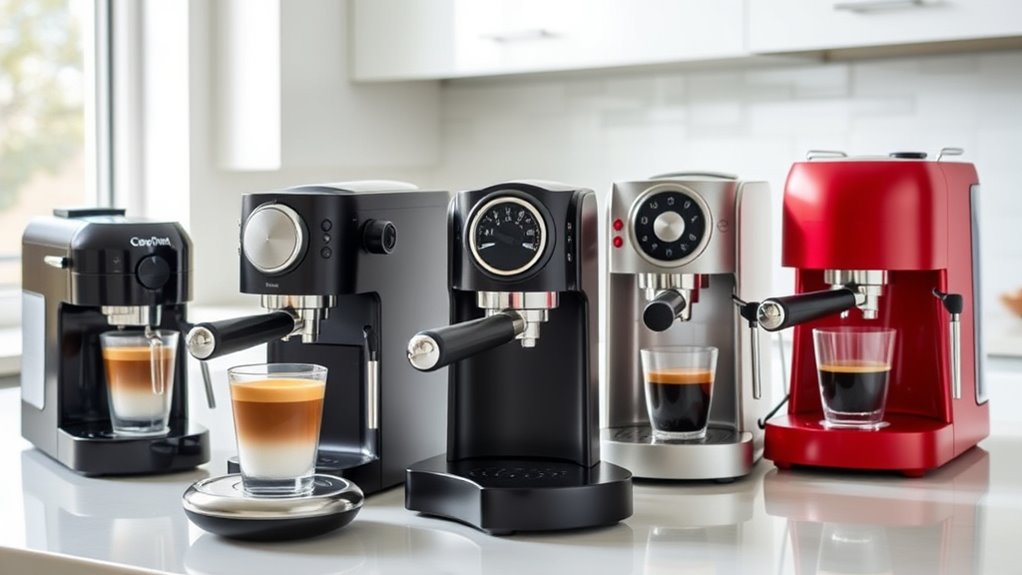

If you’re looking for the best beginner espresso machines in 2025, I recommend options like the CASABREWS 5418 PRO, SHARDOR 20 Bar with Milk Frother, Neretva 20 Bar, and De’Longhi Stilosa. These models are easy to use, affordable, and perfect for new baristas. They come with features like quick heat-up, automatic milk frothing, and compact designs. Keep exploring to find out which one might be best for your home coffee setup.
Key Takeaways
- Look for machines with user-friendly interfaces like LCD screens or simple button controls for easy operation.
- Prioritize automatic or semi-automatic models with quick heat-up times and built-in milk frothers.
- Consider compact, stainless steel designs that fit small kitchens and are durable for daily use.
- Choose affordable options under $300 that offer essential features like pre-infusion and adjustable temperature.
- Select models with reliable customer support, easy maintenance, and proven performance for beginners.
CASABREWS 5418 PRO Espresso Machine
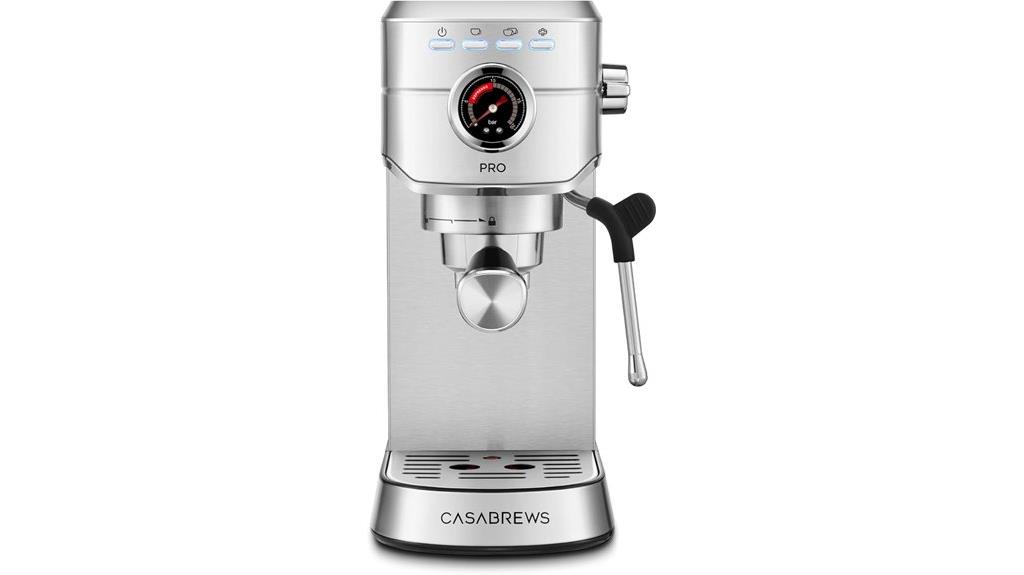
If you’re just starting out and want a professional-grade espresso machine that’s easy to use, the CASABREWS 5418 PRO is an excellent choice. It heats up in under 5 seconds thanks to Flashheat Technology, so you can brew quickly without waiting. Its sleek stainless steel design fits well in modern kitchens and doesn’t take up much space. The machine features rapid steam switching, so you can switch instantly between brewing and frothing milk. With a 20-bar pump and PID temperature control, it delivers rich crema, smooth flavor, and perfect microfoam — ideal for lattes and cappuccinos. It’s simple, fast, and perfect for home baristas.
Best For: home baristas and coffee enthusiasts seeking a professional-grade espresso machine that delivers quick, high-quality results with minimal setup.
Pros:
- Heats up in under 5 seconds thanks to Flashheat Technology for rapid brewing.
- Features rapid steam switching and PID control for fast, precise milk frothing and temperature management.
- Compact, sleek stainless steel design ideal for small modern kitchens.
Cons:
- No built-in cup warmer, requiring separate warming of cups.
- Semi-automatic operation may require some learning curve for beginners.
- Designed primarily for ground coffee; not compatible with coffee pods.
SHARDOR 20 Bar Espresso Machine with Milk Frother
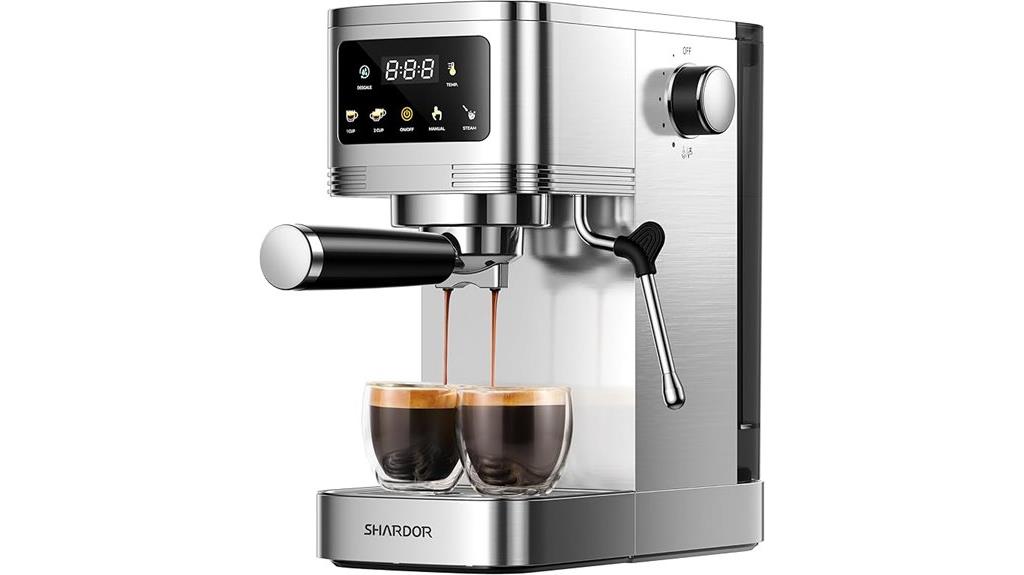
The SHARDOR 20 Bar Espresso Machine with Milk Frother is an excellent choice for beginners who want professional-quality coffee at home without the complexity of high-end models. Its 20-bar pump and 1350W motor deliver rich flavor and aroma, while the compact stainless steel design fits easily into any kitchen. The machine features a professional steam wand and milk frother, making it simple to create lattes, cappuccinos, and more. With a user-friendly touchscreen LCD, adjustable temperature controls, and a self-cleaning function, it offers convenience and customization. Rated 4.5 stars, it’s a reliable, versatile machine perfect for those just starting their barista journey.
Best For: beginners and home baristas seeking professional-quality espresso and milk-based beverages with easy-to-use features.
Pros:
- User-friendly touchscreen LCD with customizable options for shots, temperature, and manual control
- Compact stainless steel design fits conveniently in any kitchen space
- Includes milk frother and steam wand for barista-quality lattes and cappuccinos
Cons:
- Semi-automatic operation may require some learning curve for precise control
- Limited to a 45 oz water tank, requiring refills during frequent use
- Slightly heavier at 8.53 pounds, which could impact portability for some users
Neretva Espresso Machine 20 Bar
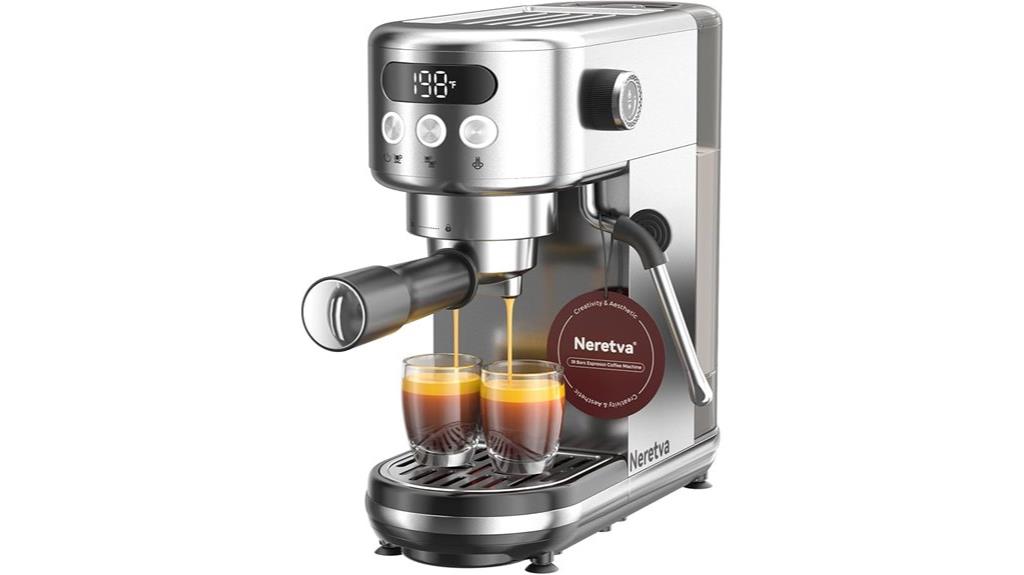
The Neretva Espresso Machine 20 Bar is ideal for beginners who want professional-quality results at home. Its powerful 20-bar pressure system and 1350W boiler deliver barista-style espresso, lattes, and cappuccinos effortlessly. The pre-infusion feature gradually builds pressure, ensuring balanced extraction and rich flavors every time. With precise temperature control and a clear display, I can easily monitor and adjust brewing and steaming temperatures for perfect results. The robust steam wand creates smooth, rich foam for latte art, while its sleek stainless steel design fits seamlessly into any kitchen. Plus, with included accessories and responsive customer support, it’s a reliable, versatile choice for new coffee enthusiasts.
Best For: beginners and home baristas seeking professional-quality espresso, lattes, and cappuccinos with easy-to-use features and reliable performance.
Pros:
- Powerful 20-bar pressure system and 1350W boiler for authentic barista-style beverages
- Precise temperature control with a clear display for easy monitoring and adjustments
- Compact, durable stainless steel design that fits seamlessly into any kitchen
Cons:
- May require some learning curve for optimal pre-infusion and frothing techniques
- Limited included accessories, which might necessitate additional purchases for customization
- Automatic steam system might lack some manual control preferred by advanced users
SHARDOR Espresso Machine 20 Bar with Milk Frother
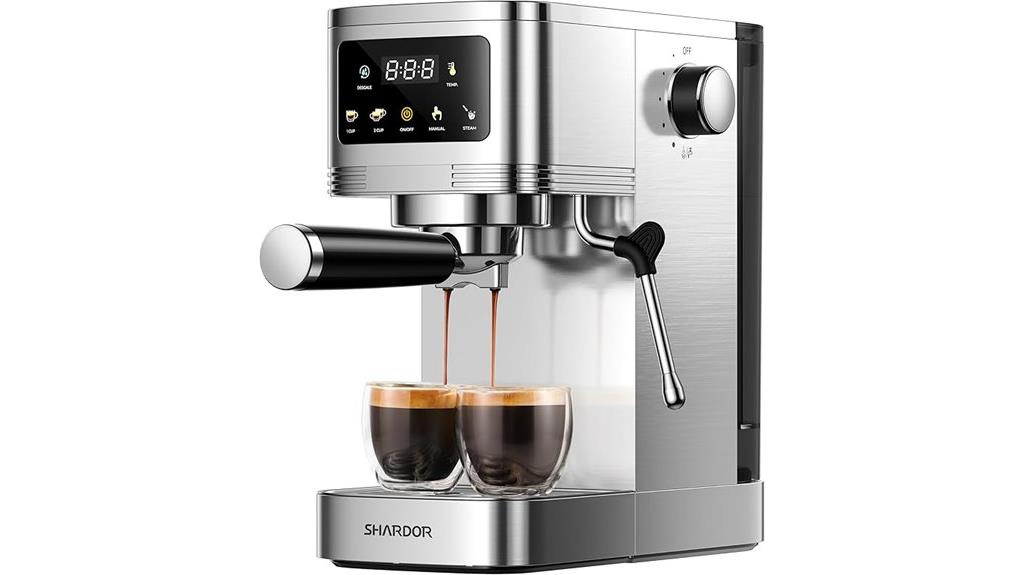
For beginners looking to craft professional-quality espresso at home, the SHARDOR Espresso Machine 20 Bar with Milk Frother offers an excellent entry point. Its 20-bar pump and 1350W motor guarantee rich flavor and aroma with every shot. The compact stainless steel design fits easily into any kitchen, while the 45 oz removable water tank simplifies refills. The machine features a professional steam wand and included milk frother, letting you create creamy lattes and cappuccinos. With a user-friendly touchscreen LCD, adjustable temperature, and self-cleaning function, it combines convenience with professional results. Rated 4.5 stars, this semi-automatic machine is perfect for new baristas seeking quality and ease.
Best For: Beginners and home baristas seeking an easy-to-use, professional-quality espresso machine with milk frothing capabilities.
Pros:
- User-friendly touchscreen LCD and adjustable temperature controls for customized brewing.
- Compact stainless steel design that easily fits into any kitchen space.
- Includes milk frother and professional steam wand for barista-quality drinks.
Cons:
- Semi-automatic operation may require some manual skill and practice.
- Limited to 45 oz water tank, requiring frequent refills with heavy use.
- Weighs 8.53 pounds, which may be less portable for frequent repositioning.
De’Longhi Stilosa Manual Espresso Machine
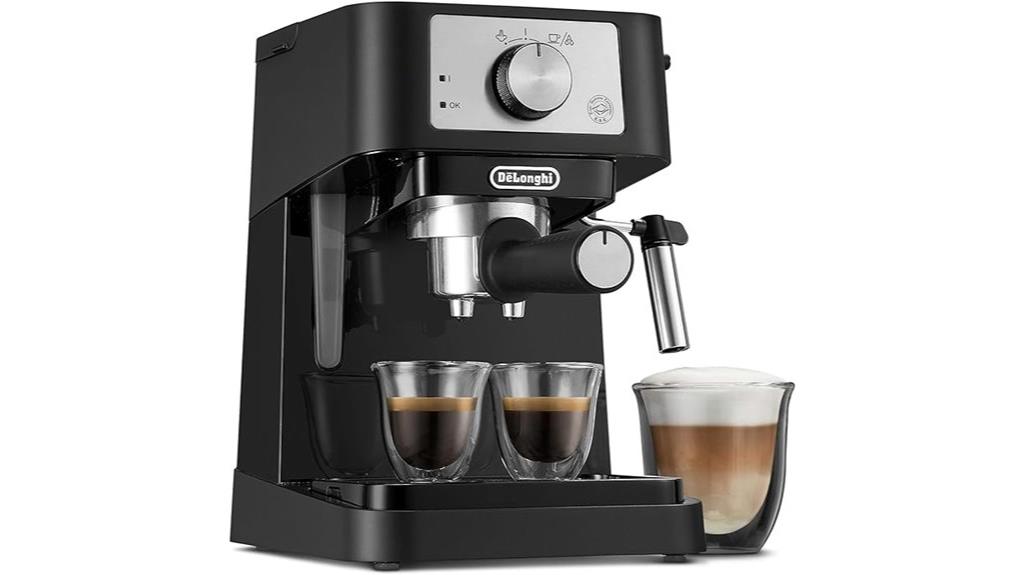
Looking for an espresso machine that’s simple to use yet delivers professional-quality drinks? The De’Longhi Stilosa Manual Espresso Machine might be just what you need. Its contemporary, compact design fits perfectly on modern kitchen counters and is easy to clean. With a 15 BAR pump, it extracts rich espresso shots, and the included portafilter with two filters offers customization. The manual steam wand lets you create textured milk for lattes and cappuccinos. Built with a stainless steel boiler, it’s durable and designed for long-lasting performance. Plus, the tamper ensures proper coffee grounds compression, making it ideal for anyone enthusiastic to craft authentic espresso-based beverages at home.
Best For: coffee enthusiasts and home baristas seeking a compact, easy-to-use espresso machine that delivers professional-quality beverages.
Pros:
- Compact, space-saving design ideal for modern kitchens
- 15 BAR pump provides optimal extraction for rich espresso
- Manual steam wand allows for textured milk perfect for lattes and cappuccinos
Cons:
- Requires manual operation, which may have a learning curve for beginners
- Limited automatic features compared to fully automatic espresso machines
- Stainless steel boiler may need regular maintenance to prevent buildup
Factors to Consider When Choosing an Espresso Machine for Beginners
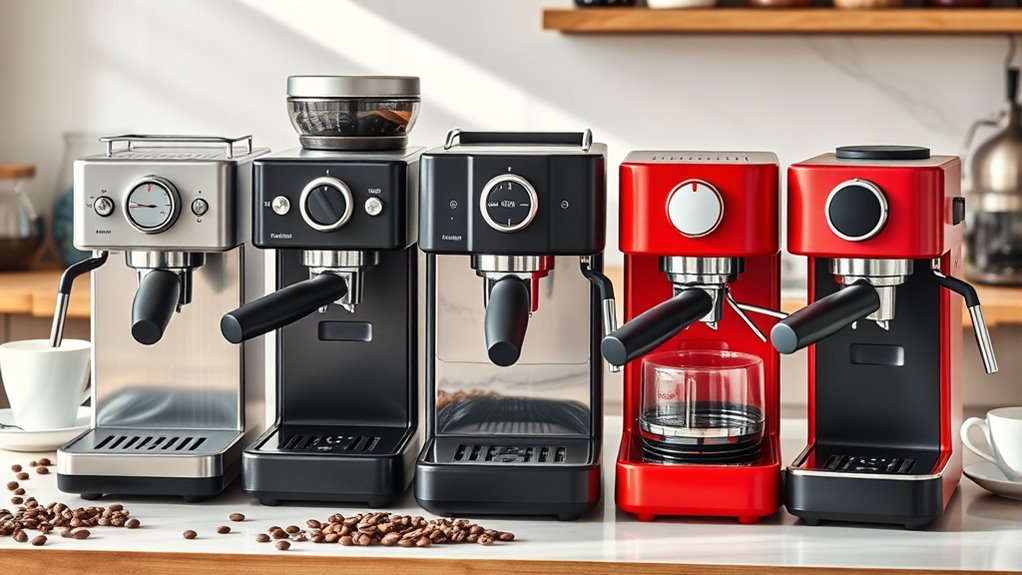
When choosing an espresso machine as a beginner, I look at how easy it is to operate and fit into my space, along with my budget. I also consider the brewing features and whether I want milk frothing options for lattes and cappuccinos. These factors help me find a machine that’s simple to use and matches my coffee preferences.
Ease of Use
Choosing an espresso machine that’s easy to use can make all the difference for beginners. A user-friendly interface, like clearly labeled buttons or a simple touchscreen, helps you operate the machine without frustration. Machines with automatic or semi-automatic functions take care of water pressure and temperature, making brewing more straightforward. Built-in guides or step-by-step instructions can boost your confidence and help you learn quickly. Features such as automatic milk frothing or pre-set shot sizes simplify making a variety of espresso drinks. Additionally, machines with minimal setup requirements and intuitive controls let you start brewing almost immediately. The goal is to find a machine that’s straightforward, so you can focus on enjoying your coffee rather than wrestling with complicated settings.
Price Range
Finding the right price range is essential because it influences the features, quality, and ease of use you’ll get from your espresso machine. Beginner models can cost anywhere from under $100 to over $500, with lower-priced machines often offering fewer features and requiring more manual effort. Mid-range options, around $200 to $300, strike a good balance, providing better control and convenience without breaking the bank. If you’re willing to invest a bit more, machines in the $400 to $500 range come with extras like temperature control, steam wands, and programmable settings, making brewing easier and more consistent. Setting a realistic budget helps narrow your choices, ensuring you pick a machine that matches your skill level and brewing goals, making your coffee journey enjoyable and manageable.
Size and Space
Selecting an espresso machine that fits comfortably in your kitchen starts with paying attention to its size and dimensions. Measure your available space carefully before shopping. Compact models are perfect for small countertops and can be easily stored away when not in use. Look for space-saving designs that combine functionality with a small footprint to maximize your counter space. If your kitchen has limited room, consider machines without bulky features like built-in cup warmers or large water tanks, which can take up unnecessary space. It’s essential to guarantee the machine’s size aligns with your layout and storage options. Taking these steps helps you choose a model that’s not only easy to use but also fits seamlessly into your kitchen environment.
Brewing Features
Once you’ve found a machine that fits your space, it’s important to contemplate the brewing features that will help you make great espresso at home. Look for machines with pre-infusion functions, which evenly saturate the coffee grounds for better flavor extraction. Adjustable temperature controls let you customize the brewing process to match your taste preferences. Pressure gauges are useful for monitoring and adjusting pressure to ensure ideal extraction. I recommend semi-automatic machines—they give you some control without being overwhelming. Also, choose a model with a clear, easy-to-use interface, such as labeled buttons or a touchscreen, so operation remains straightforward. These features help you craft consistently good espresso while keeping the process accessible for beginners.
Milk Frothing Options
When it comes to milk frothing options on an espresso machine, the choice can profoundly impact how easy it is to create your favorite milk-based drinks. Manual steam wands give you control over texture and microfoam but require practice and skill. If you’re just starting out, automatic milk frothers are a great option; they deliver quick, consistent foam with minimal effort, making your mornings smoother. Some machines come with built-in frothing features, while others need separate accessories or manual operation. The method you choose can influence the quality and texture of drinks like lattes and cappuccinos. For beginners, ease of use often outweighs the desire for perfect control, so I recommend starting with automatic or integrated options to build confidence and enjoy your drinks sooner.
Maintenance Needs
To keep your espresso machine running smoothly, it’s important to take into account its maintenance needs from the start. Regular descaling and cleaning are essential to prevent mineral buildup and guarantee optimal performance. I recommend choosing a machine with a removable drip tray and water tank, as these features make cleaning much easier. Automated cleaning functions or self-cleaning modes can save you time and effort. Make sure components like filters and steam wands are easily accessible for daily maintenance. Additionally, consider the availability and cost of replacement parts and cleaning supplies—this impacts long-term affordability. By paying attention to these maintenance needs early on, you’ll keep your machine in top shape and enjoy great espresso with less hassle.
Durability and Build
Choosing an espresso machine that lasts is just as important as maintaining it properly. A well-built machine made from high-quality materials like stainless steel or thermal ceramics can handle everyday use without corroding or breaking down. Robust construction guarantees consistent performance, reducing the need for repairs or replacements over time. Machines with solid builds are less likely to develop leaks or mechanical issues, giving you peace of mind and saving money. Features like reinforced ports and heavy-duty switches also boost durability, making the machine more reliable. For beginners, investing in a sturdy espresso maker means fewer frustrations from breakdowns and a smoother brewing experience. Durability isn’t just about longevity; it’s about ensuring your first coffee adventures are hassle-free and enjoyable.
Frequently Asked Questions
How Do I Properly Maintain and Clean My Beginner Espresso Machine?
To keep your espresso machine in top shape, I recommend cleaning it daily. Rinse the portafilter and brew group after each use, and run a descaling solution through the machine every few weeks. Don’t forget to empty and wash the drip tray regularly. Using fresh water and high-quality filters also helps. Regular maintenance guarantees your machine brews delicious espresso and lasts longer.
What Is the Ideal Grind Size for Beginner Espresso Machines?
Imagine a fine sand, just slightly coarser than flour—that’s the perfect grind size for my beginner espresso machine. It’s essential because too fine, and the water struggles to pass through, making the shot bitter; too coarse, and it becomes weak and watery. I find that a consistent, slightly gritty texture gives me rich, balanced espresso shots. It’s all about experimenting until you find that sweet spot!
Can These Machines Make Other Coffee Drinks Besides Espresso?
Yes, these beginner espresso machines can make other coffee drinks too. With some practice, I’ve been able to brew delicious lattes, cappuccinos, and Americanos using their steam wands and brew options. They’re versatile enough for different beverages, making them perfect for experimenting at home. I love how easy it is to create a variety of coffee drinks without needing separate appliances, saving both space and money.
How Long Does It Typically Take to Brew a Shot of Espresso?
It usually takes about 25 to 30 seconds to brew a shot of espresso. I find that timing can vary slightly depending on the machine and grind size, but that’s the typical range. I recommend starting with that and adjusting if needed to get your perfect shot. Patience is key, and with practice, you’ll get a consistent, rich espresso in no time!
Are There Any Common Mistakes to Avoid When Using Beginner Espresso Machines?
To avoid pitfalls, I’d say don’t rush the process—patience is key. A common mistake is tamping the coffee unevenly, which can mess up the shot. Also, avoid using stale beans or grinding too fine or too coarse; these can ruin your espresso. Keep your machine clean and don’t forget to preheat it. When you’re mindful of these, you’ll be brewing like a pro in no time.
Conclusion
Just like a painter needs the right brushes, a beginner needs the right espresso machine to craft their perfect cup. These options are straightforward, affordable, and ready to help you create barista-quality drinks at home. Think of it as your first step into a world of flavor and artistry, where every sip feels like a small victory. So, take that leap—your coffee journey awaits, and this is just the beginning of something beautiful.