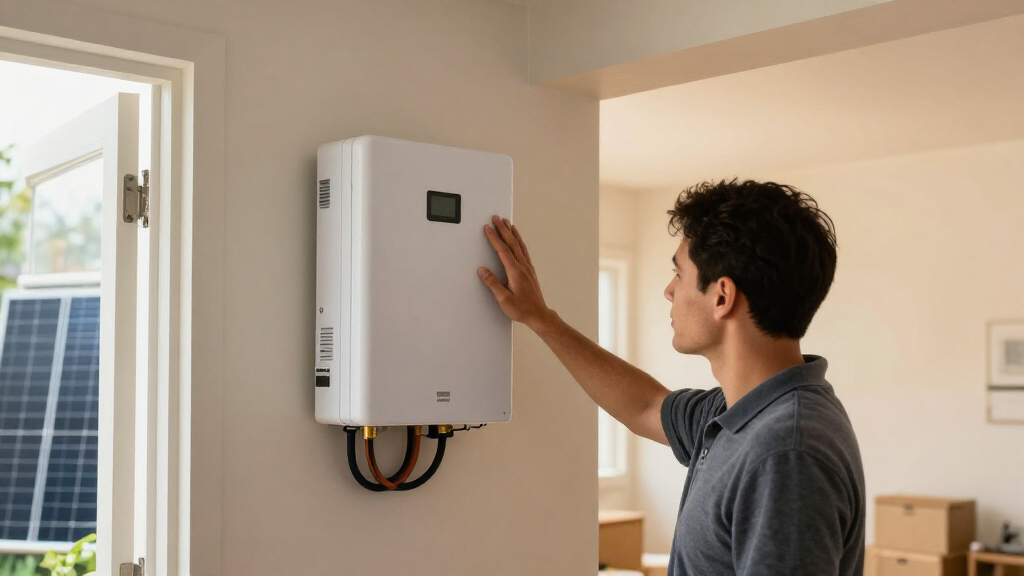
The best home battery storage systems balance usable capacity, inverter power, expansion options, and installation complexity. My best overall pick is the Anker SOLIX E10 Power Dock for its broad 12–90 kWh capacity range, while the EF ECOFLOW TITAN Plus stands out as a bundled 15 kWh setup with a smart home panel, and the WattCycle 48V system pairs a battery with a 12 kW split-phase inverter. The main tradeoff is between integrated systems that simplify planning and modular batteries that offer more flexibility but demand closer attention to compatibility and wiring. Capacity alone does not tell you how many household loads a system can run at once or how long it can sustain them. Read on for my full breakdown, selection criteria, and advice on matching a battery to your home.

Get backup power and energy gear delivered free with Prime
- Fast, free delivery on millions of items
- Prime Video, Amazon Music and more included
- Member-only deals all year
Key Takeaways
- The Anker SOLIX E10 has the broadest stated capacity range in this group, from 12 to 90 kWh, making expansion a central part of its appeal.
- The ECOFLOW TITAN Plus is the clearest bundled option here, combining a 15 kWh system with two extra batteries and a Smart Home Panel 10.
- Inverter power and stored energy solve different problems: the WattCycle listing pairs a 12 kW split-phase inverter with a 48V 100Ah battery, so buyers should check both continuous output and usable capacity.
- Several entries are battery-first or rack-style systems, including VEVOR, Powermega, Cubix100, and AOUSK; their fit depends on inverter compatibility, installation planning, and space.
- The ECO-WORTHY options serve different system scales: one is a 10 kW inverter kit with two batteries, while the other is a 10,240Wh system with a 5,000W inverter.
| Anker SOLIX E10 Power Dock and Extra Battery, 12–90 kWh |  | Best for Whole-Home Backup | Included storage: 12 kWh | Expandable capacity: Up to 90 kWh | Continuous output: 7.6 kW per unit; scalable to 22.8 kW | VIEW LATEST PRICE | See Our Full Breakdown |
| ECO-WORTHY 48V Home Backup Power Kit with 10kW Inverter and Two 51.2V 100Ah LiFePO4 Batteries |  | Best for High Inverter Output | Battery chemistry: LiFePO4 | Battery voltage: 51.2 V | Total capacity: 200 Ah; 10,240Wh | VIEW LATEST PRICE | See Our Full Breakdown |
| ECO-WORTHY 10,240Wh LiFePO4 Home Backup Power System with 5,000W Inverter |  | Best Expandable Off-Grid Kit | Battery configuration: Two 51.2 V, 100 Ah batteries | Total storage: 10,240Wh | Inverter output: 5,000 W | VIEW LATEST PRICE | See Our Full Breakdown |
| EF ECOFLOW TITAN Plus 15 kWh Home Backup System with Two Extra Batteries and Smart Home Panel 10 |  | Best Preconfigured 240 V System | Included capacity: 15 kWh | Expandable capacity: Up to 30 kWh | Continuous output: 7,200 W | VIEW LATEST PRICE | See Our Full Breakdown |
| VEVOR 51.2V 400Ah LiFePO4 Server Rack Battery with 100A BMS |  | Best Rack-Mount Battery Bank | Battery chemistry: LiFePO4 | Voltage: 51.2 V | Capacity: 400 Ah | VIEW LATEST PRICE | See Our Full Breakdown |
| ECO-WORTHY Powermega 51.2V 314Ah LiFePO4 Battery, 16.07 kWh |  | Best Expandable Single-Battery Pick | Chemistry: LiFePO4 | Nominal voltage: 51.2V | Capacity: 314Ah | VIEW LATEST PRICE | See Our Full Breakdown |
| ECO-WORTHY Cubix100 48V 600Ah LiFePO4 Server Rack Battery System, 6-Pack |  | Best for Large-Capacity Rack Systems | Chemistry: LiFePO4 | Nominal voltage: 51.2V | Battery configuration: Six 100Ah batteries; 600Ah total | VIEW LATEST PRICE | See Our Full Breakdown |
| WattCycle 48V 100Ah LiFePO4 Battery System with 12kW Split-Phase Inverter |  | Best Integrated Inverter-and-Battery System | Battery chemistry: LiFePO4 | Battery configuration: Two 48V 100Ah server rack batteries | Total energy: 10.24 kWh | VIEW LATEST PRICE | See Our Full Breakdown |
| AOUSK 48V 314Ah LiFePO4 Battery, 16.07 kWh |  | Best for Flexible Monitoring | Chemistry: LiFePO4 | Nominal voltage: 48V (51.2V model) | Capacity: 314Ah | VIEW LATEST PRICE | See Our Full Breakdown |
| home battery storage system | Battery chemistry |
|---|---|
| Anker SOLIX E10 Power Dock and | LFP |
| ECO-WORTHY 48V Home Backup Pow | LiFePO4 |
| ECO-WORTHY 10,240Wh LiFePO4 Ho | — |
| EF ECOFLOW TITAN Plus 15 kWh H | Lithium iron phosphate (LFP) |
| VEVOR 51.2V 400Ah LiFePO4 Serv | LiFePO4 |
| ECO-WORTHY Powermega 51.2V 314 | — |
| ECO-WORTHY Cubix100 48V 600Ah | — |
| WattCycle 48V 100Ah LiFePO4 Ba | LiFePO4 |
| AOUSK 48V 314Ah LiFePO4 Batter | — |
More Details on Our Top Picks
Anker SOLIX E10 Power Dock and Extra Battery, 12–90 kWh
I rank the Anker SOLIX E10 first for buyers who want a system designed around whole-home backup rather than a battery and inverter kit to assemble. Its included 12 kWh capacity can expand as household needs grow, while the 200 A Power Dock is built to connect backup power to the home’s electrical system. A switchover rated at 20 ms or less helps limit interruption when utility power fails. Compared with the ECO-WORTHY 10,240Wh kits, the E10 offers a more integrated whole-home path and greater stated expansion potential, but the ECO-WORTHY systems provide more direct inverter and battery-kit specifications. The tradeoff is that whole-home integration may call for professional installation, and the Power Dock and extra battery may arrive separately. I’d choose it for broad backup coverage, not a plug-and-play setup.
Pros:- Starts with 12 kWh of storage and is listed as expandable to 90 kWh.
- The 200 A Power Dock is designed for whole-home coverage.
- Automatic switchover is rated at 20 ms or less.
- Weather-resistant components support indoor or outdoor installation.
Cons:- Whole-home integration may require professional installation.
- The Power Dock and extra battery may be dispatched separately.
Best for: Homeowners who want an expandable battery system connected to a 200 A whole-home backup setup and are prepared for installation work.
Not ideal for: Renters or buyers seeking a lightweight, ready-to-use portable power station; this system is built for home integration and may require professional installation.
- Included storage:12 kWh
- Expandable capacity:Up to 90 kWh
- Continuous output:7.6 kW per unit; scalable to 22.8 kW
- Turbo output:10 kW per unit; scalable to 30 kW with three units
- Solar input:9 kW per unit
- Power Dock coverage:200 A
- Switchover time:20 ms or less
- Battery chemistry:LFP
- Warranty:5 years for E10; 10 years for Power Dock
Our verdict“Choose the Anker SOLIX E10 if you want expandable capacity and a dedicated whole-home connection more than a simple kit with clearly itemized inverter outputs.”
ECO-WORTHY 48V Home Backup Power Kit with 10kW Inverter and Two 51.2V 100Ah LiFePO4 Batteries
The ECO-WORTHY 48V kit stands out for buyers who need substantial inverter output alongside a battery bank: it pairs 10,240Wh of storage with a 10,000 W inverter and supports either 120 V or 120/240 V split-phase output. That split-phase support gives it a broader home-load fit than the single-inverter ECO-WORTHY 10,240Wh system, which lists 120 V output and needs multiple inverters for 208 V or 240 V. Two independent MPPT controllers also give solar charging more flexibility. The tradeoff is physical and practical: the kit weighs 265.5 lb, components ship separately, and system setup is less turnkey than the Anker SOLIX E10’s Power Dock approach. Its expansion support is substantial, but buyers should plan for installation space, wiring, and configuration rather than expecting a compact backup unit.
Pros:- Includes a 10,000 W inverter and 10,240Wh of LiFePO4 storage.
- Supports both 120 V single-phase and 120/240 V split-phase output.
- Two independent MPPT controllers support solar charging.
- Can expand to six inverters and 32 batteries.
Cons:- The full kit weighs 265.5 lb.
- Components are shipped separately, adding coordination to setup.
- Installation and expansion require attention to system wiring and configuration.
Best for: DIY-capable homeowners who need 120/240 V split-phase output, strong inverter capacity, and a system they can expand with additional batteries or inverters.
Not ideal for: Buyers who need a compact, simple-to-install backup system or cannot accommodate a 265.5 lb kit and separately shipped components.
- Battery chemistry:LiFePO4
- Battery voltage:51.2 V
- Total capacity:200 Ah; 10,240Wh
- Inverter output:10,000 W
- Peak output power:20,000 W
- Output voltage:120 V single-phase or 120/240 V split-phase
- Solar charge controllers:Two independent MPPT controllers
- Expansion:Up to 6 inverters and 32 batteries in parallel
- Weight:265.5 lb
Our verdict“Pick this ECO-WORTHY kit if split-phase output and a high inverter rating matter more than lighter weight or a more integrated whole-home system.”
ECO-WORTHY 10,240Wh LiFePO4 Home Backup Power System with 5,000W Inverter
This ECO-WORTHY 10,240Wh system is a better match for off-grid builders who want a modular battery-and-inverter base than for households seeking immediate 240 V coverage. It includes two 51.2 V batteries and a 5,000 W inverter with a built-in 100 A MPPT controller and battery charger, keeping core functions in one inverter. Its listed expansion ceiling—up to six inverters and 32 batteries—gives a growing system room to add output and storage. Against the 10,000 W ECO-WORTHY kit in this roundup, this model starts with less inverter capacity and a single inverter provides 120 V output; 208 V or 240 V requires multiple inverters in parallel. That lower starting output can suit smaller off-grid setups, but the 236.9 lb system is still heavy, and its two outlets are a practical constraint for direct connections.
Pros:- Includes two LiFePO4 batteries with 10,240Wh total capacity.
- The inverter combines pure sine wave output, MPPT charging, and battery charging.
- Supports expansion to six inverters and 32 batteries.
- Bluetooth and Wi-Fi monitoring are available through the ECO-WORTHY app.
Cons:- A single inverter provides 120 V output; 208 V or 240 V requires multiple inverters.
- The system weighs 236.9 lb.
- Only two outlets are listed.
Best for: Off-grid homeowners or workshop owners planning a 120 V system that may grow through added batteries and parallel inverters.
Not ideal for: Households that need 240 V loads from one inverter, many direct outlets, or a lightweight backup package.
- Battery configuration:Two 51.2 V, 100 Ah batteries
- Total storage:10,240Wh
- Inverter output:5,000 W
- Peak output power:10,000 W
- MPPT controller:100 A
- PV input voltage range:120–500 V DC
- Parallel expansion:Up to 6 inverters and 32 batteries
- Maximum expanded storage:Up to 163.84 kWh
- Weight:236.9 lb
Our verdict“Choose this model for a scalable 120 V off-grid base, but favor the 10,000 W ECO-WORTHY kit if you need split-phase output from the outset.”
EF ECOFLOW TITAN Plus 15 kWh Home Backup System with Two Extra Batteries and Smart Home Panel 10
The EF ECOFLOW TITAN Plus is the strongest fit here for buyers who want a preconfigured system that combines substantial storage with 120 V/240 V split-phase output. Its 15 kWh package includes the power station, two expansion batteries, and a Smart Home Panel 10, which backs up 10 circuits. That gives it a more home-panel-focused setup than either ECO-WORTHY kit, while avoiding the Anker SOLIX E10’s much larger stated expansion ceiling. The TITAN Plus can grow to 30 kWh and accepts AC, solar, and generator charging, useful when solar alone cannot restore the battery. Its 7,200 W continuous output is strong, though its circuit coverage is bounded by the panel, and only five split-phase loads are supported through the 5P8 port. At 121.3 lb, it also needs a planned installation location.
Pros:- Includes 15 kWh of storage and can expand to 30 kWh.
- Supports 120 V/240 V split-phase output.
- Smart Home Panel 10 backs up 10 circuits.
- Accepts AC, solar, and generator charging.
Cons:- The system weighs 121.3 lb.
- The panel backs up 10 circuits, with five split-phase loads supported through the 5P8 port.
- Its stated maximum storage is below the Anker SOLIX E10’s 90 kWh expansion ceiling.
Best for: Homeowners who want 240 V backup, a preconfigured panel connection, and multiple charging options for selected household circuits.
Not ideal for: Buyers who need whole-home circuit coverage beyond the 10-circuit panel, or who want the highest stated storage expansion in this group.
- Included capacity:15 kWh
- Expandable capacity:Up to 30 kWh
- Continuous output:7,200 W
- Maximum output:10 kW with solar PV input
- Voltage:120 V/240 V split-phase
- Solar input:Up to 8 kW
- Smart Home Panel:10 circuits; five split-phase loads supported through 5P8 port
- Battery chemistry:Lithium iron phosphate (LFP)
- Certification:UL 9540 certified; tested to UL 9540A
Our verdict“Choose the TITAN Plus if you want a substantial, preconfigured 240 V system for selected circuits rather than a kit-based build or maximum-scale expansion.”
VEVOR 51.2V 400Ah LiFePO4 Server Rack Battery with 100A BMS
The VEVOR 51.2 V, 400 Ah battery suits buyers who already have a compatible inverter and want a large rack-format storage bank, rather than a complete backup system. Its 400 Ah capacity is arranged as four 100 Ah units, and its LCD and app monitoring can show battery information without relying on a separate display. Compared with the ECO-WORTHY kits, this product does not include an inverter, so it offers less of a ready-to-build package; in return, it can fit a standard server rack and pair with systems using its CAN or RS485 communication. The key limitation is its 100 A maximum charge and discharge current, which can constrain power delivery even with substantial stored energy. At 103.6 lb, it also takes planning to position and install. I’d shortlist it for rack-based storage, not stand-alone home backup.
Pros:- Provides 51.2 V and 400 Ah capacity in a rack-oriented format.
- LCD and mobile app provide battery monitoring.
- Includes Bluetooth, Wi-Fi, RS485, and CAN connectivity.
- Built-in 100 A BMS provides battery protection functions.
Cons:- Battery only; an inverter and compatible system components are not included.
- Maximum charge and discharge current is 100 A.
- Weighs 103.6 lb.
Best for: Solar and backup-system owners with a compatible 48 V-class inverter who want high-capacity rack-mount storage and onboard monitoring.
Not ideal for: First-time buyers seeking a complete battery-inverter backup system, or users whose loads need charge or discharge current above 100 A.
- Battery chemistry:LiFePO4
- Voltage:51.2 V
- Capacity:400 Ah
- Configuration:4 × 100 Ah
- Maximum charge/discharge current:100 A
- BMS:100 A
- Cycle life:Over 6,000 cycles
- Monitoring and connectivity:LCD, mobile app, Bluetooth, Wi-Fi, RS485, and CAN
- Weight:103.6 lb
Our verdict“Choose the VEVOR if you need a large server-rack battery for a compatible existing system, but skip it if you need a complete backup solution in one purchase.”
ECO-WORTHY Powermega 51.2V 314Ah LiFePO4 Battery, 16.07 kWh
The Powermega is a strong fit for buyers who want substantial storage in one battery rather than starting with a multi-unit bank. Its 16.07 kWh capacity is larger than the WattCycle system’s 10.24 kWh, though WattCycle also supplies a split-phase inverter, so the Powermega needs compatible power-conversion equipment purchased or installed separately. For future growth, it supports up to 15 units in parallel, with RS485 and CAN ports for inverter communication. An active-balancing BMS, circuit breaker, and aerosol fire-suppression modules add layers of protection, while the touchscreen and wireless monitoring help track system status. The tradeoff is physical: this is a large, heavy battery shipped on a pallet, and its scale makes site access and installation planning part of the purchase.
Pros:- 16.07 kWh capacity in a single battery
- Supports expansion to 15 units in parallel
- Active-balancing BMS, circuit breaker, and aerosol fire-suppression modules
- Touchscreen, WiFi, Bluetooth, RS485, and CAN support monitoring and system integration
Cons:- Large, heavy format complicates handling and installation
- Requires a compatible inverter and other system equipment
- Pallet delivery requires space and planning
Best for: Homeowners with a compatible 48V-class inverter who want a large starting battery and room to expand their storage bank.
Not ideal for: Buyers seeking a ready-to-run backup package or anyone without space, delivery access, and equipment suited to a large battery.
- Chemistry:LiFePO4
- Nominal voltage:51.2V
- Capacity:314Ah
- Energy:16.07 kWh
- BMS:200A with active cell balancing
- Expansion:Up to 15 units in parallel
- Monitoring:7-inch HD touchscreen, WiFi, and Bluetooth
- Communication ports:RS485 and CAN
- Warranty:10 years
Our verdict“Choose the Powermega if you want a high-capacity, expandable battery and already have a compatible inverter plan.”
ECO-WORTHY Cubix100 48V 600Ah LiFePO4 Server Rack Battery System, 6-Pack
The Cubix100 is the capacity leader in this group: its six batteries provide 30.72 kWh of storage, nearly twice the Powermega’s 16.07 kWh in one battery. That makes it a better match for households planning a substantial battery bank, though the six-unit arrangement calls for more rack space and system setup. ECO-WORTHY includes parallel and communication cables, grounding wires, and other installation accessories, but the rack itself is not included. CAN and RS485 support integration, while WiFi and Bluetooth provide wireless monitoring. The system can expand to as many as 32 parallel units, a much larger stated ceiling than the WattCycle system’s limit of 20 batteries. That flexibility comes with a practical drawback: packages may arrive at different times, and buyers must arrange a compatible rack and installation.
Pros:- Six batteries provide 30.72 kWh of total storage
- Supports parallel expansion to as many as 32 units
- Includes parallel, communication, and grounding accessories
- CAN, RS485, Bluetooth, and WiFi support integration and monitoring
Cons:- Server rack is not included
- Six-battery installation needs more space and setup than a single-battery option
- Packages may arrive at different times
Best for: Homeowners and installers building a large, rack-based 48V storage bank who can supply the rack and accommodate a multi-battery setup.
Not ideal for: Buyers who need a compact, ready-to-install system or want the rack included with their batteries.
- Chemistry:LiFePO4
- Nominal voltage:51.2V
- Battery configuration:Six 100Ah batteries; 600Ah total
- Energy capacity:30.72 kWh
- Expansion:Up to 32 units in parallel
- Communication:CAN and RS485
- Wireless monitoring:Bluetooth and WiFi
- Certifications:UL9540, UL1973, and CEC listed
- Warranty:10-year limited warranty
Our verdict“Pick the Cubix100 when storage capacity and future rack-based expansion matter more than a compact, self-contained package.”
WattCycle 48V 100Ah LiFePO4 Battery System with 12kW Split-Phase Inverter
Unlike the Powermega and AOUSK batteries, which require a compatible inverter to complete a home backup system, WattCycle pairs two batteries with a 12kW split-phase inverter. That gives buyers a clearer starting package for 120V/240V loads, with 10.24 kWh of storage and UPS transfer under 10 milliseconds. Its dual MPPT controllers accept up to 24,000W of solar input, a standout feature for a solar-heavy setup, though actual system design still depends on compatible equipment and installation. The tradeoff is a shorter five-year warranty than the ECO-WORTHY Powermega and Cubix100, both listed with 10 years. The package also arrives as three separate items, and expanding it means matching additional batteries and inverters to the system rather than simply adding an arbitrary battery.
Pros:- Includes two batteries and a 12kW 120V/240V split-phase inverter
- Dual MPPT controllers support up to 24,000W of solar input
- UPS transfer time is under 10 milliseconds
- Supports expansion with additional batteries and parallel inverters
Cons:- Five-year warranty is shorter than the 10-year warranties listed for the ECO-WORTHY options
- System arrives as three separate items
- Expansion requires compatible 48V batteries and inverter setup
Best for: Homeowners who want a paired battery-and-inverter foundation for 120V/240V backup and plan to connect substantial solar input.
Not ideal for: Buyers who already own an inverter, want a longer listed warranty, or prefer a single integrated enclosure and shipment.
- Battery chemistry:LiFePO4
- Battery configuration:Two 48V 100Ah server rack batteries
- Total energy:10.24 kWh
- Inverter output:12kW, 120V/240V split-phase
- Maximum solar input:24,000W
- Maximum charging current:250A
- UPS transfer time:Under 10ms
- Battery expansion:Up to 20 batteries
- Warranty:5 years
Our verdict“Choose WattCycle if you need an inverter and battery package with strong solar-input capacity, rather than a battery alone.”
AOUSK 48V 314Ah LiFePO4 Battery, 16.07 kWh
AOUSK offers the same headline storage as the ECO-WORTHY Powermega—16.07 kWh in one 314Ah battery—but places more emphasis on multiple monitoring routes. Its full-color display, Bluetooth, WiFi, and RS232 provide several ways to check status, alongside RS485 and CAN connections for compatible inverter communication. Like the Powermega, it supports up to 15 units in parallel, so either battery can serve as the base for a larger bank. AOUSK lists a five-year warranty, shorter than the Powermega’s 10 years, and gives a weight of 291 pounds; wheels and handles aid positioning but do not make it a light installation. Buyers should also confirm inverter interface compatibility before expecting closed-loop communication.
Pros:- 16.07 kWh capacity in a single battery
- Display, Bluetooth, WiFi, and RS232 offer multiple monitoring options
- RS485 and CAN support communication with compatible inverters
- Handles and wheels aid positioning
Cons:- Five-year warranty is shorter than the Powermega’s 10-year warranty
- Weighs 291 pounds, making installation and positioning demanding
- Closed-loop integration depends on compatible inverter interfaces
Best for: Technically confident homeowners who want a 16.07 kWh battery with varied monitoring connections and a compatible inverter.
Not ideal for: Buyers who prioritize a longer listed warranty, need a complete inverter-and-battery system, or cannot manage a 291-pound unit.
- Chemistry:LiFePO4
- Nominal voltage:48V (51.2V model)
- Capacity:314Ah
- Energy storage:16.07 kWh
- BMS:200A
- Cycle life:Up to 6,000 cycles at 80% state of health
- Communication and monitoring:RS485, CAN, RS232, Bluetooth, and WiFi
- Parallel connection:Up to 15 units
- Weight:291 lbs
Our verdict“Choose AOUSK if you want a high-capacity standalone battery with flexible monitoring and can accept its shorter warranty and heavy build.”
How We Picked
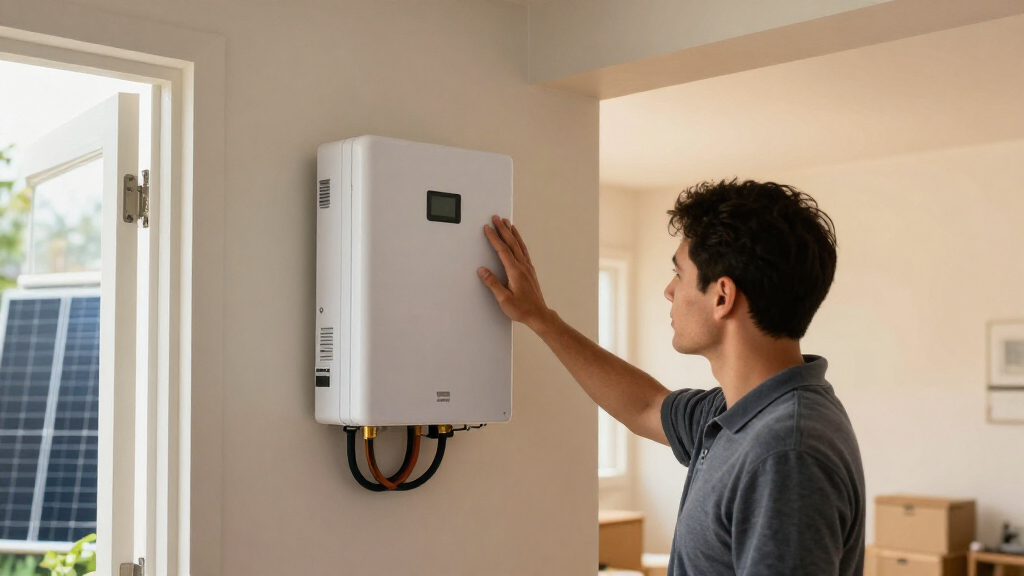
I compared these systems by the factors that shape real backup performance: listed energy capacity, inverter output and split-phase capability, expansion potential, and how much of the system is bundled. I also looked at the practical burden on the buyer: whether a listing centers on an integrated kit or a standalone battery, how clearly the configuration is described, and whether a buyer would need to select compatible equipment separately. A large kWh figure matters only if the system can deliver the power your loads need.
The ranking favors options that make a household backup plan easier to size and implement, while still recognizing systems suited to specific needs such as rack installations or larger battery banks. Bundled components and clear system scope count in a system’s favor; ambiguity about integration or the need to source an inverter separately counts against it. I do not treat capacity figures as a guarantee of usable energy or runtime, since those depend on system limits, settings, loads, and installation. Buyers should confirm compatibility, certifications, warranty terms, and local installation requirements with the manufacturer and a qualified installer before purchasing.
| home battery storage system | Battery chemistry |
|---|---|
| Anker SOLIX E10 Power Dock and | LFP |
| ECO-WORTHY 48V Home Backup Pow | LiFePO4 |
| ECO-WORTHY 10,240Wh LiFePO4 Ho | — |
| EF ECOFLOW TITAN Plus 15 kWh H | Lithium iron phosphate (LFP) |
| VEVOR 51.2V 400Ah LiFePO4 Serv | LiFePO4 |
| ECO-WORTHY Powermega 51.2V 314 | — |
| ECO-WORTHY Cubix100 48V 600Ah | — |
| WattCycle 48V 100Ah LiFePO4 Ba | LiFePO4 |
| AOUSK 48V 314Ah LiFePO4 Batter | — |
Factors to Consider When Choosing Best Home Battery Storage Systems
Choosing a home battery is less about picking the biggest capacity figure and more about designing a system around the loads you want to keep running. These checks can help you avoid paying for storage you cannot use, or buying a battery that lacks the output and equipment your home requires.
Separate energy capacity from power output
Capacity, measured in kWh, indicates stored energy; inverter output, measured in kW, limits how much power can be delivered at once. A battery with substantial capacity may keep smaller loads running for a long time yet struggle to start or run multiple high-draw appliances together. List the appliances you want backed up, their running wattage, and any startup surges before choosing a system. Then decide whether you need whole-home coverage or a smaller set of essential circuits. A common mistake is comparing battery capacity alone and assuming a larger number also means greater appliance support. Ask the seller or installer for the system’s continuous and surge output limits, not just the battery’s energy rating.
Size storage around outage length and daily use
Choose capacity based on the loads and hours you want to cover, rather than the total energy your home uses in a month. Start with a backup list, estimate each device’s daily consumption, and decide how much reserve you want for an extended outage. Solar input can replenish a battery, but production varies with season, weather, roof orientation, and the power available to the system. A large battery without enough charging capacity may not recover quickly between outages. On the other hand, oversizing storage for loads you would switch off during an emergency can add cost and installation demands without improving the backup plan. Ask for estimates that account for usable capacity, conversion losses, and your expected operating reserve.
Check the complete system boundary
A battery listing may not include everything needed for home backup. Confirm whether the package includes an inverter, transfer equipment or a smart panel, cabling, monitoring, and any required protective devices. Battery-first products can suit buyers who already have compatible equipment, while a bundled kit may reduce sourcing work but still require professional installation. Verify that the inverter supports your home’s service type and the circuits you want backed up. Do not assume that a battery can connect directly to a solar array or existing inverter just because both use a familiar voltage. Request a written equipment list and a compatibility check before treating a bundle as installation-ready.
Treat voltage, chemistry, and communication as compatibility checks
Matching nominal voltage is only the starting point when pairing a battery with an inverter or adding batteries to an existing bank. Check supported battery chemistry, charging and discharge limits, communications protocols, firmware requirements, and the manufacturer’s approved configurations. Mixing batteries from different models or ages can create uneven performance and may fall outside warranty conditions. LiFePO4 is common in this roundup, but chemistry alone does not confirm compatibility or establish the quality of a particular system. Ask the manufacturer for its supported inverter list and written rules for parallel operation. If those details are missing, budget for an installer to validate the design before buying.
Plan for installation, location, and service access
Battery placement affects safety, usability, and future maintenance. Rack batteries need suitable rack space, clearances, wiring access, and a location that meets the product’s temperature and environmental limits. Larger integrated systems may call for wall or floor space and changes to the home’s electrical setup. Check local permitting and utility interconnection rules, particularly if the system will export solar power or connect to a service panel. Ask who handles commissioning, software updates, warranty claims, and replacement parts. A lower-complexity product on paper can still become a difficult project if local installer support is limited or the equipment is poorly matched to the site.
Pay for expansion only when your plan supports it
Modularity has value when future growth is realistic, such as adding solar or extending backup coverage over time. Before paying for expandable capacity, check the maximum supported battery count, whether expansion requires matching units, and if later additions must be installed within a specified period. A system’s advertised upper capacity may depend on extra components, wiring, or a different installation configuration. If your load plan is unlikely to change, a well-sized fixed bundle may be simpler to install and manage. Compare the cost and effort of expanding later with buying the capacity you need now. Get the proposed expansion pathway in writing, including compatibility and warranty conditions.
Frequently Asked Questions
Can I connect a rack battery from this roundup to my existing solar inverter?
Do not assume that a shared voltage makes two products compatible. Check the inverter maker’s approved battery list, the battery’s communications protocol, and its charging and discharge limits. Some combinations may work only with specific firmware or a particular operating mode. Confirm whether the battery warranty covers use with your inverter and whether the installation requires additional control equipment. If the manufacturers do not document the pairing, ask a qualified installer to validate it before purchase.
How much battery capacity do I need to keep a refrigerator and a few lights running?
The answer depends on daily energy use and how long you need backup, not just the number of appliances. Find the refrigerator’s consumption data if available, then add the expected use of lights, networking equipment, and other essential devices. Allow for inverter losses and avoid planning to use the battery’s full stated capacity. Also check the inverter’s continuous and surge ratings, since a refrigerator compressor can draw more power when starting. For a dependable estimate, have an installer model the actual loads and the system’s usable energy.
Is a bundled battery-and-inverter kit a better choice than buying a battery separately?
A bundle can simplify equipment matching and make it easier to see what is included, which is useful for buyers building a system from scratch. A standalone battery can be a better fit if you already own a compatible inverter or need a particular rack arrangement. Compare the full equipment list rather than the headline battery capacity: transfer equipment, monitoring, protection, and installation materials may be separate. Ask whether the components are approved to work together and who supports the complete setup if a problem arises. The better choice is the one with a clear, compatible system plan for your home.
Can I add more batteries later without replacing the inverter?
Sometimes, but expansion depends on the inverter’s limits and the battery maker’s rules. Check maximum supported capacity, battery count, current limits, and whether additional units must match the original model. Adding storage may not increase the power available to run appliances if the inverter remains the same size. Expansion can also require changes to cabling, overcurrent protection, or configuration settings. Before choosing a smaller starter setup, ask for a written expansion plan that covers equipment, compatibility, warranty, and installation work.
What should I verify before buying a battery system for whole-home backup?
Whole-home backup requires more than a large battery bank. Confirm that the inverter supports your home’s service type, that its continuous and surge output cover the loads you expect to run, and that the transfer equipment can isolate the home safely from the grid. Have an electrician review the panel, backed-up circuits, and any high-demand appliances such as heating or cooking equipment. Check local permits, utility requirements, installation conditions, and the system’s operating limits. Ask for a written load assessment and runtime estimate based on your planned use, rather than relying on a capacity figure alone.
Conclusion
For the best overall fit, I recommend the Anker SOLIX E10 for buyers who value a wide stated expansion range and want room to scale their storage plan. The best premium-style bundled choice is the ECOFLOW TITAN Plus, which brings a 15 kWh system and Smart Home Panel 10 together; check installation scope and compatibility before committing. For a system-oriented kit at a different scale, the ECO-WORTHY 48V kit pairs a 10 kW inverter with two batteries, while the 10,240Wh ECO-WORTHY option is a more contained listed configuration. Beginners should favor clearly bundled equipment and get an installer to confirm what is included; the ECOFLOW package is the most explicit bundle in this lineup. For buyers who already have system-design experience or need rack-based storage, compare VEVOR, Powermega, Cubix100, and AOUSK against the inverter and space available. The best value depends on your complete installed system, so compare compatibility, included equipment, usable energy, and installation needs before choosing by capacity alone.


