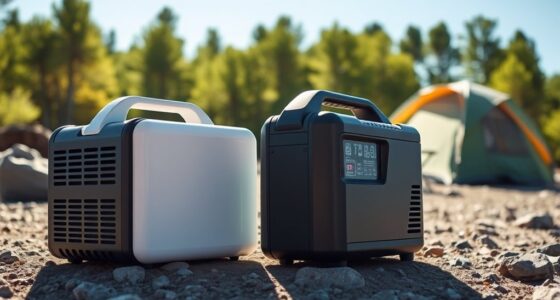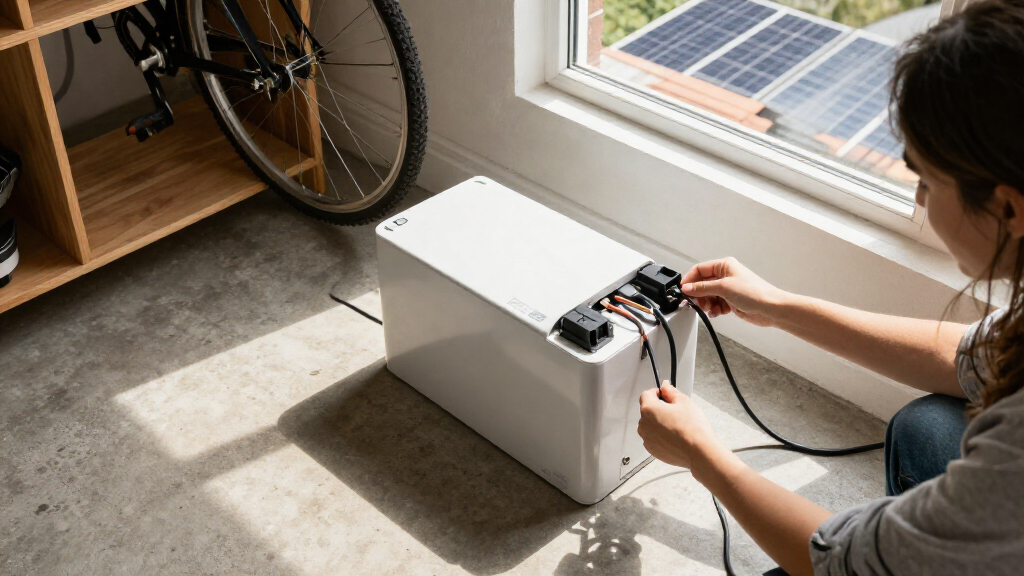

The best home energy storage batteries balance usable capacity, system compatibility, safety, and setup complexity—not just a large kWh figure. I rank the ECO-WORTHY Powermega system with its 10kW hybrid inverter as the best overall for buyers who want a more integrated home backup setup. The ECO-WORTHY Cubix100 stands out for buyers needing substantial rack-based capacity, while the Jackery HomePower 3600 Plus is a simpler portable option. The main tradeoff is between expandable, fixed battery systems that need careful installation and portable units that are easier to deploy but offer less capacity. Read on for the full comparison and guidance on matching a battery to your home.

Get backup power and energy gear delivered free with Prime
- Fast, free delivery on millions of items
- Prime Video, Amazon Music and more included
- Member-only deals all year
Key Takeaways
- The Powermega system is the most integrated pick: its 16.1kWh battery is paired with a 10kW hybrid inverter, reducing the guesswork of assembling a battery and inverter separately.
- The Cubix100 targets a different scale: its 600Ah battery system and rack cabinet suit buyers planning a larger fixed installation, but that capacity calls for careful space, wiring, and installation planning.
- Large battery capacity does not guarantee whole-home backup: the 314Ah batteries store about 16kWh, while inverter output, transfer equipment, and circuit selection determine what the system can run.
- The two portable stations favor convenience over expansion: Jackery HomePower 3600 Plus and EcoFlow DELTA Pro both provide roughly 3.6kWh and 3,600W output, making them better suited to targeted backup than long-duration whole-home supply.
- Specs and protection differ among similar batteries: KEEPKNOW lists IP65 protection, VPauexii highlights a 200A BMS and wireless monitoring, and the ECO-WORTHY standalone Powermega lists UL1973; buyers should check documentation and system compatibility before choosing.
| AOUSK 51.2V 314Ah LiFePO4 Battery, 16.08 kWh |  | Best for Expandable Home Backup | Chemistry: LiFePO4 | Nominal voltage: 51.2 V (marketed as 48 V) | Capacity: 314 Ah | VIEW LATEST PRICE | See Our Full Breakdown |
| VPauexii 51.2V 314Ah LiFePO4 Battery (16.07kWh) with 200A BMS, LCD Touchscreen, and Bluetooth/WiFi |  | Best for Built-In Safety Features | Chemistry: LiFePO4 | Voltage: 51.2 V | Capacity: 314 Ah | VIEW LATEST PRICE | See Our Full Breakdown |
| KEEPKNOW PowerUltra 48V 314Ah LiFePO4 Battery, 16.08kWh IP65 Waterproof |  | Best for Long-Term Outdoor-Ready Storage | Chemistry: LiFePO4 | Voltage: 48 V (51.2 V) | Capacity: 314 Ah | VIEW LATEST PRICE | See Our Full Breakdown |
| ECO-WORTHY Cubix100 48V 600Ah LiFePO4 Battery System with RACK6 V3 Cabinet |  | Best for High-Capacity Rack Storage | Chemistry: LiFePO4 | Nominal voltage: 51.2 V DC | System configuration: Six 48 V, 100 Ah batteries | VIEW LATEST PRICE | See Our Full Breakdown |
| ECO-WORTHY Powermega 48V 314Ah UL1973 LiFePO4 Energy Storage System with Liber 10KP 10kW Hybrid Inverter |  | Best Battery-and-Inverter Bundle | Battery chemistry: LiFePO4 | Battery voltage and capacity: 51.2 V; 314 Ah | Battery energy: 16.1 kWh | VIEW LATEST PRICE | See Our Full Breakdown |
| Jackery HomePower 3600 Plus Portable Power Station, 3584 Wh, 3600 W |  | Best Portable Home Backup | Battery capacity: 3,584 Wh | AC output: 3,600 W | Parallel output: Up to 7,200 W | VIEW LATEST PRICE | See Our Full Breakdown |
| ECO-WORTHY Powermega 48V 314Ah LiFePO4 Battery, UL1973 16.1kWh Energy |  | Best for Certified High-Capacity Systems | Battery chemistry: LiFePO4 | Nominal voltage: 51.2 V | Capacity: 314 Ah / 16.07 kWh | VIEW LATEST PRICE | See Our Full Breakdown |
| EcoFlow DELTA Pro Portable Power Station, 3600Wh, 3600W AC Output | 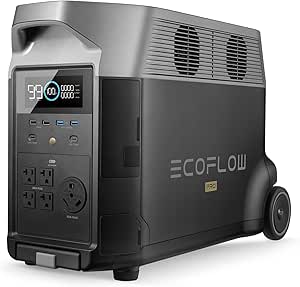 | Best for Multi-Device Backup | Battery capacity: 3,600 Wh | AC output: 3,600 W | Maximum output: 4,500 W with X-Boost | VIEW LATEST PRICE | See Our Full Breakdown |
| home energy storage batterie | Chemistry | Capacity | Warranty | Weight |
|---|---|---|---|---|
| AOUSK 51.2V 314Ah LiFePO4 Batt | LiFePO4 | 314 Ah | — | — |
| VPauexii 51.2V 314Ah LiFePO4 B | LiFePO4 | 314 Ah | 5 years | — |
| KEEPKNOW PowerUltra 48V 314Ah | LiFePO4 | 314 Ah | 10 years | — |
| ECO-WORTHY Cubix100 48V 600Ah | LiFePO4 | — | — | 636 lb |
| ECO-WORTHY Powermega 48V 314Ah | — | — | 10 years | — |
| Jackery HomePower 3600 Plus Po | — | — | 5 years | 77.2 lb |
| ECO-WORTHY Powermega 48V 314Ah | — | 314 Ah / 16.07 kWh | — | Approximately 280 lb |
| EcoFlow DELTA Pro Portable Pow | — | — | — | 99 lb |
More Details on Our Top Picks
AOUSK 51.2V 314Ah LiFePO4 Battery, 16.08 kWh
The AOUSK earns its place for households that want a large battery now and room to add storage later. Its 16.07 kWh capacity can support substantial backup or off-grid use, while parallel connections for up to 15 units make expansion possible without replacing the original battery. Compared with the ECO-WORTHY Powermega system, which bundles a 10 kW hybrid inverter, the AOUSK is a battery-only choice: that gives buyers more freedom to select compatible equipment, but also puts inverter selection and installation on them. Monitoring through a display, app, and PC, plus RS485 and CAN links, offers useful visibility and integration options. The tradeoff is physical: at 291 lb, it is difficult to move despite its wheels and handles, and its five-year warranty is shorter than the KEEPKNOW’s ten-year coverage.
Pros:- 16.07 kWh capacity provides substantial storage in one battery
- Supports parallel expansion to as many as 15 units
- Display, app, PC, RS485, and CAN monitoring and communication options
- Wheels and handles help with positioning
Cons:- Battery-only purchase requires a compatible inverter and installation setup
- 291 lb weight makes delivery and placement challenging
- Five-year warranty is shorter than the KEEPKNOW’s 10-year warranty
Best for: Homeowners building a compatible 48V solar or backup system who want one high-capacity battery with the option to add up to 14 more.
Not ideal for: Buyers seeking a ready-to-run battery-and-inverter package, or anyone without space and equipment for a 291 lb unit.
- Chemistry:LiFePO4
- Nominal voltage:51.2 V (marketed as 48 V)
- Capacity:314 Ah
- Energy storage:16.07 kWh (title states 16.08 kWh)
- BMS current:200 A
- Cycle life:Up to 6,000 cycles at 80% state of health
- Communication:RS485, CAN, RS232, Bluetooth, Wi-Fi
- Parallel connection:Up to 15 units
- Weight and warranty:291 lb; 5 years
Our verdict“Choose the AOUSK if you want a high-capacity battery that can grow with a compatible system and are prepared to source the inverter separately.”
VPauexii 51.2V 314Ah LiFePO4 Battery (16.07kWh) with 200A BMS, LCD Touchscreen, and Bluetooth/WiFi
The VPauexii is a strong fit for buyers who put extra weight on battery safety and local status checks. Its built-in auto fire suppression is a distinctive addition among these large-format batteries, and the touchscreen gives owners a direct way to check system information alongside Bluetooth and Wi-Fi monitoring. The listed 10,000+ cycle life at 80% depth of discharge also exceeds the AOUSK’s stated cycle figure, although cycle claims alone do not establish real-world service life. Its RS485, CAN, and other connections are intended to work with a broad range of inverters, but closed-loop operation may require specific communication cables. Unlike the ECO-WORTHY Powermega, this is not a battery-and-inverter bundle, so buyers need to match it with a suitable inverter and arrange the system setup themselves. The five-year warranty is another limitation beside the KEEPKNOW’s longer coverage.
Pros:- Built-in auto fire suppression adds a dedicated safety feature
- LCD touchscreen plus Bluetooth and Wi-Fi monitoring
- Listed cycle life exceeds 10,000 cycles at 80% depth of discharge
- RS485, CAN, and RS232 support a range of system connections
Cons:- Closed-loop communication with some inverters requires specific cables
- Battery-only product requires a separate compatible inverter
- Five-year warranty is shorter than the KEEPKNOW’s 10-year coverage
Best for: Solar and backup-system owners who already have or are selecting a compatible inverter and want a touchscreen, app monitoring, and built-in fire suppression.
Not ideal for: First-time buyers who want a bundled inverter or anyone unwilling to confirm cable and inverter compatibility before installation.
- Chemistry:LiFePO4
- Voltage:51.2 V
- Capacity:314 Ah
- Energy:16.07 kWh
- BMS current:200 A
- Breaker:250 A
- Cycle life:10,000+ cycles at 80% depth of discharge
- Connectivity:Bluetooth, Wi-Fi, RS485, CAN, RS232
- Warranty:5 years
Our verdict“Pick the VPauexii if built-in fire suppression and direct monitoring matter more to you than a bundled inverter or longer warranty.”
KEEPKNOW PowerUltra 48V 314Ah LiFePO4 Battery, 16.08kWh IP65 Waterproof
The KEEPKNOW stands out for combining a large 16.08 kWh battery with an IP65 rating and a 10-year warranty. That makes it the clearest choice here for buyers whose installation needs stronger protection from dust and water exposure, subject to the installation conditions set by the manufacturer. Its aerosol fire suppression and multi-layer BMS protections add further safety provisions. The 7-inch touchscreen, Bluetooth, and Wi-Fi give owners several ways to check battery status, while support for up to 15 units allows a system to grow. Compared with the AOUSK, it lists more than 8,000 cycles and longer warranty coverage; the AOUSK, however, has the same broad battery-only approach and also supports parallel expansion. The KEEPKNOW’s main drawback is its nearly 289 lb weight and large footprint, so delivery access and installation space need planning.
Pros:- IP65 rating and built-in aerosol fire suppression
- 10-year warranty and listed life of more than 8,000 cycles
- Touchscreen, Bluetooth, and Wi-Fi monitoring
- Supports parallel expansion for larger storage systems
Cons:- 288.81 lb weight calls for careful freight and placement planning
- Large enclosure needs substantial installation space
- Requires a compatible inverter and separate system setup
Best for: Homeowners with a compatible inverter who need high-capacity storage, IP65-rated protection, and longer stated warranty coverage.
Not ideal for: People with limited installation space, difficult delivery access, or a preference for a battery-and-inverter bundle.
- Chemistry:LiFePO4
- Voltage:48 V (51.2 V)
- Capacity:314 Ah
- Energy capacity:16.08 kWh
- BMS current:200 A
- Cycle life and service life:8,000+ cycles at 80% depth of discharge; stated 15-year service life
- Dimensions and weight:33.54 × 20.04 × 10.83 in; 288.81 lb
- Warranty:10 years
Our verdict“Choose the KEEPKNOW if you need a large, IP65-rated battery and value its longer warranty more than easy handling or an all-in-one package.”
ECO-WORTHY Cubix100 48V 600Ah LiFePO4 Battery System with RACK6 V3 Cabinet
The Cubix100 is the largest-capacity option in this group, pairing six rack batteries for a stated 30.72 kWh system. That scale suits homes with substantial daily energy use or backup needs better than a single 16 kWh battery such as the AOUSK. The included cabinet, busbar, cables, grounding wires, and mounting hardware make it a more complete rack package than buying battery modules alone. It also supports up to 32 parallel units, giving system planners room to expand far beyond the other listed options. Still, size brings real installation demands: the system weighs 636 lb, and buyers need appropriate delivery access, floor support, and a compatible inverter. Bluetooth and Wi-Fi monitoring are included, but closed-loop functions depend on inverter compatibility. Compared with the ECO-WORTHY Powermega bundle, the Cubix100 offers more stated storage but does not include a hybrid inverter.
Pros:- Six-battery setup provides 30.72 kWh of stated energy capacity
- Cabinet and installation accessories are included
- Supports expansion to as many as 32 parallel units
- ETL UL9540 DC, UL1973, and CEC listed
Cons:- 636 lb total weight creates substantial delivery and installation demands
- Compatible inverter is not included
- Closed-loop communication features depend on the selected inverter
Best for: Households and system installers planning a large rack-based solar or backup installation that can accommodate a cabinet and heavy freight delivery.
Not ideal for: Small homes, buyers with limited floor space or delivery access, and anyone seeking an included inverter for a simpler package.
- Chemistry:LiFePO4
- Nominal voltage:51.2 V DC
- System configuration:Six 48 V, 100 Ah batteries
- System energy capacity:30.72 kWh
- Communication:CAN, RS485, Bluetooth, Wi-Fi
- Maximum parallel units:32
- Busbar:600 A
- Weight:636 lb
- Certifications and warranty:ETL UL9540 DC, UL1973, CEC listed; 10 years
Our verdict“Choose the Cubix100 for a large, expandable rack system if you have the space, delivery access, and inverter plan to support it.”
ECO-WORTHY Powermega 48V 314Ah UL1973 LiFePO4 Energy Storage System with Liber 10KP 10kW Hybrid Inverter
The Powermega is the most straightforward pick for buyers who want the battery and hybrid inverter in one package. Its 16.1 kWh battery is paired with a 10 kW inverter that supports split-phase 240 V and single-phase 120 V output, reducing the separate equipment matching required by battery-only options such as the AOUSK. The inverter’s stated MPPT efficiency of up to 99.9% and the battery’s active-balancing BMS support a solar-focused setup, while Wi-Fi, Bluetooth, and an LCD make monitoring accessible. A built-in breaker and aerosol fire suppression add protective features. The tradeoff is less modular convenience than the Cubix100, which supplies much more storage and a rack cabinet, though it also requires a separate inverter. This package is heavy freight, and the listing says parallel cables are not included with the single-battery version; confirm the inverter version and expansion needs before ordering.
Pros:- Combines a 16.1 kWh battery with a 10 kW hybrid inverter
- Supports 120 V single-phase and 240 V split-phase output
- Battery has active balancing, a built-in breaker, and aerosol fire suppression
- LCD, Wi-Fi, and Bluetooth enable battery monitoring
Cons:- Single-battery listing does not include parallel connection cables
- Palletized truck delivery requires suitable access
- Two inverter exterior versions may ship at random
Best for: Homeowners setting up solar backup or off-grid power who want a 10 kW hybrid inverter and a large 48 V battery supplied together.
Not ideal for: Buyers who already own an inverter, need more than one battery’s capacity immediately, or require a package with parallel cables included.
- Battery chemistry:LiFePO4
- Battery voltage and capacity:51.2 V; 314 Ah
- Battery energy:16.1 kWh
- Inverter:Liber 10KP hybrid inverter; 10 kW
- Output:120 V single-phase and 240 V split-phase
- Cycle life:9,000+ cycles at 80% depth of discharge
- Communication and monitoring:RS485, CAN, RS232, Bluetooth, Wi-Fi, LCD
- Safety features:Active-balancing BMS, built-in circuit breaker, aerosol fire suppression, buzzer alarm
- Warranty:10 years
Our verdict“Choose the Powermega if you want a high-capacity battery and 10 kW hybrid inverter together, and confirm cable and delivery requirements before purchase.”
Jackery HomePower 3600 Plus Portable Power Station, 3584 Wh, 3600 W
Portable backup with strong output is the Jackery HomePower 3600 Plus’s main advantage: its 3,600 W AC rating can handle more demanding appliances than a small emergency battery, while 3,584 Wh gives it useful stored energy for outages. Unlike the stationary ECO-WORTHY Powermega 48V 314Ah, this is a self-contained power station with outlets and a wheeled handle, so it suits buyers who want a movable unit rather than a battery that needs an inverter setup.
It can recharge from AC, solar, a gas generator, or hybrid AC-plus-DC input; the stated hybrid charge time is two hours. Capacity can expand substantially, and parallel operation raises output to 7,200 W. The tradeoff is portability with limits: 77.2 pounds is still heavy to lift, and solar panels are optional. Its two outlets also offer fewer connection points than the EcoFlow DELTA Pro’s 15.
Pros:- 3,600 W AC output supports higher-load devices than many compact power stations.
- AC, solar, generator, and hybrid charging provide several ways to replenish it.
- Expandable capacity and parallel output support longer backup needs and higher loads.
- Wheels and telescopic handle make repositioning easier than lifting a stationary battery.
Cons:- At 77.2 pounds, it is difficult to lift into a vehicle or carry up stairs.
- Solar panels are optional, adding a separate purchase for solar charging.
- Two outlets provide fewer direct connection points than the EcoFlow DELTA Pro.
Best for: Homeowners or RV users who want a wheeled, ready-to-use backup station with multiple recharge options and the ability to add capacity later.
Not ideal for: Buyers planning a fixed 48V home-storage installation, or anyone who needs many built-in outlets and cannot manage a 77.2-pound unit.
- Battery capacity:3,584 Wh
- AC output:3,600 W
- Parallel output:Up to 7,200 W
- Expandable capacity:Up to 21 kWh per unit; up to 43 kWh with multiple units
- Charging options:Hybrid AC+DC, AC, solar, and gas generator
- Battery cycle life:Rated for 6,000 cycles
- Weight:77.2 lb
- Warranty:5 years
Our verdict“Choose the Jackery if you want a high-output, wheeled power station for flexible home or RV backup rather than a stationary battery-and-inverter system.”
ECO-WORTHY Powermega 48V 314Ah LiFePO4 Battery, UL1973 16.1kWh Energy
Large, fixed-system storage is the Powermega’s lane: its 16.07 kWh capacity is far beyond the Jackery HomePower 3600 Plus’s 3,584 Wh, making it a better fit for extended backup or daily use in a properly designed 48V system. UL 1973 certification, an internal 200A BMS, an external breaker, and aerosol fire-suppression modules add layers of protection that are especially relevant for residential installation.
Its 7-inch touchscreen and wireless monitoring offer more system visibility than a basic battery, while CAN and RS485 connections support inverter integration. It can scale to 15 units, but that flexibility comes with installation demands: this is not a plug-and-play power station. At roughly 280 pounds, it also requires planning for delivery and placement. Compared with the portable EcoFlow DELTA Pro, it offers much more battery capacity per unit, but requires compatible system equipment and a more involved setup.
Pros:- 16.07 kWh capacity provides substantially more stored energy than the Jackery or EcoFlow portable stations.
- UL 1973 certification, a 200A BMS, external breaker, and aerosol fire suppression add protection layers.
- Active balancing and touchscreen, Wi-Fi, and Bluetooth monitoring support system oversight.
- Parallel expansion to 15 units and CAN/RS485 ports suit larger inverter-based installations.
Cons:- About 280 pounds, so placement and installation need equipment and planning.
- Requires a compatible 48V inverter and system setup rather than offering direct appliance outlets.
- Palletized truck delivery can limit delivery access and complicate receiving.
Best for: Homeowners and off-grid system builders who need substantial 48V storage, inverter compatibility, safety features, and room to expand.
Not ideal for: Buyers who want a ready-to-use portable power station, lack a compatible inverter or installation plan, or cannot accommodate a pallet delivery and heavy battery.
- Battery chemistry:LiFePO4
- Nominal voltage:51.2 V
- Capacity:314 Ah / 16.07 kWh
- BMS:200A active-balancing BMS
- Expansion:Up to 15 units; stated system capacity up to 241 kWh
- Connectivity:CAN and RS485; Wi-Fi and Bluetooth monitoring
- Display:7-inch HD touchscreen
- Weight:Approximately 280 lb
- Safety and certification:UL 1973; external two-pole breaker and aerosol fire-suppression modules
Our verdict“Pick the Powermega for a planned 48V home or off-grid system that prioritizes high capacity and monitoring over portability and plug-and-play use.”
EcoFlow DELTA Pro Portable Power Station, 3600Wh, 3600W AC Output
The EcoFlow DELTA Pro is the most connection-rich portable option here: 15 output connections make it easier to run several devices at once than the Jackery HomePower 3600 Plus, which lists just two outlets. Its 3,600 Wh capacity and 3,600 W AC output place it in a similar class for core backup capability, while X-Boost provides a stated maximum output of 4,500 W for compatible loads.
Expansion to 25 kWh and charging from wall outlets, solar, car outlets, EV stations, or a smart outdoor generator give it a broad role in a home backup plan. Wi-Fi and Bluetooth app control add convenient monitoring. The tradeoff is its 99-pound weight, which makes moving it less practical than the Jackery. It is also a power station, not the same kind of standalone 48V battery as the ECO-WORTHY Powermega; buyers seeking a fixed inverter-based battery installation should compare system requirements before choosing.
Pros:- Fifteen output connections accommodate more simultaneous devices than the Jackery HomePower 3600 Plus.
- 3,600 Wh capacity and 3,600 W AC output suit substantial portable backup loads.
- Expansion to 25 kWh supports longer backup periods with compatible equipment.
- Multiple charging methods and Wi-Fi or Bluetooth app control add flexibility.
Cons:- At 99 pounds, moving it is harder than moving the Jackery HomePower 3600 Plus.
- Full recharge time depends on access to high-power charging sources or multiple solar panels.
- As a portable station, it is not a direct substitute for the ECO-WORTHY Powermega’s 48V battery-and-inverter system.
Best for: Households that want one portable station to power multiple devices, monitor operation by app, and expand capacity for longer outages.
Not ideal for: Buyers who need a lightweight unit, a stationary 48V battery for an existing inverter system, or fast recharging without access to suitable high-power sources.
- Battery capacity:3,600 Wh
- AC output:3,600 W
- Maximum output:4,500 W with X-Boost
- Expandable capacity:Up to 25 kWh
- Output connections:15
- Charging methods:EV station, solar, wall outlet, smart outdoor generator, and car outlet
- App connectivity:Wi-Fi and Bluetooth
- Weight:99 lb
- Dimensions:25 x 11.2 x 16.4 in
Our verdict“Choose the DELTA Pro if you value many device connections and app monitoring in an expandable portable station, and can handle its weight.”
How We Picked
I compared these eight products as home energy storage options, not as interchangeable boxes with similar capacity claims. My ranking weighs stored energy, available output information, battery chemistry, stated protection or certification, system integration, monitoring, and the practical demands of installation. I also separated fixed LiFePO4 batteries and rack systems from portable power stations, since they solve different backup problems and should not be judged by capacity alone.
The integrated Powermega system ranks first because its battery and 10kW hybrid inverter form a clearer home backup package than a battery sold on its own. The Cubix100 follows for buyers prioritizing a larger rack-based bank, while the standalone batteries rank by their distinguishing protection, monitoring, and documentation. Portable stations sit lower for whole-home storage because their roughly 3.6kWh capacity is much smaller than the fixed systems, though they can be a better match for simple, targeted backup. I did not assume that stated capacity equals usable energy or that any battery will work with a given inverter; buyers should confirm both points with the manufacturer and installer.
Factors to Consider When Choosing Best Home Energy Storage Batteries
Before choosing a model, I would start with the loads you want to keep running and the installation you can support. The details below help separate a large battery from a complete, compatible backup system.
Size storage around essential loads, not the whole house
Make a list of the appliances and circuits you expect to run during an outage, then estimate their energy use over the backup period you want. A battery’s kWh figure describes stored energy, while its inverter’s watt rating limits how much power can be delivered at once. Motors, pumps, and compressors can draw a brief startup surge that exceeds their steady running demand. A system with ample stored energy may still fail to start a demanding appliance if the inverter cannot handle that surge. Avoid sizing from a single daily-use estimate; separate essential circuits from discretionary loads and ask an electrician to check both running and startup requirements.
Treat the inverter and battery as one system
A battery and inverter must communicate and operate within compatible voltage, current, and charging limits. A standalone 48V-class battery does not automatically pair with every hybrid inverter, even when the nominal voltage appears to match. Confirm the manufacturer’s compatibility list, communication protocol, permitted battery count, and charging settings before buying. A bundled system such as the Powermega with a 10kW hybrid inverter can simplify selection, but it still needs a suitable installation and utility or solar configuration. The common mistake is choosing the battery first and discovering later that the chosen inverter cannot manage it correctly.
Check usable capacity, reserve settings, and expansion limits
Advertised capacity is not always the amount available to household loads: operating limits, reserve settings, conversion losses, and battery health affect delivered energy. Ask the seller for usable capacity under stated conditions and whether the system allows a backup reserve that remains charged for outages. If you may expand later, check the approved number of batteries and whether new units can be added to an existing bank. Expansion can be harder when models, ages, or firmware versions differ, so do not assume another matching-looking battery will integrate seamlessly. A smaller system sized accurately can serve essential loads more reliably than a larger bank with unclear expansion rules.
Plan installation, location, and protection before delivery
Fixed battery banks and rack systems need appropriate space, mounting, wiring, disconnects, and often professional installation. Check the product’s temperature range, ventilation requirements, enclosure rating, and approved indoor or outdoor placement rather than relying on a general label such as waterproof. IP65 on the KEEPKNOW battery is a stated enclosure rating, not a substitute for checking local installation rules or exposure limits. Portable power stations can avoid some fixed wiring, but they still need safe placement, clear access to outlets, and a charging plan. Confirm permitting, utility interconnection, and local fire or electrical requirements with qualified professionals before purchase.
Compare safety documentation and long-term support
LiFePO4 chemistry is common across several fixed batteries here, but chemistry alone does not establish the safety or quality of a complete installation. Review the battery management system, listed certifications, warranty terms, operating limits, and the availability of replacement parts or technical support. A UL1973 claim, such as the one listed for the ECO-WORTHY Powermega battery, is useful documentation to verify against the exact model and system configuration. Ask who handles warranty service and whether the installer will support both the battery and inverter. Favor clear, model-specific paperwork over broad claims that do not identify what was tested.
Choose between a fixed bank and portable backup
Portable stations such as the Jackery and EcoFlow are easier to move and can suit selected appliances, short outages, or users who do not want a fixed battery installation. Their roughly 3.6kWh capacity is a different proposition from the 16kWh-class fixed batteries, especially when several home circuits need sustained power. A fixed system can better suit solar integration and larger backup plans, but adds installation work, compatibility checks, and space demands. Do not choose a portable station solely because its output rating resembles a home inverter’s; output power and stored energy answer different questions. Pick the format based on how long you need backup, which circuits matter, and whether you want a permanent solar-connected system.
Frequently Asked Questions
Can a 16kWh battery run my whole home during an outage?
It may support selected household circuits, but the capacity figure alone cannot tell you whether it will run your whole home or for how long. The answer depends on your loads, usable capacity, inverter output, startup surges, and conversion losses. Heating, air conditioning, electric cooking, and vehicle charging can use stored energy quickly or exceed an inverter’s output limit. Ask an installer to model your essential circuits and outage duration rather than relying on a household average. A critical-load panel can focus backup energy on the appliances you need most.
Should I buy a battery with an inverter included or choose a battery-only model?
An integrated package can reduce the work of matching battery and inverter specifications, which is why the Powermega system is a straightforward starting point for a fixed backup design. A battery-only unit may give you more flexibility if you already own a compatible inverter or have an installer designing a custom system. In either case, verify approved communication, voltage and current limits, charging settings, and solar input requirements. A bundled product does not remove the need to confirm local code compliance or installation details. Compare the complete installed system, not just the battery component.
Are portable power stations enough for home outage backup?
They can be enough for targeted backup, such as keeping a refrigerator, communications equipment, lights, or small devices running, depending on the station’s usable energy and output. The Jackery HomePower 3600 Plus and EcoFlow DELTA Pro each list about 3.6kWh and 3,600W, well below the stored energy of the fixed 16kWh-class batteries in this roundup. That makes runtime planning especially important if you expect a prolonged outage. Portable stations are less suited to powering many home circuits for an extended period without recharging. Check whether your intended appliances can connect safely and whether the unit supports the charging method you plan to use.
What should I check before adding another battery to an existing system?
Check the inverter’s approved battery list, maximum battery count, communications requirements, and limits for current and charging. Confirm that the manufacturer permits mixing units and specifies how differences in age, capacity, or firmware affect operation. Adding a battery that shares the same nominal voltage does not guarantee safe or reliable integration. Ask your installer to review wiring, protective devices, available space, and the system’s settings before ordering. If expansion is likely, choose a system with documented growth limits from the start.
How should I compare safety claims such as IP65 or UL1973?
Look up the exact model and the scope of the claim in the manufacturer’s documentation rather than treating a feature label as a complete safety assessment. IP65 describes enclosure protection under specified test conditions; it does not by itself establish that a battery is suitable for every outdoor location. A UL1973 listing or certification claim should be checked against the exact battery model and intended system configuration. Also review installation instructions, the battery management system, operating temperature limits, and warranty terms. Have a qualified installer confirm that the complete setup meets local requirements.
Conclusion
For most buyers planning a fixed home backup system, I recommend the ECO-WORTHY Powermega system with the 10kW hybrid inverter as the best overall because it combines a 16.1kWh battery with its inverter. The best value in this lineup is the standalone ECO-WORTHY Powermega 48V 314Ah battery for buyers who already have a compatible inverter and can verify its UL1973 documentation; it is not a complete backup system on its own. For a best premium, high-capacity choice, the Cubix100’s 600Ah rack system suits buyers planning a substantial fixed installation. I would point beginners who want portable simplicity toward the Jackery HomePower 3600 Plus, while the EcoFlow DELTA Pro is another portable option for focused backup rather than whole-home storage. Choose the VPauexii if its 200A BMS and wireless monitoring fit your setup, the KEEPKNOW if its stated IP65 protection addresses a verified placement need, and the AOUSK if you want a 16.08kWh battery after confirming inverter compatibility and installation requirements.