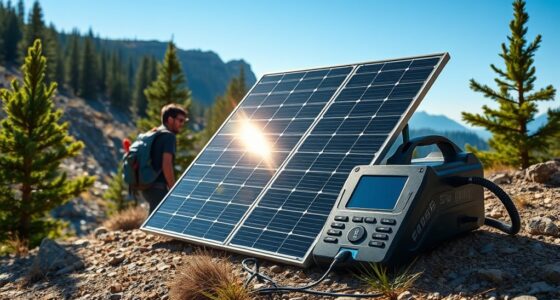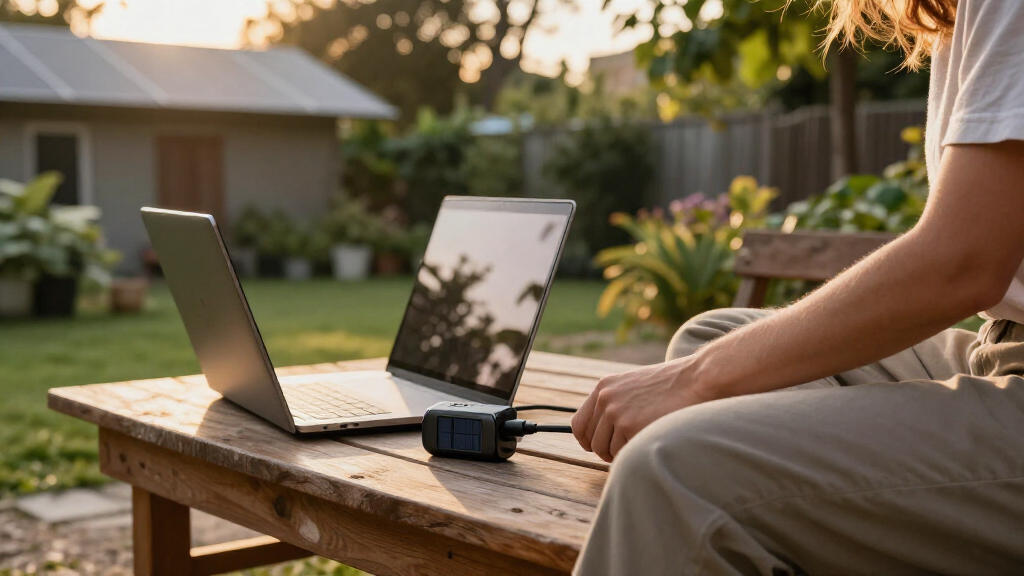
Solar-powered laptop chargers fall into two very different camps: solar power banks that fold panels into a battery you toss in a bag, and portable power stations paired with separate solar panels that can genuinely run a laptop off-grid for days. The tradeoff is size versus real capability — most solar power banks recharge painfully slowly from the sun, while true solar generator kits weigh ten pounds or more. The Portable Solar Generator 300W with 60W Solar Panel earns my best overall pick for pairing a 300W inverter with a panel big enough to actually harvest meaningful sunlight. The Takki Solar Generator 120W kit is the better budget-friendly entry point, and the Selore & S-Global 65W power bank wins for travelers who want the lightest possible option. Read on for the full breakdown, including who each of the 15 picks suits and who should skip them.
Complete the kit


Key Takeaways
- Built-in solar panels on power banks (the SOARAISE, YELOMIN, and 49800mAh models) are emergency trickle-chargers, not laptop-recharging solutions — expect a full day of sun for one laptop top-up.
- Only three options in this roundup pair a panel large enough (40W-60W) to meaningfully recharge their battery: the 300W/60W kit, the Takki 120W/21W combo, and the Portable Power Station with 40W Solar Panel.
- Wattage ratings are misleading across the category — the ‘SinKeu 24000mAh’ and ‘49800mAh’ banks deliver far less usable laptop power than their numbers suggest because AC inverter losses eat 15-25% of capacity.
- LiFePO4 chemistry in the Daran 89.6Wh station gives it roughly 4-5x the cycle life of the lithium-ion power banks, making it the durability pick despite smaller capacity.
- Pure portability picks like the Selore 18400mAh and PSOOO 27000mAh carry no solar at all — they belong in this list only as the battery half of a system you’d pair with the FlexSolar 60W panel.

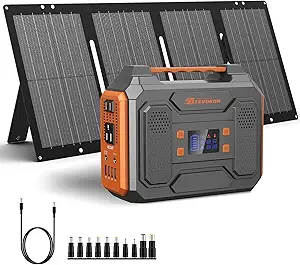

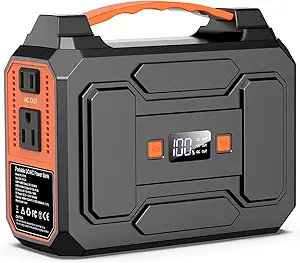


| solar-powered laptop charger | Battery Capacity |
|---|---|
| Takki Solar Generator 120W Pea | 88.8Wh |
| Portable Solar Generator 300W | — |
| SOARAISE Solar Power Bank 4800 | 48000mAh |
| Portable Power Station | — |
| Portable Laptop Charger 32000m | — |
| Portable Power Station 300W | 220Wh |
| Selore & S-Global 65W Power Ba | 18400mAh |
| Daran Portable Power Station 8 | 89.6Wh |
| Portable Solar Power Bank with | 24,000mAh |
| SinKeu 24000mAh Portable Power | — |
| FlexSolar 60W Foldable Portabl | — |
| YELOMIN Solar Power Bank 10000 | 10,000mAh |
| Solar Power Bank 49800mAh | 49,800mAh lithium polymer |
| Portable Power Station with 40 | — |
| PSOOO Power Bank 65W 27000mAh | — |
More Details on Our Top Picks
Takki Solar Generator 120W Peak Portable Power Station with 21W Solar Panel and 88.8Wh Battery
This option stands out for being one of the few kits in this price range that ships with both a battery and a foldable solar panel included, so buyers can start harvesting sunlight on day one without extra purchases. At 88.8Wh, the capacity is modest — smaller than the 146Wh unit elsewhere in this roundup — but the 21W panel can bring it from empty to 80% in 5-7 hours of good sun, which matters more for off-grid trips than raw storage. Compared with the 300W generator, the Takki trades power output for a lighter total weight of about 3.2 lbs combined, making it easier to justify carrying on a backpacking leg. The real tradeoff: the 80W continuous device limit means gaming laptops and power-hungry workstations are off the table.
Pros:- Battery and 21W solar panel included as a true kit
- Lightweight at 2.29 lbs for the station alone
- AC, USB, and DC outputs cover most laptop charging needs
- Fast 2-hour AC recharge to 80% before leaving home
Cons:- 80W device limit excludes higher-draw laptops
- Cannot reliably charge devices while recharging itself
- 88.8Wh capacity runs dry after roughly one laptop recharge plus phone top-ups
Best for: Weekend campers and laptop-toting beginners who want an all-in-one solar kit without researching separate panels
Not ideal for: Anyone running 15-inch pro laptops or multiple devices at once — the 80W ceiling and small battery will frustrate them
- Battery Capacity:88.8Wh
- Peak Power:120W
- Solar Panel Power:21W foldable (included)
- Solar Recharge Time:5-7 hours to 80%
- AC Recharge Time:2 hours to 80%
- Weight:2.29 lbs (station), 0.92 lbs (panel)
- Dimensions:5.7 x 4.13 x 3 inches
Our verdict“Buy this if you want the simplest path to solar laptop charging in one box; skip it if your laptop draws more than 80W.”
Portable Solar Generator 300W with 60W Solar Panel
The headline here is the 60W foldable panel, which is roughly triple the solar input of the Takki kit’s 21W panel. That difference translates directly into less time waiting for sunlight: this setup can meaningfully recharge during a single afternoon, while smaller panels trickle. With a 300W output ceiling, it handles most laptops, camera chargers, and small appliances simultaneously — something the 100W units in this guide simply cannot do. Compared with the 146Wh power station, this model gives up portability for capability, since a 60W panel is a real piece of gear to pack. The non-waterproof junction box is the notable weakness: one rain shower at the wrong angle and the electronics are at risk, so this demands more careful site management than sealed competitors.
Pros:- 300W output powers most laptops plus peripherals at once
- 60W panel recharges far faster than budget kits
- Overload and short-circuit protection built in
- Multiple outlets support mixed device charging
Cons:- Junction box is not waterproof despite outdoor positioning
- Too bulky and heavy for backpacking use
- Battery self-drains if left uncharged for long periods
Best for: RV travelers and base-camp workers who keep a laptop and accessories running for days off-grid
Not ideal for: Hikers and minimalists — the panel and station together take serious pack space and the junction box needs weather protection
- Output Wattage:300W
- Voltage:110V
- Solar Panel:60W foldable (included)
- Power Sources:AC/DC, battery, solar
- Safety Features:Overload protection, short circuit protection
- Best Device Range:Up to 300W
Our verdict“This pick makes the most sense for stationary off-grid setups where solar recharge speed matters more than weight.”
SOARAISE Solar Power Bank 48000mAh Wireless Portable Charger with 4 Cables
Rather than a power station with an inverter, this takes the opposite approach: a single ruggedized brick with four built-in solar panels that fold out like a book. The payoff is convenience — no separate panel to connect, no cables to lose since four are built in, and a 48000mAh capacity that dwarfs the 32000mAh laptop power bank also featured in this guide. The catch is physics: small panel arrays like this collect sunlight slowly, so the solar input is best treated as an emergency trickle, not a primary recharge method. Compared with the Takki kit, it wins on durability (waterproof, shockproof, dustproof) and pocketability, but loses badly on solar charging speed. Wireless charging on top is a nice bonus for phone users, though the weight makes it more of a bag battery than a pocket one.
Pros:- 48000mAh capacity handles multiple laptop partial recharges
- Four integrated cables eliminate packing extras
- Waterproof, shockproof, and dustproof construction
- Wireless charging plus PD/QC 3.0 fast wired charging
Cons:- Solar charging is slow given small panel surface area
- Heavier than a typical power bank despite compact dimensions
- Only three output ports limits simultaneous device charging
Best for: Outdoor adventurers and festival-goers who prioritize a tough, all-in-one backup over fast solar recovery
Not ideal for: Anyone expecting laptop-sized recharges from sunlight alone — the fold-out panels are too small for that pace
- Battery Capacity:48000mAh
- Solar Panels:4 fold-out panels
- Ports:2x USB-A, 1x USB-C (in/out)
- Wireless Charging:Yes
- Fast Charging:PD and QC 3.0
- Durability:Waterproof, shockproof, dustproof
- Dimensions:6.38 x 3.43 x 1.57 inches
Our verdict“Choose this for bombproof portable capacity with solar as a backup — not as a serious solar charging system.”
Portable Power Station, 146Wh 100W Solar Powered Power Bank with AC Outlet
For buyers who already own a panel or plan to buy one separately, this delivers the best capacity-per-dollar in this batch: 146Wh and dual AC outlets at a price point where competitors offer 88-90Wh. Compared with the Takki, you gain roughly 60% more stored energy and a second AC outlet, but you give up the included panel — which is the whole reason the Takki earns its starter-kit role. The dual flashlight modes and passable 3.3 lb weight make it a reasonable emergency-drawer candidate too. The 100W AC output ceiling is the main constraint: it covers virtually every ultrabook and most 13-15 inch laptops, but high-performance machines drawing near their adapter rating may trip it. Pair it with a separately purchased 60W panel and this becomes a legitimately capable off-grid laptop setup.
Pros:- 146Wh capacity outclasses same-price rivals like the Takki’s 88.8Wh
- Dual 110V AC outlets plus USB-C and DC output
- Three recharge methods: wall, car, and solar
- Battery management system protects against common faults
Cons:- Solar panel sold separately, adding to real cost
- 100W AC limit may trip power-hungry laptops
- Capacity still too small for multi-day off-grid use
Best for: Budget-conscious buyers who already own or will choose their own solar panel separately
Not ideal for: Buyers wanting everything in one box — no panel is included, and total cost rises once one is added
- Capacity:146Wh / 39600mAh
- AC Output:2x 110V, 100W max
- Other Outputs:2x USB-A, 1x USB-C, 1x DC 12V
- Recharging:AC adapter, car socket, solar panel (not included)
- Weight:3.3 lbs
- Lighting:Dual LED flashlights, multiple modes
Our verdict“The smart buy if you want maximum stored wattage for the money and don’t mind sourcing your own panel.”
Portable Laptop Charger 32000mAh 100W PD Power Bank with Multiple Ports
This model skips solar entirely and focuses on doing one job extremely well: fast-charging laptops over 100W USB-C PD. That focus pays off for buyers whose real-world problem is a dead MacBook at an airport — no inverter losses, no AC outlet clutter, just a clean PD handshake at full speed. The 118Wh rating sits under the FAA carry-on limit, making it travel-friendly where the larger 146Wh station enters gray-zone territory. Compared with the SOARAISE solar brick, this is faster and cleaner for laptops but has zero off-grid recovery, so it belongs in a different kind of bag. The adjustable DV outputs (12V/16V/20V/24V) add flexibility for cameras and routers, though the missing USB-C wall plug and tangle of required cables mean the true cost and clutter are higher than the box suggests.
Pros:- 100W USB-C PD charges most laptops at full adapter speed
- 118Wh capacity stays under the 100Wh+ airline approval threshold comfortably
- Adjustable DC outputs (12-24V) support cameras and other gear
- Pass-through charging lets it top up while recharging
Cons:- No solar charging capability despite sitting in a solar roundup
- USB-C wall charger not included — an extra purchase
- Multiple cables and connectors needed for full functionality
Best for: Commuters and travelers who need reliable laptop battery extension and will recharge from the wall
Not ideal for: Off-grid campers — with no solar input of any kind, it does not belong in a solar-dependent setup
- Capacity:32000mAh / 118Wh
- USB-C Output:100W PD 3.0
- DC Output 1:12V 6A
- DC Output 2:16V/20V 6A, 24V 5A
- Other Ports:2x USB QC 3.0, 2x DC
- Solar Input:None
Our verdict“The best pure wall-recharge laptop battery here — buy it for travel reliability, not solar independence.”
Portable Power Station 300W, 220Wh Solar Generator Backup Battery Pack
With a 220Wh battery and a 300W inverter, this unit has roughly double the raw capacity of the Daran 89.6Wh station, which makes it the better choice when one laptop isn’t the only thing needing power. It can run seven devices at once — two AC outlets, four USB ports, and a vehicle-style DC port — so it works well as a central charging hub at a campsite or during an outage. The tradeoff is weight: at 5 pounds, it’s twice as heavy as the Daran and nowhere near as pocketable as the SinKeu power bank. It’s a base-camp tool, not a backpack one. Also note the solar panel is sold separately, so the true off-grid cost is higher than the sticker price suggests.
Pros:- 220Wh capacity charges a laptop several times over plus phones and accessories
- Seven simultaneous outputs let it serve as a group charging hub
- Three recharge paths: AC, car, and solar
- Built-in LED light adds emergency usefulness
Cons:- 300W ceiling rules out power-hungry appliances like kettles or hair dryers
- Solar panel not included, adding to total cost
- Heavy relative to power-bank alternatives in this lineup
Best for: Campers and emergency preppers who need to keep a laptop, phones, lights, and small gear running from one shared station
Not ideal for: Minimalist travelers and hikers — at 5 lbs with no included panel, it’s too much bulk for a single-laptop charging need
- Wattage:300W
- Battery Capacity:220Wh
- Weight:5 lbs
- Dimensions:8.5 x 6.7 x 4.1 inches
- Outputs:2x110V AC, 4x USB, 1x DC vehicle port
- Recharge Options:AC wall, car, solar (panel not included)
Our verdict“Buy this if you’re powering a campsite or emergency kit for several devices at once, not if you just need one laptop topped off in a backpack.”
Selore & S-Global 65W Power Bank for Laptop, 18400mAh Portable Charger with Dual Built-in USB-C & Lightning Cables
This one wins on convenience rather than capacity. Its dual built-in USB-C and Lightning cables mean no rummaging for chargers in an airport or café, and 65W output is enough to fast-charge most modern laptops over USB-C. The LCD display showing exact remaining percentage is a genuine upgrade over the guesswork indicator lights on the SinKeu-class power banks. The catch: at 18400mAh (about 67Wh), it holds less energy than the SinKeu’s 88.8Wh, so expect roughly one full laptop charge rather than two. And unlike the Portable Solar Power Bank with AC Outlet, it has no solar input and no AC outlet — it’s strictly a USB-C laptop companion for people who recharge from the wall nightly.
Pros:- Built-in USB-C and Lightning cables eliminate cable clutter
- 65W USB-C PD output fast-charges most laptops
- LCD display shows precise remaining charge
- Four ports for charging multiple devices
Cons:- 18400mAh runs out after roughly one laptop charge
- Heavier than typical phone-only power banks at 14.53 oz
- Wall-outlet dependent — no solar or AC charging input
Best for: Frequent flyers and commuters with USB-C laptops who value built-in cables over maximum capacity
Not ideal for: Off-grid users — no solar charging and no AC outlet means it can’t run wall-powered devices or recharge away from an outlet
- Battery Capacity:18400mAh
- Output Power:65W
- Ports:4
- Connector Type:USB Type C
- Battery Cell Type:Lithium Polymer
- Built-in Cables:USB-C and Lightning
- Display:LCD
Our verdict“The right pick for travelers who live out of a USB-C laptop bag and hate carrying cables; skip it if off-grid recharging matters.”
Daran Portable Power Station 89.6Wh LiFePO4 Battery 100W (200W Peak) Solar Power Bank
The standout feature here isn’t capacity — it’s chemistry. The LiFePO4 battery rated for 3500+ cycles should outlast the lithium-ion cells in the 220Wh station and the SinKeu power bank by several years of regular use, which matters if this lives in an emergency kit or comes on every trip. At 2.54 pounds and soda-can dimensions, it splits the difference between a pocket power bank and a full station. Compared with the similarly sized Selore & S-Global, it trades built-in cables for real versatility: two AC outlets, USB-C PD input and output, and four recharge methods including solar. The 100W continuous ceiling is the constraint — it handles most laptops fine, but gaming rigs and workstations will trip it. No panel is included.
Pros:- LiFePO4 chemistry rated for 3500+ cycles, far outlasting typical lithium-ion packs
- Charges from AC, USB-C PD, car, or solar panel
- Quiet, fan-light operation suitable for tents and bedrooms
- Seven ports including two AC outlets at just 2.54 lbs
Cons:- 100W continuous limit excludes power-hungry laptops
- Solar panel sold separately
- No app or Wi-Fi monitoring for checking charge status remotely
Best for: Buyers who want a small solar-ready station they’ll still be using five years from now — emergency preppers and frequent campers
Not ideal for: Anyone powering gaming laptops or 100W+ devices — the output ceiling will shut it down
- Battery Capacity:89.6Wh
- Battery Type:LiFePO4 (3500+ cycles)
- Output Power:100W continuous, 200W peak
- Ports:7 (2 AC, 2 USB-C, 2 USB-A, 1 DC5521)
- Weight:2.54 lbs
- Charging Methods:AC, USB-C PD, car, solar panel
- Safety:12 BMS protections
Our verdict“The durability play — pick this over cheaper lithium-ion rivals if longevity and solar flexibility matter more than raw wattage.”
Portable Solar Power Bank with AC Outlet 65W 110V
Most entries here require buying a solar panel separately — this one doesn’t. The integrated 30W foldable panel means you can actually recharge off-grid out of the box, something neither the 220Wh station nor the Daran can claim. The 24,000mAh battery feeds a 65W AC outlet plus USB ports, covering laptops, tablets, and phones for a weekend trip. Compared with the SinKeu, which has identical capacity and AC wattage but no solar charging at all, this is the more self-sufficient choice — though the small panel means solar recharging is slow, best treated as a trickle-top-up rather than a primary charging method. Be aware the AC outlet needs manual toggling, and the panel’s junction box isn’t waterproof, so pack it away in rain.
Pros:- Built-in 30W foldable solar panel means true out-of-the-box off-grid charging
- 65W AC outlet handles most laptops plus multiple USB devices
- 24,000mAh capacity gives roughly 1-2 laptop charges
- Also rechargeable from wall or car for fast top-ups
Cons:- Solar recharge rate is slow given the small panel area
- Junction box is not waterproof, limiting wet-weather use
- AC outlet requires manual switching and caps at 65W
Best for: Hikers and off-grid travelers who want laptop charging capability without carrying a separate solar panel
Not ideal for: Wet-weather or coastal users — the non-waterproof junction box makes solar charging risky in rain
- Battery Capacity:24,000mAh
- AC Output:65W, 110V
- Solar Panel:30W foldable, integrated
- Folded Panel Size:12.7 x 8.4 x 0.3 inches
- USB Ports:5V/2.4A and 5V/3A, 9V/2A
- Size:6.89 x 3.98 x 1.89 inches
Our verdict“The most complete off-grid package here — buy it if you want solar included, skip it if you’ll mostly recharge from the wall anyway.”
SinKeu 24000mAh Portable Power Bank with AC Outlet and Solar Generator
Matching the Portable Solar Power Bank on paper — same 24,000mAh, same 65W AC outlet — the SinKeu differentiates itself with a sub-4-hour recharge time, which matters when you’re cycling it daily between outlet and bag. The OLED display gives clearer status readouts than basic LED indicators, and the BMS safety layer is reassuring for a device carrying an inverter. What you give up versus the integrated-solar competitor is self-sufficiency: this is fundamentally a wall-recharge device, so it suits urban backup and travel more than wilderness use. It’s also on the heavy side for a power bank, so compared with the svelte Selore & S-Global it feels more like a small station compressed into a brick than a pocket accessory. Fine for a laptop bag, awkward for a jacket pocket.
Pros:- Recharges fully in under 4 hours, faster than most rivals in this class
- 110V/65W AC outlet plus QC3.0 and DC outputs cover mixed device needs
- OLED display shows charge status at a glance
- 88.8Wh of energy delivers 1-2 laptop charges
Cons:- Heavy and bulky compared with USB-C-only power banks
- 65W AC ceiling excludes higher-draw laptops and appliances
- Needs specific recharging accessories for best results, which are easy to lose
Best for: Remote workers and travelers who want a dependable AC outlet backup that recharges quickly between uses
Not ideal for: Weight-conscious hikers and anyone needing genuine off-grid solar recharging — this leans on wall power
- Capacity:24,000mAh (88.8Wh)
- AC Outlet:110V / 65W
- USB Outputs:QC3.0 9V/2A, 5V/3A
- Additional Outputs:DC 9-12.6V/10A
- Recharge Time:Under 4 hours
- Display:OLED
Our verdict“A solid wall-recharged laptop backup for city dwellers and road-trippers — pick the integrated-solar alternative if you actually need off-grid recharging.”
FlexSolar 60W Foldable Portable Solar Panel Charger IP67 Waterproof
Among everything in this roundup, the FlexSolar 60W is the closest thing to a true solar-powered laptop charger, because it generates rather than stores power. With 60W of monocrystalline output and up to 24% conversion efficiency, it can feed a laptop directly through the PD 3.0 USB-C port — something the YELOMIN or 49800mAh power banks simply can’t match, since their tiny embedded panels are really just emergency trickle chargers. The tradeoff is obvious: no battery means no charging after sunset, and output swings with cloud cover. Compared with the 40W panel bundled with the 100W Portable Power Station, this one delivers half again as much wattage in a package that still folds down to the size of a notebook. Just plan around the non-waterproof junction box and bring a stand.
Pros:- 60W output is high enough to charge most laptops directly via USB-C PD
- Up to 24% solar conversion efficiency, better than most panels in this class
- Folds to roughly notebook size and weighs only 2.6 lbs
- Three fast-charging ports (QC3.0 USB-A, PD3.0 USB-C, DC) cover laptops, phones, and power stations
Cons:- Junction box is not waterproof, limiting true all-weather use
- No kickstand included, making optimal sun-angle positioning awkward
- Output fluctuates heavily with sunlight conditions
Best for: Campers and remote workers who spend full days outdoors and want to charge a laptop directly from sunlight without carrying a battery
Not ideal for: Anyone who needs power at night or on cloudy days — with no internal battery, this panel is useless once the sun goes down
- Power Output:60W
- Solar Conversion Efficiency:Up to 24%
- Charging Ports:QC3.0 USB-A, PD3.0 USB-C, DC
- Waterproof Rating:IP65 (panel); junction box not waterproof
- Folded Size:9.8 x 12 x 1 inches
- Unfolded Size:54.8 x 12 x 1 inches
- Weight:2.6 lbs (1.2 kg)
- Panel Material:A+ monocrystalline silicon with E film surface
- Expected Lifespan:5–10 years
Our verdict“Buy this if you work or camp in sunshine for hours at a time and want real laptop charging straight from the sun; skip it if you need power on demand after dark.”
YELOMIN Solar Power Bank 10000mAh with Foldable Solar Panels, Wireless Charging, and Emergency Flashlight
The YELOMIN 10,000mAh takes the opposite approach from the FlexSolar 60W: small panels attached to a battery, rather than a big panel feeding your devices. That makes it a convenience-first solar option — the four foldable panels can slowly top up the internal battery during a hike, while 15W wireless charging and built-in USB-C and Lightning cables eliminate cable clutter entirely. Be realistic about expectations, though. At 10,000mAh, this is a phone charger with laptop ambitions at best; the SOARAISE 48000mAh or the 49800mAh unit in this roundup hold far more energy for laptop work. Where YELOMIN wins is portability and simplicity — it slips into a daypack where those giant banks feel like carrying a brick.
Pros:- Four foldable solar panels let the bank recharge itself off-grid
- Built-in USB-C and Lightning cables mean you can leave yours at home
- 15W wireless charging pads a phone without plugging in
- Three-mode flashlight (constant, strobe, SOS) is genuinely useful in emergencies
Cons:- Only ~50Wh capacity, far below laptop-charging needs
- Bulky relative to other 10,000mAh banks because of the fold-out panels
- Solar recharging only works well in direct, sustained sunlight
Best for: Day hikers and casual campers who want a self-recharging backup for phones and small devices without carrying extra cables
Not ideal for: Laptop users — 10,000mAh and modest output won’t meaningfully charge a notebook computer
- Battery Capacity:10,000mAh
- Solar Panels:4 foldable panels
- Wireless Charging:15W
- Built-in Cables:USB-C, Lightning
- Flashlight Modes:3 (constant, strobe, SOS)
- Design:Durable, weather-resistant housing
Our verdict“This pick makes the most sense for light outdoor use where keeping a phone alive matters more than charging a laptop.”
Solar Power Bank 49800mAh – Wireless Portable Charger with 15W Fast Charging and 4 Built-in Cables
If the YELOMIN is a daypack backup, this 49800mAh beast is the base-camp option. That capacity translates to multiple full phone charges and enough headroom to top up a laptop in a pinch — something only the SOARAISE 48000mAh and the PSOOO 27000mAh come close to matching here. Four built-in cables plus wireless charging mean you can power a mixed group of devices without anyone hunting for a cord, and the IP65 waterproof, shockproof shell shrugs off camp life. The honest caveat: the solar panel on the back is a last-resort trickle charger, not a real recharging method — topping up a battery this size by sun alone would take days. Wall charge it before you leave, and treat solar as a bonus, not the plan.
Pros:- Massive 49800mAh capacity handles multiple devices across several days
- Four built-in cables and wireless charging cover nearly any device
- IP65 waterproof and shockproof build survives rough outdoor handling
- Multi-mode LED flashlight doubles as camp lighting
Cons:- Solar recharging is extremely slow relative to the huge battery size
- Large and heavy compared with ordinary power banks
- 5V/3.1A output is limiting for power-hungry laptops
Best for: Group campers and multi-day trippers who need to keep several phones, tablets, and small devices charged away from outlets
Not ideal for: Minimalist packers — its large size and weight make it a poor choice for anyone counting grams
- Battery Capacity:49,800mAh lithium polymer
- Output:5V / 3.1A
- Fast Charging:80% in 1 hour (via USB)
- Ports:3 (USB-A, USB-C, Micro USB) plus 4 built-in cables
- Wireless Charging:Yes
- Waterproof Rating:IP65
- Build:ABS and PC, shockproof housing
- Extras:Multi-mode LED flashlight
Our verdict“Choose this when raw stored capacity for a group matters more than solar recharging speed; look elsewhere if weight is your priority.”
Portable Power Station with 40W Solar Panel, 100W Solar Powered Generator
This kit is the only entry in this batch that hands you both halves of the equation: a battery station and its matching solar panel, ready to work as a closed loop. That’s a real advantage over standalone banks like the 49800mAh unit, whose tiny panel can’t realistically refill its own battery. Here, the 40W panel with MPPT charging actually recharges the station in a day of good sun, and the two AC outlets let you run a laptop charger exactly as you would at home — no USB-C PD negotiation headaches. The catch is scale: with a 100W ceiling, it sits below the Takki 120W Peak and well under the 300W generators in this roundup, and the panel itself is weaker than the FlexSolar 60W for direct charging. It also demands maintenance charging every couple of weeks when idle.
Pros:- Bundled panel and station are designed to work together with efficient MPPT solar recharging
- Two AC outlets let you plug in standard laptop chargers, not just USB cables
- Multiple recharge paths: wall outlet, solar, or 12V carport
- Comprehensive BMS protections against short circuit, over-current, over-voltage, overload, and overheating
Cons:- 100W output ceiling excludes higher-draw devices
- Solar panel junction box is not waterproof
- Requires recharge at least every two weeks when stored unused
Best for: Buyers who want an all-in-one solar ecosystem for camping or emergency prep without researching separate panels and stations
Not ideal for: Anyone running gear above 100W — power tools, larger laptops under load, or mini fridges will trip its limits
- Battery Station:100W lithium-ion
- Solar Panel:40W foldable, included
- AC Outlets:2 x 100W max
- USB Outputs:USB1, USB2, QC USB, USB-C
- DC Output:9V–12.6V / 10A max
- Recharge Methods:Wall outlet, MPPT solar, 12V carport
- Conversion Efficiency:22.8%
- Safety:Built-in BMS with short circuit, over-current, over-voltage, overload, overheating protection
Our verdict“This model is better suited to first-time solar buyers who value a matched, ready-to-go kit over maximum wattage or standalone-panel flexibility.”
PSOOO Power Bank 65W 27000mAh Laptop Battery Pack
The PSOOO 27000mAh earns its spot by being the most laptop-literate battery here, even though it carries no solar panel of its own. Its 65W PD 3.0 output hits the threshold most modern USB-C laptops need to charge at full speed — a claim the 49800mAh bank, capped at 5V/3.1A, can’t make despite its larger capacity. Pair it with the FlexSolar 60W panel and you effectively build your own solar laptop kit: panel by day, stored 65W power by night, which is more flexible than the all-in-one 100W generator kit if you already own a panel. The tradeoff is weight and honesty about solar — this is a battery, not a charger, so it belongs in a solar roundup only as the storage half of a two-piece system.
Pros:- 65W PD 3.0 output charges most USB-C laptops at full speed
- 27,000mAh capacity supports several phone charges plus a laptop top-up
- Broad device compatibility across phones, tablets, and notebooks
- Safety protections and built-in LED flashlight for travel emergencies
Cons:- Heavy and bulky for everyday carry
- Fast charging only reaches devices that support PD protocols
- No solar input of its own — requires pairing with a separate panel
Best for: Travelers and remote workers who own or plan to buy a solar panel and need a battery that charges laptops at full speed
Not ideal for: Buyers wanting solar built in — with no panel of its own, it doesn’t recharge itself off-grid
- Capacity:27,000mAh
- Max Power Output:65W PD 3.0
- Ports:Multiple, including USB-C
- Charging Protocol:USB Power Delivery 3.0 fast charging
- Compatibility:Laptops, phones, tablets
- Extras:Built-in LED flashlight, multi-layer safety protections
Our verdict“This option stands out as the storage half of a two-piece solar laptop setup, provided you’re willing to buy the panel separately.”
How We Picked
My ranking logic starts with one question: can this product actually keep a laptop running away from an outlet? A typical laptop needs 45-65W of charging power, which immediately eliminates any option that can’t deliver at least 30W sustained. I then weighed real solar harvesting capability — panel wattage, weather resistance, and whether the included panel can recharge the battery in a reasonable day of sunlight — because a “solar charger” that only charges from a wall is mislabeled. Capacity came third, but I adjusted stated watt-hours for inverter efficiency and usable depth of discharge, since raw marketing numbers flatter the big-power-bank segment.
Beyond raw specs, I scored each product on portability, build quality, charging flexibility (PD USB-C versus AC outlet versus barrel adapters), and value per usable watt-hour. Products earned their rank by excelling for a specific buyer rather than being decent at everything — which is why a $40 solar power bank sits alongside a 300W solar generator kit. Options with no solar function at all were evaluated as battery companions to a separate panel, and their ranking reflects how well they fill that narrower role.
Factors to Consider When Choosing Solar-powered Laptop Chargers
Before buying any solar-powered laptop charger, you need to understand where the marketing numbers diverge from reality. These five factors separate products that will genuinely keep you working off-grid from ones that will leave you rationing battery by mid-afternoon.
Panel Wattage Versus Battery Capacity
The single most common mistake in this category is buying a huge battery with a tiny solar panel — or no panel at all. A 48000mAh power bank sounds impressive until you realize its small built-in panels produce 5-10 watts, meaning full solar recharge takes several days of direct sun. As a working rule, you want at least 40-60W of panel to recharge a laptop-class battery in one sunny day. If portability forces you into a smaller panel, treat solar as a trickle top-up and plan around wall charging before you leave. Match the panel to your trip length: weekend campers can get by with a 21W panel, while week-long off-grid stretches demand 60W or more.
Inverter Output and Surge Ratings
Laptops with dedicated graphics or larger workstations can pull 90-100W under load, and many cheap AC outlets sag or shut down when asked for sustained power. Look closely at whether the advertised wattage is continuous or peak — a “200W peak” rating often means 100W continuous, which is a meaningful difference for a 16-inch laptop. Also check that the AC output is pure sine wave if you’ll power anything with a sensitive power brick; modified sine wave can cause buzzing, heat, and long-term damage. USB-C Power Delivery above 60W is often the more efficient route, since it bypasses inverter losses entirely and wastes 15-25% less energy than going through an AC outlet.
Battery Chemistry and Cycle Life
Most power banks in this category use standard lithium-ion, which delivers roughly 300-500 charge cycles before capacity noticeably degrades. LiFePO4 (lithium iron phosphate) chemistry, found in the Daran station, typically lasts 2000+ cycles and handles heat better — a real advantage for gear sitting in a hot car or tent. The tradeoff is weight and cost per watt-hour, since LiFePO4 is less energy-dense. If you’re an occasional camper, lithium-ion is fine and lighter. If this kit lives in an RV, van, or emergency bin and gets cycled weekly, the chemistry difference will decide whether the product lasts two years or ten.
Realistic Watt-Hours Versus Marketing Numbers
Milliamp-hour ratings are the category’s biggest shell game because they’re quoted at 3.7V cell voltage, while your laptop needs 20V — so a “49800mAh” bank holds roughly 184Wh at best, and delivers far less after conversion losses. Compare products on usable watt-hours and output wattage instead of mAh, and mentally discount AC-output capacity by about 20%. A 90Wh laptop battery charged from a 146Wh station realistically gets one full charge, not the “multiple charges” some listings imply. Also account for the fact that you shouldn’t drain lithium-ion banks to zero regularly — usable capacity is closer to 80-90% of the rating if you want good cycle life.
Weight, Weather Resistance, and Travel Reality
Honest weight math matters: solar generator kits with panels run 8-15 pounds and belong in a car or canoe, not a backpack, while sub-one-pound power banks sacrifice nearly all real solar capability. Check IP ratings carefully — only a few foldable panels carry legitimate IP67 ratings, and most power banks should never be exposed to rain despite outdoor marketing photos. Air travelers face a hard limit of 100Wh (roughly 27000mAh) per battery without airline approval, which rules out the larger stations entirely for flights. Decide your primary use first — daily carry, car camping, van life, or emergency backup — and let that, rather than maximum specs, drive your size choice.
Frequently Asked Questions
Can a solar power bank actually charge a laptop from sunlight alone?
Honestly, not at a pace that supports daily work. Most power banks with built-in panels produce 5-10 watts from the sun, while a laptop under active use draws 30-65 watts — so you’d drain faster than you charge even in ideal conditions. What small solar banks can do is slowly replenish themselves over a full day of direct sun when the laptop isn’t connected, effectively stretching a weekend trip by a few hours of runtime. For genuine solar-powered laptop charging, you need a separate 40-60W panel feeding a power station or PD power bank. That’s why my top picks all pair a real panel with a battery rather than relying on built-in solar.
Do I need an AC outlet, or is USB-C Power Delivery enough?
For most modern laptops, USB-C PD at 65W or 100W is the better choice — it’s more efficient, avoids inverter conversion losses, and works with any USB-C laptop from MacBooks to most Windows machines. You only need an AC outlet if your laptop uses a barrel-style proprietary charger, or if you want to run other devices like camera chargers, small fans, or a monitor on the road. Keep in mind that AC outputs drain the battery noticeably faster for the same charging work, since converting DC to AC and back wastes 15-25% of your stored energy. If you carry a modern USB-C laptop and nothing else, skipping the inverter saves money, weight, and battery life.
How much capacity do I need for a full day of laptop work off-grid?
A typical ultrabook draws 25-45Wh for a full day of mixed writing, browsing, and video calls, while a performance laptop can burn 60-90Wh. Since you should get the laptop to full once and still have reserve, plan on a 150-220Wh battery for a comfortable single workday plus a top-up, which is exactly the range of the mid-size power stations in this roundup. Smaller banks in the 80-100Wh range cover a half-day or one full charge for an efficient machine. Also factor in your phone, headlamp, and camera batteries — they add up faster than most people expect. And remember that topping up from solar mid-day can stretch a smaller battery considerably, provided your panel is 40W or larger.
Are the huge capacity numbers like 48000mAh power banks legit?
The numbers are technically real but practically misleading. Milliamp-hours are quoted at the cell’s 3.7V voltage, but your laptop charges at 20V, so 48000mAh works out to roughly 184Wh before conversion losses — respectable, but nowhere near what the number implies next to a standard 20000mAh phone bank. After inverter and voltage-conversion losses, expect about 130-150Wh of deliverable energy, which is roughly one to two laptop charges on a power-hungry machine. Some ultra-cheap listings also exaggerate outright, so I’d stick with brands that publish watt-hours and independent test data. Compare on watt-hours and output watts, and the marketing fog clears up quickly.
What’s the best setup for flying with a solar laptop charger?
Airlines cap batteries at 100Wh (about 27000mAh at 3.7V) per unit without prior approval, which rules out every power station in this roundup but clears the PSOOO 27000mAh, Selore 18400mAh, and most compact banks. Since solar panels contain no battery, foldable panels like the FlexSolar 60W fly without restriction — the smart travel setup is a sub-100Wh PD power bank in your carry-on plus a folding panel in checked or carry-on luggage. This combo gets you real solar harvesting at your destination while staying air-legal. Note that batteries must go in carry-on, never checked bags, under TSA rules. If you need more capacity than 100Wh at your destination, buying or shipping a larger station locally is often easier than getting airline approval.
Conclusion
For best overall, the Portable Solar Generator 300W with 60W Solar Panel stands out because it’s the only kit here where the solar input genuinely sustains laptop-level consumption — the rest of the field recharges slowly or not at all from the sun. The Takki Solar Generator 120W kit takes best value, offering a real panel-and-battery pairing at a price where competitors give you a battery alone. For premium buyers who care about longevity, the Daran 89.6Wh LiFePO4 station justifies its cost with several times the cycle life of every lithium-ion option here. Beginners should start with the SOARAISE 48000mAh solar power bank — it’s inexpensive, forgiving, and teaches you the limits of small solar without a big investment. For travel-focused buyers, the Selore & S-Global 65W with built-in cables paired with the FlexSolar 60W panel is the smart modular pick: light enough for a backpack, air-legal, and far more solar capability than any all-in-one bank. Match the pick to how you actually travel, and the choice makes itself.