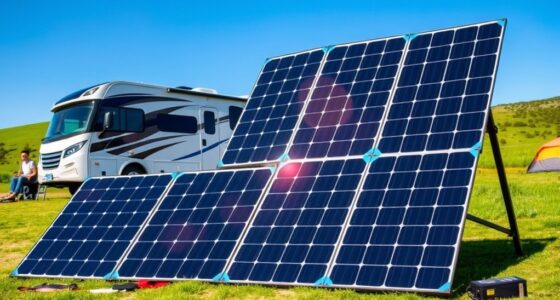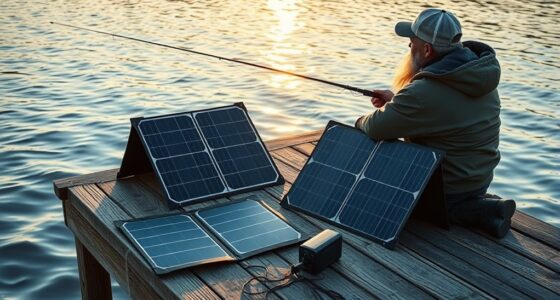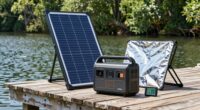
If you’re searching for the best plug-in solar batteries, you’re likely balancing capacity, portability, and affordability. The Jackery Solar Generator 1000 V2 stands out for its large capacity and fast charging, making it ideal for serious off-grid use. The Anker SOLIX C300 offers a compact design with reliable solar input for outdoor adventures, while the EnginStar Portable Power Station provides a budget-friendly option for emergency backup. Each of these options highlights different priorities, but choosing the right one depends on your specific needs. Continue reading for a detailed breakdown of these and the other top picks, along with key considerations to help guide your decision.

Get backup power and energy gear delivered free with Prime
- Fast, free delivery on millions of items
- Prime Video, Amazon Music and more included
- Member-only deals all year
Complete the kit


Key Takeaways
- Capacity varies widely, so consider your power needs carefully before choosing.
- Portability is key for outdoor use, but smaller batteries often have less capacity.
- Solar input and charging speed significantly impact usability in off-grid scenarios.
- Build quality and safety features like LiFePO4 batteries influence long-term reliability.
- Price points reflect different feature sets; higher cost usually means more capacity and durability.




| plug-in solar batterie | Battery Capacity | Weight |
|---|---|---|
| 200W Solar Powered Generator w | 146Wh | — |
| Jackery Solar Generator 1000 V | — | 23.8 lbs |
| Jackery HomePower 3600 Plus Po | — | Lightweight, 34% smaller |
| EnginStar Portable Power Stati | 155Wh | — |
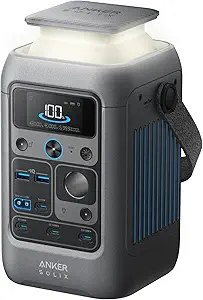
| Anker SOLIX C300 DC Power Bank | 288Wh | — |
| Anker SOLIX C300 Portable Powe | 288Wh | 15.5 pounds |
| Anker SOLIX C1000 Portable Pow | 1056Wh | — |
| Jackery Explorer 300 Portable | — | 7.5 lbs |
| EnginStar Portable Power Stati | — | 6.5 pounds |
| MARBERO 111Wh Solar Generator | 111Wh | 3.5 pounds |
More Details on Our Top Picks
200W Solar Powered Generator with 40W Solar Panel – Portable Power Station with 146Wh Capacity
This compact solar generator stands out for its portability and versatility, making it ideal for camping, outdoor activities, and emergency situations. Compared to larger units like the Jackery HomePower 3600 Plus, it can’t handle high-wattage appliances, but its lightweight design (under 1 kg) makes it easy to carry and set up. The 40W foldable solar panel offers a quick way to recharge in sunlight, though dependability hinges on consistent sun exposure, unlike grid-tied or larger capacity options. Its 200W pure sine wave inverter ensures safe operation for sensitive electronics, but the limited 146Wh capacity restricts long-term use. This model makes the most sense for users needing a reliable, portable power source for low-wattage devices during outdoor trips or emergencies.
Pros:- Extremely portable and lightweight, easy to carry
- Multiple charging options including solar, wall, and car
- Safe output with advanced battery management and pure sine wave inverter
Cons:- Limited to 200W output, not suitable for high-wattage devices
- Battery capacity may be insufficient for extended use
Best for: Hikers, campers, and emergency preparedness enthusiasts needing lightweight, portable power for small devices.
Not ideal for: Home backup or powering high-wattage appliances, as the capacity and output are too limited.
- Battery Capacity:146Wh
- Battery Type:Lithium Ion
- Output Wattage:200W
- Number of Outlets:7
- AC Outlets:2 x 110V Pure Sine Wave
- Solar Panel Power:40W
Our verdict“This pick is perfect for outdoor enthusiasts and emergency kit builders who prioritize portability and low-wattage device support.”
Jackery Solar Generator 1000 V2 with 200W Solar Panel, 1070Wh, 1500W AC, Fast Charge, LiFePO4 Battery, USB-C Output, for Outdoor, Off-Grid, RV, Emergency
The Jackery Solar Generator 1000 V2 offers a significant upgrade in capacity and power output over smaller models like the 200W portable unit. Its 1070Wh lithium iron phosphate battery ensures a longer lifespan—over 10 years—and enough juice to run multiple appliances or sustain longer trips. The 1500W continuous AC output makes it suitable for powering essential household devices, unlike the smaller generator which is limited to low-wattage electronics. The fast charging from 0% in just one hour adds a convenience edge, though the solar panel and generator are shipped separately, adding to initial setup complexity. Its app-controlled fast charging feature offers some added control, but shipping restrictions mean it’s less accessible for remote users. This unit is best for users seeking a reliable, high-capacity portable power station for extended outdoor adventures or emergency use.
Pros:- High-capacity 1070Wh battery for extended use
- Powerful 1500W AC output suitable for multiple devices
- Fast charging from 0% in about an hour
Cons:- Solar panel and generator shipped separately, complicating setup
- Requires app for optimal fast charging, adding a tech layer
Best for: Outdoor enthusiasts, RV owners, and preppers who need substantial, long-lasting power for multiple devices.
Not ideal for: Casual users or those with limited space, due to its weight (nearly 24 lbs) and setup requirements.
- Capacity:1070Wh
- AC Output:1500W
- Surge Peak:3000W
- Weight:23.8 lbs
- Battery Type:LiFePO4
- Fast USB-C Charging:PD 100W
Our verdict“This generator suits users who need dependable, high-capacity power for outdoor or emergency scenarios and are willing to manage a larger setup.”
Jackery HomePower 3600 Plus Portable Power Station with 2 Solar Panels
The Jackery HomePower 3600 Plus offers a significant jump in capacity and expandability compared to smaller, portable units. Its 3584Wh capacity and 3600W output make it suitable for home backup situations or powering multiple appliances during extended outages. Compared to the smaller 200W generator, this model is designed to scale up, with the ability to connect multiple units for even larger capacity—up to 21kWh—making it ideal for serious backup needs. However, the solar panels are shipped separately, adding to the initial investment and setup effort. Its lightweight, rolling design makes it portable for a unit of this size, but it isn’t as lightweight as smaller models. This unit is best suited for users wanting a flexible, expandable power solution for home security or emergency preparedness.
Pros:- High, expandable capacity for long-term backup
- Multiple charging options including solar, AC, and hybrid
- Lightweight and portable considering its size, with rolling design
Cons:- Solar panels are sold separately, increasing total cost
- Heavy when fully expanded, less ideal for frequent mobility
Best for: Homeowners seeking a scalable, high-capacity backup power system with the option to expand as needed.
Not ideal for: Frequent travelers or outdoor adventurers, due to its size and weight when fully expanded.
- Power Output:3600W
- Capacity:3584Wh
- Expandable Capacity:Up to 21kWh
- Charging Time:AC in 2.5 hours
- Weight:Lightweight, 34% smaller
- Design:Luggage-style with wheels
Our verdict“This flexible, expandable system is best for homeowners who want long-term, reliable backup power and are prepared for initial setup and investment.”
EnginStar Portable Power Station, 150W 155Wh Battery with 110V AC Outlet and Multiple Ports
The EnginStar Portable Power Station offers a modest but reliable power source for short-term use, especially for outdoor camping or minor outages. Its 155Wh battery is comparable to the smaller units like the 200W generator but slightly more limited in runtime, supporting devices under 150W. The 150W inverter ensures safe operation for basic electronics, but it can’t power larger appliances or high-wattage tools, making it less versatile than larger models like the Jackery HomePower 3600 Plus. Its lightweight build and multiple ports, including an LED flashlight, make it convenient for quick outdoor setups. However, its runtime is limited, and it’s not suitable for extended power needs or heavy-duty appliances. It’s a good choice for users who want a simple, portable backup for small devices during outdoor activities.
Pros:- Lightweight and easy to carry
- Multiple ports including USB, AC, and DC
- Built-in LED flashlight and safety protections
Cons:- Supports only devices under 150Wh, limiting larger gadgets
- Runtime is quite limited for high-power devices
Best for: Campers and outdoor enthusiasts needing a lightweight, quick-charging power source for small devices.
Not ideal for: Users requiring long-term backup or to power larger appliances, as capacity and runtime are limited.
- Wattage:150W
- Battery Capacity:155Wh
- Power Source:Battery
- Output Wattage:150W
- Additional Features:LED indicator, overload protection
- Runtime:1 hour
Our verdict“This unit is suitable for users seeking a compact, straightforward power solution for short outdoor trips or emergency basics.”
Anker SOLIX C300 DC Power Bank Station, 288Wh Portable Solar Generator for Camping and Emergencies
The Anker SOLIX C300 combines a solid 288Wh lithium iron phosphate battery with versatile charging ports, making it a well-rounded choice for outdoor and emergency use. Its 300W maximum output supports a wide range of small to medium devices, similar in capacity to the 200W portable generator but with more robust port options. The inclusion of three USB-C ports, including a 140W port, allows for faster charging of modern devices, and the car socket adds to its versatility. Compared to larger systems like the Jackery HomePower 3600 Plus, it’s less suitable for heavy-duty or long-term backup, but its compact size—30% smaller than similar models—makes it easier to carry. Notably, it doesn’t come with a wall charger, so that’s an added cost. It’s best for users who want a portable, durable power bank with fast recharge capabilities for outdoor activities or quick emergencies.
Pros:- High-capacity 288Wh LiFePO4 battery for safety and durability
- Multiple versatile ports including three USB-C ports
- Compact, lightweight design for portability
Cons:- No wall charger included, requiring additional purchase
- Limited initial compatibility with some solar panels like Anker SOLIX PS30
Best for: Campers, travelers, and emergency kit owners needing a compact, fast-rechargeable power source.
Not ideal for: Heavy-duty power needs or powering large appliances, as capacity and output are limited.
- Battery Capacity:288Wh
- Battery Type:LiFePO4
- Power Output:300W
- USB-C Ports:3 (140W, 100W, 15W)
- USB-A Ports:2 (12W each)
- Recharging Options:USB-C fast charge, solar, car
Our verdict“This model is ideal for users wanting a portable, fast-recharging power station for outdoor and emergency scenarios with moderate power needs.”
Anker SOLIX C300 Portable Power Station with 60W Solar Panel
The Anker SOLIX C300 stands out for its combination of power, portability, and quick recharge times. Its 288Wh LiFePO4 battery offers a reliable energy source, outperforming smaller units like the MARBERO 111Wh in capacity, while maintaining a compact form factor. Although it lacks a built-in solar panel, it supports solar recharging with external panels, making it flexible for outdoor use. Compared to larger stations like the Anker SOLIX C1000, it sacrifices some capacity but wins in ease of transport and quick setup. The main tradeoff is its weight—15.5 pounds—which could challenge those seeking ultra-light options. Overall, this makes the most sense for outdoor enthusiasts who need a portable, rechargeable power source without sacrificing too much capacity.
Pros:- Powerful 288Wh LiFePO4 battery with long cycle life
- Multiple versatile charging ports including USB-C, AC, and car socket
- Fast recharge in 68 minutes via wall outlet or solar panel
Cons:- Not compatible with certain USB-C panels like Anker SOLIX PS30
- Relatively heavy at 15.5 pounds for a portable device
- Requires separate purchase of solar panel
Best for: Outdoor adventurers and emergency preppers seeking a portable, fast-recharge station with versatile ports.
Not ideal for: Users requiring high-capacity backup power for home appliances or those who prioritize ultra-lightweight gear.
- Battery Capacity:288Wh
- Peak Power:600W
- Continuous Power:300W
- Number of Ports:11
- Weight:15.5 pounds
- Recharge Time:68 minutes
Our verdict“Ideal for portable outdoor use where power versatility and quick recharge matter most, but less suited for those needing ultra-lightweight equipment.”
Anker SOLIX C1000 Portable Power Station, 1800W (Peak 2400W) Solar Generator
The Anker SOLIX C1000 is geared toward users who need serious power capacity, with a 1056Wh LiFePO4 battery and an impressive 1800W continuous output. Compared to the smaller SOLIX C300, this station is less portable but excels for home backup, RVing, or when running high-wattage appliances. Its ultra-fast recharge under an hour, supported by solar, makes it attractive for extended off-grid stays. However, it requires a smartphone app to initiate UltraFast charging, which could be inconvenient in emergencies. The bulk and weight—over 50 pounds—limit mobility, making it less suitable for spontaneous outdoor adventures. This pick is best for those who prioritize large capacity and quick recharging over portability.
Pros:- High-capacity 1056Wh LiFePO4 battery with a 10-year lifespan
- Ultra-fast recharge in under an hour with UltraFast technology
- Supports solar recharging up to 600W with multiple outlets
Cons:- Requires smartphone app for setup and UltraFast feature
- Heavy and bulky at over 50 pounds
- Limited runtime for high-power appliances
Best for: Homeowners and RV travelers needing reliable backup power and fast recharge for multiple devices.
Not ideal for: Individuals seeking lightweight, portable solutions for camping or short outdoor trips.
- Wattage:1800W
- Peak Wattage:2400W
- Battery Capacity:1056Wh
- Recharge Time:58 minutes
- Battery Type:LiFePO4
- Outlets:11
Our verdict“Best suited for those who need large capacity, quick recharging, and don’t mind the weight for home or RV backup.”
Jackery Explorer 300 Portable Power Station, 292Wh
The Jackery Explorer 300 excels in portability, weighing just 7.5 pounds, making it a natural choice for camping, travel, or light outdoor use. Its 292Wh capacity, coupled with LiFePO4 chemistry, promises over 4,000 charge cycles, promising long-term dependability. Compared with larger units like the Anker C300, it trades some power and outlet options for exceptional ease of transport. While lacking an included solar panel, it supports fast solar charging, ideal for off-grid adventures. The limited capacity means it won’t run high-wattage appliances for long, but it’s perfect for phones, laptops, and small gadgets. Its compact design and durability make it a go-to for those prioritizing weight and reliability over raw power.
Pros:- Lightweight and portable at only 7.5 pounds
- Over 4,000 charge cycles with LiFePO4 chemistry
- Multiple device charging options including USB-C and USB-A
Cons:- Solar panel not included
- Limited capacity for larger appliances
- Requires physical delivery to specific addresses
Best for: Campers and travelers needing lightweight, reliable, and long-lasting portable power for devices.
Not ideal for: Users aiming to power high-wattage appliances or seeking large capacity for extended off-grid stays.
- Capacity:292Wh
- Weight:7.5 lbs
- Charge Cycles:Over 4,000
- Outlets:2 AC, 1 USB-C PD, 2 USB-A, 1 Car port
- Peak Surge Power:600W
- Rated Power:300W
Our verdict“Perfect for lightweight outdoor use where long-term durability and portability are priorities, but not for high-power needs.”
EnginStar Portable Power Station 300W 296Wh
The EnginStar Portable Power Station offers a compact solution with a 296Wh capacity and pure sine wave outlets, making it suitable for sensitive electronics during outdoor trips or emergencies. Its 300W output supports laptops, phones, and small appliances, comparable to the Jackery Explorer 300 but with a slightly larger battery. While it features multiple charging options including solar, wall, and car, it does not include a solar panel, which adds to its flexibility. Its dimensions—9 x 5.5 x 7.5 inches—and weight of 6.5 pounds make it highly portable. Nonetheless, its 300W output limits its use for larger devices, and charging speed can vary depending on the source. It suits those who need reliable, safe power for smaller gadgets in a compact form.
Pros:- Compact and lightweight at 6.5 pounds
- Pure sine wave outlets ensure safe power for electronics
- Multiple charging options including solar, wall, and car
Cons:- Limited to 300W output, restricting larger devices
- Solar panel not included
- Charging speed depends on power source
Best for: Emergency preparedness and outdoor enthusiasts needing reliable, compact power for small devices.
Not ideal for: People seeking to power high-wattage appliances or needing a larger capacity for extended use.
- Capacity:296Wh
- Power Output:300W
- AC Outlets:2
- Dimensions:9 x 5.5 x 7.5 inches
- Weight:6.5 pounds
- Charge Cycles:Over 1000
Our verdict“Best for reliable, safe power for small devices in emergencies or outdoor use, but not for high-wattage appliances.”
MARBERO 111Wh Solar Generator with 30W Solar Panel Kit
The MARBERO Solar Generator is a lightweight, budget-friendly choice for basic outdoor power needs, featuring a 111Wh battery and a small 30W solar panel. Its 8 output ports—including USB, AC, and DC—offer flexible device charging, ideal for short trips or emergency backup. While its capacity is modest compared to larger units like the Jackery Explorer 300, it’s significantly more portable, weighing just 3.5 pounds. The solar panel’s 21.5-23.5% efficiency makes it suitable for quick recharging during daylight hours, but the limited capacity means it won’t support prolonged off-grid use or high-wattage devices. This generator fits buyers who prioritize portability and affordability over extended power demands.
Pros:- Very lightweight at 3.5 pounds
- Multiple output ports including USB, AC, and DC
- Affordable option with foldable solar panel
Cons:- Limited battery capacity for extended use
- Maximum AC output of 80W (120W surge) limits high-wattage devices
- Battery capacity may be insufficient for long off-grid periods
Best for: Light outdoor activities, quick emergency power, and short-term camping trips.
Not ideal for: Those needing long-term, high-capacity power or to run multiple high-wattage appliances simultaneously.
- Battery Capacity:111Wh
- Output Wattage:120W (peak 120W)
- Number of Outlets:8
- Weight:3.5 pounds
- Solar Panel Power:30W
- Conversion Rate:21.5-23.5%
Our verdict“Great for quick, portable power in short-term outdoor or emergency scenarios, but not for extended use or high power demands.”

How We Picked
Products were selected based on their capacity, solar input compatibility, portability, build quality, and user versatility. We prioritized batteries with high energy density, fast recharge times, and reliable safety features like LiFePO4 chemistry. Our ranking emphasizes value for different use cases—whether for emergency backup, outdoor adventures, or off-grid living. We also considered user reviews and brand reputation to ensure these options are dependable. The goal was to identify batteries that balance performance with price, making them practical choices for a range of buyers.Factors to Consider When Choosing Best Plug-in Solar Batteries
Choosing the best plug-in solar battery involves more than just capacity. To get the most value, consider how your specific use case—be it camping, emergency backup, or off-grid living—aligns with key features. The right battery should meet your power demands, fit your portability needs, and work efficiently with your solar setup. Here are some important factors to keep in mind beyond the initial specifications.Capacity and Power Output
Capacity determines how much energy a battery can store, usually measured in watt-hours (Wh). Larger capacities are better for powering multiple devices over longer periods, but they also tend to be heavier and more expensive. Pay attention to the continuous and peak power output—these figures reveal whether the battery can handle your appliances or gear without issues. Matching capacity with your actual power needs prevents overspending on unnecessary features or underpowered setups.
Solar Compatibility and Charging Speed
Not all batteries are created equal when it comes to solar input. Check the maximum solar input wattage and compatibility with your panels to ensure efficient charging. Faster recharge times are a real advantage when relying on intermittent sunlight, especially for outdoor or emergency use. Consider whether the battery supports fast charging or pass-through charging—features that can save time and keep your devices powered with minimal downtime.
Portability and Size
The size and weight of a battery influence how easy it is to transport, especially if you plan to take it camping or on outdoor trips. Compact models like the Anker SOLIX C300 are easier to carry but often have less capacity, while larger units like the Jackery Explorer 1000 V2 offer more power at the expense of portability. Think about your typical use environment—do you need something lightweight and easy to carry, or is capacity the priority regardless of size?
Build Quality and Safety Features
Durability and safety should not be overlooked. Batteries with LiFePO4 chemistry tend to last longer and offer better thermal stability, reducing the risk of overheating or failure. Look for features like overcharge protection, short circuit prevention, and durable casing to ensure long-term reliability. Investing in a well-built unit can prevent costly replacements or safety hazards down the line.
Price and Overall Value
While higher-priced batteries often include advanced features and larger capacities, they aren’t always necessary for every user. Assess your budget against your power requirements and expected lifespan. Sometimes, a more affordable model offers excellent value for basic needs, but for frequent or critical use, paying more for durability and faster charging can be worthwhile. Avoid overspending on features you won’t utilize.
Frequently Asked Questions
How long does a plug-in solar battery typically last?
The lifespan of a plug-in solar battery depends on its chemistry and usage patterns. Lithium iron phosphate (LiFePO4) batteries generally last between 2,000 to 3,000 charge cycles, translating to around 5-10 years of regular use. Proper maintenance, avoiding deep discharges, and correct storage can extend their longevity. Keep in mind that capacity gradually decreases over time, so plan for eventual replacement or upgrade after several years of use.
Can I use a solar battery indoors?
Yes, many solar batteries are designed for indoor or outdoor use, but you should verify the manufacturer’s specifications. Indoor use requires proper ventilation and protection from moisture and extreme temperatures to ensure safety and maximize lifespan. Additionally, consider the size and portability—smaller, lightweight models are more suited for indoor storage and emergency backup scenarios.
What is the typical charging time for a plug-in solar battery?
Charging times vary based on capacity, solar input wattage, and sunlight conditions. Smaller batteries like the MARBERO 111Wh can recharge in just a few hours under optimal sunlight, while larger units like the Jackery 1000 V2 may take 6-8 hours or more. Fast-charging features can cut down recharge times significantly, but always consider your typical sunlight availability and whether the battery supports pass-through charging for simultaneous use.
Is it better to buy a larger capacity battery for future needs?
Opting for a larger capacity can provide flexibility and future-proofing, especially if you anticipate expanding your off-grid setup or increasing device power requirements. However, bigger batteries tend to be more expensive and less portable. Consider your current needs carefully—if your power demands are modest, investing in a smaller, more portable unit might be more practical, saving you money and space.
Are there safety concerns with solar batteries?
Safety concerns are minimal when using reputable brands with certified batteries, especially those with LiFePO4 chemistry. Proper usage, avoiding deep discharges, and following manufacturer instructions are key to safe operation. Overcharging, overheating, and short circuits are potential risks, but many modern units include protective features to mitigate these issues. Regular inspection and correct storage further reduce safety hazards.
Conclusion
For users seeking the best overall performance, the Jackery Solar Generator 1000 V2 offers a balanced mix of capacity, solar compatibility, and reliability. Those prioritizing value should consider the EnginStar Portable Power Station for its affordability and decent capacity. Premium buyers might lean toward the Anker SOLIX C1000 for its advanced features and durability.
Beginners or occasional users will find the MARBERO 111Wh Solar Generator straightforward and budget-friendly, while outdoor enthusiasts should focus on models like the Anker SOLIX C300 for portability and ease of use. Ultimately, your choice depends on your specific power needs, budget, and usage environment, but this roundup provides a clear starting point for making an informed decision.