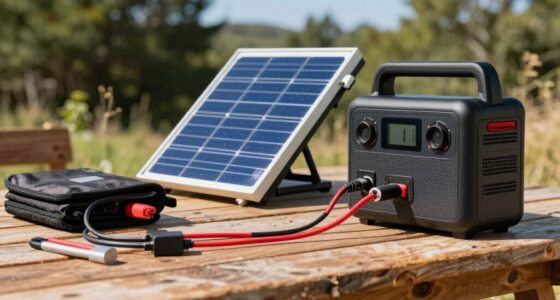
To test your solar generator, fully charge it first, then run a device with known power use until the battery nears depletion, checking if the runtime matches the specs. Move it around to see if it’s portable, and test all ports by plugging in various devices for stable output. Inspect the build quality and weather resistance for outdoor readiness, and verify the solar panels and charging options work properly. Keep testing these areas regularly to guarantee you’re prepared when needed—more tips await if you keep exploring.

Get backup power and energy gear delivered free with Prime
- Fast, free delivery on millions of items
- Prime Video, Amazon Music and more included
- Member-only deals all year
Key Takeaways
- Fully charge the solar generator and run a known load to verify runtime against specifications.
- Test all output ports with different devices to ensure stable and compatible power delivery.
- Examine build quality and weather resistance to confirm durability for outdoor use.
- Verify charging methods (solar and AC) and check indicator lights for proper functioning.
- Evaluate portability by moving the generator across terrains and assessing handle and wheel performance.

Testing your solar generator guarantees it’s ready to power your devices when needed. The first step is to evaluate the battery capacity, which tells you how much energy your unit can store and deliver. You want to make sure the battery can hold a sufficient charge for your typical needs. To test this, fully charge the generator and then run a device that consumes a known amount of power. Keep track of how long the generator supplies power before the battery drops to a critical level. This will give you a practical sense of its true capacity, rather than just relying on the manufacturer’s specifications. If your generator consistently delivers less than expected, it might indicate aging or a faulty battery that needs attention.
Test your solar generator by fully charging and running a device to assess real battery capacity.
Next, consider the portability testing of your solar generator. Portability matters because it determines how easily you can carry and set up your unit in different locations. To test this, lift and move the generator across various terrains or distances to see if it feels manageable. Pay attention to its weight and how comfortable it is to transport. If it’s too heavy or bulky, you might struggle during emergencies or outdoor adventures. Also, check the handle design and wheel functionality (if available) to ensure smooth movement. This step helps you verify that your solar generator aligns with your mobility needs and won’t become a burden when you’re away from power sources. Additionally, understanding projector technology can help you better evaluate the durability and build quality of your device, ensuring it withstands outdoor conditions. Including a visual inspection for weather resistance can further confirm the device’s suitability for outdoor use. Incorporating outdoor durability into your assessment can provide a clearer picture of how well the device will perform in real-world conditions.
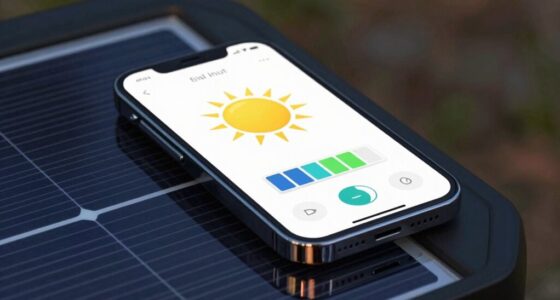
Beyond capacity and portability, it’s essential to assess the charging process itself. Fully expose the unit to sunlight or connect it to a power source to confirm it charges efficiently. Make sure the solar panels or AC charging options work as intended and that the indicator lights accurately reflect the charging status. This ensures that when you actually need backup power, your generator will replenish itself properly, saving you from surprises in critical moments. Conducting a comprehensive test can also reveal hidden issues that might not be obvious during initial use. It’s also a good idea to verify that the battery management system is functioning correctly, as this protects the device from overcharging or overheating. Proper functioning of these systems is crucial for maintaining the longevity and safety of your generator.
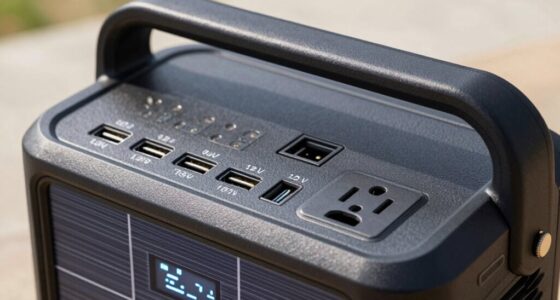
Finally, don’t forget to test the output ports. Plug in different devices to see if they operate correctly and if the power output remains stable during use. This step confirms your generator can reliably power your essential gadgets without interruptions or voltage fluctuations. Performing these tests periodically helps identify potential issues early, so when an emergency strikes, you’re confident your solar generator is fully prepared to support you. Proper testing not only extends the life of your device but also provides peace of mind, knowing that you can depend on it when it truly matters.
Products Worth Considering

Ring Alarm 14-Piece Security Kit

Samsung 48-Inch S90F OLED 4K Smart TV (2025)

Levoit Vital 100S-P Air Purifier with Washable Pre-Filter
As an affiliate, we earn on qualifying purchases.
Frequently Asked Questions
How Often Should I Test My Solar Generator?
You should test your solar generator at least once every three to six months to guarantee peak performance. During testing, focus on battery calibration and power output accuracy, verifying the system delivers the expected energy. Regular checks help identify issues early, maintaining efficiency. Keep an eye on battery health, and if you notice discrepancies in power output or calibration, perform a more detailed inspection or recalibration to keep your generator ready for use.
Can I Test a Solar Generator Indoors Safely?
Yes, you can test a solar generator indoors safely if you follow proper indoor safety precautions. Make certain the area is well-ventilated and free from flammable materials. During the test, focus on power calibration to verify your generator’s efficiency and output. Avoid overloading the system, and keep an eye on temperature and noise levels. This way, you can safely check your solar generator’s performance without risking damage or safety hazards indoors.
What Tools Do I Need for Testing?
You need a multimeter to test your solar generator’s battery calibration and power output. First, set the multimeter to measure voltage and current. Carefully connect it to the generator’s output ports. As you monitor the readings, you’ll see if the battery’s performing correctly and if the power output matches specifications. Don’t rush—this quick yet essential test guarantees your generator’s ready for real use.
How Long Does a Typical Test Take?
A typical test takes about 30 minutes to an hour, depending on your solar generator’s complexity. During this time, you’ll perform battery calibration to guarantee accurate readings and conduct power output analysis to verify it delivers the expected power levels. You’ll connect your tools, run the tests, and monitor the results. This process helps confirm your solar generator’s readiness, so you’re prepared when you need it most.
Is It Necessary to Test Under Various Weather Conditions?
Yes, it’s necessary to test your solar generator under various weather conditions to guarantee reliable performance. By doing weather simulation, you can observe how your generator handles different sunlight levels and temperatures. This helps you assess battery performance and identify potential issues. Testing in diverse conditions gives you confidence that your solar generator will work efficiently when you actually need it, regardless of the weather.
Conclusion
By testing your solar generator regularly, you guarantee it’s ready to power your life, your devices, your peace of mind. You verify its performance, confirm its reliability, and build your confidence. You prevent surprises, eliminate doubts, and embrace preparedness. In doing so, you create a dependable source of energy, a trusted backup in storms and outages, a constant companion in your quest for sustainable living. Stay vigilant, stay prepared, and keep your solar generator ready for whatever comes next.