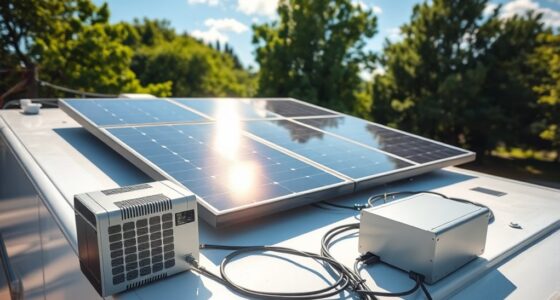
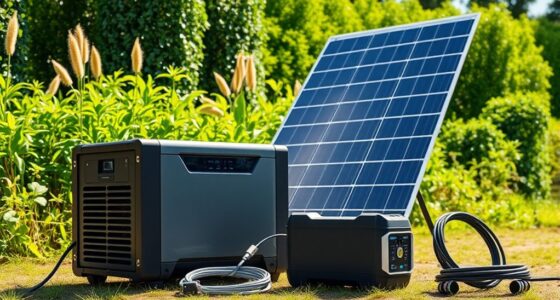
Solar generators have larger batteries and rely mainly on solar panels, making them ideal for long-term, off-grid power solutions that can run multiple appliances for extended periods. Portable power stations are lightweight and versatile, perfect for quick recharges and short-term emergencies. If you want sustainable energy along with better mobility, a solar generator is your best choice; for convenience and portability, a portable power station fits better. You’ll discover additional details if you keep exploring further.
Key Takeaways
- Solar generators have larger batteries and rely mainly on solar energy, suitable for long-term, off-grid power needs.
- Portable power stations are lighter, with smaller batteries, ideal for quick, short-term, or emergency power.
- Solar generators require solar panels for recharging, offering eco-friendly, sustainable energy; portable stations can also use AC or car chargers.
- Solar generators are better for extended outdoor activities and powering appliances like refrigerators; portable stations excel in portability and convenience.
- The choice depends on power duration, recharging methods, and mobility needs, with solar generators prioritizing sustainability and portable stations prioritizing ease of use.

When choosing a backup power solution, it’s important to understand the differences between solar generators and portable power stations. Both provide portable energy, but they serve different needs based on their design, capabilities, and how they operate. One of the key factors to consider is battery capacity. Solar generators typically have larger batteries because they’re designed to store energy collected from sunlight over time. This allows them to deliver power for longer periods during outages or outdoor activities. Portable power stations, on the other hand, often have smaller batteries optimized for quick, on-the-go use, making them lighter and more convenient for short-term or emergency needs. If you need a device that can power a refrigerator for several hours or run multiple devices simultaneously, you’ll want something with a higher battery capacity, like a solar generator.
Charging methods are another critical aspect that differentiates these options. Solar generators primarily rely on solar panels to recharge, which makes them eco-friendly and ideal for off-grid situations. They can also be charged through AC outlets or even car chargers, providing flexibility depending on circumstances. Portable power stations, however, usually come with multiple charging options, including AC power, car adapters, and sometimes portable solar panels. This versatility means you can quickly recharge them at home or in your vehicle, but they often don’t have the same capacity for solar charging as dedicated solar generators. If you’re planning to use your backup power source in remote areas with ample sunlight, a solar generator’s ability to harness solar energy efficiently becomes a significant advantage. Conversely, if you need a quick recharge during a power outage, a portable power station with multiple charging methods might be more practical.
Understanding these differences helps you determine which type fits your needs best. A solar generator’s larger battery capacity and solar-centric charging make it suitable for longer-term use and sustainable energy collection. Additionally, many regions have specific zoning laws that can influence the placement and legality of installing these systems, so researching local regulations is advisable. Portable power stations excel in convenience and quick recharging for short-term or emergency applications. Consider how much power you’ll need, how you plan to recharge the device, and whether eco-friendliness or portability is your priority. Both options can be valuable, but knowing their core distinctions ensures you make the right choice for your specific situation. Ultimately, weighing battery capacity and charging methods will guide you toward the backup power solution that offers the best balance of reliability, efficiency, and convenience for your needs.
Frequently Asked Questions
Can Solar Generators Be Used Indoors Safely?
Yes, you can use solar generators indoors safely if you prioritize indoor safety and choose a device compatible with indoor use. Look for models with proper ventilation and built-in safety features like surge protection. Always read the manufacturer’s guidelines to make certain of safe operation indoors. Proper placement and regular maintenance help prevent hazards, so you can enjoy clean, silent power in your home without risking safety.
How Long Do Portable Power Stations Typically Last?
You can typically expect a portable power station to last between 500 to 1,500 charge cycles, depending on the battery lifespan and capacity longevity. This usually translates to about 2 to 5 years of regular use. To extend its lifespan, avoid overcharging or fully discharging the unit frequently. Proper maintenance and choosing a model with high-quality batteries help make certain your portable power station remains reliable over time.
Are Solar Generators More Eco-Friendly Than Portable Power Stations?
Sure, solar generators are more eco-friendly because they harness renewable energy directly from the sun, reducing your carbon footprint. Unlike portable power stations that rely on fossil fuels or grid power, solar generators produce clean energy without emissions. So, if you’re serious about saving the planet, solar generators are the greener choice—because who needs dirty power when you’ve got sunshine? Embrace renewable energy and make a real difference.
What Maintenance Is Required for Each Device Type?
You’ll find that solar generators generally require less maintenance, mainly keeping the solar panels clean to guarantee optimal battery life and efficiency. Portable power stations often need periodic battery checks, firmware updates, and occasional cleaning of vents. Both devices benefit from avoiding extreme temperatures, but overall, solar generators tend to have lower maintenance requirements, helping you keep them in good shape with minimal effort.
Can They Both Power the Same Appliances?
While both can power many appliances, their capabilities differ based on battery capacity and charging methods. You’ll find that portable power stations often handle larger devices thanks to higher capacities and multiple charging options like AC outlets and USB ports. Solar generators rely primarily on solar input, making them eco-friendly but sometimes limited in power output. So, you might need a specific device depending on your appliance needs and available charging sources.
Conclusion
In choosing between solar generators and portable power stations, you get a glimpse of nature’s renewable energy versus modern technology. Solar generators harness sunlight, offering eco-friendly power, but depend on weather conditions. Portable power stations provide instant, reliable energy, yet rely on fuel or grid connections. Both have their strengths; it’s about balancing sustainability with convenience. Ultimately, your choice reflects whether you prioritize going green or seeking immediate, dependable power wherever you go.