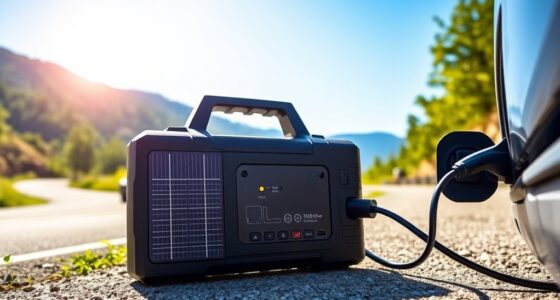
To keep your CPAP and medical devices powered during outages or when off-grid, choose a reliable solar generator with enough capacity to match your devices’ wattage and runtime needs. Look for lightweight, portable models with built-in handles, durable casings, and multiple charging options. Ensuring safety features and ease of maintenance is also key. Want to learn how to select the best solar generator for your medical needs? Keep going to find out more.
Key Takeaways
- Choose solar generators with sufficient capacity to power CPAP and medical devices overnight without depleting early.
- Ensure the generator’s wattage and runtime match the power requirements of your medical equipment.
- Opt for lightweight, portable models with handles or wheels for easy transport during emergencies or outdoor use.
- Check for multiple charging options like USB, AC, and DC to support various device connections simultaneously.
- Prioritize reliable, safety-certified solar generators designed for medical use to ensure consistent, safe backup power.

Are you worried about power outages disrupting your CPAP machine or essential medical devices? It’s understandable, especially if you rely on these devices daily. Luckily, solar generators offer a reliable solution, giving you peace of mind when the power’s out. One of the most vital factors to consider is battery capacity. You want a generator that can hold enough charge to power your CPAP overnight or run other critical devices for an extended period. High-capacity batteries ensure you won’t be left in the dark or without necessary support. It’s wise to choose a solar generator with a battery that matches your device’s power requirements, considering both the wattage and runtime. This way, you can avoid the frustration of a depleted battery before you’re done using your devices.
Portability features also play a significant role in choosing the right solar generator for medical needs. Since power outages can happen anywhere—from your home to the outdoors—you’ll want a unit that’s easy to carry and move around. Look for models that are lightweight and have ergonomic handles or wheels, making it simple to transport during emergencies or outdoor activities. Compact designs don’t just improve portability—they often come with smarter storage options, allowing you to pack cables and accessories conveniently. When you’re dealing with medical devices, especially those that require frequent charging, a portable solar generator can be a game-changer. It provides flexibility, so you’re not tied to a fixed location or an inconvenient power outlet.
Additionally, portability features include built-in carrying handles, rugged casings, and lightweight materials, which help reduce fatigue when you need to move the generator. Some models also incorporate multiple charging options, including USB ports, AC outlets, and DC connections, so you can power different devices simultaneously. This versatility is vital if you’re managing multiple medical devices or appliances. When selecting a solar generator, evaluate its size, weight, and ease of setup to ensure it fits your lifestyle and medical needs. The right balance between battery capacity and portability features means you’ll have a dependable power source that’s both robust and easy to handle. With such a generator, you won’t have to worry about interruptions, knowing you have a portable, reliable backup ready to support your health and safety whenever you need it.
Ensuring the generator is reliable and safe is essential for peace of mind during medical emergencies.
Frequently Asked Questions
Can Solar Generators Power Multiple Medical Devices Simultaneously?
Yes, solar generators can power multiple medical devices simultaneously if they have enough power capacity and device compatibility. You need to verify the generator’s wattage output and ensure it matches the combined power needs of your devices. By selecting a solar generator with a high enough capacity, you can run several medical devices at once, providing reliable, eco-friendly power during emergencies or outdoor activities.
How Long Do Solar Generators Typically Last During Extended Outages?
A solar generator’s lifespan during extended outages is like a marathon runner, steady and enduring. Typically, it lasts for several days to weeks, depending on battery lifespan and recharge cycles. If you use it efficiently, minimizing power drain, it can keep your devices running longer. Remember, the more recharge cycles the battery endures, the closer it gets to losing capacity, so proper maintenance extends its usefulness during emergencies.
Are Solar Generators Safe for Sensitive Medical Equipment?
Yes, solar generators are generally safe for sensitive medical equipment if you check battery safety and device compatibility first. Make sure the generator provides clean, stable power, usually via pure sine wave inverters, to protect your devices from surges or fluctuations. Always verify that your medical devices, like CPAP machines, are compatible with the generator’s output, and follow manufacturer guidelines for safe operation.
What Maintenance Is Required for Solar Generators Used With Medical Devices?
Maintaining your solar generator means monitoring inverter efficiency and managing battery recycling. You should regularly check connections, keep vents clear, and guarantee the inverter operates smoothly. Recycling batteries properly prolongs device life and preserves performance. Keep the system clean, charge it as needed, and follow manufacturer instructions. These simple steps safeguard your sensitive medical devices, ensuring reliable, safe power while maximizing efficiency and longevity of your solar generator system.
Can Solar Generators Be Used Indoors Safely for Medical Needs?
Yes, you can use solar generators indoors safely for medical needs if they meet indoor safety standards and are compatible with your medical devices. Make certain the generator has proper ventilation, is placed in a dry, stable area, and is compatible with your medical equipment’s power requirements. Always follow manufacturer guidelines for indoor use, and consider consulting a professional for medical compatibility to guarantee safe and reliable operation.
Conclusion
Having a solar generator guarantees your CPAP and medical devices stay powered, even during outages or outdoor adventures. Imagine a single solar panel providing enough energy to run your essential equipment for over 8 hours a day—that’s a reliable source of peace of mind. With solar generators, you can confidently face power interruptions, knowing you’ve got a clean, quiet, and sustainable backup. Keep your health and comfort protected no matter where life takes you.