Integrating solar generators with smart home technology helps you maximize energy efficiency, boost power independence, and create a seamless, eco-friendly household. With advanced batteries and real-time monitoring, you can optimize energy storage, control usage remotely, and reduce reliance on grid power. This setup ensures resilient, cost-effective living while promoting sustainability. Keep exploring to discover how smart integration can transform your home’s energy management and enhance your independence.
Key Takeaways
- Integrate solar generators with smart home systems for automated energy management and optimized power usage.
- Use real-time monitoring to track battery status, energy production, and consumption for better decision-making.
- Enable remote control of solar generator settings to adjust energy flow and maximize efficiency remotely.
- Leverage smart technology to coordinate solar energy storage and household appliance operation during peak times.
- Enhance home resilience and reduce reliance on the grid through seamless integration of solar generators with smart home platforms.
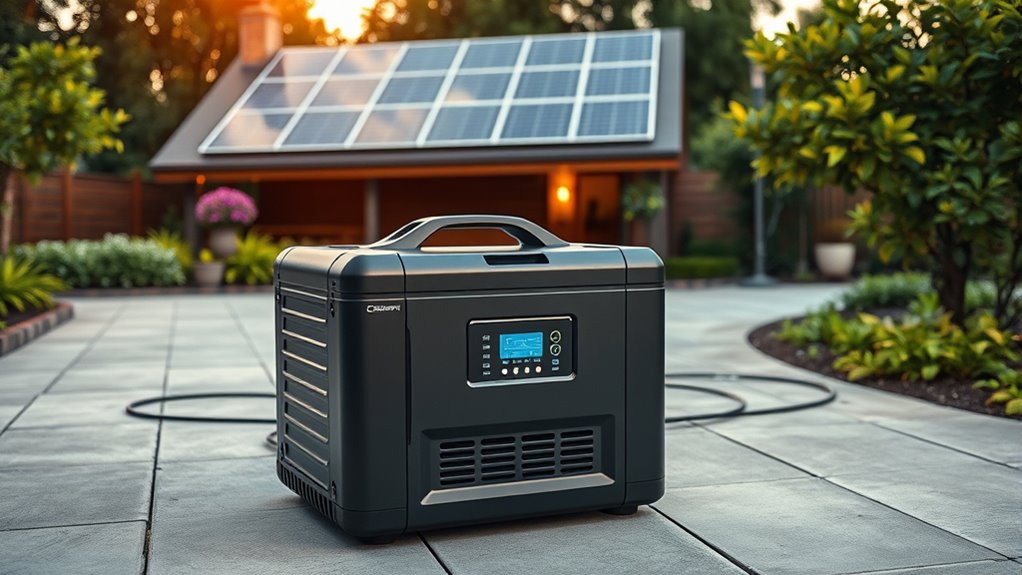
As more homeowners seek sustainable energy solutions, solar generators are becoming an essential component of smart home systems. These devices offer a reliable way to harness sunlight, reduce reliance on traditional power sources, and support your efforts to create an eco-friendly household. One key factor to consider is battery efficiency, which determines how effectively the solar generator stores excess energy generated during sunny periods. A more efficient battery means you can maximize the use of solar power, store energy for nighttime or cloudy days, and reduce the need to draw power from the grid. When you invest in a solar generator with high battery efficiency, you’re guaranteeing your home becomes more self-sufficient, giving you greater control over your energy consumption.
Solar generators with high battery efficiency maximize solar power use and boost your home’s energy independence.
Grid independence is another significant benefit of integrating solar generators into your smart home. By generating and storing your own power, you lessen your dependence on the local utility grid. This independence not only provides peace of mind during outages but also helps you avoid fluctuating energy prices. With a well-designed solar generator system, you can power essential appliances and devices even when the grid fails, making your home more resilient. Additionally, grid independence encourages you to adopt more sustainable habits, as you’re actively reducing your carbon footprint and contributing to a greener environment.
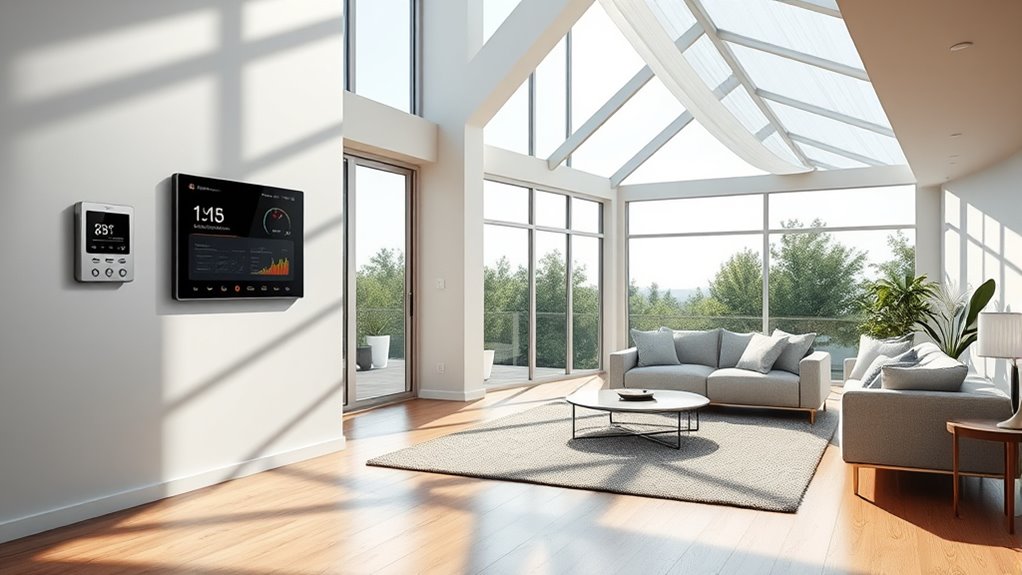
When you set up your solar generator system, it’s essential to choose models that optimize both battery efficiency and grid independence. Look for systems equipped with advanced battery technology, such as lithium-ion or solid-state batteries, which typically offer better longevity and faster charging capabilities. These features guarantee your system can store ample energy and deliver it efficiently when needed. Furthermore, smart home integration allows you to monitor and control your solar generator remotely, giving you real-time data on battery status, energy production, and consumption patterns. This transparency helps you make informed decisions about usage, further enhancing your home’s energy efficiency. Moreover, understanding content discoverability can help you select the most suitable system based on current trends and available features.
Incorporating solar generators into your smart home isn’t just about sustainability; it’s about gaining energy autonomy. As you enhance your system’s battery efficiency and leverage grid independence, you create a more resilient, cost-effective, and eco-friendly household. Over time, these investments pay off by lowering your energy bills, reducing your environmental impact, and providing peace of mind during power disruptions. With thoughtful planning and the right technology, your home can seamlessly integrate solar power, making you less reliant on external energy sources and more empowered to manage your household’s energy needs efficiently.
Frequently Asked Questions
Can Solar Generators Power Large Household Appliances?
Yes, solar generators can power large household appliances if they have sufficient portable energy and battery capacity. You need a model with a high wattage output and ample battery storage to handle devices like refrigerators or washers. Check the generator’s rated power and capacity to make certain it matches your appliance’s energy requirements. With the right size, you can keep essential appliances running smoothly during outages or off-grid situations.
How Secure Is Smart Home Integration With Solar Generators?
Smart home integration with solar generators is generally secure, but you should be aware of cybersecurity risks and data privacy concerns. Hackers could exploit vulnerabilities in your Wi-Fi or smart devices, putting your data and system control at risk. To stay safe, use strong passwords, keep software updated, and enable security features. Regularly monitoring your system helps identify potential threats early, ensuring your solar-powered smart home remains both efficient and secure.
Are Solar Generators Compatible With Existing Smart Home Systems?
Yes, solar generators are compatible with existing smart home systems, especially if they support standard protocols like Wi-Fi or Zigbee. You can easily integrate them for seamless remote monitoring and control. Just guarantee your solar generator’s battery compatibility with your smart home hub. This way, you can monitor energy production, usage, and manage your system remotely, making your home more efficient and connected.
What Is the Cost Comparison Between Traditional and Solar-Powered Systems?
You might think traditional systems are cheaper, but a thorough cost analysis shows solar-powered setups often have higher upfront costs. However, they offer significant investment benefits over time, including lower energy bills and tax incentives. While initial expenses are higher, the long-term savings and environmental advantages make solar systems a smart choice for cost-effective, sustainable energy solutions. So, weigh the upfront costs against ongoing savings to make the best decision.
How Does Weather Affect Solar Generator Performance?
Weather variability and seasonal changes markedly impact your solar generator’s performance. Cloudy days, rain, or snow reduce sunlight, lowering energy production. Longer winter nights mean less daily sunlight, while summer’s extended daylight boosts output. You’ll notice decreased efficiency during overcast weather, but your system still works. To maximize performance, consider location, shading, and seasonal adjustments, ensuring your solar generator adapts well to changing weather conditions.
Conclusion
Think of your solar generator and smart home system as a symphony conductor, effortlessly guiding energy flow to create harmony in your home. With each solar beam and smart device working together, you become the maestro of a sustainable masterpiece. As the sun rises and sets, your energy orchestra plays on seamlessly, empowering you to live smarter, greener, and more in tune with the world around you. Embrace this harmony and let your home shine with brilliance.