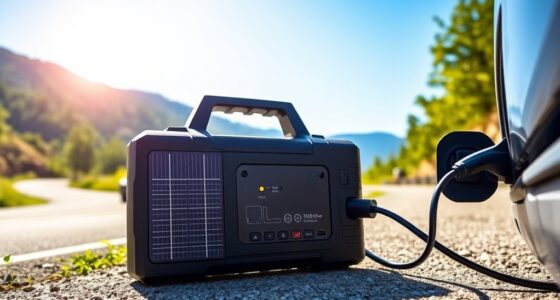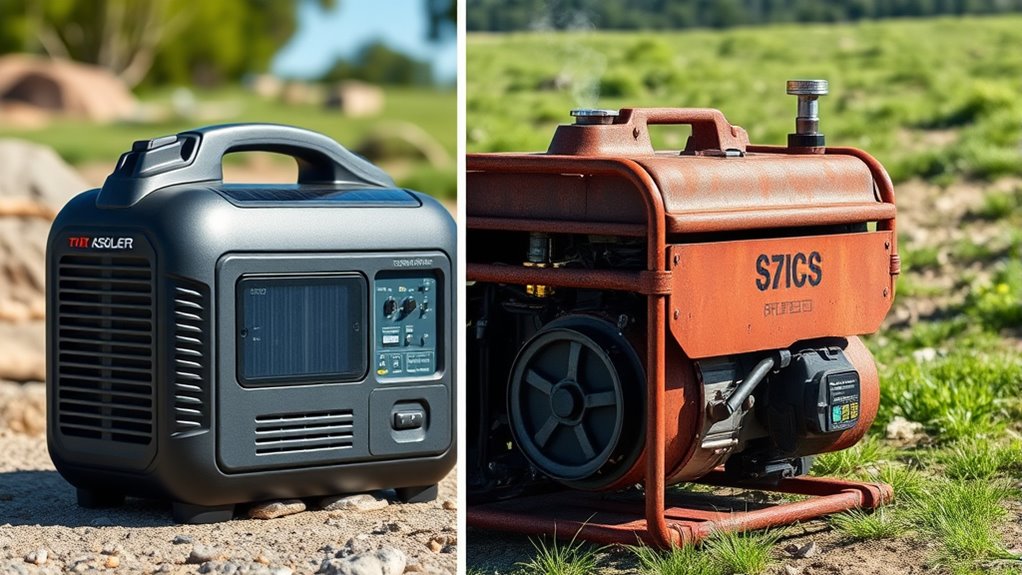

If you prioritize renewable energy and lower ongoing costs, a solar generator is a great choice since it produces clean, emission-free power from sunlight, though its output can be limited by weather and sunlight availability. On the other hand, a gas generator offers higher, more reliable power for heavy-duty tasks and emergencies but relies on fossil fuels, which are less eco-friendly and costlier over time. Understanding these pros and cons can help you make the best decision for your needs as you explore further.
Key Takeaways
- Solar generators are eco-friendly and produce no emissions, while gas generators emit greenhouse gases and pollutants.
- Gas generators deliver higher, more reliable power regardless of weather, unlike solar generators which depend on sunlight.
- Solar generators have lower operational costs due to no fuel needs but are weather-dependent and less suitable for heavy-duty use.
- Gas generators offer quick startup and consistent power, ideal for continuous, high-wattage needs, whereas solar may require backup options.
- Solar energy is sustainable and reduces long-term environmental impact, making it preferable for eco-conscious users.

When choosing a power source, understanding the differences between solar generators and gas generators is essential. Each option has its unique advantages and drawbacks, especially when it comes to renewable energy and fuel efficiency. Solar generators harness the power of the sun, making them a sustainable choice that produces clean energy without emissions. They rely on solar panels to convert sunlight into electricity, and their main benefit is that they generate power from a renewable resource. This means you won’t have to worry about running out of fuel or contributing to pollution. Solar generators are ideal for outdoor activities, emergencies, or situations where environmental impact matters most. However, their fuel efficiency depends heavily on sunlight conditions. Cloudy days, shade, or nighttime can substantially reduce their output, limiting their reliability in some scenarios. You’ll need to plan around these limitations or have backup options if consistent power is critical.
On the other hand, gas generators operate by burning fuel, usually gasoline or diesel, to produce electricity. They’re known for their high power output and quick startup times, making them suitable for heavy-duty tasks and continuous use. Gas generators tend to be more fuel-efficient in terms of immediate energy output, especially when you need a reliable power source regardless of weather or time of day. But their reliance on fossil fuels means they aren’t renewable energy sources, and they emit greenhouse gases and other pollutants during operation. This environmental impact is a considerable consideration if you’re committed to sustainability. Additionally, fuel costs can add up over time, and storing fuel safely becomes an important aspect of ownership. Gas generators are often more practical for backup power at home or construction sites, where consistent, high wattage is necessary.
Ultimately, your choice depends on your priorities. If renewable energy and minimal environmental impact are top concerns, solar generators offer a clean, sustainable solution, though they come with limitations in power and weather dependence. If you need a powerful, reliable source that can operate independently of weather conditions and deliver high fuel efficiency in terms of immediate output, a gas generator might be the better fit. Think about your typical usage, location, and long-term plans before making a decision. Both options have their place, but understanding the key differences helps you select the right power source for your needs.
Frequently Asked Questions
How Long Do Solar Generators Typically Last Before Replacement?
Solar generators typically last between 8 to 15 years before needing replacement, depending on battery lifespan and usage. You should perform regular maintenance, such as keeping the unit clean and avoiding overcharging, to extend its life. Proper care guarantees the battery stays efficient longer, reducing the need for early replacement. Ultimately, investing in quality components and following maintenance requirements helps maximize your solar generator’s longevity.
Are Solar Generators Effective During Prolonged Power Outages?
Yes, solar generators are effective during prolonged power outages because they harness solar power and store energy efficiently. With adequate energy storage capacity, they can provide reliable power for essential devices over extended periods. Just guarantee your solar generator has sufficient batteries and panels to capture enough sunlight, especially during cloudy days, so you can maintain a steady power supply when traditional sources fail.
Can Solar Generators Power High-Wattage Appliances Reliably?
Ever wondered if solar generators can handle your high-wattage appliances? They can, but it depends on their solar capacity and appliance compatibility. Smaller units might struggle with heavy-duty devices, while larger, high-capacity models can power essentials reliably. To guarantee smooth operation, check the solar generator’s wattage limits and match them with your appliance’s power needs. This way, you’ll know if your setup can handle the load without issues.
What Are the Environmental Impacts of Manufacturing Gas Generators?
Manufacturing gas generators causes significant environmental impacts. You should know that manufacturing emissions release greenhouse gases, contributing to climate change. Additionally, resource depletion occurs because extracting materials like metal and fossil fuels depletes natural reserves. These processes can harm ecosystems and increase pollution. When considering a gas generator, it’s important to be aware of these environmental costs, as they add up over time and impact the planet’s health.
How Easy Is It to Upgrade or Expand a Solar Generator System?
You’ll find that upgrading or expanding your solar generator system is quite straightforward, thanks to its modular design. About 75% of solar systems are scalable, allowing you to add more panels or batteries as your energy needs grow. With scalability options, you can easily enhance capacity without replacing the entire system. This flexibility makes solar generators a smart choice for adapting to future power demands effortlessly.
Conclusion
Ultimately, choosing between a solar and gas generator is like selecting between a gentle sunrise and a steady breeze. The solar option offers quiet serenity and a touch of sunlight’s warmth, while the gas generator provides reliable energy through stormy clouds. Think of your choice as a dance with nature—embracing the calm of sustainable power or trusting the familiar hum that keeps your world turning. Whichever path you take, it’s about finding harmony with your energy needs.