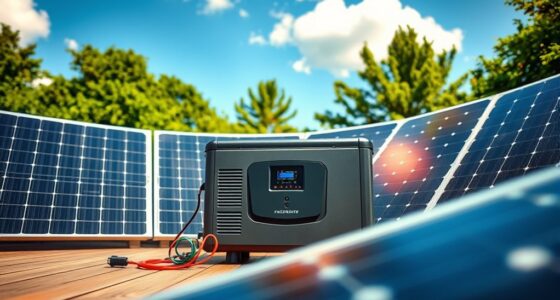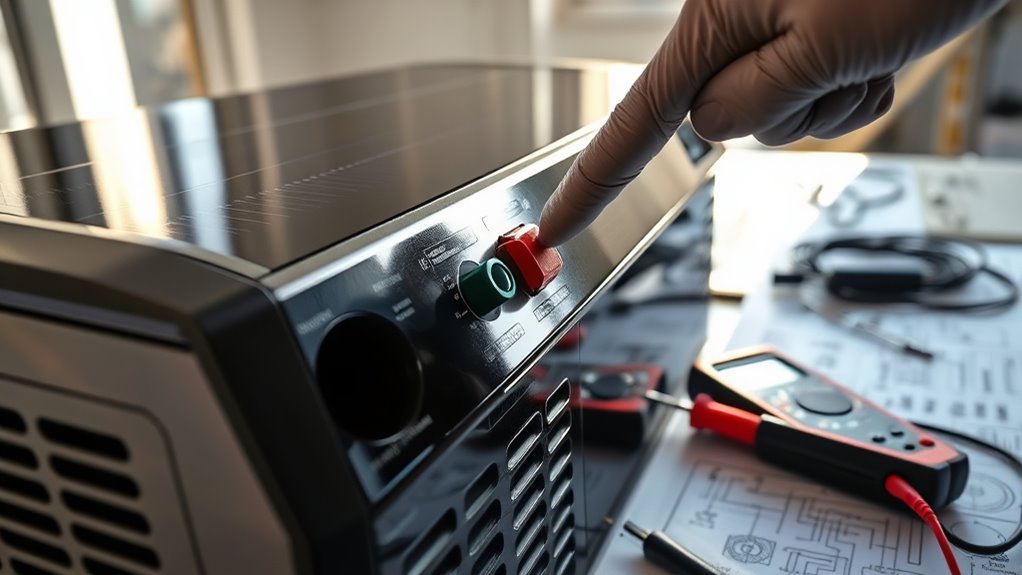

When your solar generator isn’t working properly, start by inspecting the battery for corrosion, loose connections, and ensuring it holds a charge. Check the inverter for error messages, overheating, or loose wires, and reboot if needed. Clean solar panels and verify connections for damage or shading. Address system errors by resetting or updating firmware. Regular maintenance prevents many issues, but if problems persist, further steps can help you troubleshoot more effectively. Keep going to learn more solutions.
Key Takeaways
- Check for system error messages and perform a reset by turning the generator off and on.
- Inspect battery terminals for corrosion and ensure secure connections to maintain proper power flow.
- Clean solar panels regularly and verify they are free from shading or dirt to optimize charging.
- Examine inverter display for warning lights or errors, reboot, or consult manufacturer guidelines if needed.
- Monitor overall system performance and promptly address loose or damaged cables, batteries, or components.
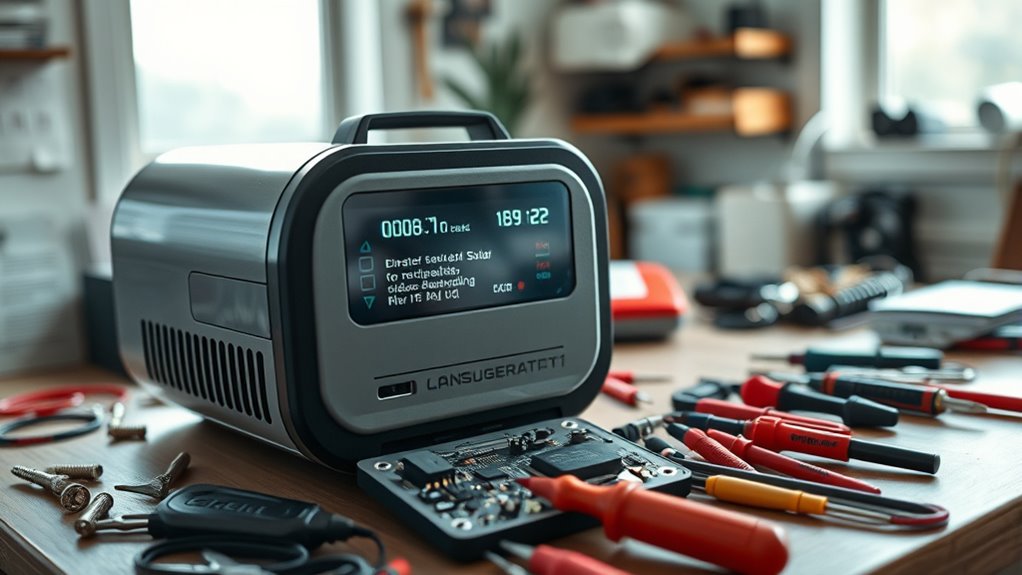
Solar Generator Troubleshooting
If your solar generator isn’t working as expected, troubleshooting can help identify and fix common issues quickly. One of the first things to check is the battery maintenance, as batteries are often the source of many problems. Start by inspecting the battery terminals for corrosion or loose connections. Corrosion appears as a white or bluish buildup, which you can clean with a mixture of baking soda and water. Tighten any loose terminal connections to guarantee proper contact. Additionally, verify that the battery isn’t overly discharged or swollen, as this can indicate damage or aging that requires replacement. If your generator’s battery isn’t holding a charge, consider testing it with a multimeter or seeking professional assistance to determine if it needs replacing. Proper battery maintenance prolongs your generator’s lifespan and guarantees reliable power. Regularly checking the battery health can help prevent unexpected failures and ensure consistent performance.
Inverter repair is another common issue that can cause your solar generator to malfunction. The inverter converts the DC power stored in the batteries into AC power usable by your devices. If your generator isn’t providing power or if the output is inconsistent, the inverter might be faulty. Check the inverter’s display panel for error messages or warning lights. Sometimes, rebooting the system helps; turn off the generator, wait a few minutes, then turn it back on. If the problem persists, inspect the inverter’s connections for loose wires or damaged components. Over time, inverters can overheat or suffer from internal component failure, so if you notice persistent issues, replacing or repairing the inverter might be necessary. Keep in mind that inverter repair can be complex, so consulting the manufacturer’s guidelines or a professional technician is often the safest approach.
Beyond these specific issues, guarantee that your solar panels are clean and properly positioned to maximize sunlight absorption. Dirty or shaded panels can considerably reduce charging efficiency, leading to power shortages. Also, verify that all cables and connections are secure and undamaged; loose or frayed wires can disrupt power flow and cause system errors. If your generator still isn’t functioning properly after these checks, it might be an internal fault or software glitch, in which case resetting the system or updating firmware could help. Remember, regular maintenance routines like cleaning, inspecting connections, and monitoring battery health are vital for preventing many common problems. Troubleshooting requires patience and a methodical approach, but addressing these issues promptly will guarantee your solar generator remains a dependable source of power when you need it most.
Frequently Asked Questions
How Long Do Solar Generator Batteries Typically Last?
Your solar generator batteries typically last between 5 to 15 years, depending on usage and maintenance. To extend their battery lifespan, follow regular maintenance tips like keeping them charged, avoiding deep discharges, and storing them properly. Proper care guarantees you get the most out of your investment and prevents early replacements. Keep an eye on performance and follow manufacturer guidelines to maximize the lifespan of your solar generator batteries.
Can I Use a Solar Generator While It’s Charging?
Using a solar generator while charging isn’t a problem; in fact, it’s as simple as pie! Just guarantee your solar panel compatibility and avoid overloading the system. Keep up with generator maintenance to prevent any hiccups. As long as your setup supports simultaneous use, you can power devices while it charges, giving you maximum efficiency and convenience. Just be mindful of your generator’s capacity to avoid any issues.
What’s the Best Way to Store a Solar Generator Long-Term?
To store your solar generator long-term, you should keep it in a cool, dry place and avoid extreme temperatures. Perform regular battery maintenance by charging it periodically, especially if not used for months. Store the ports securely to prevent dust and moisture from entering. Fully charge the generator before storage, and check on it every few months to make sure the battery remains healthy, extending its lifespan and readiness for future use.
Are Solar Generators Safe for Indoor Use?
Yes, solar generators are generally safe for indoor use when you follow proper indoor safety guidelines. Make sure you use them in well-ventilated areas to avoid fire hazards caused by overheating or electrical issues. Keep them away from water and flammable materials, and never overload the unit. Regularly inspect your solar generator for damage, and follow the manufacturer’s instructions to guarantee safe operation indoors.
How Do I Upgrade My Solar Generator’s Capacity?
To upgrade your solar generator’s capacity, start by evaluating your current battery capacity and identifying compatible upgrade options. You can often add extra batteries or replace the existing one with a higher-capacity model. Make sure to check your generator’s specifications and consult the manufacturer for recommended upgrade options. Properly installing these upgrades ensures you extend your power supply without risking safety or damaging your system.
Conclusion
Remember, a problem shared is a problem halved. By understanding common solar generator issues and their fixes, you can keep your device running smoothly and avoid unnecessary downtime. Regular maintenance and troubleshooting will save you time and money in the long run. Stay proactive, follow the tips outlined, and you’ll ensure your solar generator stays powered when you need it most. After all, a little effort today prevents bigger problems tomorrow.