Many blackout buyers pick the wrong solar generator size because they overlook your actual power needs. Choosing a unit that’s too small won’t last through outages, while oversizing leads to unnecessary weight and expense. To avoid this, you should carefully assess how much power your devices need daily and balance capacity with portability. If you keep these factors in mind, you’ll be better prepared. Stick around to discover how to make smarter choices for your backup power.

Get backup power and energy gear delivered free with Prime
- Fast, free delivery on millions of items
- Prime Video, Amazon Music and more included
- Member-only deals all year
Key Takeaways
- Buyers often overestimate capacity, leading to unnecessary costs and weight, or underestimate, risking insufficient power during outages.
- Accurate assessment of essential devices and their watt-hour requirements helps determine appropriate generator size.
- Balancing capacity with portability ensures the generator is practical for backup needs without becoming burdensome.
- Understanding energy efficiency and power management extends runtime, preventing overspending on oversized units.
- Properly matching generator size to specific blackout needs ensures reliable backup power without excess bulk.

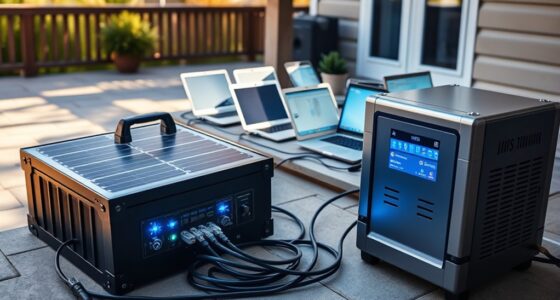
Are you unsure how to choose the right solar generator size for your needs? Many people make the mistake of selecting a unit based solely on the power output or initial cost, but there’s more to contemplate. One of the most important factors is battery capacity, which determines how long your generator can supply power during an outage or outdoor activity. If you underestimate this, you risk running out of juice when you need it most. Conversely, overestimating can lead to unnecessary expense and added weight, making the generator less portable. To find balance, think about what devices you’ll be powering and how long you need them to run. For example, if you’re mainly charging smartphones and small appliances for a few hours, a smaller battery capacity will suffice. But if you’re planning to power a refrigerator or multiple devices throughout the day, you’ll want a larger capacity.
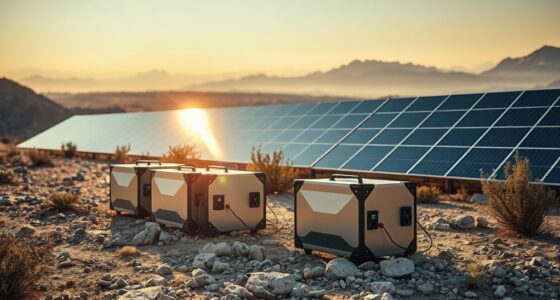
Portability considerations also play a significant role in choosing the right size. Many blackout buyers overlook how battery capacity impacts the overall weight and size of the solar generator. Larger batteries mean more stored energy but also increased bulk and weight, which can limit your ability to move the generator easily. If portability is a priority, you’ll need to find a sweet spot that offers enough power for your needs without turning into a bulky, cumbersome device. Think about how you’ll transport it—will it be carried by hand, stored in a vehicle, or moved around a campsite? This will influence your choice. Lightweight models with smaller batteries are ideal for quick, short-term use, while heavier, higher-capacity units suit those who need extended power and can handle the extra weight.
It’s tempting to go for the biggest battery capacity you see, but that often isn’t necessary and can be counterproductive. Instead, assess your essential power requirements carefully. Calculate the watt-hours needed based on your devices’ power consumption and expected usage time. Understanding battery capacity helps you make smarter choices and avoid overspending. Additionally, considering energy efficiency of your devices can help optimize your power needs and prevent unnecessary battery size. Recognizing the importance of power management can further extend your generator’s runtime and efficiency. Furthermore, evaluating your power consumption habits can help you select a size that balances capacity with practical use. Remember, a higher capacity isn’t always better if portability is a concern or if you don’t need that much stored energy. By balancing your power needs with portability considerations, you can choose a solar generator that provides reliable backup power without becoming an unwieldy burden. In the end, understanding how battery capacity impacts both runtime and portability helps you avoid common pitfalls and ensures you’re prepared when blackout conditions strike.
Products Worth Considering

Bose SoundLink Flex Bluetooth Speaker (2nd Gen), Portable Waterproof Speaker, Black

Dyson Ball Animal 3 Corded Upright Vacuum

Philips Hue Large Smart Light Tube, Black – White and Color Ambiance LED Color-Changing Light – 1 Pack
As an affiliate, we earn on qualifying purchases.
Frequently Asked Questions
How Long Will a Solar Generator Last During a Power Outage?
During a power outage, a solar generator’s runtime depends on its battery capacity and your power needs. If you have a larger battery capacity, it’ll last longer, especially if you minimize device usage. Charging methods also matter; using sunlight to recharge the generator can extend its lifespan during outages. To maximize runtime, choose a generator with sufficient battery capacity and consider multiple charging options like solar panels or grid power.
Can Solar Generators Power My Entire Home?
Imagine your home as a grand tree, needing enough water to stay lush. A solar generator, with the right battery capacity, can power your entire home, but only if it’s sized correctly. It’s essential to take into account your charging methods—solar panels, grid, or inverter—and match them to your energy needs. Properly chosen, your solar generator can sustain your home through blackouts, acting like a steady stream of sunlight.
What Safety Precautions Should I Take With Solar Generators?
You should always prioritize safety when using solar generators. Wear appropriate safety gear like gloves and eye protection, especially during setup or maintenance. Regularly check and maintain the battery to prevent leaks or overheating, which can be dangerous. Keep the generator in a well-ventilated area, away from water, and never overload it. These precautions help guarantee safe operation and prolong your solar generator’s lifespan.
Are Solar Generators Suitable for Outdoor Camping Trips?
You might think solar generators are perfect for camping, but don’t forget, they’re just a piece of camping gear, not a magic solution. Their portable energy makes them great for outdoor trips, powering lights, phones, and small appliances. Just remember, size matters—choose one that fits your energy needs. While they’re convenient, don’t overestimate their capacity; a bigger generator might be just what you need for longer adventures.
How Do Weather Conditions Affect Solar Generator Performance?
Weather patterns and cloud cover directly impact your solar generator’s performance. On cloudy days or during bad weather, reduced sunlight means less energy is generated, so your generator might not charge fully or deliver maximum power. To guarantee reliable performance, you should consider weather conditions when planning your usage. Keep in mind that heavy rain or snow can also affect the efficiency and safety of your solar setup.
Conclusion
Choosing the right solar generator size is like fitting the perfect pair of shoes—you need to guarantee it can comfortably handle your power needs without feeling too bulky or too tight. Don’t underestimate your energy consumption, or you might find yourself in the dark when you need power the most. Take the time to evaluate your devices and plan ahead, so you’re not caught off guard. After all, a well-sized generator is your reliable partner in any blackout.