To set up a solar generator, start by positioning your panels south-facing in the northern hemisphere, ensuring they get direct sunlight and are free from shade. Calculate your daily energy needs to determine the right battery capacity, then connect the panels to a charge controller, followed by the batteries and inverter. After completing the connections, test the system and monitor performance regularly. For tips on optimizing and maintaining your setup, keep exploring how each component works together seamlessly.
Key Takeaways
- Position solar panels south-facing in your area, ensuring they receive maximum direct sunlight throughout the day.
- Calculate your daily energy needs and select a battery capacity with extra buffer for cloudy days and future use.
- Connect solar panels to a charge controller, then link the controller to batteries, and finally connect to the inverter.
- Power on the system, verify all components operate correctly, and monitor performance regularly.
- Maintain clean panels, check system components periodically, and adjust panel placement to optimize sunlight exposure.

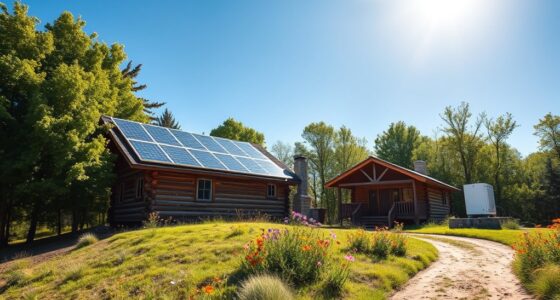
Setting up a solar generator is a straightforward process that can considerably reduce your reliance on traditional power sources. The first step is understanding how to position your solar panels for maximum efficiency. Solar panel placement is crucial; you’ll want to find a location that receives direct sunlight for the majority of the day, ideally facing south if you’re in the northern hemisphere. Avoid shaded areas caused by trees, buildings, or other obstructions, as even partial shade can significantly decrease energy production. Use a solar pathfinder or shade analysis tools if needed to identify the best spot. Mount the panels at an angle that corresponds to your latitude to optimize sun exposure throughout the year. Proper placement ensures you generate the most power possible, making your entire setup more effective.
Position solar panels south-facing in unobstructed areas for optimal efficiency.
Next, you should focus on battery capacity planning. This involves calculating your energy needs to determine how large your battery bank should be. Think about the devices you’ll power, their wattage, and how long you’ll need them to operate during cloudy days or at night. It’s better to overestimate slightly to provide a buffer for unexpected power demands or extended cloudy periods. When planning your battery capacity, consider the total watt-hours required daily and add extra capacity to account for inefficiencies and future expansion. This step prevents you from running out of stored energy when you need it most. Additionally, understanding projector contrast ratio can help you choose the right home cinema setup that complements your solar generator system.
Once you’ve placed your solar panels and planned your battery capacity, connect the panels to a compatible charge controller. This device regulates the voltage and current coming from the panels to prevent overcharging the batteries, prolonging their lifespan. Follow the manufacturer’s instructions carefully, ensuring all connections are secure and weatherproof. Afterward, connect the charge controller to your batteries, then link your battery bank to the inverter, which converts stored DC power into usable AC power for your appliances.
Testing your setup is the next vital step. Once everything’s connected, turn on your system and check for proper operation. Monitor the solar panel output and battery levels to confirm that the system charges effectively and supplies power as expected. Make adjustments as needed, such as repositioning panels for better sunlight or fine-tuning your battery management system.
Frequently Asked Questions
How Do I Choose the Right Solar Generator Size for My Needs?
To choose the right solar generator size, you need to assess your energy needs by listing all devices you’ll power and their wattages. Then, consider the battery capacity required to run those appliances for your desired duration. If you use multiple devices or need longer backup, opt for a generator with higher capacity. Always match the generator’s output to your total energy consumption to make certain of reliable power.
Can Solar Generators Operate During Cloudy or Rainy Weather?
Yes, solar generators can operate during cloudy or rainy weather, but their efficiency drops due to reduced solar panel efficiency. Your generator’s performance depends on the battery storage capacity, which stores energy when sunlight is available. During overcast conditions, it relies more on stored power, so having a larger capacity helps. While it might not run at full capacity, your solar generator can still power essential devices in such weather.
What Safety Precautions Should I Follow During Installation?
Safety first, as they say, “Precaution is better than cure.” During installation, you should prioritize electrical safety by turning off power sources and avoiding contact with live wires. Wear personal protective equipment like gloves, goggles, and insulated tools to safeguard yourself. Keep the area dry and clear of obstacles. Always follow manufacturer instructions and local codes, and consider consulting a professional to guarantee a safe and proper setup.
How Often Should I Maintain or Check My Solar Generator System?
You should perform a system inspection and follow a regular maintenance schedule at least once every three to six months. Check for any loose connections, dirt, or damage to panels and wiring. Keep the system clean and guarantee ventilation is unobstructed. Regular maintenance helps optimize performance, extends the lifespan of your solar generator, and prevents potential issues. Staying consistent with these checks keeps your system running smoothly and efficiently.
Are There Any Permits or Regulations Required for Installation?
You need to check permit requirements and zoning regulations before installing your solar generator. Many areas require permits for electrical work or rooftop installations, and zoning laws can restrict the size or placement of solar equipment. Contact your local building department or planning office to guarantee you meet all legal requirements. Doing so helps you avoid fines, delays, or required modifications, making your installation smooth and compliant with local laws.
Conclusion
So there you have it — your shiny new solar generator ready to turn sunlight into your personal power plant. Just imagine, no more worrying about blackouts or overpriced utility bills, all while you lounge like royalty, basking in your eco-friendly glory. Who knew that a few simple steps could make you feel like a modern-day energy wizard? Now, go ahead, bask in the glow of your solar success — literally. Power has never looked this good.