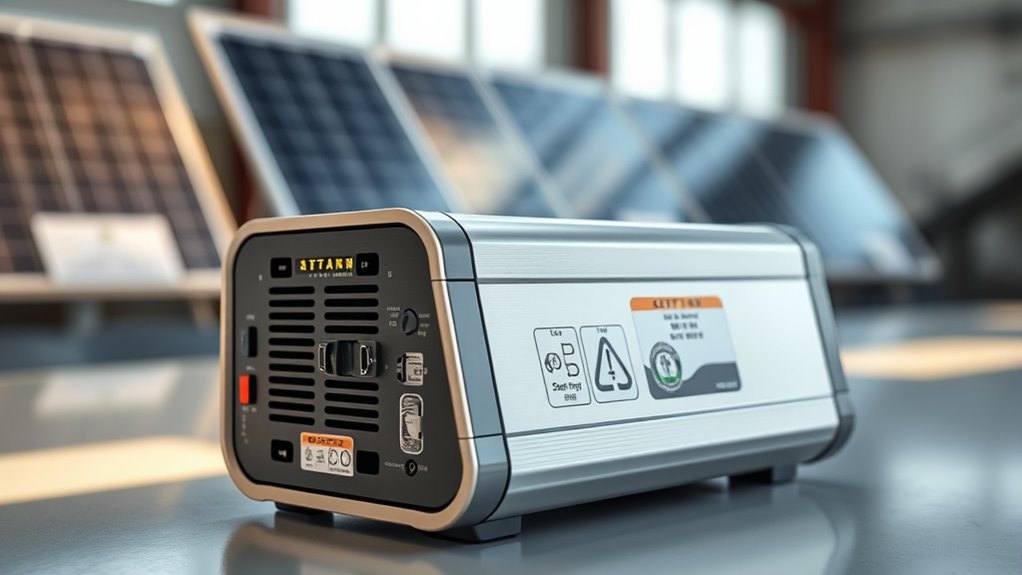
When choosing a solar generator, it’s important to look for proper certifications like UL, CE, or FCC, which confirm the product meets safety and performance standards. Regulations ensure that the device is safe, reliable, and compliant with regional laws. Reputable certifications and port standards help prevent hazards and enable compatibility with various devices. Staying informed about these standards can help you make safer, smarter decisions—if you want to discover more, keep exploring the details behind these regulations.
Key Takeaways
- Solar generators must comply with safety standards like UL, CE, and FCC to ensure electrical safety and reliability.
- Certifications verify that battery components are thermally stable and properly vented to prevent hazards.
- Port standards (USB-C, AC outlets) ensure compatibility and safe connections with devices and accessories.
- Regulatory bodies enforce safety regulations through independent testing and certification processes.
- Certified solar generators offer increased safety, reliability, and legal compliance for home and outdoor use.
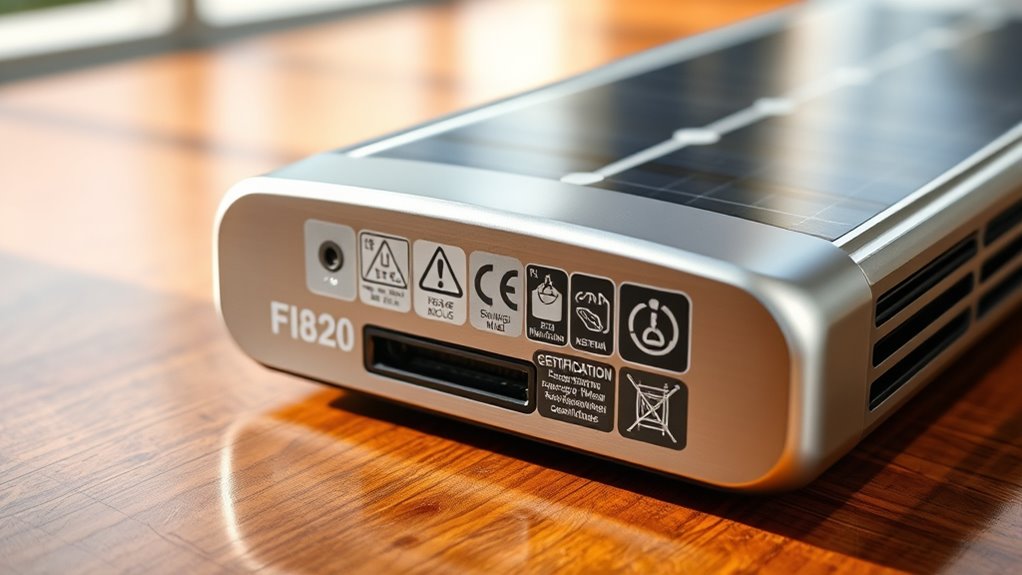
Understanding solar generator regulations and certifications is essential if you’re considering investing in renewable energy solutions. When shopping for a solar generator, one of the most critical factors to consider is safety, particularly regarding battery safety. Batteries are at the heart of your solar generator, and ensuring they meet safety standards can prevent potential hazards like overheating, fires, or explosions. Reputable certifications verify that the battery components have undergone rigorous testing for thermal stability, durability, and proper venting. Knowing that a product complies with these standards gives you peace of mind, especially if you’ll be using the generator in your home or during outdoor activities where safety is paramount.
Another significant aspect is port standards, which govern how your solar generator connects with other devices and accessories. These standards ensure compatibility and reliable performance across different brands and models. When a solar generator adheres to recognized port standards, you can connect your devices—like smartphones, laptops, or larger appliances—without worrying about improper connections or damage. It also simplifies the process of expanding your system in the future, whether you’re adding more batteries or integrating additional solar panels. Be sure to check if the generator’s ports meet industry standards such as USB-C, AC outlets, or DC inputs, as this will determine how easily you can utilize your solar power setup. Additionally, enforcing safety regulations helps to uphold these standards and protect consumers from subpar products.
Regulations also play a vital role in determining what features and safeguards your solar generator must have. Certified products typically undergo testing by independent agencies, which verify compliance with safety, performance, and environmental standards. These certifications can include UL (Underwriters Laboratories), CE (Conformité Européenne), or FCC (Federal Communications Commission), depending on where you live. Such certifications confirm that the product meets strict safety guidelines, reducing risks associated with electrical faults, short circuits, or poor manufacturing practices. By choosing a generator with proper certifications, you ensure you’re investing in a reliable, safe device that adheres to the legal standards set for consumer electronics and energy storage devices.
Frequently Asked Questions
Are Solar Generators Legal to Use in All Countries?
No, solar generators aren’t legal to use in all countries. You need to check international standards and local regulations first. Some countries have import restrictions or specific safety requirements, so your device might not meet them. Always verify with local authorities or customs to make sure your solar generator complies with national laws before using or importing it. This way, you avoid legal issues and ensure safe operation.
Do Solar Generator Certifications Guarantee Safety in Extreme Weather?
While certifications like UL or IEC set strong standards, they don’t guarantee safety in all extreme weather conditions—think of them as a good foundation, but not a crystal ball. Certification standards focus on safety, durability, and performance, but weather resilience can vary. You should consider additional features like waterproofing and temperature tolerance to make sure your solar generator stands up against harsh elements and keeps running when you need it most.
How Often Should Solar Generator Safety Inspections Be Performed?
You should perform solar generator safety inspections at least once a year to guarantee it meets safety standards. Regular inspection frequency helps identify potential issues early, preventing damage or safety hazards. Check for loose connections, corrosion, or damaged parts during each inspection. If you notice anything unusual, increase the inspection frequency or consult a professional. Staying proactive ensures your solar generator operates safely and efficiently over time.
Can Uncertified Solar Generators Be Used for Backup Power?
You can technically use uncertified solar generators for backup power, but it’s not recommended. Uncertified safety measures mean you risk potential hazards like electrical malfunctions or fires. Relying on uncertified units may compromise backup reliability, especially during critical moments. To guarantee safety and consistent backup performance, it’s best to choose certified solar generators that meet safety standards, giving you peace of mind when powering your home during outages.
What Are the Penalties for Non-Compliance With Solar Generator Regulations?
You could face hefty penalty fines—up to thousands of dollars—and legal sanctions if you ignore solar generator regulations. In fact, non-compliance affects nearly 30% of users who underestimate the importance of certifications. These penalties aim to guarantee safety and efficiency. To avoid legal issues, make sure your solar generator meets all regulatory standards, and stay informed about local laws to protect yourself from costly fines and sanctions.
Conclusion
Guiding solar generator regulations might seem daunting, but certifications ensure safety and efficiency. While laws vary, ignoring them could lead to hazards or legal issues. Think of regulations as your shield, protecting you from potential risks, unlike the unverified, uncertified units that pose dangers. Embrace certifications not just as rules, but as your assurance of quality. Ultimately, following these guidelines transforms your solar generator from a risky gamble into a reliable, eco-friendly power source you can trust.