To keep your solar generator working well in cold and hot weather, you should manage temperatures carefully. Cold weather slows battery reactions, so insulating or pre-warming your unit helps maintain power. Hot weather speeds up battery wear, so place your generator in shaded, ventilated spots and use active cooling if available. Proper placement and temperature regulation are key to extending lifespan and ensuring reliable performance—continue exploring how to optimize your system in any climate.
Key Takeaways
- Cold weather reduces battery capacity; use insulation or pre-warming to maintain efficiency.
- Hot temperatures accelerate battery degradation; incorporate active cooling and avoid direct sunlight.
- Temperature regulation features like fans and heat sinks help sustain optimal system performance.
- Proper placement in sheltered or shaded areas prevents overheating or excessive cold impact.
- Monitoring internal temperatures and environmental conditions ensures reliable operation across climates.

Understanding how a solar generator operates is essential for maximizing its efficiency and ensuring reliable power. When it comes to cold and hot weather, the way your solar generator manages its internal components becomes even more critical. The key factors to consider are battery efficiency and temperature regulation. These two elements directly influence how well your solar generator performs, especially under extreme temperatures.
Proper management of battery efficiency and temperature regulation is vital for optimal solar generator performance.
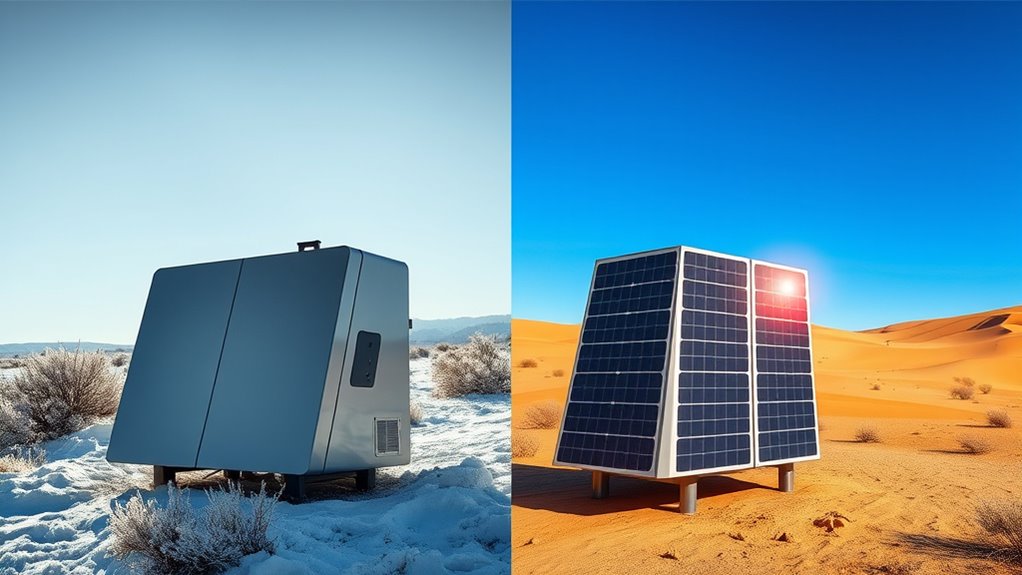
In cold weather, batteries tend to lose some of their capacity, which means your solar generator may not produce or store as much energy as it would in moderate conditions. This drop in battery efficiency happens because low temperatures slow down the chemical reactions inside the batteries, reducing their ability to hold and deliver power. To counteract this, many solar generators are equipped with built-in temperature regulation systems or insulation measures that help keep the battery’s temperature within an optimal range. If your unit doesn’t have these features, you might notice decreased performance and should consider placing the generator in a sheltered, warmer spot whenever possible. Additionally, pre-warming the batteries before use can help maintain better efficiency.
Hot weather poses its own set of challenges. Excessive heat can accelerate battery degradation over time and impair overall system performance. When temperatures climb too high, the internal components of the generator, including the battery, can overheat, leading to reduced lifespan and potential safety hazards. Proper temperature regulation becomes vital here. Many solar generators include active cooling systems, such as fans or heat sinks, to dissipate excess heat effectively. If your unit lacks sufficient cooling, avoid leaving it in direct sunlight for extended periods. Instead, place it in a shaded, ventilated area to prevent overheating and preserve battery health.
Both cold and hot conditions can affect the solar panels’ efficiency, but temperature regulation within the generator itself is equally crucial. When the internal temperature stays within the recommended range, the battery maintains its efficiency, and the generator continues to operate reliably. Regularly monitoring your solar generator’s temperature and ensuring it’s placed in appropriate environments can extend its lifespan and improve performance. Remember, the more you understand and manage temperature effects, the better you’ll optimize your solar generator’s operation in varying weather conditions. Proper temperature regulation and attention to battery efficiency are your best tools for keeping your power system running smoothly, no matter the climate.
Frequently Asked Questions
How Does Temperature Affect Solar Generator Battery Lifespan?
You should know that high temperatures accelerate battery degradation, reducing your solar generator’s lifespan. Conversely, cold weather can slow down chemical reactions, but extreme cold might cause internal damage over time. Proper thermal management helps maintain ideal battery temperature, protecting it from damage caused by overheating or freezing. By keeping your battery within the recommended temperature range, you ensure longer lifespan and reliable performance for your solar generator.
Can Cold Weather Cause Solar Panels to Ice Over and Reduce Efficiency?
Cold weather can lead to ice formation on your solar panels, which may quietly diminish their efficiency. When ice covers the surface, it blocks sunlight from reaching the cells, much like a frosted window dims a view. This natural barrier reduces the panels’ ability to generate power, so you might notice a dip in performance. Regularly inspecting and gently clearing ice can help maintain peak panel efficiency during chilly months.
What Safety Precautions Are Needed During Extreme Heat for Solar Generators?
During extreme heat, you should prioritize heat safety by ensuring proper ventilation around your solar generator to prevent overheating. Keep an eye on the ambient temperature and avoid direct sunlight during the hottest parts of the day. Use cooling measures like fans or shade covers if necessary. Regularly check your generator’s temperature and follow manufacturer guidelines to prevent damage, ensuring safe and efficient operation even in high temperatures.
Do Solar Generators Need Special Maintenance in Winter or Summer?
Yes, you should perform special maintenance in winter and summer. In winter, regularly clean your solar panels to prevent snow buildup and keep them efficient. In summer, check for dust or debris that can diminish performance. Also, follow storage tips like keeping the generator in a cool, dry place during extreme temperatures. Proper maintenance ensures your solar generator runs smoothly year-round, maximizing its lifespan and energy output.
How Do Shading and Weather Conditions Impact Solar Generator Performance?
Shading effects and weather variability markedly impact your solar generator’s performance. When shading occurs, even partially, it reduces sunlight absorption, lowering energy output. Overcast skies, rain, or snow also diminish sunlight, decreasing efficiency. You should position your solar panels in areas with minimal shading and be mindful of weather changes. Regularly checking for shading effects and weather conditions helps optimize your solar generator’s energy production, ensuring it works efficiently regardless of external factors.
Conclusion
In both hot and cold weather, your solar generator performs best when you understand its needs. When it’s hot, give it shade and ample airflow; when it’s cold, keep it warm and protected from frost. By adjusting your approach, you guarantee reliable power, maximize efficiency, and extend the lifespan of your solar generator. Stay mindful of the weather, adapt your strategies, and enjoy steady, sustainable energy no matter the season.