To guarantee reliable backup solar power for medical facilities, you need a smarter checklist that covers capacity assessment, infrastructure evaluation, and system efficiency. Prioritize understanding your critical device loads, optimize battery size, and evaluate generator and grid dependability. Incorporate smart management and monitoring tools to detect issues early and plan for environmental impacts. Staff training and emergency drills are essential to minimize downtime during outages. Keep exploring how to strengthen your backup system for continuous patient care and resilience.

Get backup power and energy gear delivered free with Prime
- Fast, free delivery on millions of items
- Prime Video, Amazon Music and more included
- Member-only deals all year
Key Takeaways
- Conduct a thorough assessment of critical device power requirements and backup duration needs.
- Integrate multiple energy sources and smart management systems for seamless power switching.
- Regularly monitor system performance and perform maintenance to ensure backup readiness.
- Account for environmental factors and geographic conditions affecting solar energy efficiency.
- Train staff and conduct drills to ensure effective emergency response and system operation.

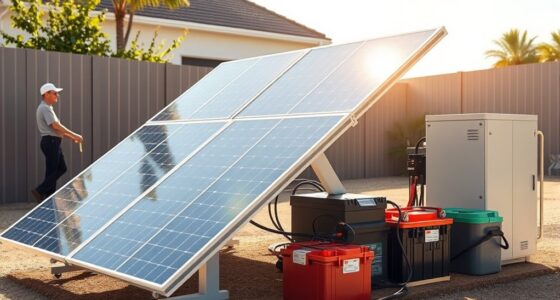
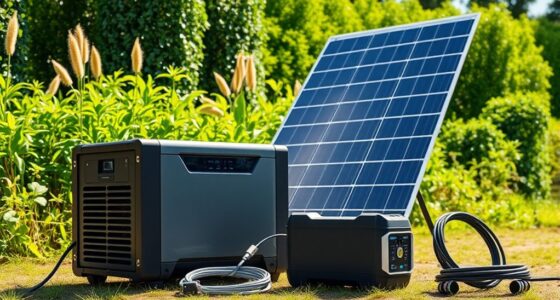
In critical medical environments, reliable power is crucial, yet traditional energy sources can be vulnerable to outages. When lives are at stake, you need a backup system that guarantees continuous operation of vital equipment. That’s where solar batteries and power redundancy come into play. A solar battery can store excess energy generated by solar panels during sunny days, providing a steady power supply when the grid fails. It acts as a buffer, allowing your facility to maintain critical functions without interruption. Incorporating a solar battery into your backup plan isn’t just about having an extra source of energy; it’s about creating a resilient system that can adapt to emergencies. Power redundancy, in this context, means having multiple energy sources working together to guarantee uninterrupted power. This can include solar batteries, generators, and grid connections, all configured to switch seamlessly when needed.
Solar batteries and power redundancy ensure continuous, reliable energy in critical medical environments during outages.
When planning your backup setup, first consider the capacity of your solar battery. You need enough storage to power essential equipment during outages, which requires a careful assessment of your energy consumption. Think about the most critical devices—ventilators, monitors, life-support systems—and ensure the solar battery can sustain them for a specified period. Next, evaluate your existing power infrastructure. Are your generators capable of handling peak loads? Is your grid connection dependable enough to serve as a backup? These questions help you determine where redundancy is most needed and how to optimize your system. Including power management systems can further enhance the efficiency and reliability of your backup setup. Additionally, understanding the importance of energy resilience** can help you prioritize investments that improve system robustness against various disruptions. Recognizing the role of system integration** can also streamline the transition between power sources during an outage.
A smarter checklist involves integrating smart monitoring systems that track the status of your solar battery and overall power health. Real-time data lets you identify potential issues early, preventing unexpected failures. You should also establish maintenance routines for your solar battery and backup generators, ensuring they are ready when needed. Consider the geographic and environmental factors that might affect solar energy collection, such as shading or weather patterns, and plan accordingly. Additionally, understanding power reliability and how to enhance it through redundancy can be a key factor in system resilience.
Finally, training your staff on emergency procedures ensures everyone knows how to activate and manage the backup system efficiently. Regular drills reinforce this knowledge, minimizing downtime during actual outages. By combining a well-sized solar battery with a robust power redundancy plan, you create a smarter, more reliable backup system. This approach not only safeguards patient care but also enhances your facility’s resilience, so you’re prepared for whatever emergencies come your way.
medical solar battery backup system
As an affiliate, we earn on qualifying purchases.
As an affiliate, we earn on qualifying purchases.
Frequently Asked Questions
How Long Can Solar Backup Power Typically Last During Outages?
Solar backup power typically lasts between several hours to a couple of days, depending on your battery capacity and power usage. If you have a larger battery capacity, your system can provide power for a longer duration during outages. To maximize power duration, manage your energy consumption carefully, turning off non-essential devices. Regularly monitor your system’s battery capacity to guarantee you’re prepared for extended outages and optimize your backup power reliability.
What Are the Key Safety Considerations for Medical Solar Backup Systems?
Your medical solar backup system must be safer than a fortress in a storm! Prioritize battery maintenance to prevent dangerous leaks or fires, and make certain your system is certified to meet strict safety standards. Regular inspections, proper installation, and adherence to manufacturer guidelines are essential. Don’t forget to keep emergency shut-off switches accessible. These steps guarantee your backup system remains reliable and safe when you need it most.
Can Solar Backup Systems Be Integrated With Existing Hospital Infrastructure?
Yes, solar backup systems can be integrated with existing hospital infrastructure. You need to focus on renewable integration and confirm infrastructure compatibility by carefully evaluating your current electrical system. Work with experts to design a seamless connection, considering power loads and backup needs. Proper planning guarantees the system’s efficiency, safety, and reliability, allowing your hospital to benefit from renewable energy while maintaining essential operations without disruptions.
What Is the Initial Cost Versus Long-Term Savings of Solar Backup for Medical Facilities?
You’ll find that the initial cost of solar backup for medical facilities can be significant, but a thorough cost analysis shows strong long-term savings. The investment benefits include reduced energy bills, increased energy independence, and enhanced emergency resilience. Over time, these savings outweigh the upfront costs, making solar backup systems a smart financial decision that improves reliability and sustainability for your facility.
How Do Weather Patterns Impact Solar Backup Reliability for Medical Needs?
Weather patterns greatly impact your solar backup system’s reliability for medical needs. Unpredictable weather, like storms or heavy clouds, can reduce solar energy production, challenging your climate resilience. By leveraging advanced weather forecasting, you can anticipate cloudy days or storms, adjusting backup protocols proactively. This proactive approach ensures continuous power, maintaining critical medical functions. Properly planning for weather variability enhances your system’s reliability and your facility’s overall safety.
hospital emergency power generator
As an affiliate, we earn on qualifying purchases.
As an affiliate, we earn on qualifying purchases.
Conclusion
To guarantee your medical backup solar power system is reliable, follow a smarter checklist that covers all essentials. Did you know that hospitals with backup power systems experience 40% fewer critical failures during outages? By staying prepared and vigilant, you can protect lives and maintain essential services during emergencies. Don’t leave your system to chance—plan thoroughly, test regularly, and keep your checklist updated. Your proactive approach makes all the difference in critical moments.
solar energy storage for medical facilities
As an affiliate, we earn on qualifying purchases.
As an affiliate, we earn on qualifying purchases.
medical-grade uninterruptible power supply (UPS)
As an affiliate, we earn on qualifying purchases.
As an affiliate, we earn on qualifying purchases.
Fall Picks
fall essentials
As an affiliate, we earn on qualifying purchases.