Watt-hours measure the total energy a portable power station can store, while watts show its maximum immediate power output. Think of watt-hours as how long your device can run, and watts as how fast it delivers power at any moment. Understanding both helps you choose the right station for your needs and manage your device usage efficiently. If you want to learn how to optimize your power setup, keep exploring these key concepts further.
Key Takeaways
- Watts measure the instantaneous power output or consumption; watt-hours indicate total energy stored or used over time.
- Higher watt-hour capacity means longer device operation, while watt rating shows maximum continuous power output.
- Matching solar panel wattage with station input specs affects recharge speed and efficiency.
- Watt-hours allow comparison of power station capacities and help estimate runtime for connected devices.
- Considering both watt and watt-hour ratings ensures optimal performance and planning for energy needs.
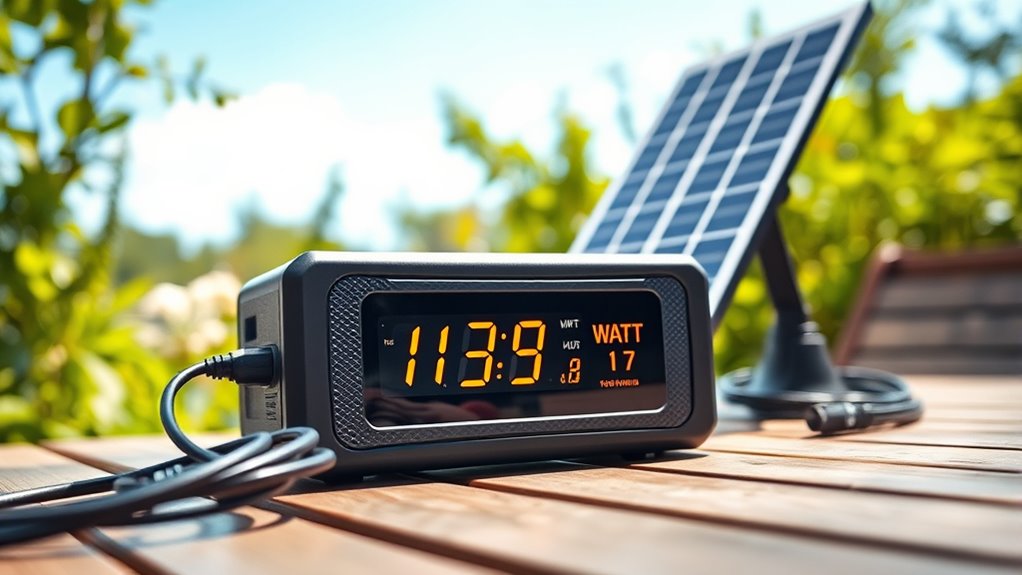
To truly understand energy consumption, it’s important to know the difference between watt-hours and watts. Watts measure the rate at which energy is used or produced, fundamentally representing power. In contrast, watt-hours indicate the total amount of energy consumed or stored over time. When you’re shopping for portable power stations, grasping these concepts helps you make smarter choices, especially when considering factors like solar panel compatibility and battery capacity comparison.
Imagine you’re trying to choose a portable power station for outdoor adventures. You’ll want to check its watt-hour rating to see how much energy it can store. A higher watt-hour (Wh) capacity means more stored energy, allowing you to run devices for longer periods. But it’s equally important to look at the watt rating of the station, which shows how much power it can supply at once. For example, a station with a 200 Wh capacity can deliver 50 watts for four hours or 100 watts for two hours, but it can’t provide 200 watts continuously without exceeding its specifications.
When considering solar panel compatibility, you need to match the power output of your panels with the input requirements of your power station. A solar panel’s wattage tells you how much power it can generate under ideal conditions. If your station has a high watt-hour capacity but a low solar input capacity, it’ll take longer to recharge. Conversely, a solar panel with a high wattage rating can replenish your station more quickly, but only if your station’s input specifications support that level. Making a battery capacity comparison among different models helps you determine which station best fits your needs—whether you prioritize longer usage or faster recharging.
Understanding watt-hours also helps you plan for energy efficiency. For instance, if you know your device consumes 10 watts, a 100 Wh power station could theoretically run it for 10 hours. However, real-world factors like inefficiencies and conversion losses mean actual runtime might be slightly less. Knowing this allows you to choose a station with an appropriate capacity, ensuring you won’t run out of power when you need it most. Additionally, the integration of automation technologies in some power management systems can optimize energy use and prolong device operation.
Frequently Asked Questions
How Do Watt-Hours Affect Portable Power Station Runtimes?
Watt-hours directly influence your portable power station’s runtimes by showing its battery capacity and energy storage. The higher the watt-hours, the longer your devices can run before needing a recharge. You can compare models easily, knowing that increased watt-hours mean more energy stored and extended usage. Keep in mind, energy consumption of your devices also affects runtimes, but overall, watt-hours are key to understanding how long your power station will last.
Can Watt-Hour Ratings Compare Different Brands Effectively?
Yes, watt-hour ratings can help you compare different brands effectively, but keep in mind that battery lifespan and overall cost matter too. Higher watt-hours mean longer runtimes, but if a brand offers better battery longevity or a lower price, it might be a smarter choice. Always consider the balance between capacity, durability, and cost to find the best portable power station for your needs.
Do Higher Watt-Hour Ratings Mean Faster Charging Times?
Higher watt-hour ratings don’t mean faster charging times; they indicate greater battery capacity, allowing longer use. Did you know that a larger capacity can store enough energy for hours of device use? While energy density affects how compact the power station is, it doesn’t directly impact charging speed. So, focus on watt-hours to gauge how long your station can power your devices, not how quickly it charges.
How Does Wattage Impact Device Compatibility With Power Stations?
Wattage directly influences device compatibility because higher wattage devices need power stations with sufficient voltage considerations and surge capacity. If your device requires a high surge capacity, make sure the power station can handle brief power spikes. Check the device’s wattage and voltage requirements, then compare them to the power station’s output specs. Using a station with inadequate wattage or surge capacity can lead to charging issues or damage.
Are Watt-Hours More Important Than Watts for Outdoor Use?
It’s no coincidence that watt-hours matter more than watts for outdoor use because they directly relate to battery capacity and how long your device can run. While watts show power consumption, watt-hours tell you how much energy your power station stores, making it essential for extended trips. Prioritizing higher watt-hours ensures better energy efficiency and longer usage, especially when you’re far from power sources.
Conclusion
So, now you see watt-hours and watts aren’t just fancy tech jargon—they’re the power behind your gadgets. Think of watt-hours as your battery’s drink of water, while watts are how fast it drains that drink. If you’re ever lost in the power jungle, just remember: a bigger watt-hour tank means longer fun, and higher watts mean faster chaos. Keep these in mind, and you won’t be left in the dark—literally.