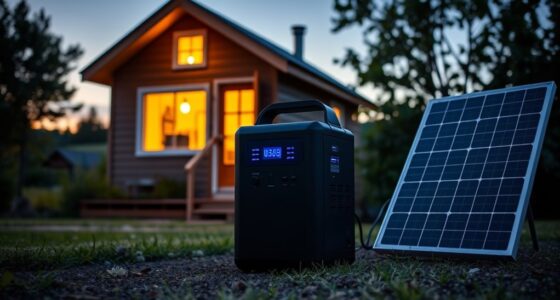
To keep safe when using portable power stations, always follow the manufacturer’s instructions and inspect the device regularly for damage or leaks. Operate in a well-ventilated space, avoid placing it near liquids, and use only compatible chargers. Don’t overcharge or overload the device, and disconnect immediately if you notice heat or odors. Store it properly in a cool, dry area and monitor the battery’s condition. Keep these tips in mind to protect yourself and extend your power station’s lifespan.
Key Takeaways
- Follow manufacturer instructions carefully and regularly inspect for damage or leaks.
- Operate in a well-ventilated area away from flammable surfaces and liquids.
- Use only the provided charger and avoid overcharging or incompatible power sources.
- Store in a cool, dry place, avoiding direct sunlight and extreme temperatures.
- Monitor the battery for signs of hazards and disconnect immediately if irregularities occur.
Portable power stations offer a convenient way to keep your devices charged during outages or outdoor adventures, but using them safely is essential. When it comes to battery safety, understanding how to operate and maintain your power station properly can prevent accidents and ensure it functions reliably when you need it most. One of the most important aspects of safe usage is reading and following the manufacturer’s instructions carefully. These guidelines provide crucial information on how to handle the device, avoid overloading, and store it correctly. Proper battery safety also involves inspecting your power station regularly for signs of damage, such as cracks, leaks, or corrosion, which could pose fire or chemical hazards if ignored.
Follow manufacturer instructions and regularly inspect your power station to ensure safe, reliable use during emergencies and outdoor activities.
In terms of emergency preparedness, having a portable power station on hand can be a game-changer during power outages or natural disasters. However, it’s vital to use it responsibly to maximize safety. Always operate the device in a well-ventilated area to prevent heat buildup and reduce the risk of fire. Avoid placing it on flammable surfaces or near liquids, as spills or moisture can cause electrical shorts or damage the internal battery components. When charging or discharging, ensure your power station is compatible with your devices and avoid overloading it beyond its rated capacity. Overloading can lead to overheating or damage to the battery, compromising both safety and functionality.
Charging your power station correctly is another key safety step. Use only the charger supplied by the manufacturer, and don’t attempt to charge it with incompatible power sources. Overcharging can cause the battery to swell or overheat, increasing the risk of fire. During extended use, monitor the device periodically for any unusual heat or odors, which are signs that something may be wrong. If you notice any irregularities, turn off the power station immediately and disconnect it from all devices.
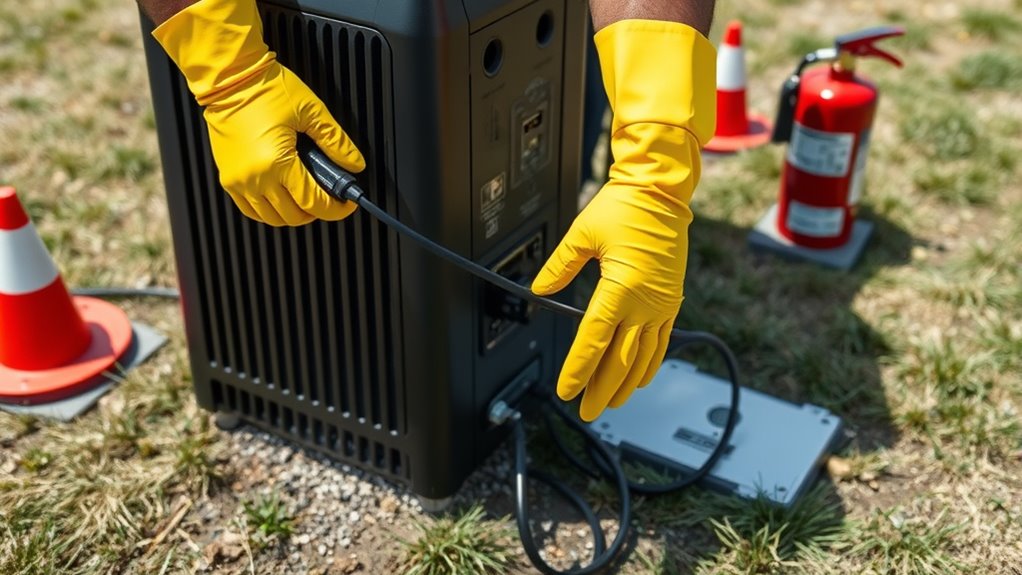
In addition to these safety practices, it’s wise to keep a fire extinguisher nearby when operating your portable power station, especially during emergency situations. This prepares you to respond quickly if a fire does occur. Store the device in a cool, dry place when not in use, and avoid leaving it in direct sunlight or extreme temperatures, as these conditions can degrade the battery over time. Regularly checking the battery safety of your power station can help detect potential hazards early and prolong its lifespan. By prioritizing battery safety and adhering to proper usage protocols, you’ll enhance your emergency preparedness and ensure your portable power station serves as a reliable, safe source of power when you need it most.
Frequently Asked Questions
Can Portable Power Stations Be Used Underwater?
No, portable power stations shouldn’t be used underwater due to waterproofing concerns and underwater operation risks. Water can damage internal components, cause short circuits, or lead to dangerous electrical shocks. You risk ruining the device and endangering yourself. Always keep portable power stations dry and protected from moisture. If you need power underwater, look for equipment specifically designed for aquatic environments, ensuring safety and functionality.
Are There Age Restrictions for Operating Portable Power Stations?
Ever wondered if age limits matter? You should know that user age restrictions are in place for a reason. Children’s safety is a priority, so operator age restrictions are typically set by manufacturers to prevent accidents. Always check the product’s guidelines, and supervise young users around portable power stations. Isn’t ensuring safety worth taking these precautions? Keep kids safe by following age recommendations and teaching them proper handling.
How Do I Dispose of a Damaged Power Station Safely?
When disposing of a damaged portable power station, start with a damage assessment to determine if it’s safe to handle. If it’s compromised, take it to a certified battery recycling center; never throw it in the trash. Proper disposal prevents environmental harm and safety hazards. Always follow local regulations for electronic waste, and avoid puncturing or dismantling the device yourself to minimize risks.
Can I Connect Multiple Power Stations for More Capacity?
You can connect multiple power stations to increase battery capacity, but only if they’re designed for daisy-chaining or parallel connection. Always check the manufacturer’s instructions for connection safety, as improper setup can cause electrical issues or damage. Make sure the voltage and current ratings are compatible, and use appropriate cables. Never force connections or connect incompatible units, as this can pose safety risks and reduce the lifespan of your power stations.
Do Portable Power Stations Emit Harmful Radiation?
Portable power stations emit minimal electromagnetic field (EMF) radiation, so radiation exposure is generally very low. They’re designed with EMF safety in mind, ensuring you’re not exposed to harmful levels during normal use. To stay safe, keep a reasonable distance and avoid prolonged close contact. Overall, these stations are safe for everyday use, and the EMF safety features help minimize any concerns about radiation exposure.
Conclusion
By following these safety practices, you’ll keep your portable power station a trusted ally, not a hidden danger. Treat it like a delicate instrument, handling it with care and respect, so it can serve you reliably in any situation. Remember, safety isn’t just a guideline — it’s the sturdy anchor that keeps your adventures bright and trouble-free. Stay vigilant, and let your power station be a beacon of dependable energy, lighting your path safely ahead.