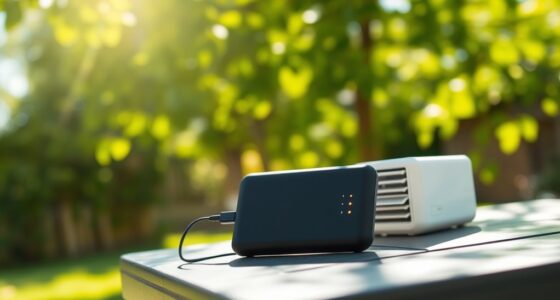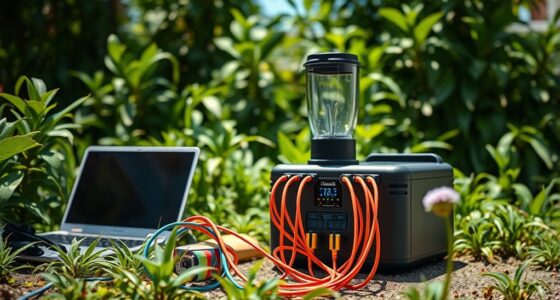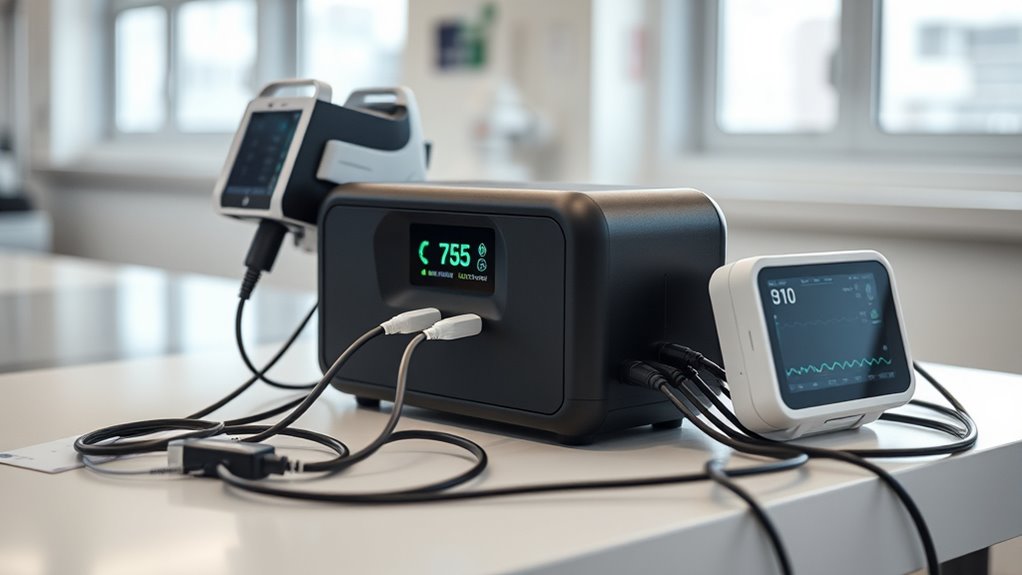

When choosing a portable power station for your medical devices, look for units with long-lasting batteries, multiple output options, and lightweight, rugged designs for easy transport. Features like clear displays, quick-charge, and weather resistance make them reliable in various environments. Ensuring the device is user-friendly and durable helps maintain critical operations during emergencies or in remote areas. Keep exploring to discover essential tips for selecting the perfect power station for your needs.
Key Takeaways
- Look for power stations with extended battery life to ensure continuous operation of medical devices during outages.
- Prioritize models with multiple output options (AC, USB, DC) to support various medical equipment simultaneously.
- Choose lightweight, compact units with sturdy handles or wheels for easy portability in emergency and remote settings.
- Opt for devices with weather-resistant and shockproof features to ensure durability in diverse environments.
- Select power stations equipped with user-friendly displays and quick-charge capabilities for efficient field operation.
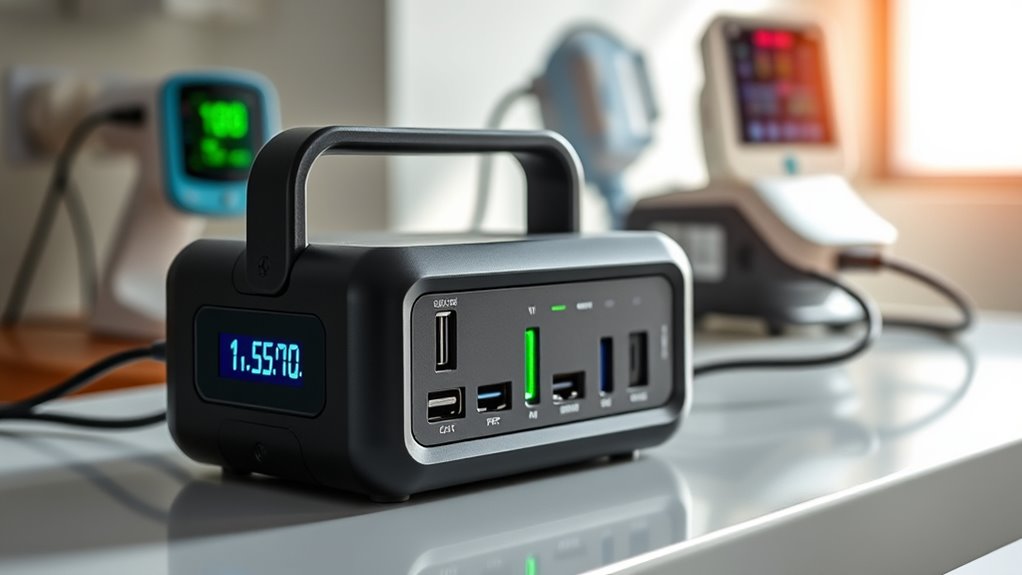
When it comes to guaranteeing uninterrupted medical care, portable power stations have become essential tools for powering medical devices in emergency situations, remote locations, and during power outages. One of the most critical aspects to consider is their battery life, which determines how long your devices can run without needing a recharge. A longer battery life means you can rely on the power station for extended periods, whether you’re in a disaster zone or a remote area where grid access isn’t available. Many models now feature high-capacity batteries that can power life-support equipment, oxygen concentrators, and other vital devices for hours on end. To maximize efficiency, you should look for units with smart power management systems that optimize energy use and preserve battery life, especially during prolonged emergencies.
Portability features are equally important when selecting a power station for medical use. You need a device that’s lightweight and compact enough to carry easily, yet robust enough to handle the demands of medical equipment. Look for units with sturdy handles, ergonomic designs, and additional straps or wheels if you’ll be transporting them frequently. Some power stations also come with built-in carry cases or protective covers, which are handy in rugged environments. The size and weight directly influence how swiftly you can deploy the power station in urgent situations, so a balance between capacity and portability is crucial. Features like quick-charge capabilities, multiple charging ports, and lightweight construction enhance usability in the field.
Additionally, the design of the power station should include user-friendly interfaces, such as clear displays showing remaining battery life and output status, so you can monitor performance easily during critical moments. Many units also incorporate multiple output options—AC outlets, USB ports, and DC car adapters—allowing you to power various devices simultaneously. The ruggedness of the device, including weather-resistant or shockproof features, adds to its reliability in unpredictable environments. Whether you’re a healthcare professional working in a remote clinic or a caregiver preparing for emergencies, selecting a portable power station with excellent battery life and portability features ensures you can deliver consistent, lifesaving care without interruption. By prioritizing these aspects, you’ll have a dependable tool that adapts to your needs, giving you peace of mind when every second counts. Additionally, choosing units with reliable power sources is essential to ensure continuous operation during critical times.
Frequently Asked Questions
How Long Can a Portable Power Station Power Medical Devices Continuously?
You can typically power medical devices continuously for several hours, depending on the battery life and power capacity of your portable power station. Smaller stations may last 4-8 hours, while larger ones with higher capacity can run devices for 24 hours or more. Always check the device’s power consumption and compare it with the power station’s capacity to estimate runtime accurately. Keep in mind, usage patterns can also affect how long it lasts.
Are Portable Power Stations Compatible With All Medical Device Models?
You might find that portable power stations aren’t compatible with all medical device models due to varying device compatibility and model variety. Always check the power station’s specifications and compare them with your device’s requirements. Some models support a wide range of devices, while others are more limited. To confirm proper operation, verify compatibility beforehand, especially if you rely heavily on specific medical equipment for health or safety reasons.
What Safety Features Should I Look for in Medical-Grade Power Stations?
You should look for medical-grade power stations with reliable safety features like surge protection to prevent voltage spikes that could damage your devices. Make certain they have ample battery capacity to handle your medical equipment’s power needs during outages. Additionally, features like overcurrent and short circuit protection help keep your devices safe. These safety measures give you peace of mind, knowing your essential medical devices operate securely and efficiently during critical moments.
Can Portable Power Stations Be Recharged via Solar Panels?
Yes, portable power stations can be recharged via solar panels. Look for models with solar panel compatibility to guarantee they work seamlessly with renewable energy options. This setup allows you to harness solar power, making your energy use more sustainable and reliable, especially in emergencies or remote locations. Recharging with solar panels helps reduce reliance on traditional power sources, providing a versatile and eco-friendly solution for your medical device needs.
What Is the Weight and Portability Level for Emergency Medical Use?
Think of a portable power station as a lifeline you carry with you. Its weight considerations are typically between 10 to 30 pounds, making it manageable for emergency medical use, but still requiring careful handling. Portability factors include a compact design, sturdy handles, and lightweight construction, enabling you to swiftly move it to where it’s needed most. This balance guarantees reliable energy support during critical moments, embodying hope and resilience.
Conclusion
When choosing a portable power station for your medical devices, you’re ensuring safety and reliability, much like the trusty steed of a knight. Don’t forget, in this modern age, power outages are as unwelcome as a plague during a renaissance fair. With the right station, you stay connected and protected, whether you’re in the wilderness or at home. So, invest wisely—because in today’s world, your health and peace of mind are worth more than any treasure.