
To keep your portable power station accurate and reliable, you should recalibrate it when you notice inconsistent battery readings or unexplained power issues. Perform a full charge, let it sit to stabilize, then discharge it completely before charging again. Avoid frequent deep discharges, as they can reduce battery lifespan. Proper recalibration extends your device’s useful life and guarantees trusted power levels when you need them most. Keep following along to discover key tips for maintaining your power station’s performance.
Key Takeaways
- Recalibration ensures accurate battery level readings and optimal device performance.
- Perform recalibration after significant charge cycles or when readings become inconsistent.
- Follow manufacturer-specific steps: fully charge, discharge completely, then recharge to reset sensors.
- Avoid frequent deep discharges to prolong battery lifespan and reduce wear.
- Proper recalibration helps prevent unexpected power loss and extends the power station’s useful life.

Portable power stations are invaluable for keeping your devices charged during outages or outdoor adventures, but over time, their accuracy can drift, leading to inaccurate readings and reduced efficiency. Understanding how to recalibrate your unit is crucial to maintaining peak performance. One key aspect to ponder is the battery lifespan, which naturally diminishes as your power station endures more charging cycles. Each charge cycle—when the battery is charged from 0% to 100%—gradually wears down the battery’s capacity. As the number of cycles increases, the battery’s ability to hold a full charge decreases, which can distort the device’s indicator readings and overall efficiency.
Over time, battery cycles reduce capacity, causing inaccurate readings and diminished efficiency in portable power stations.
When your power station starts to show inconsistent or inaccurate battery level readings, it’s a sign that recalibration might be needed. Recalibration helps reset the device’s internal sensors, ensuring that the displayed battery percentage aligns with the actual stored energy. This process becomes increasingly important as the battery ages and the number of charging cycles accumulates. If you ignore these signs, you might find yourself running out of power unexpectedly or overestimating how much charge remains, which can compromise your plans or leave you stranded without power.
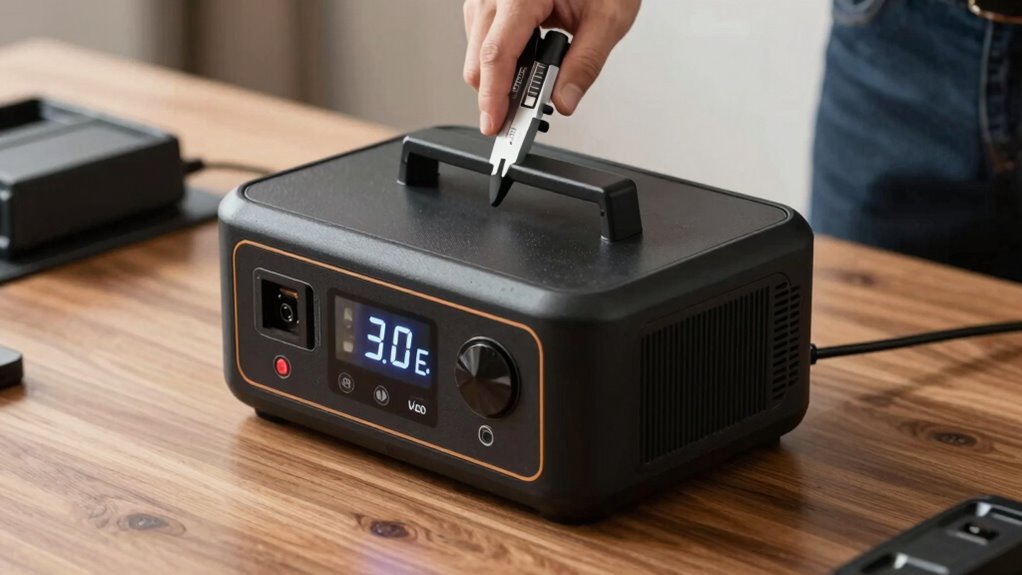
To properly recalibrate your portable power station, start by fully charging the unit to 100%. Once fully charged, let it sit idle for a few hours, allowing the battery to stabilize. Afterward, use the device until it completely discharges, either by powering connected devices or through controlled discharging methods recommended by the manufacturer. This full cycle of charging and discharging helps the internal sensors recalibrate, aligning the battery indicator with the actual energy stored. Some units may have specific recalibration procedures detailed in the user manual, so it’s important to follow those instructions carefully to avoid any damage or inaccuracies.
Keep in mind that frequent deep discharges can impact your battery’s lifespan, reducing the total number of charging cycles it can sustain over time. Hence, recalibration should be done as needed—when you notice inconsistent readings—rather than as a routine maintenance step. Proper handling and periodic recalibration of your power station not only extend its useful life but also ensure that your device performs reliably when you need it most. By understanding how battery lifespan and charging cycles influence your power station’s accuracy, you can keep your device operating efficiently for years to come.
portable power station recalibration kit
As an affiliate, we earn on qualifying purchases.
As an affiliate, we earn on qualifying purchases.
Frequently Asked Questions
How Often Should I Recalibrate My Portable Power Station?
You should recalibrate your portable power station every 3 to 6 months, especially if you notice inaccurate battery readings or decreased performance. Regular recalibration helps maintain battery lifespan and guarantees accurate readings after numerous charging cycles. If you frequently use or charge your device, more frequent recalibration might be necessary. Properly calibrating your power station keeps it functioning efficiently, extending its overall lifespan and optimizing performance during critical moments.
Can Recalibration Fix Inaccurate Battery Level Readings?
Think of your power station’s battery level as a compass that sometimes drifts off course. Recalibration acts as the navigator’s correction, restoring Battery accuracy. Using proper Calibration methods, like following manufacturer instructions or performing a full charge-discharge cycle, can fix inaccurate readings. If your readings seem off, recalibrating guarantees your device’s gauge points true, giving you reliable power management for all your outdoor adventures.
Is Recalibration Necessary After Firmware Updates?
Yes, recalibration is often necessary after firmware updates because they can alter how your power station interprets battery chemistry data. You should follow specific calibration procedures to guarantee accurate battery level readings, especially if you notice discrepancies. Proper recalibration helps maintain peak performance, prolongs battery life, and ensures your device accurately reflects its remaining power, regardless of firmware changes. Always consult your user manual for the correct calibration steps.
What Signs Indicate My Power Station Needs Recalibration?
You notice your power station’s battery lifespan seems shorter, or the device isn’t holding a charge like it used to. Maybe the power efficiency drops unexpectedly, causing devices to run slower or shut off prematurely. These signs suggest recalibration is needed. When your power station’s display shows inconsistent readings or the estimated runtime becomes unreliable, it’s time to recalibrate. Addressing these issues restores accuracy and prolongs your power station’s usefulness, ensuring reliable performance whenever you need it most.
Are There Risks Involved With Recalibrating My Device?
Recalibrating your device can pose minimal risks if you follow calibration best practices carefully. Improper calibration might temporarily affect battery accuracy or cause minor discrepancies in readings, but these issues are usually reversible. To avoid risks, make sure your power station is in a stable environment, follow manufacturer instructions precisely, and don’t rush the process. Proper calibration maintains battery accuracy and prolongs your device’s lifespan, making it a worthwhile maintenance step.
portable power station battery calibration
As an affiliate, we earn on qualifying purchases.
As an affiliate, we earn on qualifying purchases.
Conclusion
Remember, keeping your portable power station properly recalibrated guarantees it performs like a well-oiled machine, ready to power your adventures or emergencies. Don’t neglect this crucial step, or you might find yourself caught in a pickle, much like a knight without his armor. Regular recalibration is your best defense against inaccuracies and shortened battery life, so treat it as an indispensable part of your maintenance ritual. Stay vigilant, and your trusty power station will serve you faithfully for years to come.
power station battery level indicator
As an affiliate, we earn on qualifying purchases.
As an affiliate, we earn on qualifying purchases.
portable power station maintenance tools
As an affiliate, we earn on qualifying purchases.
As an affiliate, we earn on qualifying purchases.